
Hu Qian Wan Hǔ Qián Wán
Hidden Tiger Pill
- Category
- Formulas that Tonify
- Subcategory
- Formulas that Nourish and Tonify the Yin
- Ingredients
- 9 herbs
Actions
What does Hu Qian Wan do?
Hu Qian Wan (Hidden Tiger Pill) nourishes Liver and Kidney yin, clears deficiency heat, and strengthens the sinews and bones of the lower limbs — a Yuan-dynasty formula built by expanding the classic yin-nourish/fire-drain pair (Zhi Mu and Huang Bai with Shu Di Huang and Gui Ban) with sinew- and bone-strengthening herbs aimed specifically at wei syndrome (weakness and atrophy) of the legs.
The nine ingredients divide by role, per Bensky & Barolet and Chen & Chen:
- Chief: Huang Bai (wine-fried) and Zhi Mu (wine-fried) together clear deficiency fire from the lower burner; Shu Di Huang and Gui Ban (deep-fried) richly nourish Kidney yin and essence, with Gui Ban’s shell also anchoring floating yang and strengthening bone.
- Deputies: Bai Shao nourishes Liver blood and softens/relaxes the sinews; classically, Hu Gu (tiger bone) is the deputy most specific to this formula’s name and purpose — traditionally credited with strengthening sinews and bone and dispelling wind-damp from the joints and legs (see cautions for this ingredient’s current legal/conservation status).
- Assistants: Suo Yang gently warms and tonifies Kidney yang, adding a touch of yang to move the heavy yin tonics and further strengthen the lower back and legs; Gan Jiang, used in a small amount, moderates the formula’s bitter cold so it does not injure Spleen yang; Chen Pi regulates qi and prevents the rich, cloying tonics from stagnating digestion.
Source: Sacred Lotus sources & references (formula composition) + Bensky & Barolet, Formulas & Strategies; Chen & Chen, Chinese Medical Herbology and Pharmacology (chief/deputy/assistant analysis, attributed to these formularies). Traditional-use framing; not medical advice.
Indications
What is Hu Qian Wan used for?
Hu Qian Wan treats wei syndrome — weakness and atrophy of the lower limbs — arising from Liver and Kidney yin deficiency with deficiency heat, the classic pattern in which depleted yin fails to nourish the sinews and bones while unanchored heat rises above.
- Weakness, soreness, or wasting (atrophy) of the legs, with difficulty standing or walking for long periods.
- Sore, weak low back and knees.
- Feverish sensation felt deep in the bones, tidal (afternoon) fever, and night sweats.
- Irritability, a tendency toward spermatorrhea, and general debility despite the heat signs.
Tongue and pulse: a red tongue with little coating; a thin, frail pulse.
Source: Sacred Lotus sources & references (tongue/pulse fields) + Bensky & Barolet, Formulas & Strategies; Chen & Chen, Chinese Medical Herbology and Pharmacology. Traditional-use framing; not medical advice.
Ingredients
9 substances in Hu Qian Wan — each links to its full herb monograph.
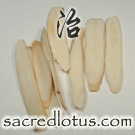 Bai Shao60 gTonify Blood
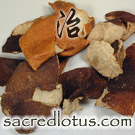 Chen Pi60 gRegulate the Qi
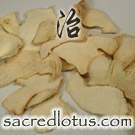 Gan Jiang15 gWarm the Interior and Expel Cold
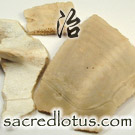 Gui Ban120 gdeep-friedTonify Yin
 Hu Gu60 gDispel Wind-Dampness
 Huang Bai150 gwine-friedClear Heat and Dry Dampness
 Shu Di Huang60 gTonify Blood
 Suo Yang45 gTonify Yang
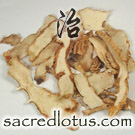 Zhi Mu30 gwine-friedDrain Fire
Preparation & dosage
How is Hu Qian Wan prepared?
Traditionally the nine ingredients are ground to a fine powder and formed into pills with wine or honey, matching “Wan” (pill) in the name; a 9-gram pill is taken morning and evening with warm or lightly salted water.
- Herb-specific processing: Huang Bai and Zhi Mu are wine-fried to moderate their cold, bitter nature; Gui Ban is deep-fried to make it friable; Gan Jiang is used dried (not fresh) in a small amount.
- Modern practice: also prepared as a decoction, with amounts reduced proportionally from the pill-form reference quantities, when a faster or stronger effect is wanted.
Source: Sacred Lotus sources & references (preparation and herb-processing notes) + Bensky & Barolet, Formulas & Strategies.
Safety — read before use
What are the cautions for Hu Qian Wan?
Hu Qian Wan is a rich, bitter-cold yin tonic and is inappropriate for cold-type or damp-heat-excess presentations of leg weakness, and it contains an ingredient with a significant modern conservation and legal status that deserves separate mention.
- Avoid (or use only with modification) in Spleen/Stomach deficiency with poor appetite or loose stools — the bitter-cold Huang Bai and Zhi Mu, and the heavy Shu Di Huang and Gui Ban, can burden a weak digestion with prolonged use.
- Not for excess-pattern or damp-heat wei syndrome (e.g. the damp-heat leg weakness treated by formulas such as Er Miao San/San Miao Wan) — this formula is for the deficiency-heat pattern specifically.
- Hu Gu (Os Tigris, tiger bone): the tiger (Panthera tigris) has been listed on CITES Appendix I since 1975, and China removed tiger bone from official pharmaceutical use and banned its domestic trade in 1993. This classical ingredient is documented here strictly as a historical/reference note on how the formula was originally constituted — not as guidance to source, sell, or administer any tiger part. Modern manufacture and practice generally omit Os Tigris or substitute other sinew/bone-strengthening, wind-damp-dispelling materials (for example Gou Gu/Os Canis, or herbs such as Qian Nian Jian, Sang Ji Sheng, or Niu Xi) in its place.
- Professional guidance advised for any prolonged use, and particularly in pregnancy, given the formula’s heavy tonifying and warming components (Suo Yang, Gan Jiang).
Source: Bensky & Barolet, Formulas & Strategies (cautions for bitter-cold yin-nourishing formulas); CITES Appendix I listing for Panthera tigris (in force since 1975) and China’s 1993 domestic tiger-bone trade ban, as documented in the public CITES species record and Chinese Pharmacopoeia history. Traditional-use framing; not medical advice; not sourcing guidance.
Originally Appeared In:
- Teachings of Dan Xi (Dan Xi Xin Fa)
Notes:
How is Hu Qian Wan different from Da Bu Yin Wan?
Hu Qian Wan is Da Bu Yin Wan expanded for wei syndrome of the legs: both formulas share the yin-nourish/fire-drain core of Huang Bai, Zhi Mu, Shu Di Huang, and Gui Ban for Liver/Kidney yin deficiency with deficiency fire, but Hu Qian Wan adds Bai Shao, Hu Gu, Suo Yang, Gan Jiang, and Chen Pi specifically to strengthen the sinews and bones and treat leg weakness/atrophy — choose Da Bu Yin Wan for general deficiency-fire signs (tidal fever, night sweats, irritability) without prominent leg atrophy, and Hu Qian Wan when wei syndrome of the lower limbs is the presenting complaint.
Classical source and lineage: attributed to Zhu Danxi (1281–1358), the Yuan-dynasty founder of the Yin-Nourishing School, and recorded in his Danxi Xinfa (Elaborations on the Methods of [Zhu] Dan-xi). Because tiger bone is now restricted, many contemporary formularies present this formula for its historical/theoretical value or note the modern substitution described in cautions, rather than as an active clinical prescription containing Os Tigris.
Source: Bensky & Barolet, Formulas & Strategies (formula comparison and classical attribution).
Clinical Studies & Research:
Is there modern research on Hu Qian Wan?
No dedicated clinical or pharmacological studies on this specific classical compound formula were found in available searches — a predictable gap given the formula’s restricted, largely historical Os Tigris ingredient. What has been studied is one of its yin-tonifying component herbs, in the same bone/deficiency-heat context the formula targets.
- Zhi Mu (component-level, preclinical): timosaponin AIII, a saponin from Anemarrhena asphodeloides, reduced inflammatory injury in an AGEs-induced osteoblast model and in an alloxan-induced diabetic osteoporosis zebrafish model by modulating RAGE/MAPK signaling (PMID 32502823) — evidence on the herb and a bone-pathology model, not on this compound formula.
- Formula-specific: no PubMed-indexed clinical or pharmacological studies on Hu Qian Wan itself were identified as of this review (2026-07).
Sources: PubMed 32502823; PubMed searches conducted 2026-07 for “Hu Qian Wan” / “Huqian Wan” returned no formula-specific studies. Research context on a component herb, not a therapeutic claim for the formula.
Sources & References
Compiled and edited by Thomas Dehli, Founder & Editor, Sacred Lotus Updated
The information here is referenced from numerous sources — teachers, practitioners, class notes from Five Branches University, the books below, and the published research literature, with citations given as resolvable PubMed identifiers. Where sources disagree, I have flagged the discrepancies directly. If facts couldn't be verified, I have left them out. How we source our content.
Reference information for students and practitioners — not medical advice. Consult a qualified practitioner. Terms of use.
Chinese Formulas Books & References
 https://amzn.to/4fYI3f8
 https://amzn.to/4j55NRA
 https://amzn.to/4gMROyv
 https://amzn.to/4h7msSK