
Yu Nu Jian
Jade Woman Decoction
- Category
- Formulas that Clear Heat
- Subcategory
- Formulas that Clear Heat from the Organs
- Ingredients
- 5 herbs
Actions
What does Yu Nu Jian do?
Yu Nu Jian clears (drains) Stomach heat while it enriches and nourishes yin. It treats a combined excess-and-deficiency pattern — blazing Stomach fire on a background of Stomach and Kidney yin deficiency — cooling the fire without further scorching the fluids, and moistening the yin without trapping the heat.
How the ingredients work together:
- Chief — Shi Gao (Gypsum) clears blazing heat from the Stomach channel.
- Deputy — Shu Di Huang enriches Kidney yin and essence, addressing the deficient root.
- Assistants — Zhi Mu and Mai Men Dong clear heat and nourish yin: Zhi Mu supports both chief and deputy, while Mai Men Dong nourishes Stomach and Lung yin and generates fluids.
- Envoy — Huai Niu Xi directs fire and blood downward and tonifies the Liver and Kidney, keeping the action from flaring upward.
Source: Bensky & Barolet, Chinese Herbal Medicine: Formulas & Strategies (2nd ed.), Yu Nu Jian entry. Traditional-use framing; not medical advice.
Indications
What is Yu Nu Jian used for?
Yu Nu Jian is used for Stomach fire with Stomach and Kidney yin deficiency. The flaring Stomach heat rises along its channel to the mouth and gums while the underlying yin deficiency shows as dryness and thirst.
Typical presentation:
- Mouth and gums — toothache, swollen, painful, or bleeding gums, and headache along the Stomach channel.
- Heat and dryness — thirst, a dry mouth, and a preference for cold drinks.
- Tongue & pulse — a dry red tongue with a thin yellow coat; a rapid, thin pulse (possibly floating and slippery).
It is also applied to wasting-and-thirsting disorder (xiao ke) presenting with strong hunger and thirst on the same Stomach-heat-with-yin-deficiency basis.
Source: Bensky & Barolet, Formulas & Strategies; tongue and pulse confirmed against the Sacred Lotus formula record. Traditional-use framing; not medical advice.
Western Uses:
What is Yu Nu Jian used for in modern practice?
In modern reference sources Yu Nu Jian is framed around Stomach-heat oral and metabolic complaints — conditions such as periodontitis, gingivitis, toothache, aphthous ulcers, and the thirst of diabetes mellitus, when a practitioner identifies Stomach heat with yin deficiency. This is pattern-based reference framing, not a diagnosis-specific treatment claim.
Reported reference associations include:
- Oral and periodontal problems — periodontitis, gingivitis, bleeding gums, mouth ulcers, and toothache (the focus of its modern clinical research).
- Wasting-thirst / diabetes — the strong-thirst, strong-hunger presentation traditionally called xiao ke.
Any such use is decided by pattern differentiation, not by the Western label alone.
Source: Bensky & Barolet, Formulas & Strategies (modern applications). Reference framing only; not a medical claim.
Ingredients
5 substances in Yu Nu Jian — each links to its full herb monograph.
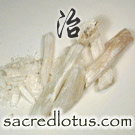 Shi Gao15-30 gDrain Fire
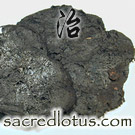 Shu Di Huang9-30 gTonify Blood
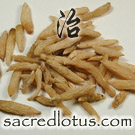 Mai Men Dong6-9 gTonify Yin
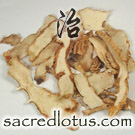 Zhi Mu3-6 gDrain Fire
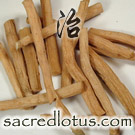 Huai Niu Xi3-6 gInvigorate Blood and Remove Stagnation
Preparation & dosage
How is Yu Nu Jian prepared?
Yu Nu Jian ("Jade Woman Decoction") is prepared as a water decoction (tang) of Shi Gao, Shu Di Huang, Zhi Mu, Mai Men Dong and Huai Niu Xi, taken for Stomach heat with Kidney-yin deficiency (toothache, bleeding gums, thirst).
Shi Gao (gypsum, a mineral) is broken up and cooked first / longer to release its heat-clearing action, after which the yin tonics are added. Huai Niu Xi guides the heat (and any bleeding) downward. Available as granules.
Source: Sacred Lotus sources & references (composition and preparation note) + Bensky & Barolet, Formulas & Strategies.
Decoction; Shi Gao cooked first. Typical: Shi Gao 15-30 g, Shu Di Huang 9-30 g, Mai Men Dong 6-9 g, Zhi Mu and Huai Niu Xi 3-6 g each.
Safety — read before use
What are the cautions for Yu Nu Jian?
Yu Nu Jian is cold and enriching, so it is contraindicated where the toothache or gum problem stems from cold or from deficiency without heat. The chief herb Shi Gao is strongly cold and can injure a weak digestion.
- No true heat — not for wind-cold or deficiency-cold toothache, nor for gum problems lacking Stomach-heat signs.
- Weak Spleen/Stomach — the cold, rich ingredients can cause loose stools or reduced appetite; use with caution or modification when digestion is weak.
- Preparation — Shi Gao is cooked first (longer) to draw out its heat-clearing action.
Source: Bensky & Barolet, Formulas & Strategies (cautions). Not medical advice; consult a qualified practitioner.
Originally Appeared In:
- Collected Treatises of Jing Yue (Jing Yue Quan Shu)
Notes:
How does Yu Nu Jian compare to other formulas, and how is it modified?
Yu Nu Jian is distinguished from Qing Wei San by the presence of yin deficiency. Both cool Stomach heat and treat toothache and gum problems, but Qing Wei San addresses a purely excess Stomach and blood heat (often with damp-heat), while Yu Nu Jian is chosen when that Stomach fire sits on a deficient Stomach/Kidney yin, shown by a dry red tongue and thirst.
Common comparisons and modifications:
- vs Qing Wei San — Qing Wei San for excess Stomach/blood heat; Yu Nu Jian for Stomach heat with yin deficiency.
- Greater heat, less yin damage — Sheng Di Huang may be substituted for Shu Di Huang to emphasize clearing heat and cooling the blood.
- Marked bleeding or heat — the Sacred Lotus diagnosis corpus notes adding Mu Dan Pi, Bai Mao Gen, and Lu Gen (fresh preferred) for Stomach-fire uprising, and pairs the modified formula ("Jia Wei Yu Nu Jian") with moxa at KI-1 to lead heat downward.
Sources: Bensky & Barolet, Formulas & Strategies (comparisons); Sacred Lotus diagnosis content, "Menses-Associated Symptoms" (Stomach Fire Uprising). Traditional-use framing; not medical advice.
Clinical Studies & Research:
Is there modern research on Yu Nu Jian?
The main clinical evidence is in periodontitis. A meta-analysis of 13 trials (1,179 patients) found modified Yunu-Jian added to conventional care improved overall efficacy (RR 1.17) and periodontal indices, though the pooled trials were low quality (no blinding or allocation concealment).
Sources: PMC 8093059; PubMed 27660650. Research context, not a claim.
Sources & References
Compiled and edited by Thomas Dehli, Founder & Editor, Sacred Lotus Updated
The information here is referenced from numerous sources — teachers, practitioners, class notes from Five Branches University, the books below, and the published research literature, with citations given as resolvable PubMed identifiers. Where sources disagree, I have flagged the discrepancies directly. If facts couldn't be verified, I have left them out. How we source our content.
Reference information for students and practitioners — not medical advice. Consult a qualified practitioner. Terms of use.
Chinese Formulas Books & References
 https://amzn.to/4fYI3f8
 https://amzn.to/4j55NRA
 https://amzn.to/4gMROyv
 https://amzn.to/4h7msSK