

Bai Tou Weng Tang Bái Tóu Wēng Tāng
Pulsatilla Decoction
- Category
- Formulas that Clear Heat
- Subcategory
- Formulas that Clear Heat from the Organs
- Ingredients
- 4 herbs
Actions
What does Bai Tou Weng Tang do?
Bai Tou Weng Tang (Pulsatilla Decoction) clears heat, resolves fire toxin, cools the blood, and stops dysentery. It is the classic Shang Han Lun formula for severe damp-heat/heat-toxin dysentery — a small, purely bitter-cold prescription with no qi-regulating or purgative herbs, built to attack heat toxin directly rather than to move stagnation.
The four ingredients divide by role:
- Chief: Bai Tou Weng (Radix Pulsatillae) clears heat toxin and cools the blood in the Large Intestine and Liver channels — traditionally regarded as the key herb for heat-toxin dysentery with blood in the stool.
- Deputies: Huang Lian (Rhizoma Coptidis) and Huang Bai (Cortex Phellodendri) drain fire, dry dampness, and resolve toxicity, reinforcing the chief’s heat-clearing action through the Stomach, Large Intestine, and lower burner.
- Assistant: Qin Pi (Cortex Fraxini) is bitter, cold, and astringent — it clears heat and dries dampness while its astringent quality helps secure the intestines and stop the dysentery.
Source: Sacred Lotus sources & references + Bensky & Barolet, Formulas & Strategies (chief/deputy/assistant analysis). Traditional-use framing; not medical advice.
Indications
What is Bai Tou Weng Tang used for?
Bai Tou Weng Tang treats damp-heat/heat-toxin dysentery — heat toxin scorching the Stomach and Intestines, injuring the blood vessels of the gut and causing the classic dysenteric triad of blood, pus, and tenesmus. First recorded in Zhang Zhongjing’s Shang Han Lun (Treatise on Cold Damage), it is reserved for the more severe, purely hot presentation rather than milder damp-heat with qi-and-blood stagnation.
Its classic clinical presentation:
- Dysenteric signs: abdominal pain, diarrhea with blood and pus in the stool, foul-smelling stool, and tenesmus (urgent, straining, incompletely relieved evacuation).
- Heat signs: a burning sensation around the anus, thirst with a desire to drink, and possible low fever.
Tongue and pulse: per the site’s formula record, a red tongue with a yellow coat and a wiry, rapid pulse — both consistent with heat toxin scorching the Intestines.
Source: Sacred Lotus sources & references on pattern/tongue/pulse + Bensky & Barolet, Formulas & Strategies. Traditional-use framing; not medical advice.
Western Uses:
What is Bai Tou Weng Tang used for in modern practice?
In modern practice Bai Tou Weng Tang is referenced for acute infectious-type diarrheal illness with blood and pus in the stool — historically applied to patterns resembling bacillary dysentery (Shigella) and amoebic dysentery, conditions Western medicine recognizes by bloody, mucoid stool with cramping and urgency.
These biomedical correlates describe the formula’s traditional use, not a claim that it treats any diagnosed disease. Contemporary research is preclinical, using mouse colitis models and network pharmacology to probe possible mechanisms (see research); it has not been studied in human clinical trials to our knowledge. Any use for a diagnosed condition, especially an acute infectious one, belongs with a qualified practitioner and appropriate medical care.
Source: traditional-use correlates summarized from Bensky & Barolet, Formulas & Strategies; reference only, not a treatment claim.
Ingredients
4 substances in Bai Tou Weng Tang — each links to its full herb monograph.
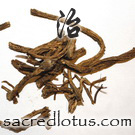 Bai Tou Weng6 gClear Heat and Eliminate Toxins
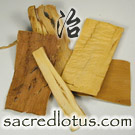 Huang Bai9 gClear Heat and Dry Dampness
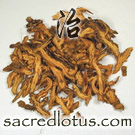 Huang Lian9 gClear Heat and Dry Dampness
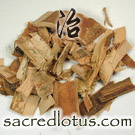 Qin Pi9 gClear Heat and Dry Dampness
Preparation & dosage
How is Bai Tou Weng Tang prepared?
Bai Tou Weng Tang is prepared as a water decoction of its four herbs, taken warm in divided doses. In the original Shang Han Lun method the herbs are decocted together, the liquid reduced and strained, and the dose taken in two portions; if the dysentery is not resolved after the first dose, the remaining decoction is taken.
Source: Bensky & Barolet, Formulas & Strategies (classic preparation method). Reference only, not a treatment protocol.
Decoction. Reference amounts per the site’s formula record: Bai Tou Weng 6 g; Huang Lian, Huang Bai, Qin Pi 9 g each. Taken warm, traditionally in two divided doses. Reference only; not a prescribing recommendation.
Safety — read before use
What are the cautions for Bai Tou Weng Tang?
Bai Tou Weng Tang is an intensely bitter, cold formula meant for heat-toxin dysentery, so it is contraindicated in cold-type or deficient diarrhea and dysentery. Where stools are watery rather than bloody, or accompanied by cold limbs, aversion to cold, and a weak pulse (Spleen/Stomach yang deficiency or cold-damp), this formula is the wrong tool and can worsen the underlying cold.
- Not for chronic or deficient dysentery: the formula’s four herbs are all bitter and cold with no tonifying action; prolonged or inappropriate use can injure Spleen and Stomach yang.
- Pregnancy and general debility: because of its strongly cold, purging-by-clearing nature, use during pregnancy or in weak/depleted patients should be guided by a qualified practitioner — the classic modification adding Zhi Gan Cao and E Jiao (see notes) exists specifically to protect blood-deficient patients.
- Acute bloody or infectious diarrhea warrants prompt evaluation by a qualified practitioner; this formula is traditional-use reference, not a substitute for medical care.
Source: Bensky & Barolet, Formulas & Strategies (cautions for bitter-cold, heat-toxin-clearing formulas). Traditional-use framing; not medical advice.
Originally Appeared In:
- On Cold Damage (Shang Han Lun)
Notes:
How is Bai Tou Weng Tang different from Shao Yao Tang and Ge Gen Huang Qin Huang Lian Tang?
Bai Tou Weng Tang is reserved for more severe, purely heat-toxin dysentery with blood, whereas the other classic dysentery formulas address related but distinct patterns. Choosing between them depends on how much qi-and-blood stagnation, pain, and exterior involvement is present alongside the heat.
- vs Shao Yao Tang (Peony Decoction): Shao Yao Tang treats damp-heat dysentery with more prominent qi-and-blood stagnation — marked abdominal pain and tenesmus — and includes blood-invigorating and qi-regulating herbs (Bai Shao, Dang Gui, Mu Xiang, Bing Lang) plus a small purgative (Da Huang) following the classic principle “to treat dysentery, regulate the qi and blood.” Bai Tou Weng Tang has no such herbs; it is a purer heat-toxin-clearing formula for more severe blood-in-the-stool presentations.
- vs Ge Gen Huang Qin Huang Lian Tang (Kudzu, Scutellaria & Coptis Decoction): that formula addresses diarrhea/dysentery from heat trapped internally after improper treatment of an exterior condition, with residual fever and sweating — an exterior-interior heat pattern. Bai Tou Weng Tang has no exterior component; it is used for heat toxin already deep in the Intestines.
Key modification: the classic variant Bai Tou Weng Jia Gan Cao E Jiao Tang (Jin Gui Yao Lue) adds Zhi Gan Cao and E Jiao to the base formula for dysentery occurring in a blood-deficient patient (classically postpartum) — protecting blood and yin while the four bitter-cold herbs still clear the heat toxin.
Source: Bensky & Barolet, Formulas & Strategies (formula comparisons and the Jin Gui Yao Lue modification) + Sacred Lotus sources & references on pattern for Shao Yao Tang.
Clinical Studies & Research:
Is there modern research on Bai Tou Weng Tang?
Yes, but it is preclinical — mouse colitis models and network pharmacology rather than human clinical trials. Most recent work uses the formula (often called Baitouweng Tang/decoction in the literature) in dextran-sulfate-sodium (DSS) induced ulcerative colitis models to probe possible immune and barrier-repair mechanisms; a search of PubMed/PMC did not surface completed randomized clinical trials, so clinical-trial evidence should be treated as currently absent rather than assumed.
- Immunomodulation (preclinical): in DSS-colitis mice, absorbed compounds (including anemoside A3, palmatine, and aesculin) bound therapeutic targets such as STAT3, JAK3, S1PR1, PD-1, and PD-L1 in molecular docking, and treatment reduced TNF-α and IL-6 while suppressing STAT3 activation (PMID 36434688; PMC 9701001).
- Gut-barrier mechanism (preclinical): in DSS-colitis mice, the formula promoted DOPA decarboxylase (DDC) activity, shifting tryptophan metabolism toward indole metabolites that activate the aryl hydrocarbon receptor (AhR)/IL-22 pathway and strengthen intestinal barrier function (PMID 38974042; PMC 11224817).
- TLR4/NF-κB pathway (preclinical): network pharmacology combined with a DSS mouse model found the formula reduced disease activity and colon shortening, lowered IL-6 and TNF-α, raised IL-10, and suppressed TLR4/NF-κB signaling (PMID 41736428).
Sources: PubMed 36434688 / PMC 9701001; PubMed 38974042 / PMC 11224817; PubMed 41736428. Research context, not a therapeutic claim; evidence is preclinical and clinical-trial data appears limited or absent.
Sources & References
Compiled and edited by Thomas Dehli, Founder & Editor, Sacred Lotus Updated
The information here is referenced from numerous sources — teachers, practitioners, class notes from Five Branches University, the books below, and the published research literature, with citations given as resolvable PubMed identifiers. Where sources disagree, I have flagged the discrepancies directly. If facts couldn't be verified, I have left them out. How we source our content.
Reference information for students and practitioners — not medical advice. Consult a qualified practitioner. Terms of use.
Chinese Formulas Books & References
 https://amzn.to/4fYI3f8
 https://amzn.to/4j55NRA
 https://amzn.to/4gMROyv
 https://amzn.to/4h7msSK