
Ma Xing Shi Gan Tang
Ephedra, Apricot Kernel, Gypsum, and Licorice Decoction
- Category
- Formulas that Clear Heat
- Subcategory
- Formulas that Clear Heat from the Organs
- Ingredients
- 4 herbs
Actions
What does Ma Xing Shi Gan Tang do?
Ma Xing Shi Gan Tang clears heat that has become trapped in the Lung and diffuses/descends Lung qi to relieve cough, wheezing, and panting. Its four ingredients are built around a chief pair — Ma Huang and Shi Gao — whose combined nature is acrid and cooling, not warming, because the large dose of cold Shi Gao offsets Ma Huang’s warmth.
The four ingredients divide by role:
- Co-chiefs: Ma Huang opens and diffuses Lung qi to stop wheezing and vents any residual exterior constraint; Shi Gao, used in a notably larger amount than Ma Huang, clears heat from the Lung and Stomach and restrains Ma Huang’s warm, dispersing tendency so the pair acts as a whole to vent heat rather than to warm.
- Deputy: Xing Ren directs rebellious Lung qi downward and moistens the Lung, complementing Ma Huang’s upward, opening action — one herb ascends, one descends, together restoring the Lung’s normal qi movement and stopping cough and wheeze.
- Envoy: honey-fried Gan Cao harmonizes the acrid-cold combination, protects Stomach qi from Shi Gao’s coldness, and moderates Ma Huang’s dispersing action.
Source: Sacred Lotus sources & references (composition) cross-referenced against multiple online sources; Bensky & Barolet, Formulas & Strategies (chief/deputy/envoy analysis). Traditional-use framing; not medical advice.
Indications
What is Ma Xing Shi Gan Tang used for?
Ma Xing Shi Gan Tang treats heat trapped in the Lung, with or without a lingering external wind-heat component — a pattern the Shang Han Lun describes arising after improper treatment (over-sweating, or premature purgation) allowed cold to transform into interior heat while some surface involvement can still remain.
Its classic clinical presentation:
- Respiratory signs: cough, wheezing, or panting, often with thick or yellow sputum.
- Fever: fever that may or may not be accompanied by sweating — a distinguishing point in the original text, which specifies the formula for cases “with or without sweating.”
- Heat signs: thirst, a sensation of heat, and irritability consistent with heat lodged in the Lung.
- No marked exterior pattern: chills are minimal or absent by this stage, distinguishing it from a formula still primarily releasing the exterior.
Tongue and pulse: red tip with a thin yellow or white coat; a pulse that is rapid, slippery, and floating if an external component is still present.
Source: Sacred Lotus sources & references (pattern/tongue/pulse) cross-referenced against multiple online sources; Shang Han Lun (Treatise on Cold Damage); Bensky & Barolet, Formulas & Strategies. Traditional-use framing; not medical advice.
Western Uses:
What conditions is Ma Xing Shi Gan Tang used for in modern practice?
Ma Xing Shi Gan Tang clears heat trapped in the Lungs (cough/wheeze with fever and thick sputum), so it is referenced for febrile respiratory conditions: upper respiratory tract infections, lobar and bronchial pneumonia, bronchial asthma, measles pneumonitis, bronchiolitis, whooping cough (pertussis), and diphtheria.
It is chosen for the Lung-heat pattern, not for a diagnosis. Pneumonia, diphtheria, whooping cough, and measles complications are serious — several are vaccine-preventable and some are medical emergencies — and require prompt medical care; a severe asthma attack is life-threatening. This formula appears in integrative practice alongside, not instead of, that care. Traditional-use correlates only, not a treatment claim.
Source: Sacred Lotus sources & references (pattern) + Bensky & Barolet, Formulas & Strategies; biomedical correlates as reference only. Not medical advice.
Ingredients
4 substances in Ma Xing Shi Gan Tang — each links to its full herb monograph.
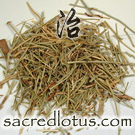 Ma Huang12 gWarm, Spicy Herbs that Release the Exterior
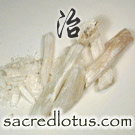 Shi Gao48 gDrain Fire
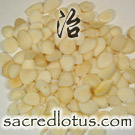 Xing Ren18 g50 piecesRelieve Coughing and Wheezing
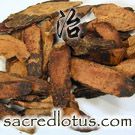 Zhi Gan Cao6 gTonify Qi
Preparation & dosage
How is Ma Xing Shi Gan Tang prepared?
Ma Xing Shi Gan Tang is prepared as a water decoction and taken warm. In the classical Shang Han Lun method, Ma Huang is decocted first and any foam skimmed from the surface before the remaining herbs are added, a step traditionally used to reduce its harshness; Shi Gao, a mineral, is typically broken into smaller pieces to aid extraction. Modern practice sometimes decocts all four herbs together, adjusted for convenience.
Source: Shang Han Lun (Treatise on Cold Damage) classical decoction method; cross-referenced against multiple online sources.
Safety — read before use
What are the cautions for Ma Xing Shi Gan Tang?
Ma Xing Shi Gan Tang contains Ma Huang (Ephedra), an herb whose ephedrine-type alkaloids make it a controlled or restricted substance in a number of jurisdictions — for example, ephedra-containing dietary supplements have been banned in the United States since 2004 — and it should only be used under the guidance of a qualified practitioner, never self-administered or combined with stimulant medications.
- Cardiovascular and other conditions: Ma Huang is generally avoided or used only with great caution in hypertension, cardiac arrhythmia, hyperthyroidism, and anxiety disorders, given its stimulant cardiovascular effects.
- Not for cold patterns: unsuitable for a purely cold exterior pattern without heat — the formula’s large dose of cold Shi Gao would aggravate a true cold condition.
- Not for qi/yang deficiency with spontaneous sweating: avoid where sweating already reflects underlying deficiency rather than pathogenic heat, since Ma Huang’s dispersing action can further deplete qi and fluids.
- Spleen-Stomach cold: use cautiously in patients with underlying Spleen-Stomach yang deficiency or cold-type diarrhea, given Shi Gao’s cold nature.
Source: Bensky & Barolet, Formulas & Strategies, and Chen & Chen, Chinese Medical Herbology and Pharmacology (Ma Huang/Ephedra safety profile and formula cautions); cross-referenced against multiple online sources. Neutral public-safety reference; not administration guidance.
Originally Appeared In:
- On Cold Damage (Shang Han Lun)
Notes:
How does Ma Xing Shi Gan Tang differ from related formulas?
Ma Xing Shi Gan Tang is a purely heat-clearing, Lung-diffusing formula — it carries no warming exterior-release herb, which is exactly what sets it apart from its closest relatives.
- vs Ma Huang Tang: as above — Gui Zhi versus Shi Gao is the defining swap; Ma Huang Tang warms and releases a cold exterior with no sweating, Ma Xing Shi Gan Tang clears Lung heat with or without sweating.
- vs Da Qing Long Tang: this formula combines Ma Huang Tang’s full exterior-releasing action (including Gui Zhi) with a smaller dose of Shi Gao, treating a strong wind-cold exterior with no sweating alongside interior heat and restlessness; Ma Xing Shi Gan Tang has no Gui Zhi and is used once the exterior is minimal and Lung heat wheezing predominates, without needing a vigorous sweat.
- vs Ding Chuan Tang: Ding Chuan Tang also uses Ma Huang for wheezing but adds Bai Guo and several phlegm-transforming herbs for wheezing complicated by phlegm accumulation; Ma Xing Shi Gan Tang is comparatively simple and purely heat-clearing.
Classical source: from the Shang Han Lun (Treatise on Cold Damage), Zhang Zhongjing, where it appears twice — after improper sweating and after improper purgation — both times for “fever and panting, without great [exterior] heat,” a phrase classically understood as the absence of a pronounced exterior fever pattern rather than an absence of heat altogether, since heat has by then relocated to the Lung.
Source: Shang Han Lun (Treatise on Cold Damage); Bensky & Barolet, Formulas & Strategies (formula comparisons); cross-referenced against multiple online sources. Traditional-use framing; not medical advice.
Clinical Studies & Research:
Is there modern research on Ma Xing Shi Gan Tang?
Yes — a substantial body of preclinical work explores antiviral, antibacterial, and anti-inflammatory mechanisms relevant to its traditional use for Lung-heat cough and wheeze, alongside some clinical use in respiratory disease. Much of the mechanistic evidence comes from cell and animal models rather than large randomized trials of the formula itself.
- Influenza entry inhibition: the decoction blocked influenza A virus attachment and penetration into host cells in vitro (EC50 0.83 ± 0.41 mg/mL against H1N1; attachment IC50 0.58 ± 0.07 mg/mL, penetration IC50 0.47 ± 0.08 mg/mL), with broad-spectrum activity including oseltamivir-resistant strains, via disruption of the viral envelope and suppression of PI3K/AKT signaling (PMID 22710290, Journal of Ethnopharmacology, 2012).
- Pneumococcal virulence: the formula inhibited oligomerization of pneumolysin, a key toxin of Streptococcus pneumoniae, protecting human lung cells from toxin-mediated damage and improving outcomes in infected mice, without directly killing the bacteria (PMID 33892068, Journal of Ethnopharmacology, 2021).
- Acute lung injury (rat model): post-treatment after LPS challenge reduced lung microvessel hyperpermeability, leukocyte adhesion, and inflammatory signaling (ICAM-1, TLR4, NF-κB), and improved survival (PMID 24809727, Microcirculation, 2014).
- Clinical case series (chronic bronchitis): a modified combination with Er Chen Tang was reported in a small clinical series for chronic bronchitis (PMID 15119160, Journal of Traditional Chinese Medicine, 2004).
Sources: PubMed 22710290; PubMed 33892068; PubMed 24809727; PubMed 15119160. Research context, not a therapeutic claim; robust randomized clinical trial evidence for the formula itself remains limited.
Sources & References
Compiled and edited by Thomas Dehli, Founder & Editor, Sacred Lotus Updated
The information here is referenced from numerous sources — teachers, practitioners, class notes from Five Branches University, the books below, and the published research literature, with citations given as resolvable PubMed identifiers. Where sources disagree, I have flagged the discrepancies directly. If facts couldn't be verified, I have left them out. How we source our content.
Reference information for students and practitioners — not medical advice. Consult a qualified practitioner. Terms of use.
Chinese Formulas Books & References
 https://amzn.to/4fYI3f8
 https://amzn.to/4j55NRA
 https://amzn.to/4gMROyv
 https://amzn.to/4h7msSK