
Yin Qiao Ma Bo San
Honeysuckle, Forsythia, and Puffball Powder
- Category
- Formulas that Clear Heat
- Subcategory
- Formulas that Clear Heat from the Organs
- Ingredients
- 6 herbs
Actions
What does Yin Qiao Ma Bo San do?
Yin Qiao Ma Bo San clears heat, resolves toxin, and specifically disinhibits (opens and soothes) the throat. It is a Wen Bing Tiao Bian formula built around the "Yin Qiao" heat-toxin pair plus Ma Bo (puffball), the herb that gives the formula its name and its throat-directed focus.
Roles by dose and function (Sacred Lotus does not flag chief/deputy/assistant/envoy; derived here using the standard analytical convention against our own composition, amounts, and channel/property data):
- Chief: Jin Yin Hua and Lian Qiao (highest single dose in the formula, 30 g) — sweet/bitter and cold, they clear heat and resolve toxin at the root of the pattern.
- Deputies: Niu Bang Zi and She Gan — spicy-bitter and cold, they disperse wind-heat and cut directly through the swelling, phlegm, and pain in the throat.
- Assistant: Ma Bo — light and floating, it targets the throat specifically, clearing Lung heat and reducing swelling and hoarseness.
- Envoy: Lu Gen — sweet and cold; in the original method it is decocted as the cooking liquid for the other herbs, generating fluids and moderating the formula’s bitter-cold intensity so it does not injure fluids.
Source: Sacred Lotus sources & references + Wen Bing Tiao Bian (original composition/method) + standard chief/deputy/assistant/envoy analytical convention (cf. Bensky & Barolet, Formulas & Strategies). Traditional-use framing; not medical advice.
Indications
What is Yin Qiao Ma Bo San used for?
Yin Qiao Ma Bo San treats warm-toxin blocking the throat — in the Wen Bing Tiao Bian it is described as a damp-warmth pattern with throat obstruction and sore throat (湿淹喝阻咙痛), presenting with fever, thirst, a painful throat, and difficulty swallowing.
- Core presentation: fever, thirst, red and swollen/painful throat, a sensation of obstruction when swallowing.
- Pulse: floating, per the original source text.
Discrepancy: several English-language formula references summarize the pattern more generally as "wind-heat toxin" with swollen, painful throat, rather than the primary text’s more specific damp-warmth framing. Both point to the same clinical picture (an acute warm/toxic attack lodging in the throat); the difference looks like a simplification in secondary sources rather than a real conflict, so both framings are kept.
Source: Wen Bing Tiao Bian (primary pattern, symptoms, pulse) cross-checked against English-language formula references. Traditional-use framing; not medical advice.
Western Uses:
What is Yin Qiao Ma Bo San used for in modern practice?
In modern Chinese clinical practice, Yin Qiao Ma Bo San is referenced for acute tonsillitis, throat-origin (laryngogenic) cough, and the mouth/throat sores of hand-foot-mouth disease — conditions that share its traditional throat-toxin presentation. English-language formula references similarly describe its traditional scope as covering pyogenic (pus-forming) throat infection, Vincent’s angina (a severe ulcerative throat/gum infection), and scarlet fever.
These are offered as a reference to the formula’s traditional use, not as a claim that it treats any diagnosed disease. Direct clinical-trial evidence on this specific formula was not found (see research); any use for a diagnosed throat condition belongs with a qualified practitioner and appropriate medical care.
Source: modern Chinese clinical-use literature on Yin Qiao Ma Bo San + English-language formula references (biomedical correlates). Reference only, not a treatment claim.
Ingredients
6 substances in Yin Qiao Ma Bo San — each links to its full herb monograph.
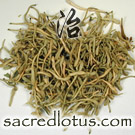 Jin Yin Hua15 gClear Heat and Eliminate Toxins
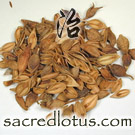 Lian Qiao30 gClear Heat and Eliminate Toxins
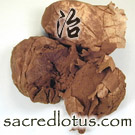 Ma Bo9 gClear Heat and Eliminate Toxins
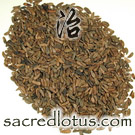 Niu Bang Zi18 gCool, Spicy Herbs that Release the Exterior
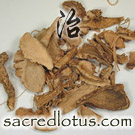 She Gan9 gClear Heat and Eliminate Toxins
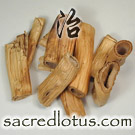 Lu Gen18 gDrain Fire
Preparation & dosage
How is Yin Qiao Ma Bo San prepared?
Classically, the herbs are ground into a coarse powder and taken as roughly 18 g per dose, decocted briefly in a broth made from fresh Lu Gen (reed rhizome). The original instruction is to remove the decoction from heat as soon as its aroma becomes strong, and not to overcook it — standard guidance for heat-clearing formulas whose activity depends partly on the herbs’ more volatile constituents.
In current practice the formula is more often prepared as a standard decoction with Lu Gen included as a regular ingredient (as reflected in our own per-herb amounts) rather than strictly as a powder cooked only in reed-rhizome broth.
Source: Wen Bing Tiao Bian (original preparation method) + Sacred Lotus sources & references.
Traditionally a powder (san), roughly 18 g per dose decocted briefly in fresh Lu Gen broth; commonly prepared today as a standard decoction. Reference relative amounts: Lian Qiao 30 g; Niu Bang Zi 18 g; Lu Gen 18 g (originally the decocting liquid); Jin Yin Hua 15 g; She Gan 9 g; Ma Bo 6-9 g depending on edition (see cautions re: dosage range). Reference only.
Safety — read before use
What are the cautions for Yin Qiao Ma Bo San?
Yin Qiao Ma Bo San is built from bitter, cold, heat-clearing herbs, so it is not appropriate for cold patterns, true exterior deficiency, or a weak/cold digestion. Several of its component herbs carry their own individual cautions that apply within the formula.
- Spleen deficiency with loose stools: She Gan’s bitter, cold nature can further weaken Spleen yang and worsen diarrhea; avoid or use cautiously in this presentation.
- Pregnancy: She Gan is classically cautioned against in pregnancy (blood-moving action); Ma Bo is also generally used with caution in pregnancy and while nursing.
- Not for long-term use: bitter, cold, toxin-resolving herbs like She Gan are traditionally used for short courses at standard dosage, not as ongoing tonics.
- Ma Bo powder/spore dust: inhaling the fine spore powder can irritate the airway; use standard prepared decoction pieces rather than loose powder where possible.
Discrepancy: our formula dose for Ma Bo is 9 g, while general single-herb dosage guides commonly cite a lower typical range (roughly 1–4 g, or up to about 4.5 g in decoction). Classical editions of this formula vary between about 6 and 9 g of Ma Bo, so the higher formula-specific dose is kept, but it runs above the generic single-herb guidance and is worth a practitioner’s attention.
Source: individual-herb materia medica references for She Gan and Ma Bo, cross-checked against our formula dosing. Traditional-use framing; not medical advice.
Originally Appeared In:
- Systematic Differentiation of Warm Diseases (Wen Bing Tiao Bian)
Notes:
How is Yin Qiao Ma Bo San related to Yin Qiao San, and how is it modified?
Yin Qiao Ma Bo San shares its two lead herbs (Jin Yin Hua, Lian Qiao) with the better-known Yin Qiao San but is a distinct, more specialized formula — it drops Yin Qiao San’s exterior-releasing herbs (e.g., Bo He, Jing Jie) and instead adds She Gan, Niu Bang Zi, and Ma Bo to concentrate on clearing toxin and directly opening a blocked, painful throat, rather than releasing a wind-heat exterior more broadly.
- vs Yin Qiao San: choose Yin Qiao Ma Bo San when throat obstruction/pain dominates the picture over exterior wind-heat symptoms like headache and body aches.
- Classical modification (Wen Bing Tiao Bian): when the throat is obstructed but not painful, the source text adds Hua Shi, Jie Geng, and extra Lu Gen (Wei Gen) to favor draining damp and opening the throat over clearing toxin.
Source: Wen Bing Tiao Bian (formula relationship and classical modification).
Clinical Studies & Research:
Is there modern research on Yin Qiao Ma Bo San?
No clinical trials on this specific formula were found in PubMed; the available research is on its individual herbs, particularly the two lead ingredients. A 2020 systematic review of Lonicerae japonicae flos (Jin Yin Hua) documents anti-inflammatory activity (inhibiting nitric oxide, TNF-α, and IL-6), antibacterial effects, and antiviral activity against influenza A (H1N1) in laboratory studies, and notes its traditional use in combination formulas for cough, sore throat, and fever. A 2025 review of Belamcanda chinensis (She Gan) likewise documents a long history of use for throat ailments and modern evidence of anti-inflammatory, antibacterial, and antiviral activity, underlying several licensed Chinese patent medicines for sore throat.
- Jin Yin Hua (Lonicerae japonicae flos), preclinical/review: systematic review of ethnopharmacology and pharmacology, including anti-inflammatory and antiviral (influenza A) findings (PMID 32206048).
- She Gan (Belamcanda chinensis), preclinical/review: review of traditional throat use plus modern anti-inflammatory, antibacterial, and antiviral evidence (PMID 41375398).
- Related combination, clinical (different formula): a randomized controlled trial of a botanical lozenge containing Lonicera japonica (with Siraitia grosvenorii, Platycodon grandiflorus, and Glycyrrhiza uralensis — not this formula) improved pharyngeal symptom scores in chronic pharyngitis versus placebo (PMID 38549665 / PMC 10973001).
Sources: PubMed 32206048; PubMed 41375398; PubMed 38549665 / PMC 10973001. Research context on component herbs, not a therapeutic claim for this formula; direct trial evidence on Yin Qiao Ma Bo San itself remains unfound.
Sources & References
Compiled and edited by Thomas Dehli, Founder & Editor, Sacred Lotus Updated
The information here is referenced from numerous sources — teachers, practitioners, class notes from Five Branches University, the books below, and the published research literature, with citations given as resolvable PubMed identifiers. Where sources disagree, I have flagged the discrepancies directly. If facts couldn't be verified, I have left them out. How we source our content.
Reference information for students and practitioners — not medical advice. Consult a qualified practitioner. Terms of use.
Chinese Formulas Books & References
 https://amzn.to/4fYI3f8
 https://amzn.to/4j55NRA
 https://amzn.to/4gMROyv
 https://amzn.to/4h7msSK