
Long Dan Xie Gan Tang
Gentiana Longdancao Decoction to Drain the Liver
- Category
- Formulas that Clear Heat
- Subcategory
- Formulas that Clear Heat from the Organs
- Ingredients
- 10 herbs
Actions
What does Long Dan Xie Gan Tang do?
Long Dan Xie Gan Tang drains excess fire from the Liver and Gallbladder channels and clears damp-heat from the lower burner — a strongly bitter, cold formula built on a "drain-while-protecting" strategy: harsh heat-draining and damp-draining herbs are balanced by two blood/yin-nourishing herbs so the purge does not itself injure the patient.
The ten ingredients divide by function (roles per Bensky & Barolet):
- Chief: Long Dan Cao (Radix Gentianae Longdancao) — intensely bitter and cold; drains excess fire from the Liver and Gallbladder channels and clears damp-heat from the lower burner at the same time, the herb the formula is named for.
- Deputies: Huang Qin (Radix Scutellariae) and Zhi Zi (Fructus Gardeniae) — both bitter and cold, reinforcing Long Dan Cao's heat-draining action through the Triple Burner and directing heat downward and out via the urine.
- Assistants — damp-draining group: Ze Xie (Rhizoma Alismatis), Che Qian Zi (Semen Plantaginis), and Mu Tong — promote urination so that damp-heat in the lower burner (genital itching/discharge, painful urination) is flushed out through the urine.
- Assistants — protective group: Sheng Di Huang (Radix Rehmanniae) and Dang Gui (Radix Angelicae Sinensis) — nourish Blood and Yin to offset the drying, damaging effect of so many bitter, cold, draining herbs on the Liver's own yin-blood reserve — the "drain fire without damaging yin" logic that distinguishes this formula from a simple purgative.
- Assistant: Chai Hu (Radix Bupleuri) — enters the Liver and Gallbladder channels specifically and guides the other herbs there, while also lifting and moving stagnant Liver qi.
- Envoy: Gan Cao (Radix Glycyrrhizae) — harmonizes the formula and protects the Stomach from the harshness of the bitter, cold herbs.
Source: Sacred Lotus sources & references + Bensky & Barolet, Chinese Herbal Medicine: Formulas & Strategies (2nd ed.), chief/deputy/assistant/envoy analysis. Traditional-use framing; not medical advice.
Indications
What is Long Dan Xie Gan Tang used for?
Long Dan Xie Gan Tang treats two related but distinct symptom pictures — upward-flaring Liver/Gallbladder fire and downward-draining Liver-channel damp-heat — both traced to the same excess-fire root, since the Liver channel is said to encircle the genitals and pass through the flanks, ears, and eyes.
- Liver/Gallbladder fire flaring upward: red, painful, swollen eyes; sudden deafness or tinnitus with a sensation of blockage; migraine-type headache along the sides of the head; bitter taste in the mouth; irritability and a short temper; flank pain.
- Liver-channel damp-heat pouring downward: painful, burning, or turbid urination; genital itching, swelling, or sores; foul-smelling vaginal discharge (leukorrhea); scrotal swelling or eczema (damp-heat type "jock itch").
- Constitutional signs common to both: irritability, red face and eyes, dry mouth without much desire to drink, constipation, dark and scanty urine.
Tongue and pulse: red tongue with a greasy yellow coat; wiry, rapid, and forceful pulse (already on file, matching Bensky & Barolet's description of this pattern).
Source: Sacred Lotus sources & references on pattern/tongue/pulse + Bensky & Barolet, Chinese Herbal Medicine: Formulas & Strategies (2nd ed.). Traditional-use framing; not medical advice.
Western Uses:
What conditions is Long Dan Xie Gan Tang used for in modern practice?
Long Dan Xie Gan Tang drains Liver/Gallbladder excess fire and damp-heat pouring into the lower burner, so it is referenced across a wide band of heat-and-damp-heat conditions of the head, flanks, and genito-urinary region: migraine, intercostal neuralgia, gallstones, acute conjunctivitis, acute otitis media, boils/carbuncles of the ear canal, hypertension, acute jaundice-type (icteric) hepatitis, acute cholecystitis, herpes zoster and herpes simplex, acute pyelitis, cystitis, urethritis, acute pelvic inflammatory disease, acute prostatitis, scrotal eczema, swollen testes, and hyperthyroidism.
The thread is the Liver/GB fire and damp-heat pattern, not any one diagnosis. Several entries are urgent: acute cholecystitis is a potential surgical emergency, jaundice always needs assessment, a swollen painful testicle can be torsion (a same-hour emergency), and pelvic inflammatory disease and hypertension require medical care. Traditional-use correlates only, not a treatment claim.
Source: Sacred Lotus sources & references (pattern) + Bensky & Barolet, Formulas & Strategies; biomedical correlates as reference only. Not medical advice.
Ingredients
10 substances in Long Dan Xie Gan Tang — each links to its full herb monograph.
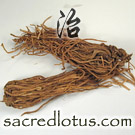 Long Dan Cao3-9 gClear Heat and Dry Dampness
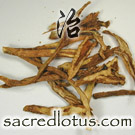 Huang Qin6-12 gClear Heat and Dry Dampness
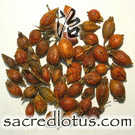 Zhi Zi6-12 gDrain Fire
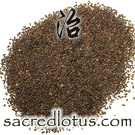 Che Qian Zi9-15 gRegulate Water and Drain Dampness
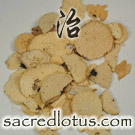 Chuan Mu Tong3-6 gRegulate Water and Drain Dampness
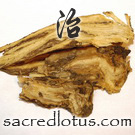 Dang Gui6-12 gTonify Blood
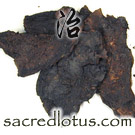 Sheng Di Huang9-15 gCool the Blood
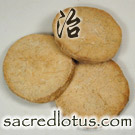 Ze Xie6-12 gRegulate Water and Drain Dampness
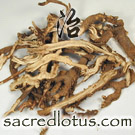 Chai Hu3-9 gCool, Spicy Herbs that Release the Exterior
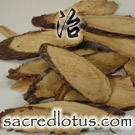 Gan Cao3-6 gTonify Qi
Preparation & dosage
How is Long Dan Xie Gan Tang prepared?
Long Dan Xie Gan Tang is traditionally taken as a water decoction, with the ten herbs cooked together in the standard manner; it is also produced commercially as a concentrated granule/powder extract and as ready-made pills (Long Dan Xie Gan Wan) for long-term convenience.
- Long Dan Cao and Zhi Zi are sometimes stir-fried (processed) to moderate their intense bitterness and coldness and reduce the risk of Stomach upset, particularly for patients with a sensitive digestion.
- Because the formula is so strongly bitter, cold, and draining, it is classically prescribed for a short, defined course while the excess-fire/damp-heat signs are active, then stopped or modified once the tongue coat, urination, and other acute signs normalize (see Cautions).
Source: Bensky & Barolet, Chinese Herbal Medicine: Formulas & Strategies (2nd ed.), preparation and processing notes for bitter-cold draining decoctions.
Safety — read before use
What are the cautions for Long Dan Xie Gan Tang?
Long Dan Xie Gan Tang is a harsh, strongly bitter and cold formula meant only for a real excess-heat pattern, taken for a short, defined course — it is not appropriate for Spleen/Stomach deficiency-cold, for Liver/Kidney yin deficiency without true excess fire, or as a long-term maintenance formula.
- Spleen/Stomach deficiency-cold: avoid or use only with caution and appropriate modification — the multiple bitter, cold herbs can easily aggravate poor appetite, loose stool, or cold limbs.
- Not for deficiency patterns: inappropriate for Liver/Kidney yin or blood deficiency presenting without genuine excess fire or damp-heat signs (e.g. deficiency-type dizziness, dry eyes, or low-grade heat without a red, greasy-coated tongue and forceful pulse) — the draining herbs would further deplete an already-deficient patient.
- Pregnancy: the strongly bitter, cold, and diuretic composition warrants caution in pregnancy; use only under qualified professional guidance.
- Short-course, excess-pattern-only design: classically not intended for extended, ongoing use — once acute fire/damp-heat signs resolve, the formula is typically stopped or modified rather than continued, given how depleting sustained bitter-cold draining can be.
Identity/safety reference — Mu Tong substitution: our database records this formula's Mu Tong ingredient as "Chuan Mu Tong," botanically Caulis Clematidis Armandii (Clematis armandii) — the non-toxic source plant. This is offered as neutral, factual context, not guidance: historically, some commercial preparations of Long Dan Xie Gan Tang/Wan — particularly outside mainland China, where the name "Mu Tong" has been applied to more than one botanical source — substituted Guan Mu Tong (Aristolochia manshuriensis), which contains aristolochic acid, a confirmed human carcinogen and nephrotoxin. This substitution is well documented as a cause of aristolochic acid nephropathy, including a case in which high-performance liquid chromatography/mass spectrometry confirmed aristolochic acid in a "Long Dan Xie Gan Wan" product, leading to its recall from the Australian market by the Therapeutic Goods Administration (PMID 21470089); broader population-based studies in Taiwan likewise found increased chronic kidney disease and kidney-failure risk associated with prescribed Chinese herbal products suspected of containing aristolochic acid via Mu Tong or Fangchi (PMID 19076288; PMID 20116155). This is reported purely as historical/public-safety reference regarding herb identity, not as advice about any specific product.
Source: Bensky & Barolet, Chinese Herbal Medicine: Formulas & Strategies (2nd ed.), cautions for bitter-cold draining formulas; Mu Tong identity/safety facts per PubMed 21470089, PubMed 19076288, PubMed 20116155, cross-checked against the Sacred Lotus formula record. Not a substitute for professional advice.
Originally Appeared In:
- Analytic Collection of Medicinal Formulas (Yi Fang Ji Jie)
Notes:
How does Long Dan Xie Gan Tang differ from other Liver-fire formulas?
Long Dan Xie Gan Tang is distinguished from related formulas by pairing its heat-draining action with dedicated urinary damp-drainage and a built-in blood/yin-protecting pair — features the plainer Liver-fire formulas below don't combine.
- vs Dang Gui Long Hui Wan (Tangkuei, Gentian, and Aloe Pill): an even more aggressive formula for severe, constitutional Liver/Gallbladder fire (including manic agitation), adding purgatives such as Da Huang and Lu Hui (aloe) to purge fire via the stool; reserved for more extreme excess than Long Dan Xie Gan Tang's damp-heat-with-fire presentation.
- vs Xiao Chai Hu Tang (Minor Bupleurum Decoction): shares Chai Hu but is a harmonizing formula for Shaoyang-stage disorder with mixed heat and deficiency, not a heat-draining formula — the two are not interchangeable despite the common herb.
- vs Zuo Jin Wan (Left Metal Pill): treats a milder Liver-fire-invading-Stomach pattern (acid reflux, epigastric pain) using only two herbs (Huang Lian and Wu Zhu Yu) and does not address lower-burner damp-heat or the eye/ear excess-fire presentation.
Classical source: commonly attributed to Yi Fang Ji Jie ("Analytic Collection of Medical Formulas," Wang Ang, Qing dynasty); versions of the formula under this name also appear in later formularies such as the Yi Zong Jin Jian ("Golden Mirror of Medicine"), with some variation in the exact herb list and dosages between sources.
Source: Bensky & Barolet, Chinese Herbal Medicine: Formulas & Strategies (2nd ed.), comparison and classical-source notes. Reference only.
Clinical Studies & Research:
Is there modern research on Long Dan Xie Gan Tang?
Yes — recent pharmacological studies in animal models have investigated its traditional hepatoprotective use, focused on metabolic and drug-induced liver injury rather than any single indication.
- Insulin resistance and liver injury: in rats, Longdan Xiegan Tang attenuated liver injury and hepatic insulin resistance, an effect linked to regulation of the ACE2/Ang-(1–7)/Mas axis and its downstream anti-inflammatory signaling (PMID 33781876, J Ethnopharmacol 2021).
- Antipsychotic-induced fatty liver: a modified version of the formula, given chronically to rats, reduced olanzapine-induced fatty liver by regulating hepatic de novo lipogenesis and fatty-acid beta-oxidation gene expression (SREBP-1c, PPAR-alpha, AMPK-alpha pathways) (PMID 30590197, J Ethnopharmacol 2019).
These are preclinical (animal-model) mechanistic studies, not clinical trials in patients, and are offered as research context on the formula's traditional hepatoprotective reputation — not as evidence of effectiveness for any diagnosed liver condition.
Sources: PubMed 33781876; PubMed 30590197. Research context, not a therapeutic claim; any liver condition warrants professional medical evaluation.
Sources & References
Compiled and edited by Thomas Dehli, Founder & Editor, Sacred Lotus Updated
The information here is referenced from numerous sources — teachers, practitioners, class notes from Five Branches University, the books below, and the published research literature, with citations given as resolvable PubMed identifiers. Where sources disagree, I have flagged the discrepancies directly. If facts couldn't be verified, I have left them out. How we source our content.
Reference information for students and practitioners — not medical advice. Consult a qualified practitioner. Terms of use.
Chinese Formulas Books & References
 https://amzn.to/4fYI3f8
 https://amzn.to/4j55NRA
 https://amzn.to/4gMROyv
 https://amzn.to/4h7msSK