
Semen Plantaginis Plantago Seed, Plantain Seed
Also known as Che Qian Ren
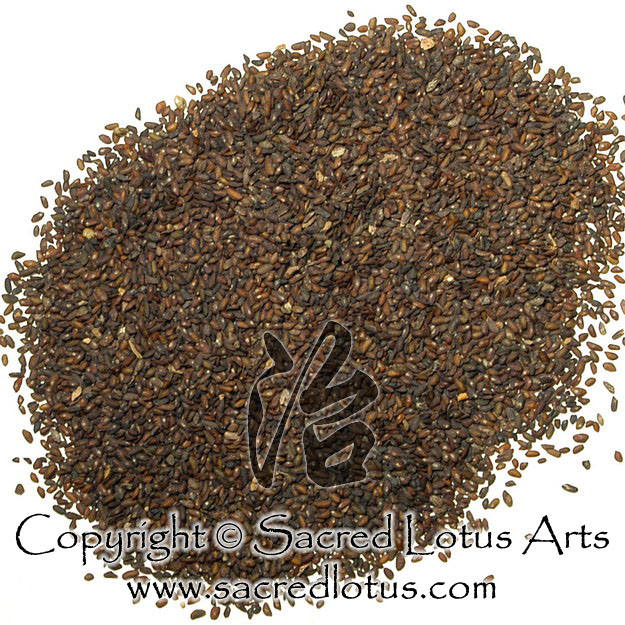
Materia Medica Data
- Temperature
- Cold
- Nature & Flavour
- Sweet, Cold
- Channels Entered
- KI, BL, LIV, LU
- Latin (pharmaceutical)
- Semen Plantaginis
- Chinese
- 车前子
- Tone Marks
- chē qián zĭ
- Also Known As
- Che Qian Ren
- Translation
- Before the Cart Seeds, Seed in Front of the Cart
Chinese Herb Actions
What is Che Qian Zi used for in Chinese medicine?
Che Qian Zi (Plantago Seed/Plantain Seed, Semen Plantaginis) is a sweet, cold herb entering the Kidney, Bladder, Liver, and Lung channels, traditionally used to promote urination and drain dampness, clear damp-heat, brighten the eyes, and expel phlegm from the Lung. Its alternate name Che Qian Ren and the translation “Before the Cart Seeds” refer to the plant growing along cart-worn roadside paths.
Its main traditional actions:
- Promotes urination and drains dampness — painful, difficult, or dribbling urination (Lin syndrome) and edema, by draining excess fluid and damp downward through the urine.
- Clears damp-heat — damp-heat in the Bladder or Liver channel presenting as turbid, burning urination or damp-heat vaginal discharge (leukorrhea).
- Clears the Liver and brightens the eyes — red, swollen, painful eyes from Liver heat, and (in yin/jing-deficiency presentations) blurred vision or reduced visual acuity when combined with Liver- and Kidney-nourishing herbs.
- Expels phlegm from the Lung and stops cough — cough with copious or heat-type phlegm.
Source: Sacred Lotus sources & references, cross-referenced against multiple online sources (materia medica consensus).
Chinese Herb Dosage
What is the typical dosage of Che Qian Zi, and why is it wrapped before decocting?
Commonly 9–15 g in decoction, classically decocted wrapped in cloth (包爋, bāo jiān). Che Qian Zi is a very small, mucilaginous seed — once wet, it releases a gummy mucilage that can make the strained decoction cloudy, stick to the bottom of the pot, or slip through a standard strainer. Wrapping the seeds in a cloth or gauze bag before adding them to the pot keeps them contained while the water still extracts their active constituents, giving a clean, properly strained decoction.
Source: Sacred Lotus sources & references, cross-referenced against multiple online sources (standard materia medica ranges and preparation notes). Reference only — not a prescription.
Chinese Herb Contraindications & Cautions
Are there cautions for Che Qian Zi?
Che Qian Zi is cold and draining by nature, so it is traditionally used cautiously, or avoided, in Kidney-yang deficiency presentations without damp-heat (e.g. cold-type spermatorrhea or frequent urination), and in patients with loose stools or diarrhea from Spleen deficiency — a cold, diuretic herb can aggravate both a cold-deficient Kidney picture and a weak, damp-prone Spleen.
Source: Sacred Lotus sources & references, cross-referenced against multiple online sources (materia medica cautions).
Chinese Herb Toxicity & Overdose
Low. Che Qian Zi is a food-grade seed with a long history of dietary and medicinal use, and no significant intrinsic toxicity is reported at normal therapeutic doses.
Source: materia medica consensus; no toxicity signal identified in the pharmacology research reviewed below.
Herb-Drug Interactions
No well-established clinical herb–drug interactions are documented for Che Qian Zi. Given its diuretic action, routine practitioner awareness is reasonable for patients on conventional diuretics or lithium (whose excretion can be affected by changes in urine output) — this is precautionary, not a demonstrated clinical interaction. (Flagged for practitioner confirmation.)
Western / Biomedical Research
Chinese Herb Clinical Studies & Research
Provided as research context — a summary of published biomedical study, not a therapeutic or medical claim.
Is there modern research on Che Qian Zi (Semen Plantaginis)?
Yes — animal-model research reports kidney-protective and urate-lowering effects consistent with Che Qian Zi’s traditional urination-promoting, damp-heat-clearing use, though rigorous human clinical trials specific to the seed are limited.
- Hyperuricemia (animal model) — Plantaginis Semen extract reduced serum uric acid and reversed kidney tissue injury in a potassium-oxonate-induced hyperuricemia rat model, associated with reduced xanthine oxidase activity and lower inflammatory markers; the study identified dozens of chemical constituents in the extract, several of which were detected in serum after treatment. This is a plausible modern parallel to the traditional "drains damp-heat via urination" action, though it is animal-model evidence, not a human clinical result.
- Diabetic kidney disease (animal model) — Plantaginis Semen improved markers of diabetic kidney disease in an animal model, associated with effects on the sphingosine kinase 1/sphingosine-1-phosphate signaling pathway, a mechanism relevant to kidney inflammation and fibrosis.
Overall, the available research is preclinical (animal-model) and supports a kidney-protective, urate- and damp-heat-clearing pharmacological rationale, but controlled human trials specific to Che Qian Zi were not identified.
Sources: PMID 39126116 (Plantaginis Semen and potassium-oxonate-induced hyperuricemia, Int J Mol Sci 2024); PMID 38677576 (Plantaginis Semen and diabetic kidney disease via the sphingosine kinase 1/S1P pathway, J Ethnopharmacol 2024). Research context, not a therapeutic claim.
Chinese Herb Notes
How is Che Qian Zi (the seed) different from Che Qian Cao (the whole plant)? What does it combine with?
Che Qian Zi is specifically the seed of the plantain plant, while Che Qian Cao is the whole aerial herb (leaf and stem, sometimes with root) — they share a damp-heat-clearing, diuretic character but are used somewhat differently. Che Qian Zi’s small, mucilaginous seeds are what require the special wrapped-decoction step above; Che Qian Cao, being leaf and stem, is decocted normally like any other herb.
- Che Qian Zi (seed) — the seed's traditional emphasis is on promoting urination, clearing Bladder/Liver damp-heat, brightening the eyes, and expelling Lung phlegm; this is the form used in classical eye and urinary formulas discussed below.
- Che Qian Cao (whole herb) — the leaf/stem shares the diuretic, damp-heat-clearing action but is traditionally also used more broadly for heat-toxin conditions such as damp-heat dysentery and sores, including topical use, reflecting the wider range typical of an aerial-parts herb versus a seed.
Note for Western readers: Che Qian Zi (Plantago asiatica/Plantago depressa seed) is a different species use-case from Psyllium (Plantago ovata/Plantago psyllium husk), the common Western dietary-fiber bulk laxative — both are Plantago-genus seeds, but Che Qian Zi's traditional role is urinary/damp-heat clearing and eye-brightening, not bulk laxative fiber.
Confirmed formula use (Sacred Lotus formula records): Long Dan Xie Gan Tang (draining excess Liver/Gallbladder fire and Liver damp-heat in the Lower Jiao); Ba Zheng San (damp-heat in the Lower Jiao/Bladder); Zhu Jing Wan (“Preserve Vistas Pill,” for Liver-blood and Kidney-jing deficiency causing poor or blurry vision — the deficiency-type counterpart to its eye-brightening action); Wan Dai Tang (Spleen-qi deficiency with dampness and Liver constraint, for vaginal discharge); and Yi Huang Tang (Kidney and Spleen deficiency with damp-heat in the Ren Mai, also for discharge). (Traditional formula context, not treatment advice.)
Source: Sacred Lotus sources & references (differentiation & combinations); Sacred Lotus formula records for Long Dan Xie Gan Tang, Ba Zheng San, Zhu Jing Wan, Wan Dai Tang, and Yi Huang Tang.
Sources & References
Compiled and edited by Thomas Dehli, Founder & Editor, Sacred Lotus Updated
The information here is referenced from numerous sources — teachers, practitioners, class notes from Five Branches University, the books below, and the published research literature, with citations given as resolvable PubMed identifiers. Where sources disagree, I have flagged the discrepancies directly. If facts couldn't be verified, I have left them out. How we source our content.
Reference information for students and practitioners — not medical advice. Consult a qualified practitioner. Terms of use.
Chinese Herbs Books & References
 https://amzn.to/3WfB3DK
 https://amzn.to/3DR1VUh
 https://amzn.to/42aMz73
 https://amzn.to/3PuD4bt