
Wan Dai Tang
End Discharge Decoction
- Category
- Formulas that Stabilize and Bind
- Subcategory
- Formulas that Stabilize the Womb
- Ingredients
- 10 herbs
Actions
What does Wan Dai Tang do?
Wan Dai Tang (“End Discharge Decoction”) strengthens the Spleen, dries dampness, gently soothes the Liver, and stops vaginal discharge. It was designed by the Qing-dynasty physician Fu Qingzhu for chronic, thin, white or pale vaginal discharge arising from Spleen qi deficiency with dampness, complicated by a mildly constrained Liver.
The ten ingredients divide by role:
- Chief: Bai Zhu and Shan Yao, both dry-fried and used in a very large dose (30 g each in our records reference amounts) — they strongly tonify Spleen qi, strengthen digestion, and help contain (astringe) the discharge.
- Deputies: Ren Shen reinforces Spleen qi to support the chief herbs; Cang Zhu more forcefully dries dampness; Bai Shao (wine-fried) softens and nourishes the Liver blood, restraining Liver excess so it stops encroaching on the Spleen; Che Qian Zi (wine-fried) drains dampness by separating clear from turbid at the Bladder, giving the dampness an exit route.
- Assistants: Chen Pi regulates qi so the rich tonics do not become cloying or stagnant; Chai Hu, used in a very small amount, lifts clear yang and only gently courses the Liver — just enough to relieve constraint without overly dispersing qi.
- Envoys: Jing Jie, charred (Jing Jie Tan), shifts the herb’s action toward the blood level to help end the discharge rather than release the exterior; Gan Cao harmonizes the formula.
The classic design principle behind the formula (per Fu Qingzhu’s own commentary, paraphrased) is to tonify the Spleen while only lightly regulating the Liver, embedding a little dispersal within tonification and a little drainage within upbearing — rather than aggressively draining dampness or forcefully coursing the Liver, both of which would further weaken an already-deficient Spleen.
Source: Sacred Lotus sources & references + Bensky & Barolet, Formulas & Strategies (chief/deputy/assistant/envoy analysis, herb processing notes). Traditional-use framing; not medical advice.
Indications
What is Wan Dai Tang used for?
Wan Dai Tang treats profuse, thin, white or clear vaginal discharge (leukorrhea) caused by Spleen qi deficiency with dampness and a mildly constrained Liver — not discharge from damp-heat or active infection, which presents differently and calls for a different formula.
Its classic clinical presentation:
- Discharge: profuse, thin, watery, white or pale (not yellow, thick, or foul-smelling), continuous rather than acute.
- Spleen-deficiency signs: fatigue and lethargy, pale or sallow (withered-yellow) complexion, poor appetite, loose stools, a sensation of heaviness in the lower abdomen.
- Liver-constraint overlay: mild irritability, a tendency toward the pattern flaring with stress or emotional tension — but without strong Liver-fire signs.
Tongue and pulse (per Sacred Lotus sources & references): the tongue is pale with a white coating; the pulse is soggy and frail, reflecting underlying qi deficiency and internal dampness rather than heat or excess.
Source: Sacred Lotus sources & references on pattern/tongue/pulse + Bensky & Barolet, Formulas & Strategies. Traditional-use framing; not medical advice.
Western Uses:
What is Wan Dai Tang used for in modern practice?
In modern practice Wan Dai Tang is referenced for chronic or recurrent leukorrhea and chronic, non-acute vaginitis presenting with thin white discharge and fatigue — the traditional Spleen-deficiency-with-dampness pattern rather than an active infection. It has also been studied as an adjunct alongside topical care for chronic vaginitis that developed after cancer immunotherapy.
These biomedical correlates are offered as a reference to the formula’s traditional use, not as a claim that it treats any disease. Vaginal discharge that is foul-smelling, colored, itchy, or accompanied by pain or fever should be evaluated by a qualified clinician, since it may reflect an infection (e.g., bacterial vaginosis, candidiasis) requiring targeted medical treatment; this formula addresses an underlying constitutional pattern, not a substitute for that evaluation. See research for the supporting evidence.
Source: traditional-use correlates summarized from Bensky & Barolet, Formulas & Strategies, and PubMed 37318889; reference only, not a treatment claim.
Ingredients
10 substances in Wan Dai Tang — each links to its full herb monograph.
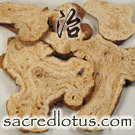 Bai Zhu30 gdry-friedTonify Qi
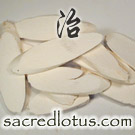 Shan Yao30 gdry-friedTonify Qi
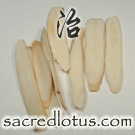 Bai Shao15 gwine-friedTonify Blood
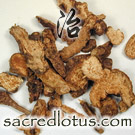 Cang Zhu9 gAromatic Herbs that Transform and Dissolve Dampness
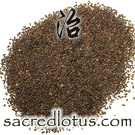 Che Qian Zi9 gwine-friedRegulate Water and Drain Dampness
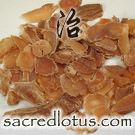 Ren Shen6 gTonify Qi
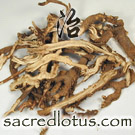 Chai Hu1.8 gCool, Spicy Herbs that Release the Exterior
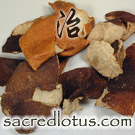 Chen Pi1.5 gRegulate the Qi
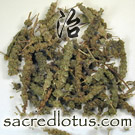 Jing Jie1.5 gCharred, Jie Sui TanWarm, Spicy Herbs that Release the Exterior
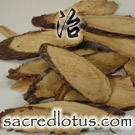 Gan Cao3 gTonify Qi
Preparation & dosage
How is Wan Dai Tang prepared?
Wan Dai Tang is taken as a water decoction, with several herbs specially processed before decocting. Bai Zhu and Shan Yao are dry-fried (chao), which moderates their nature and reinforces their Spleen-strengthening effect; Bai Shao and Che Qian Zi are wine-fried (jiu chao), guiding their action and tempering Che Qian Zi’s cooling, diuretic tendency; Jing Jie is charred (Jing Jie Tan), shifting its action toward the blood level to help end the discharge rather than release the exterior as the raw herb would.
Dang Shen at two to three times the listed Ren Shen dose is commonly substituted for Ren Shen. As with any herbal decoction, duration and dosing should be set and reassessed by a qualified practitioner.
Source: Sacred Lotus sources & references + Bensky & Barolet, Formulas & Strategies (herb processing).
Decoction. Reference relative amounts (dry-fried unless noted): Bai Zhu, Shan Yao 30 g each; Bai Shao (wine-fried) 15 g; Cang Zhu, Che Qian Zi (wine-fried) 9 g; Gan Cao 3 g; Ren Shen 6 g; Chen Pi, Jing Jie (charred) 1.5 g; Chai Hu 1.8 g. Dang Shen at 2-3x the Ren Shen dose is commonly substituted for Ren Shen. Reference only; dosing should be set by a qualified practitioner.
Safety — read before use
What are the cautions for Wan Dai Tang?
Wan Dai Tang is built for a deficiency-and-dampness pattern with thin white discharge; it is not appropriate for damp-heat discharge — thick, yellow or greenish, foul-smelling discharge with vulvar itching or burning suggests a damp-heat pattern (e.g., addressed by formulas such as Yi Huang Tang or Long Dan Xie Gan Tang) and calling for professional reassessment rather than this formula.
- Not a substitute for treating active infection: discharge with odor, color, itching, pain, or fever warrants medical evaluation (e.g., for bacterial vaginosis, candidiasis, or an STI) alongside or instead of herbal treatment.
- Contains Ren Shen: avoid in patterns with clear excess heat; as with any Ren Shen–containing formula, professional guidance is advised regarding known herb–herb incompatibilities.
- Pregnancy and breastfeeding: contains a mild qi-moving herb (Chai Hu) and a diuretic herb (Che Qian Zi) — use only under professional guidance.
- Persistent or refractory symptoms should prompt reassessment rather than continued self-treatment.
Source: Bensky & Barolet, Formulas & Strategies (pattern differentiation and cautions for leukorrhea formulas). Traditional-use framing; not medical advice.
Originally Appeared In:
- Women's Diseases According to Fu Qing Zhu (Fu Qing Zhu Nu Ke)
Notes:
How is Wan Dai Tang different from Yi Huang Tang, and what modifications are common?
Wan Dai Tang and Yi Huang Tang are companion formulas from the same source (Fu Qingzhu) for opposite ends of the same complaint — vaginal discharge. Wan Dai Tang treats white, thin discharge from Spleen deficiency with dampness and mild Liver constraint; Yi Huang Tang treats yellow discharge from damp-heat. Matching the discharge’s color and consistency to the correct pattern is the key differentiation point.
- vs Yi Huang Tang: choose Yi Huang Tang instead when the discharge is yellow, thick, or foul-smelling — signs of damp-heat rather than Spleen deficiency with dampness.
- Common modifications: add Fu Ling or Yi Yi Ren for more pronounced damp-draining; add Long Gu, Mu Li, or Wu Wei Zi to strengthen the astringent, discharge-stopping effect in more stubborn cases; Dang Shen at two to three times the dose is commonly substituted for Ren Shen.
Source: Bensky & Barolet, Formulas & Strategies (Fu Qingzhu leukorrhea formula pair and common modifications).
Clinical Studies & Research:
Is there modern research on Wan Dai Tang?
Direct clinical trial evidence specific to Wan Dai Tang is limited; the clearest verifiable study is a randomized controlled trial in chronic vaginitis following cancer immunotherapy. Most other discussion of this formula in the literature is descriptive or appears in Chinese-language gynecology journals not independently verified here, so it has been omitted rather than cited without confirmation.
- Chronic vaginitis after immunotherapy (RCT): in 80 patients who developed chronic vaginitis after sintilimab (an anti-PD-1 immunotherapy) treatment for small-cell lung cancer, Wandai decoction combined with topical TCM fumigation-and-washing was compared against Wandai decoction alone (n=40 per group). The combined-treatment group had faster resolution of vulvar itching and leukorrhea, higher vaginal pH, higher IgG and secretory IgA, lower CRP/TNF/IL-6, and a higher overall effective rate (all p<0.001). The authors noted the small sample size and lack of comparison across different vaginitis subtypes as limitations (PMID 37318889).
Sources: PubMed 37318889. Research context, not a therapeutic claim; direct clinical trial evidence for Wan Dai Tang as a standalone formula remains limited.
Sources & References
Compiled and edited by Thomas Dehli, Founder & Editor, Sacred Lotus Updated
The information here is referenced from numerous sources — teachers, practitioners, class notes from Five Branches University, the books below, and the published research literature, with citations given as resolvable PubMed identifiers. Where sources disagree, I have flagged the discrepancies directly. If facts couldn't be verified, I have left them out. How we source our content.
Reference information for students and practitioners — not medical advice. Consult a qualified practitioner. Terms of use.
Chinese Formulas Books & References
 https://amzn.to/4fYI3f8
 https://amzn.to/4j55NRA
 https://amzn.to/4gMROyv
 https://amzn.to/4h7msSK