
Zhen Ling Dan
Rouse the Spirit Special Pill
- Category
- Formulas that Stabilize and Bind
- Subcategory
- Formulas that Stabilize the Womb
- Ingredients
- 6 herbs
Actions
What does Zhen Ling Dan do?
Zhen Ling Dan (Rouse the Spirit Special Pill) is a heavy-mineral astringent formula that secures and stanches severe, prolonged uterine bleeding while moving blood stasis at the same time, so the bleeding is stopped without trapping stagnant blood behind it. It pairs powerfully astringent calcined minerals with a small amount of blood-invigorating resin, a classic "stop the flooding without leaving stasis" strategy for beng lou (abnormal uterine bleeding).
- Chief: the four calcined minerals recorded in our composition — Yu Liang Shi (Limonite), Zi Shi Ying (Fluorite), Chi Shi Zhi (Halloysite/Kaolin), and Dai Zhe Shi (Hematite) — heavy, astringent substances that secure and stanch bleeding/discharge from the Lower Burner.
- Assistants: Ru Xiang (Frankincense) and Mo Yao (Myrrh) invigorate the blood and stop pain, keeping the astringent minerals from trapping stagnant blood.
- Classically described but not itemized in our ingredient table: secondary formulary sources also count Wu Ling Zhi (Flying Squirrel Droppings) among the blood-invigorating assistants, and Zhu Sha (Cinnabar) — a toxic mercury-sulfide mineral — to settle and calm the Heart-spirit. our own preparation instructions independently confirm Zhu Sha, used as an outer coating on the finished pills rather than ground into them, plus glutinous rice flour as the pill binder.
Discrepancy: our the ingredient data table lists 6 substances (4 minerals + Ru Xiang + Mo Yao), while classical/secondary formulary sources describe an 8-part formula that also formally counts Wu Ling Zhi and Zhu Sha as ingredients (plus glutinous rice as binder). Kept, not omitted, because our own the Preparation section independently corroborates the Zhu Sha coating and rice binder — this looks like an incomplete ingredient table rather than a real compositional conflict.
Source: Sacred Lotus sources & references + preparation notes + classical formulary descriptions of the Tai Ping Hui Min He Ji Ju Fang (Song dynasty), cross-checked against standard Chinese-language formula references. Chief/assistant analysis per standard TCM formula-role convention (cf. Bensky & Barolet, Formulas & Strategies). Encyclopedic reference only — not a recommendation to prepare or take this formula, which contains a restricted toxic mineral; see Cautions.
Indications
What is Zhen Ling Dan used for?
Zhen Ling Dan treats abnormal uterine bleeding (beng lou) arising from blood stasis obstructing the collaterals together with deficiency-cold of the Chong and Ren (Penetrating and Conception) vessels. Classically it is grouped among formulas that stabilize the womb.
Its classic clinical presentation:
- Bleeding pattern: heavy or continuous dark purple uterine bleeding with clots.
- Pain: lower-abdominal pain that resists pressure and tends to ease once clots are passed.
- Secondary use: the strongly astringent minerals (Yu Liang Shi, Chi Shi Zhi) were also historically applied to chronic diarrhea or dysentery.
Tongue and pulse: dark purple tongue, possibly with purple (stasis) spots; a submerged, thin, and wiry pulse.
Source: Sacred Lotus sources & references on pattern/tongue/pulse + classical formulary descriptions of the Tai Ping Hui Min He Ji Ju Fang, cross-checked against standard Chinese-language formula references. Traditional-use framing; historical reference only, not medical advice.
Western Uses:
What is Zhen Ling Dan used for in modern practice?
Zhen Ling Dan is primarily of historical and educational interest today rather than a formula in active modern clinical use, because it classically incorporates Zhu Sha (Cinnabar), a toxic mercury-sulfide mineral, alongside several other heavy mineral substances. Its classical presentation of heavy, dark, clotted uterine bleeding with pain corresponds to what Western medicine would describe as dysfunctional or abnormal uterine bleeding — that correlate is offered strictly as a reference to the formula's traditional use, not as a treatment claim.
No dedicated modern clinical trial of this specific formula was located (see Research). Contemporary manufacture and export of cinnabar-containing patent medicines is restricted or reformulated in a number of markets on mercury-toxicity grounds. This entry documents the formula as a historical/reference record, not as a current treatment option.
Source: general literature on cinnabar-containing TCM preparations, incl. Huang et al., Frontiers in Pharmacology 2022 (PMID 35308204); reference only, not a treatment claim.
Ingredients
6 substances in Zhen Ling Dan — each links to its full herb monograph.
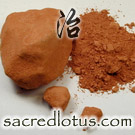 Chi Shi Zhi120 gAstringe, Stabilize, Bind
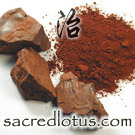 Dai Zhe Shi120 gAnchor, Settle, and Calm the Spirit
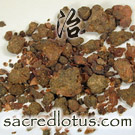 Mo Yao60 gInvigorate Blood and Remove Stagnation
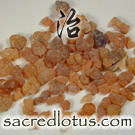 Ru Xiang60 gInvigorate Blood and Remove StagnationNo specimen photographYu Liang Shi120 gAstringe, Stabilize, Bind
 Zi Shi Ying120 gAnchor, Settle, and Calm the Spirit
Preparation & dosage
How is Zhen Ling Dan prepared, and what caution applies?
Zhen Ling Dan is prepared as pills: the mineral and resin ingredients (Yu Liang Shi, Zi Shi Ying, Chi Shi Zhi, Dai Zhe Shi, Ru Xiang, Mo Yao) are ground, mixed with water and about 120 g of ground glutinous rice, formed into pills, and the pills are then coated with Zhu Sha. A dose is one 9–12 g pill once a day, on an empty stomach with warm water or wine.
Safety caution. The Zhu Sha (cinnabar) coating is a toxic mercury mineral; cinnabar is banned or restricted in many countries and modern versions omit it. This is a heavy, mineral-based practitioner-only formula — any cinnabar-containing product should be avoided.
Source: Sacred Lotus sources & references (composition and preparation note) + Bensky & Barolet, Formulas & Strategies; cinnabar toxicity from standard herb-safety references.
Historical/reference information only — not a preparation or dosing recommendation (this formula classically contains Zhu Sha/Cinnabar; see Cautions). Per our composition and preparation notes: ground minerals are combined with 120 g glutinous rice flour as a binder and formed into pills, which are then coated in Zhu Sha. Reference relative amounts: Yu Liang Shi, Zi Shi Ying, Chi Shi Zhi, Dai Zhe Shi 120 g each; Ru Xiang, Mo Yao 60 g each. Classical texts describe finished pills of roughly 9-12 g. Documented as a historical record only.
Safety — read before use
What are the cautions for Zhen Ling Dan?
Zhen Ling Dan classically includes Zhu Sha (Cinnabar, mercury sulfide/HgS) — flagged as a toxic substance in this database — a mineral now tightly dose-restricted in the current Chinese Pharmacopoeia and subject to restriction or reformulation in cinnabar-containing patent medicines exported to a number of markets. The information below is a public-safety and historical reference, not guidance for preparing, coating, or taking this formula.
- Zhu Sha / Cinnabar (mercury sulfide): absorbed mercury accumulates mainly in the kidney; research on cinnabar-containing preparations documents nephrotoxic and neurotoxic risk with excessive or prolonged mercury exposure (PMID 18445765; PMID 21126564). Heating releases toxic mercury vapor. Regarded as contraindicated in pregnancy and unsuitable for unsupervised or prolonged use.
- Other heavy minerals: per our own herb monographs, Dai Zhe Shi (Hematite), Chi Shi Zhi (Halloysite), and Zi Shi Ying (Fluorite) each carry an independent pregnancy caution and are not intended for prolonged use; being heavy, they can also burden Spleen/Stomach qi.
- Excess/heat patterns: as a warming astringent for deficiency-cold with stasis, it is inappropriate wherever there is active heat, damp-heat, or an acute excess-type bleeding pattern — astringing too early risks trapping the pathogenic factor (per our Yu Liang Shi caution).
- Pregnancy: contraindicated — multiple components (Zhu Sha, Dai Zhe Shi, the blood-invigorating Ru Xiang/Mo Yao) each carry an independent pregnancy caution.
Source: Sacred Lotus toxic/endangered flag + herb-level cautions for Zhu Sha, Dai Zhe Shi, Chi Shi Zhi, Zi Shi Ying, and Yu Liang Shi + PubMed (Liu et al. 2008, PMID 18445765; Shi et al. 2011, PMID 21126564; Huang et al., Frontiers in Pharmacology 2022, PMID 35308204). Public-safety/encyclopedic reference; not medical advice and not administration guidance.
Originally Appeared In:
- Imperial Grace Formulary of the Tai Ping Era (Tai Ping Hui Min He Ji Ju Fang)
Notes:
What should I know about Zhen Ling Dan's composition and modern status?
our ingredient table (four minerals plus Ru Xiang and Mo Yao) is narrower than the 8-part formula described in classical and secondary formulary sources, which also count Wu Ling Zhi and Zhu Sha as formal ingredients alongside a glutinous rice binder. our own preparation instructions independently confirm the Zhu Sha coating and rice binder, so this reads as an incomplete ingredient table rather than a genuine compositional conflict.
Because it classically contains Zhu Sha (Cinnabar), Zhen Ling Dan is rarely, if ever, encountered in contemporary clinical practice. It is presented here as an encyclopedic/historical record of a Song-dynasty (Tai Ping Hui Min He Ji Ju Fang) formula, not as a current treatment option.
Source: Sacred Lotus sources & references + preparation notes, cross-checked against standard Chinese-language formula references and general TCM literature on cinnabar-containing preparations.
Clinical Studies & Research:
Is there modern research on Zhen Ling Dan?
No dedicated modern clinical trial or pharmacological study of Zhen Ling Dan itself was located. Because the formula's defining safety issue is its classical Zhu Sha (Cinnabar) content, the relevant modern research concerns cinnabar/mercury toxicology rather than the formula's efficacy.
- Absorption and disposition: cinnabar's mercury is poorly absorbed from the gastrointestinal tract, but what is absorbed accumulates mainly in the kidney, resembling the disposition pattern of inorganic mercury (PMID 18445765).
- Comparative nephrotoxicity (animal study): in rats, the cinnabar-containing preparation Zhu-Sha-An-Shen-Wan was substantially less nephrotoxic than mercuric chloride or methylmercury at equivalent mercury doses, though toxicity was not absent (PMID 21126564).
- Regulatory/toxicology review: a 2022 review of mercury-containing TCM preparations documents cinnabar's continued inclusion in the Chinese Pharmacopoeia alongside export restrictions on some cinnabar-containing patent medicines (PMID 35308204).
Sources: PubMed 18445765; PubMed 21126564; PubMed 35308204. Toxicology/safety research context only; no clinical-efficacy research on this formula was found.
Sources & References
Compiled and edited by Thomas Dehli, Founder & Editor, Sacred Lotus Updated
The information here is referenced from numerous sources — teachers, practitioners, class notes from Five Branches University, the books below, and the published research literature, with citations given as resolvable PubMed identifiers. Where sources disagree, I have flagged the discrepancies directly. If facts couldn't be verified, I have left them out. How we source our content.
Reference information for students and practitioners — not medical advice. Consult a qualified practitioner. Terms of use.
Chinese Formulas Books & References
 https://amzn.to/4fYI3f8
 https://amzn.to/4j55NRA
 https://amzn.to/4gMROyv
 https://amzn.to/4h7msSK