
Gu Chong Tang
Stabilize Gushing Decoction
- Category
- Formulas that Stabilize and Bind
- Subcategory
- Formulas that Stabilize the Womb
- Ingredients
- 10 herbs
Actions
What does Gu Chong Tang do?
Gu Chong Tang urgently stops heavy, prolonged uterine bleeding (beng lou, “flooding and spotting”) by rebuilding a weakened Spleen’s grip on the Blood while astringing to check the flow directly. It comes from Zhang Xichun’s early-20th-century Yi Xue Zhong Zhong Can Xi Lu and is built around ten ingredients that combine root treatment with urgent symptom control.
- Chief: Huang Qi and dry-fried Bai Zhu tonify Spleen and Source qi and raise/hold yang, so qi can properly command (govern) the Blood — addressing the underlying deficiency driving the hemorrhage.
- Deputies: Shan Zhu Yu and Bai Shao nourish and astringe Liver/Kidney essence and blood, helping secure the Chong and Ren vessels (the “sea of blood” and the vessel governing the uterus); Shan Zhu Yu doubles as a strong astringent.
- Assistants: calcined Long Gu, calcined Mu Li, Hai Piao Xiao, and Qian Cao Gen astringe and stop the bleeding directly; Qian Cao Gen also cools the Blood and mildly moves it, guarding against stasis forming from the other astringents.
- Envoys: Wu Bei Zi (ground to powder, taken with the strained decoction) and charred Zong Lu Pi are the strongest astringents in the formula, consolidating the overall hemostatic effect.
Source: this site’s own composition record + Bensky & Barolet, Formulas & Strategies (chief/deputy/assistant/envoy analysis). Traditional-use framing; not medical advice.
Indications
What is Gu Chong Tang used for?
Gu Chong Tang treats Spleen qi deficiency that fails to control (govern) the Blood, with the Chong and Ren vessels destabilized — producing sudden heavy uterine bleeding (flooding) or persistent light bleeding (spotting), classically grouped together as beng lou.
- Bleeding pattern: heavy, pale or watery menstrual blood, or bleeding between periods; onset may be sudden and profuse or a lingering trickle.
- Qi-deficiency signs: fatigue, shortness of breath, reduced appetite, pale or sallow complexion, occasional dizziness; cold limbs in more severe cases.
- Other applications: postpartum bleeding that continues past the expected recovery window, and perimenopausal flooding, when the qi-deficient, non-heat pattern fits.
Tongue and pulse: pale tongue, sometimes with tooth marks; a deficient, thin, or forceless (hollow) pulse.
Source: this site’s own composition record/identity + Bensky & Barolet, Formulas & Strategies. Traditional-use framing; not medical advice.
Western Uses:
What is Gu Chong Tang used for in modern practice?
In modern practice Gu Chong Tang is referenced by TCM practitioners for heavy or prolonged uterine bleeding that biomedicine describes as abnormal or dysfunctional uterine bleeding (AUB/DUB), typically of the anovulatory or qi-deficient type — and only once a physician has ruled out structural or hormonal causes such as fibroids, polyps, coagulation disorders, ectopic pregnancy, or malignancy.
This biomedical correlate is offered as a reference to the formula’s traditional use, not as a claim that it treats any diagnosed condition. Several modern Chinese formulas share the word “guchong” (stabilize the Chong vessel) in their names but use different, modified compositions (see research) — they are related in principle, not identical to this classical formula. Heavy or irregular uterine bleeding always warrants prompt medical evaluation; this is not a substitute for that care.
Source: traditional-use correlate summarized from Bensky & Barolet, Formulas & Strategies; reference only, not a treatment claim.
Ingredients
10 substances in Gu Chong Tang — each links to its full herb monograph.
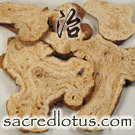 Bai Zhu30 gdry-friedTonify Qi
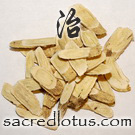 Huang Qi18 gTonify Qi
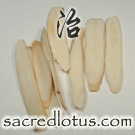 Bai Shao12 gTonify Blood
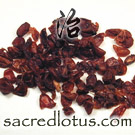 Shan Zhu Yu24 gAstringe, Stabilize, Bind
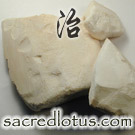 Hai Piao Xiao12 gAstringe, Stabilize, Bind
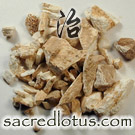 Long Gu24 gcalcinedAnchor, Settle, and Calm the Spirit
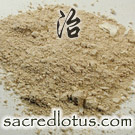 Mu Li24 gcalcinedAnchor, Settle, and Calm the Spirit
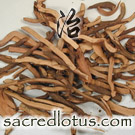 Qian Cao Gen9 gStop Bleeding
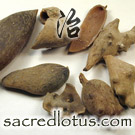 Wu Bei Zi1.5 gAstringe, Stabilize, BindNo specimen photographZong Lu Pi6 gStop Bleeding
Preparation & dosage
How is Gu Chong Tang prepared?
Gu Chong Tang is a water decoction with staggered cooking times so the mineral/shell astringents release fully and the most astringent herb is never boiled.
- Calcined Long Gu and calcined Mu Li are decocted first (roughly 30–60 minutes) before the remaining herbs are added, standard practice for mineral/shell substances.
- Charred Zong Lu Pi is added with the main decoction.
- Wu Bei Zi is ground to a fine powder and taken by mixing it into the strained, finished decoction — it is not boiled with the other herbs.
Source: this site’s own composition record + Bensky & Barolet, Formulas & Strategies (standard preparation of mineral/shell and astringent substances). Traditional-use framing; not medical advice.
Decoction, staggered preparation (see preparation). Reference relative amounts: Bai Zhu (dry-fried) 30 g; Shan Zhu Yu, Long Gu (calcined), Mu Li (calcined) 24 g; Huang Qi 18 g; Bai Shao, Hai Piao Xiao 12 g; Qian Cao Gen 9 g; Zong Lu Pi 6 g; Wu Bei Zi 1.5 g (powdered, taken with the strained decoction). Reference only; not a prescription.
Safety — read before use
What are the cautions for Gu Chong Tang?
Gu Chong Tang is built for qi-deficient, non-heat, non-stasis bleeding, so it is inappropriate when bleeding stems primarily from Blood Heat or Blood Stasis — its strong astringent, binding action risks “locking in” heat or stagnant (stasis) blood rather than resolving it.
- Avoid or modify in Blood-Heat bleeding (bright red, thick blood with heat signs) and in bleeding where dark clots and pain point to Blood Stasis as the primary pattern.
- Not a first-line or standalone response to heavy or irregular uterine bleeding: any significant or unexplained bleeding needs prompt medical evaluation to exclude fibroids, polyps, endometrial pathology, malignancy, ectopic pregnancy, or a bleeding disorder.
- Pregnancy and professional supervision: use only under a qualified practitioner’s guidance, particularly in pregnancy or when the diagnosis is uncertain.
Source: Bensky & Barolet, Formulas & Strategies (cautions for astringent, blood-stopping formulas). Traditional-use framing; not medical advice.
Originally Appeared In:
- Records of Heart Felt Experiences in Medicine with References to the West (Yi Xue Zhong Zhong Can Xi Lu)
Notes:
How does Gu Chong Tang compare to other formulas for flooding and spotting (beng lou)?
Gu Chong Tang leans on mineral and shell astringents (Long Gu, Mu Li, Hai Piao Xiao, Wu Bei Zi) for urgent hemostasis alongside qi tonification, which distinguishes it from formulas that rely more on qi-raising or blood-nourishing herbs alone.
- vs Gu Ben Zhi Beng Tang (also from Fu Qingzhu’s and related lineages of gynecology texts): that formula centers on Ren Shen, Huang Qi, Bai Zhu, and Sheng Di/Shu Di to rebuild qi and blood together, with comparatively less reliance on mineral/shell astringents than Gu Chong Tang.
- Modern derivatives: contemporary Chinese clinical formulas such as Yi Qi Gu Chong Tang share Gu Chong Tang’s qi-securing strategy but are distinct, modified prescriptions rather than the original ten-herb decoction.
Source: Bensky & Barolet, Formulas & Strategies (comparative formula analysis); cross-checked against contemporary TCM formula references. Traditional-use framing.
Clinical Studies & Research:
Is there modern research on Gu Chong Tang?
Direct clinical trials on Zhang Xichun’s unmodified, ten-herb classical formula were not found in PubMed/PMC. Several modern Chinese-language studies use related, similarly-named “guchong” (stabilize the Chong vessel) formulas for dysfunctional uterine bleeding, but their compositions differ from — and are not confirmed identical to — this classical formula, so they are noted here for context only, not as direct evidence for it.
- Guchong Zhixue Decoction (a modified, similarly-named formula): a small randomized trial in anovulatory dysfunctional uterine bleeding reported a 93.3% hemostasis rate versus 70.0% for a comparator oral liquid (PMID 16548361).
- Shenqi Guchong Recipe (a distinct peri-menopausal variant): studied for anovulatory dysfunctional uterine bleeding in perimenopause (PMID 20929121).
Sources: PubMed 16548361; PubMed 20929121. Cited as related, name-similar formulas for context only — composition not confirmed identical to this formula; not a therapeutic claim.
Sources & References
Compiled and edited by Thomas Dehli, Founder & Editor, Sacred Lotus Updated
The information here is referenced from numerous sources — teachers, practitioners, class notes from Five Branches University, the books below, and the published research literature, with citations given as resolvable PubMed identifiers. Where sources disagree, I have flagged the discrepancies directly. If facts couldn't be verified, I have left them out. How we source our content.
Reference information for students and practitioners — not medical advice. Consult a qualified practitioner. Terms of use.
Chinese Formulas Books & References
 https://amzn.to/4fYI3f8
 https://amzn.to/4j55NRA
 https://amzn.to/4gMROyv
 https://amzn.to/4h7msSK