
Actions
What does Run Chang Wan do?
Run Chang Wan (Moisten the Intestines Pill) moistens the intestines, nourishes blood and fluids, and gently unblocks the bowels. It treats dry, difficult stool that comes from a deficiency of blood and fluids drying out the large intestine — not from excess heat or qi stagnation — so it works by lubricating and replenishing rather than by aggressive purging.
The five ingredients divide by role:
- Chief: Huo Ma Ren (Semen Cannabis, 15 g) directly lubricates and moistens the intestines with its rich oil content; Sheng Di Huang (Radix Rehmanniae, 30 g) nourishes yin and generates fluids, addressing the underlying dryness at its root.
- Deputies: Tao Ren (Semen Persicae, 9 g) and Dang Gui (Radix Angelicae Sinensis, 9 g) both moisten the intestines while nourishing and invigorating blood — supporting the chief herbs and treating the blood deficiency that commonly accompanies this pattern (after illness, blood loss, or childbirth).
- Assistant/Envoy: Zhi Ke (Fructus Aurantii, 9 g) regulates qi and directs it downward to help move stool along, keeping the rich, oily tonics in the formula from becoming stagnant or cloying.
Source: this site’s own composition record + Bensky & Barolet, Formulas & Strategies (chief/deputy/assistant/envoy reasoning for moistening-purgative formulas). Traditional-use framing; not medical advice.
Indications
What is Run Chang Wan used for?
Run Chang Wan treats dry, hard, difficult-to-pass stool caused by a deficiency of blood and fluids in the large intestine — a pattern typically seen in the elderly, postpartum women, and people recovering from a feverish illness or significant blood loss, where the intestines simply lack the fluid and blood to keep stool moist and moving.
Its classic clinical presentation:
- Dry, hard stool passed infrequently and with difficulty, but generally without the severe straining, cramping, or urgency seen in excess-heat constipation.
- Underlying deficiency signs: often a sallow or pale complexion, dizziness, or a generally depleted constitution consistent with blood and fluid deficiency.
- Typical populations: the elderly with declining fluids and blood, postpartum mothers, and patients convalescing after illness, surgery, or blood loss.
Tongue and pulse: the tongue tends to be dry; the pulse is thin, reflecting depleted blood and fluids rather than excess heat.
Source: this site’s own pattern/tongue/pulse record (tongue "Dry tongue", pulse "Thin pulse") + Bensky & Barolet, Formulas & Strategies. Traditional-use framing; not medical advice.
Western Uses:
What is Run Chang Wan used for in modern practice?
In modern TCM practice, Run Chang Wan and closely related moisten-the-intestine formulas are referenced for functional constipation associated with reduced bowel motility and stool dryness — commonly discussed alongside elderly constipation, postpartum recovery, and convalescence after illness or surgery, where a gentle, non-irritant approach is preferred over stimulant laxatives.
A large systematic review of Chinese herbal medicine for constipation found Run-Chang-Wan to be the single most frequently used proprietary Chinese herbal medicine in the reviewed clinical literature (identified in 87 studies), indicating wide practical use even though a dedicated, high-quality randomized trial on this specific five-herb formula was not located. For research context, a related but compositionally distinct moisten-intestine formula in the same purgative category, Ma Zi Ren Wan (which adds Da Huang, Zhi Shi, Hou Po, and Xing Ren to a hemp-seed base), was compared with senna and placebo in a randomized, double-blind, double-dummy trial and found comparably effective to senna and superior to placebo for increasing complete spontaneous bowel movements; follow-up work proposed down-regulation of oleamide as one contributing mechanism. These are offered as reference to the traditional pattern this class of formula addresses, not as evidence that Run Chang Wan itself treats any diagnosed condition.
Source: traditional-use correlates summarized from Bensky & Barolet, Formulas & Strategies, plus PubMed 27347002 (Run-Chang-Wan usage frequency), PubMed 29654915 and PubMed 32038247 (related-formula Ma Zi Ren Wan research, cited as class context only). Reference only, not a treatment claim.
Ingredients
5 substances in Run Chang Wan — each links to its full herb monograph.
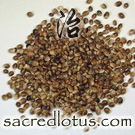 Huo Ma Ren15 gMoist Laxatives
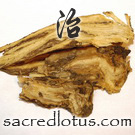 Dang Gui9 gTonify Blood
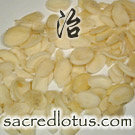 Tao Ren9 gInvigorate Blood and Remove Stagnation
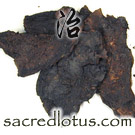 Sheng Di Huang30 gCool the Blood
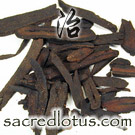 Zhi Ke9 gRegulate the Qi
Preparation & dosage
How is Run Chang Wan prepared?
Traditionally the five herbs are ground to a fine, even powder and bound with honey into pills (wan) — a slow-release, gentle format well suited to the frail, elderly, or postpartum patients this formula is meant for, rather than a fast-acting decoction. Honey itself is also mildly moistening, reinforcing the formula's action.
Modern practice sometimes prepares the same five ingredients as a decoction (tang) for a stronger, faster effect when needed, though the honey-pill form remains the traditional and most commonly referenced preparation.
Source: this site’s own composition record/origin cross-checked against this site’s own record (matching preparation description) + Bensky & Barolet, Formulas & Strategies (pill preparation for moistening purgatives). Traditional-use framing; not medical advice.
Honey pills (wan): traditional reference dose is about 15 g/day. Reference relative amounts per this site’s own composition record: Sheng Di Huang 30 g; Huo Ma Ren 15 g; Tao Ren, Dang Gui, Zhi Ke 9 g each. As a decoction, amounts are typically adjusted downward (some references cite roughly half these amounts) and taken once daily. Reference only; not a prescription.
Safety — read before use
What are the cautions for Run Chang Wan?
Run Chang Wan is a gentle, deficiency-oriented formula and is not intended for constipation from excess heat, qi stagnation, or cold-deficiency, so matching the pattern matters. Several of its ingredients invigorate blood, so it is generally used with caution in specific situations.
- Pregnancy: contains blood-invigorating herbs (Tao Ren, Dang Gui) — use only under professional guidance.
- Not for cold-deficiency or spleen-deficiency loose stool/diarrhea patterns — the formula's moistening, oily ingredients are inappropriate where digestion is already weak and stools are loose rather than dry.
- Not a substitute for treating the underlying deficiency — it is traditionally used to relieve dry stool while the root blood/fluid deficiency is addressed separately (e.g., with blood- or yin-nourishing formulas); it is not intended as an indefinite daily laxative.
- Bleeding risk / anticoagulant or antiplatelet medication: because Tao Ren and Dang Gui are blood-invigorating herbs, discuss concurrent use with a qualified practitioner and physician.
Source: Bensky & Barolet, Formulas & Strategies (cautions for moistening-purgative formulas and blood-invigorating herbs). Traditional-use framing; not medical advice.
Originally Appeared In:
- Master Shen's Book for Revering Life (Shen Shi Zun Sheng Shu)
Notes:
Is there more than one formula called Run Chang Wan?
Yes — and this matters for accuracy. "Run Chang Wan" (润肠丸, "Moisten the Intestines Pill") names more than one classical formula, and sources online frequently conflate them. This entry is the version from Shen Shi Zun Sheng Shu (Master Shen's Book for Revering Life): Huo Ma Ren, Tao Ren, Dang Gui, Sheng Di Huang, and Zhi Ke — a gentle formula that nourishes blood and fluids while moistening, with no rhubarb. It is not the better-known Run Chang Wan from Li Dong-yuan's Pi Wei Lun (Treatise on the Spleen and Stomach, 1249 CE), which is built around wine-baked Da Huang (rhubarb) plus Qiang Huo, Huo Ma Ren, Tao Ren, and Dang Gui Wei — a stronger purgative aimed at wind-dryness and qi stagnation in a sturdier patient, and generally reduced or avoided in the frail or elderly. Verify the composition (not just the name) before comparing this formula to outside references.
- vs Li Dong-yuan's Run Chang Wan (Pi Wei Lun): that version contains Da Huang and Qiang Huo and purges more forcefully; this Shen Shi Zun Sheng Shu version has no rhubarb and is suited to the frail, elderly, postpartum, or those weakened by illness.
- vs Ma Zi Ren Wan (Shang Han Lun): Ma Zi Ren Wan adds Da Huang, Zhi Shi, Hou Po, and Xing Ren to a hemp-seed base and targets fluid depletion with mild qi-stagnation and Stomach heat; it purges more than this formula, which leans on blood-and-fluid nourishment.
- vs Wu Ren Wan: a gentler formula built purely from moistening seeds/kernels, without the blood-nourishing herbs (Dang Gui, Sheng Di Huang) this formula adds — choose Wu Ren Wan for simple dryness, this formula when blood deficiency is also prominent.
Source: this site’s own composition record ("Master Shen's Book for Revering Life (Shen Shi Zun Sheng Shu)") + Bensky & Barolet, Formulas & Strategies (formula-family comparisons for moistening purgatives).
Clinical Studies & Research:
Is there modern research on Run Chang Wan?
Direct, high-quality clinical-trial evidence specific to this five-herb Shen Shi Zun Sheng Shu formula is limited, but it is documented as one of the most widely used Chinese herbal approaches to constipation in the clinical literature. A systematic review of Chinese herbal medicine for constipation identified Run-Chang-Wan as the single most frequently used proprietary Chinese herbal medicine among the studies it reviewed (87 studies referenced it), while also noting that herb-drug interaction and safety data across proprietary CHMs for constipation remain limited and that more rigorous randomized controlled trials are needed.
- Usage frequency (clinical literature synthesis): Run-Chang-Wan was the most frequently used proprietary CHM for constipation across the reviewed studies (PMID 27347002; PMC 4919884).
- Related-formula RCT (Ma Zi Ren Wan, a compositionally distinct moisten-intestine formula sharing the chief herb Huo Ma Ren): a double-blind, double-dummy randomized trial in 291 patients with functional constipation found Ma Zi Ren Wan comparably effective to senna and superior to placebo for increasing complete spontaneous bowel movements (PMID 29654915).
- Related-formula mechanism (Ma Zi Ren Wan, preclinical/translational): follow-up work proposed down-regulation of oleamide as a contributing mechanism for improved bowel movement (PMID 32038247).
Sources: PubMed 27347002 / PMC 4919884 (Run-Chang-Wan usage frequency and safety-data gap); PubMed 29654915 and PubMed 32038247 (Ma Zi Ren Wan, a related but distinct formula, cited for research context only). Research context, not a therapeutic claim; direct trial evidence on this specific formula was not located.
Sources & References
Compiled and edited by Thomas Dehli, Founder & Editor, Sacred Lotus Updated
The information here is referenced from numerous sources — teachers, practitioners, class notes from Five Branches University, the books below, and the published research literature, with citations given as resolvable PubMed identifiers. Where sources disagree, I have flagged the discrepancies directly. If facts couldn't be verified, I have left them out. How we source our content.
Reference information for students and practitioners — not medical advice. Consult a qualified practitioner. Terms of use.
Chinese Formulas Books & References
 https://amzn.to/4fYI3f8
 https://amzn.to/4j55NRA
 https://amzn.to/4gMROyv
 https://amzn.to/4h7msSK