

Wu Ji San
Five Accumulation Powder
- Category
- Formulas that Release the Exterior
- Subcategory
- Formulas that Release Exterior-Interior Excess
- Ingredients
- 16 herbs
Actions
What does Wu Ji San do?
Wu Ji San (Five Accumulation Powder) simultaneously releases an exterior wind-cold invasion and warms/moves an interior accumulation of cold, damp, phlegm, qi, and blood — the “five accumulations” (qi ji, xue ji, tan ji, han ji, shi ji) that give the formula its name. It is built by combining several recognizable sub-formulas into one prescription, each aimed at one of the five accumulations.
The sixteen ingredients divide by function:
- Release the exterior: Ma Huang and Bai Zhi expel wind-cold and open the surface, addressing the exterior layer of the pattern; Sheng Jiang assists them.
- Warm interior cold: Gan Jiang and Rou Gui warm the middle and lower burner and scatter interior cold — together with Ma Huang and Bai Zhi, these four are most often cited as the formula’s chief herbs.
- Dry damp / resolve food-damp accumulation (Ping Wei San core): Cang Zhu, Hou Po, Chen Pi, and Zhi Gan Cao dry dampness, move qi, and strengthen the Spleen.
- Transform phlegm (Er Chen Tang core): Ban Xia, Chen Pi, and Fu Ling dry damp and transform phlegm.
- Invigorate blood (Si Wu Tang minus Shu Di Huang): Dang Gui, Bai Shao, and Chuan Xiong nourish and move blood without the cloying richness of Shu Di Huang.
- Regulate qi in the chest and abdomen: Jie Geng and Zhi Ke open and direct qi up and down, relieving fullness.
- Harmonize: Zhi Gan Cao moderates the formula’s warming, drying, and moving herbs.
Source: this site’s own composition record + Bensky & Barolet, Formulas & Strategies, cross-checked against multiple independent formula references. See discrepancy note above on chief-herb labeling. Traditional-use framing; not medical advice.
Indications
What is Wu Ji San used for?
Wu Ji San treats an external wind-cold invasion layered on top of pre-existing internal cold, damp, phlegm, qi stagnation, and blood stagnation — a combined exterior-interior excess pattern rather than a single simple diagnosis. It is classically indicated for people whose interior was already cold and congested before catching an external chill.
Its classic clinical presentation:
- Exterior signs: chills and fever without sweating, headache, body aches, stiff neck and back.
- Interior signs: fullness and cold pain in the chest and abdomen, nausea, vomiting, poor appetite, borborygmus, and diarrhea (or, in other presentations, constipation).
- Gynecology: also applied to irregular or painful menstruation from cold congealing the blood vessels.
Tongue and pulse: tongue with a white, greasy coating; pulse deep and slow, or deep and wiry.
Source: Bensky & Barolet, Formulas & Strategies, cross-checked against multiple independent TCM formula references for tongue/pulse presentation. Traditional-use framing; not medical advice.
Western Uses:
What is Wu Ji San used for in modern practice?
In modern practice Wu Ji San is referenced for cold-type complaints that combine an upper-respiratory or musculoskeletal exterior component with a digestive or gynecological interior component — contexts practitioners have traditionally matched to its pattern, such as the common cold with digestive upset, chronic gastritis, low back pain and sciatica with a cold-damp quality, and irregular or painful menstruation from cold.
These biomedical correlates describe the formula’s traditional pattern-matched use, not a claim that it treats any diagnosed disease. Direct clinical research on Wu Ji San itself is limited; related trial evidence comes mainly from Ojeok-san, the same classical formula as used in Korean medicine (see research). Any use for a diagnosed condition belongs with a qualified practitioner and appropriate medical care.
Source: traditional-use correlates summarized from Bensky & Barolet, Formulas & Strategies, and cross-checked TCM formula references; reference only, not a treatment claim.
Ingredients
16 substances in Wu Ji San — each links to its full herb monograph.
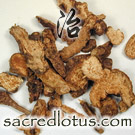 Cang Zhu3-9 gAromatic Herbs that Transform and Dissolve Dampness
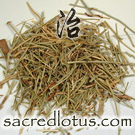 Ma Huang1.5-4.5 gWarm, Spicy Herbs that Release the Exterior
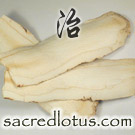 Bai Zhi1.5-4.5 gWarm, Spicy Herbs that Release the Exterior
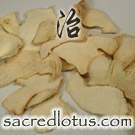 Gan Jiang1.5-4.5 gWarm the Interior and Expel Cold
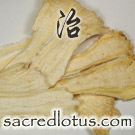 Jie Geng3-9 gWarm Herbs that Transform Phlegm-Cold
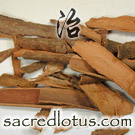 Rou Gui1.5-4.5 gWarm the Interior and Expel Cold
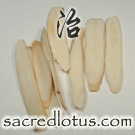 Bai Shao1.5-4.5 gTonify Blood
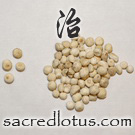 Ban Xia3-9 gWarm Herbs that Transform Phlegm-Cold
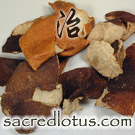 Chen Pi3-9 gRegulate the Qi
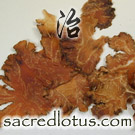 Chuan Xiong1.5-4.5 gInvigorate Blood and Remove Stagnation
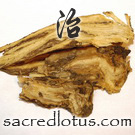 Dang Gui1.5-4.5 gTonify Blood
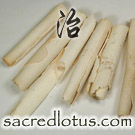 Fu Ling3-9 gRegulate Water and Drain Dampness
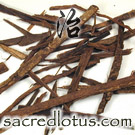 Hou Po1.5-4.5 gAromatic Herbs that Transform and Dissolve Dampness
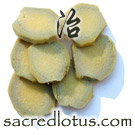 Sheng Jiang3 piecesWarm, Spicy Herbs that Release the Exterior
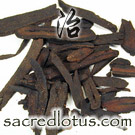 Zhi Ke1.5-4.5 gRegulate the Qi
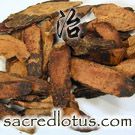 Zhi Gan Cao1.5-4.5 gTonify Qi
Preparation & dosage
How is Wu Ji San prepared?
Classically, Wu Ji San is prepared as a coarse powder rather than decocted whole. Most of the herbs are ground into a coarse powder and dry-fried over a slow fire until lightly yellowed (Rou Gui and Zhi Ke are typically added afterward, unfried); roughly 9 g of the powder is then simmered with a few slices of fresh ginger in water down to a reduced volume and taken warm.
In modern practice the same ingredients are more often prepared as a standard water decoction at proportionally reduced doses. As with any formula containing Ma Huang and warming, moving herbs, dosing and duration should be set by a qualified practitioner for the individual case.
Source: cross-checked TCM formula references for classical vs. modern preparation method; reference only, not a self-treatment guide.
Reference relative amounts (per this site’s own composition record, powder/decoction proportions): Cang Zhu, Chen Pi, Ban Xia, Fu Ling, Jie Geng 3-9 g; Ma Huang, Bai Zhi, Gan Jiang, Rou Gui, Hou Po, Zhi Ke, Dang Gui, Bai Shao, Chuan Xiong, Zhi Gan Cao 1.5-4.5 g; Sheng Jiang 3 pieces. Classical preparation dry-fries the powder and decocts ~9 g with ginger. Reference only.
Safety — read before use
What are the cautions for Wu Ji San?
Wu Ji San is a strongly warming, drying, and moving formula, so it is unsuitable for damp-heat or yin-deficiency-with-heat patterns and for people who are constitutionally weak or depleted, since its exterior-releasing and qi/blood-moving herbs can further tax a deficient body.
- Pregnancy: contains Ma Huang plus blood-invigorating herbs (Dang Gui, Chuan Xiong) and has a recorded historical alias as a labor-hastening formula — avoid in pregnancy except under experienced professional guidance.
- Avoid in heat patterns: not appropriate for exterior wind-heat, warm-febrile disease, or damp-heat presentations.
- Ma Huang caution: as with any Ma Huang-containing formula, use cautiously with cardiovascular conditions, hypertension, or stimulant-sensitive individuals, and only under practitioner guidance.
Source: Bensky & Barolet, Formulas & Strategies (cautions for Ma Huang-containing and strongly warming/moving formulas), cross-checked against multiple independent formula references. Traditional-use framing; not medical advice.
Originally Appeared In:
- Imperial Grace Formulary of the Tai Ping Era (Tai Ping Hui Min He Ji Ju Fang)
Notes:
How is Wu Ji San related to Ping Wei San, Er Chen Tang, and Si Wu Tang?
Wu Ji San is best understood as several smaller formulas combined into one, each contributing its classic action to a different one of the “five accumulations.”
- Ping Wei San (Cang Zhu, Hou Po, Chen Pi, Zhi Gan Cao) supplies the damp-drying, Spleen-strengthening core that addresses food and damp accumulation.
- Er Chen Tang (Ban Xia, Chen Pi, Fu Ling, Zhi Gan Cao) supplies the phlegm-transforming action.
- Si Wu Tang minus Shu Di Huang (Dang Gui, Bai Shao, Chuan Xiong) supplies blood-invigorating action without the rich, cloying quality Shu Di Huang would add to an already-stagnant, damp presentation.
- Ma Huang, Bai Zhi, and Sheng Jiang add exterior-releasing action; Gan Jiang and Rou Gui add interior-warming action; Jie Geng and Zhi Ke add qi-regulating action for the chest and abdomen.
Key modification: classical sources add scallion white (Cong Bai) and fermented soybean (Dan Dou Chi) when the exterior wind-cold component is more pronounced.
Source: Bensky & Barolet, Formulas & Strategies (component-formula analysis), cross-checked against multiple independent formula references.
Clinical Studies & Research:
Is there modern research on Wu Ji San?
Direct clinical trial evidence on Wu Ji San itself is limited; most controlled research comes from Ojeok-san, the same classical formula (五積散) as prepared in Korean traditional medicine, which shares Wu Ji San’s core ingredients (Ma Huang, Cang Zhu, Chen Pi, Hou Po, Jie Geng, Gan Jiang, Rou Gui, Ban Xia, Fu Ling, Bai Zhi, Dang Gui, Chuan Xiong, Bai Shao, and licorice). A pilot randomized, double-blind, placebo-controlled trial of Ojeok-san plus Saengmaek-san for gastroesophageal-reflux-induced chronic cough reported significant improvement in cough diary score and cough-specific quality of life versus placebo over six weeks. An animal study reported that Ojeok-san reduced airway inflammation and pulmonary fibrosis markers in an ovalbumin-challenge asthma model. A separate registered pilot RCT protocol examined Ojeok-san for cold hypersensitivity of the hands and feet.
- Chronic cough (clinical, combination formula): pilot RCT of Ojeok-san plus Saengmaek-san for reflux-induced chronic cough, Frontiers in Pharmacology, 2022 (PMID 35300295).
- Airway inflammation (preclinical): Ojeok-san reduced inflammation and fibrosis markers in a mouse asthma model, Journal of Ethnopharmacology, 2013 (PMID 23816501).
- Cold hypersensitivity (clinical, study protocol): registered pilot RCT protocol of Ojeok-san for cold hypersensitivity in hands and feet, Trials, 2018 (PMID 30497488).
Sources: PubMed 35300295; PubMed 23816501; PubMed 30497488. Research on Ojeok-san, the Korean-medicine preparation of this same classical formula; research context, not a therapeutic claim for Wu Ji San specifically.
Sources & References
Compiled and edited by Thomas Dehli, Founder & Editor, Sacred Lotus Updated
The information here is referenced from numerous sources — teachers, practitioners, class notes from Five Branches University, the books below, and the published research literature, with citations given as resolvable PubMed identifiers. Where sources disagree, I have flagged the discrepancies directly. If facts couldn't be verified, I have left them out. How we source our content.
Reference information for students and practitioners — not medical advice. Consult a qualified practitioner. Terms of use.
Chinese Formulas Books & References
 https://amzn.to/4fYI3f8
 https://amzn.to/4j55NRA
 https://amzn.to/4gMROyv
 https://amzn.to/4h7msSK