
Gelatinum Corii Asini Ass Hide Glue, Donkey Hide Gelatin
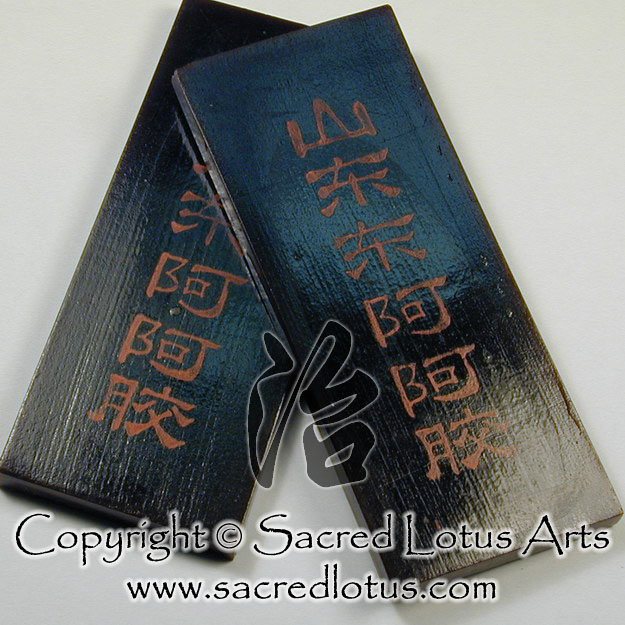
Materia Medica Data
- Category
- Herbs that Tonify Blood
- Temperature
- Neutral
- Nature & Flavour
- Sweet, Neutral
- Channels Entered
- KID, LIV, LU
- Latin (pharmaceutical)
- Gelatinum Corii Asini
- Chinese
- 阿胶
- Tone Marks
- ē jiāo
Chinese Herb Actions
What is E Jiao used for in Chinese medicine?
E Jiao (donkey-hide gelatin) is traditionally used as a key blood tonic that also stops bleeding and nourishes yin — for blood-deficiency presentations of a pale or sallow complexion, dizziness, palpitations, and insomnia. The notes single it out as the best choice for blood deficiency accompanied by loss of blood (concurrent bleeding).
Its main traditional actions:
- Tonifies the blood — pale/sallow complexion, dizziness, palpitations, insomnia; the best choice for blood deficiency accompanied by loss of blood.
- Stops bleeding — a range of chronic/deficiency-type bleeding patterns, including uterine bleeding and coughing of blood.
- Nourishes yin and moistens dryness (Lung) — Lung-yin-deficiency dry, chronic cough and wheezing.
- Nourishes yin to settle the spirit — yin-deficiency irritability and insomnia (a Heart-yin picture), classically combined with Huang Lian.
- Nourishes and moistens the yin of Lung and Kidney — its neutral temperature is described as benefiting both yin and yang aspects; also associated with binding the essence (spermatorrhea, frequent urination, vaginal discharge) in deficiency patterns.
Source: owner’s Five Branches notes, reviewed against Bensky, Materia Medica (3rd ed.). Traditional-use framing; not medical advice.
Chinese Herb Dosage
What is the typical dosage of E Jiao?
Roughly 5–9 g, up to ~15 g — the owner’s notes give 3–10 qián (commonly 1.5–3 qián), which at ~3 g per qián is about 5–9 g up to ~15 g, consistent with standard materia medica ranges. Preparation is distinctive: E Jiao is a gelatin and is not decocted with the other herbs — it is melted / dissolved (“濮化,” yáng huà) into the strained, still-hot decoction, or taken dissolved in warm rice wine.
Source: owner’s Five Branches notes; standard materia medica ranges. Reference only — not a prescription.
Chinese Herb Contraindications & Cautions
Are there cautions for E Jiao?
E Jiao is cloying and rich by nature — the blood-tonic chapter warns these herbs can cause indigestion and should be combined with Stomach-strengthening herbs. The notes give its contraindication as excess patterns — especially dampness, stagnation, and accumulation — and it is poorly suited to weak digestion, poor appetite, or phlegm/damp. It is best used under a qualified practitioner, particularly in pregnancy.
- Dietary/ethical (reference note) — E Jiao is an animal-derived product (donkey hide) and is not suitable for vegetarians or vegans; the donkey-hide source should be disclosed.
- Authenticity (reference note) — commercial ejiao has documented adulteration (substitution with other animal hides such as bovine or porcine); genuine, tested product matters for both safety and label accuracy (see research).
Source: owner’s Five Branches notes; blood-tonic chapter cautions; authentication research (below). Animal-source and adulteration points are neutral reference disclosures.
Chinese Herb Toxicity & Overdose
Low. E Jiao is a food-grade gelatin with a long dietary history and no significant toxicity reported at normal doses. The main real-world concerns are not intrinsic toxicity but quality/adulteration and its status as an animal product (allergen potential for those sensitive to gelatin/collagen).
Source: materia medica consensus; quality-control research (below). Reference note, not a safety guarantee.
Herb-Drug Interactions
No well-established clinical herb–drug interactions are documented. Given its traditional blood-building use and preclinical hematologic / iron-affinity findings (below), practitioner awareness is reasonable for patients on anticoagulant or iron therapy — this is precautionary, not a demonstrated clinical interaction. (Flagged for practitioner confirmation.)
Western / Biomedical Research
Chinese Herb Clinical Studies & Research
Provided as research context — a summary of published biomedical study, not a therapeutic or medical claim.
Is there modern research on E Jiao (Asini Corii Colla)?
Yes — one small human RCT plus preclinical support, with overall clinical evidence still limited. Chemically, E Jiao is a collagen-derived material: hydrolyzed collagen peptides, gelatin, and amino acids.
- Human clinical (single RCT) — a randomized, double-blind, placebo-controlled trial in adults with TCM “blood-deficient” symptoms (n = 210 enrolled; 181 completers; 6 g/day for 8 weeks) reported that, versus placebo, the E Jiao group had a smaller decline in red-blood-cell count and hematocrit, improved dizziness scores, and improved SF-36 quality-of-life domains, with no significant difference in “heat” side effects. The authors note limitations: small sample, short duration, enrollment limited to blood-deficient participants, and no mechanistic investigation. Treat as preliminary, single-study evidence.
- Preclinical hematopoiesis / anti-anemia — review and animal work report that E Jiao fractions promote hematopoiesis (e.g., in 5-fluorouracil–induced anemic mice) and show antioxidant and immune-modulating activity; cell and animal models, not clinical proof.
- Iron bioavailability (preclinical) — donkey-hide gelatin hydrolysates show iron-binding/affinity and gut-microbiota-modulating properties proposed to support iron bioavailability; laboratory/animal research.
- Authentication — DNA-based (cytochrome c oxidase I / PCR) methods have been developed specifically to detect adulterated Asini Corii Colla, reflecting a recognized quality-control problem in the market.
Human clinical evidence remains limited; most support is preliminary or preclinical.
Note: The current Sacred Lotus records the pharmaceutical Latin as “Gelatinum Corii Asini,” while the research literature more often uses “Colla Corii Asini” / “Asini Corii Colla.” We believe these refer to the same substance (donkey-hide gelatin); the identity field is left unchanged pending owner confirmation.
Sources: DOI 10.3389/fphar.2021.718154, PMID 34707496, PMC 8542698 (randomized placebo-controlled trial); ScienceDirect S1756464625000209 (chemistry/pharmacology review, preclinical for efficacy); PMC 12658104 (iron affinity of donkey-hide gelatin hydrolysates, preclinical); PMC 5717782 (COI-based PCR authentication of adulterated Asini Corii Colla). Research context, not a therapeutic claim.
Chinese Herb Notes
How is E Jiao different from Shu Di Huang and He Shou Wu?
All three tonify blood, but E Jiao is the most moistening and is the best choice for blood deficiency with concurrent loss of blood — its stop-bleeding action distinguishes it among the blood tonics.
- He Shou Wu — tonifies the Liver and is not cloying.
- Shu Di Huang — tonifies the Kidney and is cloying.
- E Jiao — more moistening than Shu Di Huang, and the best choice for blood deficiency with concurrent loss of blood.
Common combinations: with Huang Lian (± egg yolk) for yin-deficiency irritability and insomnia — the pattern behind Huang Lian E Jiao Tang. Because it is cloying, it is traditionally combined with Spleen/Stomach-strengthening herbs to protect digestion. It also features in numerous classical formulas including Zhi Gan Cao Tang (blood/yin deficiency with palpitations), Bu Fei E Jiao Tang (Lung), Da Ding Feng Zhu and San Jia Fu Mai Tang (nourish yin, extinguish internal wind), Wen Jing Tang (menstrual), Huang Tu Tang (tonify and stop bleeding), and E Jiao Ji Zi Huang Tang. (Traditional formula context, not treatment advice.)
Source: owner’s Five Branches notes (differentiation & combinations); Sacred Lotus formula links.
Sources & References
Compiled and edited by Thomas Dehli, Founder & Editor, Sacred Lotus Updated
The information here is referenced from numerous sources — teachers, practitioners, class notes from Five Branches University, the books below, and the published research literature, with citations given as resolvable PubMed identifiers. Where sources disagree, I have flagged the discrepancies directly. If facts couldn't be verified, I have left them out. How we source our content.
Reference information for students and practitioners — not medical advice. Consult a qualified practitioner. Terms of use.
Chinese Herbs Books & References
 https://amzn.to/3WfB3DK
 https://amzn.to/3DR1VUh
 https://amzn.to/42aMz73
 https://amzn.to/3PuD4bt