
Shou Tai Wan
Fetus Longevity Pill
- Category
- Formulas that Stabilize and Bind
- Subcategory
- Formulas that Stabilize the Kidneys
- Ingredients
- 4 herbs
Actions
What does Shou Tai Wan do?
Shou Tai Wan (Fetus Longevity Pill) tonifies the Kidney and secures and calms the fetus, supplementing the Chong and Ren vessels. It is a minimalist four-herb formula — devised by the physician Zhang Xichun — built on the premise that a restless or threatened pregnancy from Kidney deficiency is best settled by directly rebuilding Kidney essence and steadying the Chong (Sea of Blood) and Ren (conception vessel) that root the fetus.
The four ingredients divide by role:
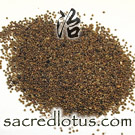
- Chief: Tu Si Zi (120 g) — tonifies Kidney yang and yin together without being overly warming or drying, binds essence, and is considered the classic fetus-calming herb.
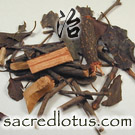
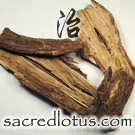
- Deputies: Sang Ji Sheng and Xu Duan (60 g each) tonify the Liver and Kidney, strengthen the low back and knees, and calm the fetus; Xu Duan additionally helps stop the abnormal bleeding of a restless fetus.
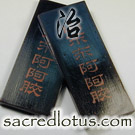
- Assistant: E Jiao (60 g, melted into the powder) nourishes blood and yin and is a classic hemostatic, checking the vaginal spotting that accompanies Kidney-deficient restless fetus.
The formula has no separate envoy herb — its four members work as a tight, single-purpose unit rather than a broad tonic.
Source: this site’s own composition record + Bensky & Barolet, Formulas & Strategies (chief/deputy/assistant analysis). Traditional-use framing; not medical advice.
Indications
What is Shou Tai Wan used for?
Shou Tai Wan treats restless fetus syndrome — threatened or habitual miscarriage — arising from Kidney deficiency. In TCM physiology the Kidney stores essence and anchors the Chong and Ren vessels that hold the fetus secure; when Kidney qi is insufficient, the fetus loses its mooring.
Its classic clinical presentation:
- Core signs: sore, weak low back (a hallmark Kidney-deficiency sign), vaginal spotting or bleeding during pregnancy, and a sensation of downward-bearing or restlessness in the abdomen.
- Accompanying Kidney-deficiency signs: dizziness and frequent urination.
- History: often applied where there is a pattern of habitual (recurrent) miscarriage, not only a single threatened episode.
Tongue and pulse: pale tongue with a white, slippery coat; submerged, frail pulse, most notably in the rear (chi/Kidney) position.
Source: this site’s own pattern/tongue/pulse record + Bensky & Barolet, Formulas & Strategies. Traditional-use framing; not medical advice.
Western Uses:
What is Shou Tai Wan used for in modern practice?
In modern integrative practice, Shou Tai Wan's Kidney-securing pattern is referenced alongside conventional care for threatened miscarriage and recurrent pregnancy loss. In the randomized trials reviewed in Chinese-medicine literature, "Shoutai pill" formulations (the classical base, sometimes modified) were used almost entirely as an adjunct to Western management — combined with progesterone, dydrogesterone, or hCG injection — rather than as a standalone substitute for medical evaluation and monitoring.
This biomedical correlate is offered as a reference to the formula’s traditional use, not as a claim that it treats miscarriage or any diagnosed condition on its own. Any bleeding or suspected pregnancy complication requires prompt evaluation by a qualified obstetric provider; herbal treatment, where used, belongs alongside that care, not in place of it.
Source: traditional-use correlate summarized from trial descriptions in Xu et al., Frontiers in Pharmacology 2023 systematic review (PMID 36865912); reference only, not a treatment claim.
Ingredients
4 substances in Shou Tai Wan — each links to its full herb monograph.
Preparation & dosage
How is Shou Tai Wan prepared?
Shou Tai Wan ("Fetus Longevity Pill") is prepared as pills: Tu Si Zi, Sang Ji Sheng and Xu Duan are ground to an even powder, and the E Jiao (donkey-hide gelatin) is dissolved in warm water (it is melted rather than ground) and used to bind the powder into pills. A typical dose is about 6 g, twice a day with warm water.
The formula secures the Kidneys to calm a restless fetus and is used, under medical and practitioner supervision, for threatened miscarriage — a situation that always requires prompt obstetric care. Available as granules.
Source: Sacred Lotus sources & references (composition and preparation note) + Bensky & Barolet, Formulas & Strategies.
Powdered pill (wan): Tu Si Zi 120 g, Sang Ji Sheng 60 g, Xu Duan 60 g ground to a fine powder; E Jiao 60 g melted in water and mixed in, formed into pills — reference relative amounts from Zhang Xichun's original recipe. Typical modern dose: 6 g, twice daily, with warm water. Some practitioners decoct the same four herbs as a tea instead of forming pills. Reference only; dosing in pregnancy should be individualized by a qualified practitioner.
Safety — read before use
What are the cautions for Shou Tai Wan?
Shou Tai Wan is built for Kidney-deficiency (vacuity) restless fetus and is not appropriate where bleeding or a restless fetus stems from heat or from qi/blood stagnation. Its warming, binding tonics can aggravate a heat pattern (e.g., bright-red bleeding, thirst, red tongue) or a stagnation pattern rather than help it, so pattern differentiation matters before use.
- Not a substitute for medical care: vaginal bleeding or spotting at any point in pregnancy warrants prompt evaluation by a qualified obstetric provider; in the clinical literature this formula is used alongside, not instead of, conventional monitoring and treatment.
- Contains E Jiao (donkey-hide gelatin), an animal-derived ingredient — relevant for those with dietary restrictions and worth noting given ongoing concerns about gelatin sourcing/authentication in the herb trade.
- Professional guidance required: as with any formula used during pregnancy, dosing and duration should be individualized and supervised by a qualified TCM practitioner in coordination with the patient’s prenatal care.
Source: Bensky & Barolet, Formulas & Strategies (cautions for Kidney-tonifying, fetus-securing formulas). Traditional-use framing; not medical advice.
Originally Appeared In:
- Records of Heart Felt Experiences in Medicine with References to the West (Yi Xue Zhong Zhong Can Xi Lu)
Notes:
How is Shou Tai Wan different from other fetus-calming formulas?
Shou Tai Wan is the narrowest of the classic fetus-securing formulas, targeting Kidney deficiency specifically — other formulas in the same family cover different root patterns behind a restless fetus.
- vs Tai Shan Pan Shi San: a larger, broader formula (qi and blood tonics such as Ren Shen, Huang Qi, Bai Zhu, Dang Gui plus Huang Qin and Sha Ren) for restless fetus from combined qi-and-blood deficiency with some heat, rather than Kidney deficiency alone.
- vs Jiao Ai Tang (E Jiao and Ai Ye with Si Wu Tang): addresses Chong/Ren vacuity-cold uterine bleeding with Blood-nourishing and warming herbs; Shou Tai Wan instead centers on Kidney-tonifying, essence-binding herbs (Tu Si Zi, Xu Duan, Sang Ji Sheng).
Common modifications reported in later clinical use: add Ren Shen/Dang Shen and Huang Qi for concurrent Spleen-qi deficiency and fatigue; add Bai Zhu for poor appetite or damp; add Huang Qin for heat signs with bleeding; add Sha Ren for nausea or qi stagnation. Origin: Zhang Xichun, Yi Xue Zhong Zhong Can Xi Lu (Records of Traditional Chinese Medicine in Dialogue with Western Medicine), early 20th century.
Discrepancy note: some modern sources use "Shou Tai Wan" loosely to refer to Zi Shen Yu Tai Wan (also marketed as Bu Shen Gu Chong Wan), a much larger, ~15-herb reproductive-support formula popularized by Dr. Luo Yuankai in the 1960s. That formula shares a few ingredients with Shou Tai Wan (including Tu Si Zi, Sang Ji Sheng, E Jiao, and Xu Duan) but is a distinct, later prescription. This site’s own composition record for this entry (4 herbs, Zhang Xichun's original ratios) matches the classical Shou Tai Wan, not the 15-herb formula.
Source: Bensky & Barolet, Formulas & Strategies (formula comparisons) + formula descriptions cross-referenced against multiple online sources (Zi Shen Yu Tai Wan/Bu Shen Gu Chong Wan sourcing).
Clinical Studies & Research:
Is there modern research on Shou Tai Wan?
Yes — systematic reviews of randomized trials and mechanistic studies on its component herbs, though most clinical trials tested Shou Tai Wan (or modified versions of it) as an add-on to conventional obstetric treatment rather than alone. A 2025 meta-analysis of 11 RCTs (888 participants) found Shoutai pills combined with conventional therapy nearly doubled the live-birth rate versus conventional therapy alone, with no significant increase in adverse events. A broader 2023 systematic review of Chinese herbal medicine for threatened miscarriage found Shoutai-pill-based regimens among the most frequently studied, generally combined with progesterone, dydrogesterone, or hCG.
- Recurrent miscarriage (clinical meta-analysis): Shoutai pills plus conventional care vs. conventional care alone across 11 RCTs — live-birth rate RR 1.88, early pregnancy loss RR 0.41, no significant difference in adverse events (PMID 40438584).
- Threatened miscarriage (clinical systematic review): Shoutai-pill-based Chinese herbal medicine, mostly combined with Western medicine, associated with higher continuation-of-pregnancy rates and no increased adverse-event risk versus Western medicine alone (PMID 36865912).
- Mechanism, herb-pair level (preclinical): systems-pharmacology analysis of the Tu Si Zi–Sang Ji Sheng pair (two of the formula's four herbs) mapped 31 targets onto MAPK, PI3K-Akt, and TGF-β signaling relevant to threatened abortion (PMID 32775426).
- Mechanism, single herb (preclinical): total flavones from Cuscuta chinensis (Tu Si Zi) reduced markers of abortion via the MAPK pathway in decidual cells and a rat model (PMID 30369955; PMC 6189658).
Sources: PubMed 40438584; PubMed 36865912; PubMed 32775426; PubMed 30369955 / PMC 6189658. Research context, not a therapeutic claim; trials studied Shoutai-pill formulations as an adjunct to conventional care, not as a replacement for it.
Sources & References
Compiled and edited by Thomas Dehli, Founder & Editor, Sacred Lotus Updated
The information here is referenced from numerous sources — teachers, practitioners, class notes from Five Branches University, the books below, and the published research literature, with citations given as resolvable PubMed identifiers. Where sources disagree, I have flagged the discrepancies directly. If facts couldn't be verified, I have left them out. How we source our content.
Reference information for students and practitioners — not medical advice. Consult a qualified practitioner. Terms of use.
Chinese Formulas Books & References
 https://amzn.to/4fYI3f8
 https://amzn.to/4j55NRA
 https://amzn.to/4gMROyv
 https://amzn.to/4h7msSK