
Jin Suo Gu Jing Wan
Metal Lock Pill to Stabilize the Essence
- Category
- Formulas that Stabilize and Bind
- Subcategory
- Formulas that Stabilize the Kidneys
- Ingredients
- 6 herbs
Actions
What does Jin Suo Gu Jing Wan do?
Jin Suo Gu Jing Wan (“Metal Lock Pill to Stabilize the Essence,” also called Golden Lock Tea Pill) stabilizes the Kidney and binds the essence (gu shen se jing). All six ingredients work toward one purely astringent goal — closing the “gate” that has failed to hold the essence — rather than tonifying Kidney yin or yang directly.
The six ingredients divide by role:
- Chief: Sha Yuan Zi (Semen Astragali Complanati), Qian Shi (Semen Euryales), and Lian Zi/Lian Rou (Semen Nelumbinis) — sweet, astringent Kidney (and Spleen) tonics that bind and secure the essence together.
- Deputy: Lian Xu (Stamen Nelumbinis, lotus stamen) — reinforces the astringent action of the chief herbs and helps connect Heart and Kidney.
- Assistants: Long Gu (Os Draconis, crispy-fried) and Mu Li (Concha Ostreae, calcined) — heavy, settling mineral astringents that further bind essence and steady a floating, unanchored Kidney qi.
Classically the pills are taken with a little warm salted water, which is thought to guide the formula’s action to the Kidney (salt is associated with the Kidney channel).
Source: Sacred Lotus sources & references + Bensky & Barolet, Formulas & Strategies (chief/deputy/assistant analysis). Traditional-use framing; not medical advice.
Indications
What is Jin Suo Gu Jing Wan used for?
Jin Suo Gu Jing Wan treats Kidney deficiency with an unstable (non-astringed) essence — a pattern where the Kidney qi is too weak to “hold the gate” that keeps the essence contained, so it leaks out even without dream-disturbed heat driving it.
Its classic clinical presentation:
- Essence leakage without dreams: spermatorrhea/nocturnal emission that occurs without dreaming (distinguishing it from fire-driven, dream-disturbed emission), and premature ejaculation.
- Kidney-deficiency signs: sore, weak lower back and knees, general fatigue and lack of strength, tinnitus or reduced hearing.
- Related leakage: traditionally also applied where urination is frequent and turbid, or dribbles after voiding, reflecting the same failure to secure and contain.
Tongue and pulse: pale tongue with a white coat; thin, frail pulse — both pointing to underlying deficiency rather than heat or excess.
Source: Sacred Lotus sources & references on pattern/tongue/pulse + Bensky & Barolet, Formulas & Strategies. Traditional-use framing; not medical advice.
Western Uses:
What is Jin Suo Gu Jing Wan used for in modern practice?
In modern TCM practice, this pattern — Kidney qi too weak to secure the essence — is traditionally correlated with complaints such as recurrent seminal emission, premature ejaculation, and (less centrally) frequent or turbid urination. Contemporary clinical references on Chinese patent medicines describe practitioners reaching for this formula in cases resembling what Western medicine might label chronic prostatitis-related seminal leakage or mild proteinuria of a deficiency type, when the presentation fits the traditional pattern above.
These biomedical correlates describe how the traditional pattern maps onto modern diagnostic language; they are not a claim that the formula treats any diagnosed disease, and no formula-level clinical trials were located to support such claims (see research). Any use for a diagnosed condition belongs with a qualified practitioner and appropriate medical care.
Source: traditional-use correlates summarized from Bensky & Barolet, Formulas & Strategies, and contemporary TCM clinical/patent-medicine references; reference only, not a treatment claim.
Ingredients
6 substances in Jin Suo Gu Jing Wan — each links to its full herb monograph.
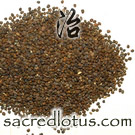 Sha Yuan Zi60 gTonify Yang
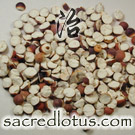 Qian Shi60 gAstringe, Stabilize, Bind
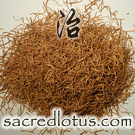 Lian Xu60 gAstringe, Stabilize, Bind
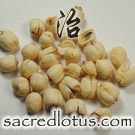 Lian Zi120 gAstringe, Stabilize, Bind
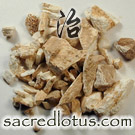 Long Gu30 gcrispy-friedAnchor, Settle, and Calm the Spirit
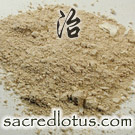 Mu Li30 gcalcinedAnchor, Settle, and Calm the Spirit
Preparation & dosage
How is Jin Suo Gu Jing Wan prepared?
Classically the six herbs are ground to powder and formed into pills with a lotus-root/lotus-seed powder paste, then taken with a little warm, lightly salted water — the salt is traditionally thought to guide the formula’s action into the Kidney channel. Long Gu is crispy-fried and Mu Li is calcined before use, standard processing that makes these mineral astringents easier to powder and (traditionally) enhances their astringent, settling action.
It may also be prepared as a decoction, in which case the individual herb amounts are reduced from the pill-making quantities below.
Source: Sacred Lotus sources & references/processing notes + Bensky & Barolet, Formulas & Strategies (pill preparation with salt-water vehicle). Traditional-use framing; not medical advice.
Traditionally powdered and pilled with lotus-root paste; standard patent-pill dose is about 9 g, taken with warm, lightly salted water. Reference relative amounts for pill-making (per Sacred Lotus sources & references): Lian Zi (Lian Rou) 120 g; Sha Yuan Zi, Qian Shi, Lian Xu 60 g each; Long Gu (crispy-fried), Mu Li (calcined) 30 g each. If decocted, reduce these amounts proportionally. Reference only.
Safety — read before use
What are the cautions for Jin Suo Gu Jing Wan?
Jin Suo Gu Jing Wan is a symptomatic astringent — it secures the essence without correcting whatever underlying imbalance let it leak in the first place. It does not nourish Kidney yin, warm Kidney yang, or clear fire, so on its own it addresses the branch (biao), not the root (ben).
- Wrong pattern for fire: if emission is dream-disturbed and accompanied by heat signs (red tongue, rapid pulse, five-palm heat, restlessness), the root is usually Kidney yin deficiency with empty fire disturbing the essence chamber — this formula’s pure astringency is not designed for that presentation and a yin-nourishing, fire-clearing approach is indicated instead.
- Avoid with damp-heat or active pathogens in the lower burner: as with most strongly astringent formulas, using it where damp-heat, infection, or another excess condition is present risks “locking the door with the thief still inside.”
- Root cause should be addressed: Bensky & Barolet note this formula is commonly combined with a formula that tonifies the underlying Kidney yin or yang deficiency (or clears fire, if present) rather than relied on alone for ongoing leakage (see notes for common pairings).
Source: Bensky & Barolet, Formulas & Strategies (cautions for purely astringent essence-securing formulas). Traditional-use framing; not medical advice.
Originally Appeared In:
- Analytic Collection of Medicinal Formulas (Yi Fang Ji Jie)
Notes:
How does Jin Suo Gu Jing Wan compare to other essence-securing and Kidney formulas?
Jin Suo Gu Jing Wan is deliberately narrow: it astringes and secures, and nothing more. Because it does not address the root imbalance behind the leakage, it is frequently paired with (or exchanged for) a formula that does.
- vs Liu Wei Di Huang Wan: add or substitute when the underlying pattern is Kidney yin deficiency (dry mouth, night sweats, malar flush) rather than plain qi-level insecurity.
- vs Jin Gui Shen Qi Wan: add or substitute when the underlying pattern is Kidney yang deficiency (cold, clear copious urination, cold limbs) rather than plain qi-level insecurity.
- For dream-disturbed, fire-type emission: a yin-nourishing, fire-clearing strategy (e.g. formulas built on Zhi Bai Di Huang Wan) is generally chosen instead of, or added to, this formula.
- vs Sang Piao Xiao San: Sang Piao Xiao San also secures essence and urine but adds Ren Shen and Fu Shen to tonify Heart and Kidney together and calm the shen — it is favored when urinary frequency/incontinence is accompanied by more pronounced Heart-Kidney disconnection (poor memory, unsettled spirit).
Source: Bensky & Barolet, Formulas & Strategies (comparisons and combinations for essence-securing formulas).
Clinical Studies & Research:
Is there modern research on Jin Suo Gu Jing Wan?
No dedicated clinical trials or mechanistic studies of the complete formula were found indexed in PubMed under its English, pinyin, or Chinese-character names as of this review — it has not been a research focus in its own right. Two of its three chief herbs, however, have documented kidney-relevant pharmacology studied independently of this formula.
- Sha Yuan Zi (Semen Astragali Complanati): an ethnopharmacological/phytochemical/pharmacological review covers its documented actions (PMID 24933224); its major flavonoid, complanatoside A, was shown to block renal fibrosis in diabetic mice via NOX4 (PMID 35843189).
- Qian Shi (Euryale ferox seed): reviewed for its material basis and mechanism in preventing/treating diabetic kidney disease (PMID 36165567), and shown to improve oxidative stress markers in a diabetic-nephropathy mouse model (PMID 36832842).
Sources: PubMed 24933224; PubMed 35843189; PubMed 36165567; PubMed 36832842. These are single-herb, preclinical findings offered as mechanistic context for the formula’s Kidney-securing chief herbs — not evidence for the finished formula, and not a therapeutic claim.
Sources & References
Compiled and edited by Thomas Dehli, Founder & Editor, Sacred Lotus Updated
The information here is referenced from numerous sources — teachers, practitioners, class notes from Five Branches University, the books below, and the published research literature, with citations given as resolvable PubMed identifiers. Where sources disagree, I have flagged the discrepancies directly. If facts couldn't be verified, I have left them out. How we source our content.
Reference information for students and practitioners — not medical advice. Consult a qualified practitioner. Terms of use.
Chinese Formulas Books & References
 https://amzn.to/4fYI3f8
 https://amzn.to/4j55NRA
 https://amzn.to/4gMROyv
 https://amzn.to/4h7msSK