
Sang Piao Xiao San
Mantis Egg Case Powder
- Category
- Formulas that Stabilize and Bind
- Subcategory
- Formulas that Stabilize the Kidneys
- Ingredients
- 8 herbs
Actions
What does Sang Piao Xiao San do?
Sang Piao Xiao San regulates and tonifies the Heart and Kidney, stabilizes essence, and stops excessive urination. It is built for a pattern in which Heart and Kidney fail to communicate: Kidney deficiency lets essence and urine leak, while the Heart, deprived of that Kidney support, cannot settle the spirit — so the formula pairs astringent Kidney tonics with herbs that calm the Heart and open its orifices.
The eight ingredients divide by role:
- Chief: Sang Piao Xiao (mantis egg-case) tonifies the Kidney and directly astringes and secures urine — the formula’s namesake action.
- Deputies: Long Gu astringes essence and urine while calming the spirit and anchoring floating yang; Gui Ban nourishes Kidney yin and anchors yang, reinforcing the Heart–Kidney link.
- Assistants: Ren Shen tonifies source qi and calms the spirit, paired with Dang Gui to build qi and blood together; Fu Shen and Yuan Zhi calm the Heart, settle the spirit, and open the Heart orifices to restore Heart–Kidney communication; Shi Chang Pu is aromatic and opens the orifices alongside Yuan Zhi, clearing mental fog.
Source: Sacred Lotus sources & references + Bensky & Barolet, Formulas & Strategies (chief/deputy/assistant analysis). Traditional-use framing; not medical advice.
Indications
What is Sang Piao Xiao San used for?
Sang Piao Xiao San treats Heart-and-Kidney deficiency in which the two organs fail to communicate — Kidney deficiency lets urine and essence escape unchecked, while the un-anchored Heart leaves the spirit unsettled and the mind foggy. It is a classic choice when urinary-leakage symptoms and mental/spirit symptoms appear together rather than in isolation.
Its classic clinical presentation:
- Urinary: frequent urination, urinary incontinence or enuresis (bedwetting), and cloudy or turbid urine.
- Essence: spermatorrhea (involuntary seminal emission).
- Heart/spirit: disorientation, forgetfulness, mental fogginess, and an unsettled spirit.
Tongue and pulse: pale tongue with a white coat; thin, slow, and frail pulse.
Source: Sacred Lotus sources & references on pattern/tongue/pulse + Bensky & Barolet, Formulas & Strategies. Traditional-use framing; not medical advice.
Western Uses:
What is Sang Piao Xiao San used for in modern practice?
In modern practice Sang Piao Xiao San is referenced for the traditional pattern behind pediatric bedwetting, adult urinary frequency or stress-related leakage, and involuntary seminal emission, alongside associated fatigue, poor concentration, or forgetfulness. Practitioners have traditionally applied it where Western medicine would describe nocturnal enuresis, overactive-bladder-type urinary frequency, or premature/involuntary ejaculation occurring together with stress, poor sleep, or mental fatigue.
These biomedical correlates are offered as a reference to the formula’s traditional use, not as a claim that it treats any diagnosed condition. Direct clinical-trial evidence on the compound formula itself is sparse (see research); persistent or new-onset urinary symptoms should be evaluated by a qualified practitioner to rule out an underlying structural or medical cause.
Source: traditional-use correlates summarized from Bensky & Barolet, Formulas & Strategies; reference only, not a treatment claim.
Ingredients
8 substances in Sang Piao Xiao San — each links to its full herb monograph.
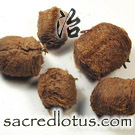 Sang Piao Xiao9-12 gAstringe, Stabilize, Bind
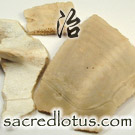 Gui Ban9-15 ghoney-friedTonify Yin
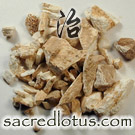 Long Gu12-30 gAnchor, Settle, and Calm the Spirit
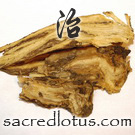 Dang Gui6-9 gTonify Blood
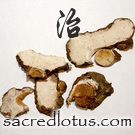 Fu Shen9-12 gRegulate Water and Drain Dampness
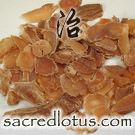 Ren Shen9-12 gTonify Qi
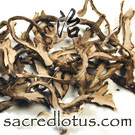 Shi Chang Pu6-9 gAromatic Substances that Open the Orifices
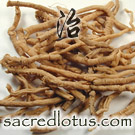 Yuan Zhi3-6 gNourish the Heart and Calm the Spirit
Preparation & dosage
How is Sang Piao Xiao San prepared?
Classically prepared as a fine powder (san) taken at bedtime washed down with a ginseng decoction — the original form named in the formula’s title. In contemporary practice it is more commonly given as a decoction (tang) of the same eight herbs in the same proportions.
- Shell/bone substances first: Long Gu and Gui Ban are dense and are conventionally decocted first, roughly 20–30 minutes, before the remaining herbs are added.
- Gui Ban preparation: conventionally honey-fried (zhi Gui Ban) rather than raw.
- Timing: in both powder and decoction form, an evening/bedtime dose is traditional given the formula’s use for nighttime urinary leakage and unsettled spirit.
Source: Sacred Lotus amount notation (Gui Ban, honey-fried) + Bensky & Barolet, Formulas & Strategies (traditional powder form and preparation). Reference only.
Classically a powder (san) taken at bedtime with a ginseng decoction; commonly given today as a decoction of the same herbs. Reference relative amounts: Long Gu 12-30 g; Gui Ban 9-15 g (honey-fried); Sang Piao Xiao, Ren Shen, Fu Shen 9-12 g; Shi Chang Pu, Dang Gui 6-9 g; Yuan Zhi 3-6 g. Long Gu and Gui Ban are decocted first. Reference only.
Safety — read before use
What are the cautions for Sang Piao Xiao San?
Sang Piao Xiao San is an astringing, tonifying formula for deficiency, so it is inappropriate wherever an excess or heat pattern is driving the urinary symptoms. Locking in urine and essence with astringents while a damp-heat or infectious process is active can trap the pathogen and worsen it, so correct pattern identification comes first.
- Avoid in Damp-Heat patterns — burning, urgent, or dark urine — and in acute urinary tract infection with clear heat signs.
- Use cautiously in yin deficiency with effulgent (empty) fire — night sweats, malar flush, a rapid pulse — where its warming, astringent thrust is not the best fit.
- Spleen deficiency with dampness: the rich tonics (Ren Shen, Gui Ban) can burden weak digestion — watch for bloating or reduced appetite.
- New-onset, persistent, or painful urinary symptoms — or enuresis that does not resolve — warrant professional evaluation to exclude an underlying structural or medical cause rather than astringent treatment alone.
Source: Bensky & Barolet, Formulas & Strategies (cautions for astringent Kidney-essence formulas). Traditional-use framing; not medical advice.
Originally Appeared In:
- Extension of the Materia Medica (Ben Cao Yan Yi)
Notes:
How is Sang Piao Xiao San different from Suo Quan Wan, Jin Suo Gu Jing Wan, and Tian Wang Bu Xin Dan?
Sang Piao Xiao San is distinguished by pairing Kidney-astringing herbs with Heart-calming, spirit-settling herbs — it treats urinary/essence leakage that comes bundled with disorientation, forgetfulness, and an unsettled spirit, not urinary leakage alone.
- vs Suo Quan Wan: a simpler, warmer formula that astringes Kidney qi and reduces urination directly, without the Heart-calming, orifice-opening herbs — choose it when there is no Heart–Kidney disharmony or mental-fog component.
- vs Jin Suo Gu Jing Wan: focuses more narrowly on securing essence for spermatorrhea using shell/mineral astringents, without Sang Piao Xiao San’s Kidney-yin nourishment (Gui Ban) or its emphasis on restoring Heart–Kidney communication.
- vs Tian Wang Bu Xin Dan: nourishes yin and clears heat for a more pronounced yin-deficiency-with-heat pattern of insomnia and anxiety (more cooling herbs, no astringents) — Sang Piao Xiao San is milder and warmer, aimed primarily at urinary/essence leakage with secondary mental symptoms.
Origin: attributed to Kou Zongshi, recorded in the Ben Cao Yan Yi (Extended Materia Medica), 1116 CE (Song dynasty).
Source: Bensky & Barolet, Formulas & Strategies (comparative formula analysis and provenance).
Clinical Studies & Research:
Is there modern research on Sang Piao Xiao San?
Direct clinical-trial evidence on the eight-herb compound formula is sparse in PubMed-indexed literature; the clearest formula-level pharmacology comes from an animal-model study of a modern product built on the same original prescription. Using orthogonal-design experiments, researchers optimizing Gutianquan capsule — formulated from the original Sangpiaoxiao Pulvis (Sang Piao Xiao San) prescription — found the traditional composition produced the strongest anti-diuretic effect in rats and sedative-hypnotic effect in mice, supporting the formula’s traditional actions of stopping urination and calming the spirit.
- Formula-level pharmacology (preclinical): orthogonal-design optimization of Gutianquan capsule confirmed the original Sang Piao Xiao San proportions gave the best anti-diuretic (rat) and sedative (mouse) activity (PMID 15058211).
- Chief herb, kidney protection (preclinical, single herb only): Sang Piao Xiao (Ootheca Mantidis) attenuated renal interstitial fibrosis in mice via gut-microbiota modulation (PMID 37677965).
- Chief herb, nephroprotective peptides (preclinical, single herb only): bioactive peptides isolated from Sang Piao Xiao (Mantidis Oötheca) inhibited complement C3 and protected against drug-induced kidney injury in cell and mouse models (PMID 41571360).
Sources: PubMed 15058211; PubMed 37677965; PubMed 41571360. The latter two studies concern the single chief herb, not the eight-herb compound formula. Research context, not a therapeutic claim; direct clinical trial evidence on the formula remains limited.
Sources & References
Compiled and edited by Thomas Dehli, Founder & Editor, Sacred Lotus Updated
The information here is referenced from numerous sources — teachers, practitioners, class notes from Five Branches University, the books below, and the published research literature, with citations given as resolvable PubMed identifiers. Where sources disagree, I have flagged the discrepancies directly. If facts couldn't be verified, I have left them out. How we source our content.
Reference information for students and practitioners — not medical advice. Consult a qualified practitioner. Terms of use.
Chinese Formulas Books & References
 https://amzn.to/4fYI3f8
 https://amzn.to/4j55NRA
 https://amzn.to/4gMROyv
 https://amzn.to/4h7msSK