

Gui Zhi Jia Long Gu Mu Li Tang
Cinnamon Twig Decoction Plus Dragon Bone and Oyster Shell
- Category
- Formulas that Stabilize and Bind
- Subcategory
- Formulas that Stabilize the Kidneys
- Ingredients
- 7 herbs
Actions
What does Gui Zhi Jia Long Gu Mu Li Tang do?
Gui Zhi Jia Long Gu Mu Li Tang harmonizes yin and yang and anchors the floating, unrooted yang that lets essence, fluids, and spirit leak out. It is the classic Gui Zhi Tang formula (Gui Zhi, Bai Shao, Sheng Jiang, Da Zao, Gan Cao) — which regulates the flow of construction (ying) and defense (wei) qi — with Long Gu and Mu Li added to settle the spirit and astringe what a destabilized yin-yang relationship can no longer contain.
The seven ingredients divide by role:
- Chief: Gui Zhi warms and moves yang qi through the channels and drives the exterior ying-wei harmonization that underlies the formula.
- Deputies: Bai Shao nourishes yin and blood and restrains Gui Zhi’s dispersing warmth, forming the classic Gui Zhi Tang pair; Long Gu and Mu Li — the herbs that define this modified formula — anchor the Heart spirit, subdue floating yang, and astringe the seminal, sweat, and blood leakage caused by yin-yang disharmony.
- Assistants: Sheng Jiang and Da Zao support Gui Zhi Tang’s harmonizing action on the Spleen and Stomach and help generate qi and fluids.
- Envoy: Gan Cao harmonizes all seven herbs.
Source: Sacred Lotus sources & references + cross-checked chief/deputy/assistant/envoy analysis (Bensky & Barolet framework; classical Jin Gui Yao Lue commentary). Traditional-use framing; not medical advice.
Indications
What is Gui Zhi Jia Long Gu Mu Li Tang used for?
Gui Zhi Jia Long Gu Mu Li Tang treats yin-yang disharmony with loss of essence — the classical Jin Gui Yao Lue pattern in which Heart yang and Kidney yin/essence no longer anchor each other, so what should stay contained (semen, sweat, blood, even the spirit itself) leaks or floats free.
Its classic clinical presentation:
- Men: seminal emission (spermatorrhea) with tension or tightness in the lower abdomen, cold genitals.
- Women: dream intercourse (vivid, disturbing erotic dreams), irregular menstruation.
- Shared signs: palpitations, easy startling, anxiety, dizziness, hair loss, night sweats or spontaneous sweating, and light, dream-disturbed sleep.
Pulse: per the Jin Gui Yao Lue the pulse is extremely deficient, hollow (empty, like pressing a scallion stalk), and slow — recorded here as a “hollow slow pulse.”
Source: Sacred Lotus sources & references on pattern/pulse + Bensky & Barolet, Formulas & Strategies + Jin Gui Yao Lue (Zhang Zhongjing). Traditional-use framing; not medical advice.
Western Uses:
What is Gui Zhi Jia Long Gu Mu Li Tang used for in modern practice?
In modern practice this formula is referenced for anxiety, insomnia with restless or dream-disturbed sleep, night sweats, and premature ejaculation or spermatorrhea linked to a heart-kidney-disharmony pattern. Practitioners have also applied it, often modified, to panic-type anxiety, trauma-related hyperarousal, and menopausal sleep disturbance — contexts where Western medicine recognizes anxious hyperarousal, disrupted sleep, or sexual dysfunction.
These biomedical correlates describe the formula’s traditional use, not a claim that it treats any diagnosed disease. Its name is also easily confused with two related but differently-composed formulas — Gui Zhi Gan Cao Long Gu Mu Li Tang (a simpler four-herb Shang Han Lun formula without Bai Shao, Sheng Jiang, or Da Zao) and Chai Hu Jia Long Gu Mu Li Tang (built on Xiao Chai Hu Tang, containing Chai Hu) — whose separate research bases do not transfer to this seven-herb formula (see research). Any use for a diagnosed condition belongs with a qualified practitioner and appropriate medical care.
Source: traditional-use correlates summarized from Bensky & Barolet, Formulas & Strategies, and modern clinical-formula literature; reference only, not a treatment claim.
Ingredients
7 substances in Gui Zhi Jia Long Gu Mu Li Tang — each links to its full herb monograph.
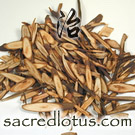 Gui Zhi9 gWarm, Spicy Herbs that Release the Exterior
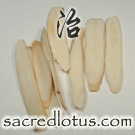 Bai Shao9 gTonify Blood
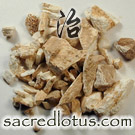 Long Gu15-30 gAnchor, Settle, and Calm the Spirit
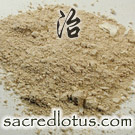 Mu Li15-30 gAnchor, Settle, and Calm the Spirit
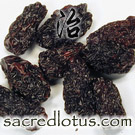 Da Zao4 piecesTonify Qi
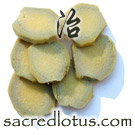 Sheng Jiang9 gWarm, Spicy Herbs that Release the Exterior
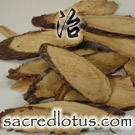 Gan Cao6 gTonify Qi
Preparation & dosage
How is Gui Zhi Jia Long Gu Mu Li Tang prepared?
Decocted in water, with Long Gu and Mu Li crushed and simmered first. Because they are dense mineral/shell substances, Long Gu and Mu Li are conventionally added to the water and pre-decocted for roughly 20–45 minutes before the remaining five herbs go in, so their calming, astringent constituents fully extract.
Source: Sacred Lotus sources & references + standard mineral/shell decoction practice (Bensky & Barolet, Formulas & Strategies).
Decoction; Long Gu and Mu Li crushed and pre-decocted 20-45 minutes before the remaining five herbs are added. Reference amounts (Sacred Lotus, consistent with classical Jin Gui Yao Lue proportions): Gui Zhi, Bai Shao, Sheng Jiang 9 g each; Gan Cao 6 g; Da Zao 4 pieces; Long Gu, Mu Li 15-30 g each (dose scales with severity of leakage/agitation). Reference only; consult a qualified practitioner for individualized dosing.
Safety — read before use
What are the cautions for Gui Zhi Jia Long Gu Mu Li Tang?
This formula is warm and astringent, so it is unsuitable for excess heat, yin deficiency with vigorous fire, or an unresolved exterior condition — the warming Gui Zhi Tang base and the astringing mineral shells can aggravate heat or lock in a pathogen that should instead be released.
- Avoid or use cautiously with genuine excess-heat patterns, marked yin-deficient heat, or pronounced dampness (greasy tongue coating, heaviness, distention) — the mineral shells can burden a weak, damp Spleen and cause loose stools.
- Preparation matters: Long Gu and Mu Li are dense mineral/shell substances and are conventionally decocted first (see preparation).
- Herb-drug spacing: Long Gu and Mu Li are calcium-rich and can bind to, and reduce absorption of, tetracycline- and fluoroquinolone-class antibiotics, bisphosphonates, levothyroxine, and iron supplements; conventional guidance is to separate dosing by at least two hours.
Source: Bensky & Barolet, Formulas & Strategies (cautions for warming/astringent formulas) + general mineral-shell herb-drug interaction guidance. Traditional-use framing; not medical advice.
Originally Appeared In:
- Essentials from the Golden Cabinet (Jin Gui Yao Lue)
Notes:
How is Gui Zhi Jia Long Gu Mu Li Tang different from other "jia Long Gu Mu Li" formulas?
Gui Zhi Jia Long Gu Mu Li Tang is the full Gui Zhi Tang (Gui Zhi, Bai Shao, Sheng Jiang, Da Zao, Gan Cao) plus Long Gu and Mu Li — distinct from two similarly named formulas it is often confused with:
- vs Gui Zhi Gan Cao Long Gu Mu Li Tang (Shang Han Lun): a simpler four-herb formula (Gui Zhi, Zhi Gan Cao, Long Gu, Mu Li only — no Bai Shao, Sheng Jiang, or Da Zao) for a more acute case of restlessness after excessive sweating depletes Heart yang.
- vs Chai Hu Jia Long Gu Mu Li Tang: built on Xiao Chai Hu Tang (Chai Hu, Huang Qin, and other Shaoyang herbs, plus Long Gu, Mu Li, and other additions) for Shaoyang-stage agitation with constraint — a structurally unrelated formula despite the shared name.
Common modifications: add Long Chi (dragon’s teeth) for stronger spirit-calming; add Wu Wei Zi or Suan Zao Ren when yin/essence loss is more pronounced; add Fu Xiao Mai and Ma Huang Gen for prominent night sweats; add heat-clearing herbs when floating yang shows more heat signs.
Source: Bensky & Barolet, Formulas & Strategies (formula-family comparison) + classical formula-name cross-check (Jin Gui Yao Lue vs Shang Han Lun vs Chai Hu-family sources).
Clinical Studies & Research:
Is there modern research on Gui Zhi Jia Long Gu Mu Li Tang?
Yes, though direct trials on this exact seven-herb formula are limited, and its name is easily confused with two related but differently-composed formulas that have larger, separate research bases. A 2024 Chinese meta-analysis pooled 17 randomized controlled trials (1,395 patients) of Gui Zhi Jia Long Gu Mu Li Tang for insomnia and reported a higher clinical effective rate and greater reduction in Pittsburgh Sleep Quality Index (PSQI) scores than control treatment.
- Insomnia (meta-analysis of RCTs): 17 trials, 1,395 patients; higher effective rate and greater PSQI improvement vs. control (DOI 10.3969/j.issn.2095-7130.2024.01.014).
- Name-alike formulas, not this one: Guizhi Gancao Longgu Muli Tang (a simpler four-herb variant, no Bai Shao/Sheng Jiang/Da Zao) has its own separate insomnia/menopause research (e.g. PubMed 29956898; PubMed 32118720), and Chai Hu Jia Long Gu Mu Li Tang (a Xiao Chai Hu Tang-based formula) has a separate depression/post-stroke research base (e.g. PubMed 34457030; PubMed 37808199) — both excluded here because their compositions do not match this formula.
Sources: DOI 10.3969/j.issn.2095-7130.2024.01.014 (Chinese meta-analysis, insomnia). Name-alike-formula PMIDs are listed for disambiguation only, not as evidence for this formula. Research context, not a therapeutic claim; robust English-language clinical-trial evidence for this specific formula remains limited.
Sources & References
Compiled and edited by Thomas Dehli, Founder & Editor, Sacred Lotus Updated
The information here is referenced from numerous sources — teachers, practitioners, class notes from Five Branches University, the books below, and the published research literature, with citations given as resolvable PubMed identifiers. Where sources disagree, I have flagged the discrepancies directly. If facts couldn't be verified, I have left them out. How we source our content.
Reference information for students and practitioners — not medical advice. Consult a qualified practitioner. Terms of use.
Chinese Formulas Books & References
 https://amzn.to/4fYI3f8
 https://amzn.to/4j55NRA
 https://amzn.to/4gMROyv
 https://amzn.to/4h7msSK