
Zhi Gan Cao Tang Zhì Gān Cǎo Tāng
Honey Fried Licorice Decoction
- Category
- Formulas that Tonify
- Subcategory
- Formulas that Tonify the Qi and Blood
- Ingredients
- 9 herbs
Actions
What does Zhi Gan Cao Tang do?
Zhi Gan Cao Tang (Honey Fried Licorice Decoction) tonifies qi and blood, nourishes yin, and gently warms and unblocks the Heart yang to restore a weak, irregular pulse. It is the classic formula for palpitations with a knotted or intermittent pulse arising from qi-and-blood deficiency in a consumptive, yin-depleted body — hence its alternate name Fu Mai Tang, “Restore the Pulse Decoction.”
How the ingredients work together:
- Chief — Zhi Gan Cao (honey-fried licorice, 12 g): tonifies qi, benefits the Heart, and supports generation of qi and blood; the formula is named for it.
- Deputies — Sheng Di Huang (a large 24 g dose), with E Jiao and Mai Men Dong: richly nourish yin, blood, and fluids to fill the vessels.
- Assistants — Ren Shen and Da Zao: tonify the qi that generates blood; Huo Ma Ren moistens.
- Envoys — Gui Zhi and Sheng Jiang (with wine): warm and unblock the yang and move qi and blood through the vessels so the pulse is restored.
Source: Sacred Lotus sources & references (composition); owner’s Five Branches / Bensky formula notes; Bensky & Barolet, Chinese Herbal Medicine: Formulas & Strategies. Traditional-use framing; not medical advice.
Indications
What is Zhi Gan Cao Tang used for?
It is used for palpitations with a knotted or intermittent (arrhythmic) pulse caused by deficiency of qi, blood, and yin affecting the Heart — the classic “consumptive” presentation. Alongside the palpitations there is often irritability, insomnia, shortness of breath, a wan complexion, and signs of fluid depletion.
Typical pattern and presentation:
- Cardinal signs — palpitations, a pulse that is knotted (jie) or intermittent (dai) and misses beats, or thin, weak, and rapid.
- Consumptive / yin-depletion signs — emaciation, dry mouth and throat, a dry cough with little or no sputum, dry constipation, spontaneous or night sweats.
- Tongue — pale with a scanty or absent (mirror-like) coat.
Source: live Sacred Lotus sources & references (tongue: pale with little coat; pulse: weak, irregular, thin; or weak, rapid); owner’s Five Branches / Bensky formula notes. Traditional pattern description, not a diagnosis.
Western Uses:
How is Zhi Gan Cao Tang framed in modern practice?
In modern practice Zhi Gan Cao Tang is used as a reference formula for deficiency-type presentations that overlap with functional cardiac complaints — the pattern of palpitations with an irregular pulse that classical texts describe. Chinese clinical reports most often study it in the setting of premature ventricular contractions and other arrhythmias in weak, deficient patients.
This is a framing note, not a treatment claim:
- Pattern-first — it is selected for the TCM pattern (qi/blood/yin deficiency with an arrhythmic pulse), not for any biomedical diagnosis.
- Overlap terms — the reviewed literature discusses premature ventricular contractions and supraventricular arrhythmia in deficiency patterns.
Source: reviewed clinical literature (see Research). Reference framing only; palpitations and any irregular heartbeat need evaluation by a licensed clinician — not medical advice.
Ingredients
9 substances in Zhi Gan Cao Tang — each links to its full herb monograph.
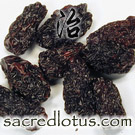 Da Zao5-10 piecesTonify Qi
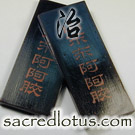 E Jiao6 gTonify Blood
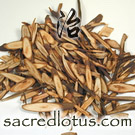 Gui Zhi9 gWarm, Spicy Herbs that Release the Exterior
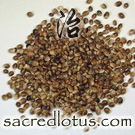 Huo Ma Ren9 gcrushedMoist Laxatives
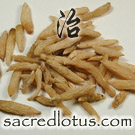 Mai Men Dong9 gTonify Yin
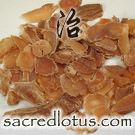 Ren Shen6 gTonify Qi
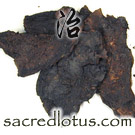 Sheng Di Huang24 gCool the Blood
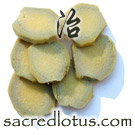 Sheng Jiang9 gWarm, Spicy Herbs that Release the Exterior
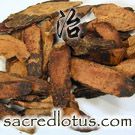 Zhi Gan Cao12 gTonify Qi
Preparation & dosage
How is Zhi Gan Cao Tang prepared?
Zhi Gan Cao Tang ("Honey-fried Licorice Decoction") is prepared as a water decoction (tang) of Zhi Gan Cao (the chief), Ren Shen, Gui Zhi, Sheng Di Huang, Mai Men Dong, Huo Ma Ren, Sheng Jiang and Da Zao, with two off-heat additions.
After straining, about 10 ml of rice wine is stirred into the hot decoction (to help move and warm the blood), and the E Jiao (donkey-hide gelatin) is dissolved into it rather than boiled. It is taken as one-third of the batch, three times a day. 2–3 times the dose of Dang Shen is usually substituted for Ren Shen. Used for a weak, irregular ("knotted") pulse and palpitations. Available as granules.
Source: Sacred Lotus sources & references (composition and preparation note) + Bensky & Barolet, Formulas & Strategies.
Decoction. Classical amounts: Zhi Gan Cao 12 g, Sheng Di Huang 24 g, Ren Shen 6 g, Gui Zhi 9 g, Mai Men Dong 9 g, Huo Ma Ren 9 g (crushed), E Jiao 6 g, Sheng Jiang 9 g, Da Zao 5-10 pieces. Cook with added rice wine; dissolve E Jiao into the strained decoction. Reference only, not a prescription.
Safety — read before use
What are the cautions for Zhi Gan Cao Tang?
The formula is rich, sweet, and cloying, so it can burden a weak Spleen and Stomach. Use it with caution where there is Spleen/Stomach deficiency with dampness — poor appetite, abdominal fullness, or loose stools — and it is not appropriate for excess or damp patterns, or for palpitations from heat or phlegm rather than deficiency.
- Licorice load — it contains a substantial dose of Zhi Gan Cao (12 g); prolonged or high-dose licorice (glycyrrhizin) is traditionally linked to fluid retention, raised blood pressure, and low potassium, so supervision matters.
- Classical incompatibility — per the Eighteen Incompatibilities, Gan Cao is not combined with Gan Sui, Da Ji, Yuan Hua, or Hai Zao.
- Cardiac symptoms — an irregular heartbeat warrants professional evaluation; do not self-treat.
Source: owner’s Five Branches / Bensky formula notes; classical incompatibility lists; materia medica cautions on licorice. Reference only.
Originally Appeared In:
- On Cold Damage (Shang Han Lun)
Notes:
How does Zhi Gan Cao Tang compare with related formulas, and how is it modified?
Zhi Gan Cao Tang is distinguished by nourishing yin and blood strongly enough to fill the vessels and restore an irregular pulse — a focus its neighbors do not share. It is also known as Fu Mai Tang (Restore the Pulse Decoction).
- vs Sheng Mai San — both address qi-and-yin deficiency of the Heart, but Sheng Mai San (Ren Shen, Mai Men Dong, Wu Wei Zi) targets qi-and-yin collapse with profuse sweating; Zhi Gan Cao Tang more richly nourishes blood and yin and specifically restores a knotted/intermittent pulse.
- vs Gui Pi Tang — Gui Pi Tang tonifies qi and blood via the Spleen and Heart for palpitations from Spleen–Heart deficiency, but it does not nourish yin or aim at an arrhythmic pulse.
Common modifications: for marked palpitations, anxiety, and restlessness, spirit-settling substances such as Long Gu, Mu Li, Zhen Zhu (pearl), or Hu Po are added.
Source: owner’s Five Branches / Bensky formula notes (comparison & modification set); Bensky, Formulas & Strategies.
Clinical Studies & Research:
Is there modern research on Zhi Gan Cao Tang?
Yes — mostly Chinese-language randomized trials in arrhythmia, with encouraging results but consistently low methodological quality. A systematic review of Zhigancao Decoction for premature ventricular contractions pooled 25 randomized controlled trials in 2,441 patients and found improvement in total effectiveness and a reduction in ventricular premature beats, but rated the trials as generally low quality and judged safety uncertain (only 13 of 25 reported adverse events).
A later meta-analysis of Zhigancao Decoction combined with metoprolol versus metoprolol alone pooled 39 RCTs in 4,260 patients and reported a higher total effective rate (OR 4.74) with fewer adverse reactions — but the authors caution that all trials were Chinese-language and of low quality, only 11 of 39 used proper randomization, none were blinded, and a moderate risk of publication bias was present, so the results “must be cautiously evaluated.” Network-pharmacology work has also modeled its effects on atrial fibrillation and myocardial fibrosis.
Sources: PubMed 25637158 (Complement Ther Med, 2015, systematic review, 25 RCTs / 2,441 patients, PVCs); PubMed 35282353 (Front Cardiovasc Med, 2022, meta-analysis, 39 RCTs / 4,260 patients, Zhigancao Decoction + metoprolol); PMC 9203184 (network-pharmacology study, atrial fibrillation / myocardial fibrosis). Research context, not a therapeutic claim.
Sources & References
Compiled and edited by Thomas Dehli, Founder & Editor, Sacred Lotus Updated
The information here is referenced from numerous sources — teachers, practitioners, class notes from Five Branches University, the books below, and the published research literature, with citations given as resolvable PubMed identifiers. Where sources disagree, I have flagged the discrepancies directly. If facts couldn't be verified, I have left them out. How we source our content.
Reference information for students and practitioners — not medical advice. Consult a qualified practitioner. Terms of use.
Chinese Formulas Books & References
 https://amzn.to/4fYI3f8
 https://amzn.to/4j55NRA
 https://amzn.to/4gMROyv
 https://amzn.to/4h7msSK