
Ba Zhen Tang Bā Zhēn Tāng
Eight Treasure Decoction
- Category
- Formulas that Tonify
- Subcategory
- Formulas that Tonify the Qi and Blood
- Ingredients
- 8 herbs
Actions
What does Ba Zhen Tang do?
Ba Zhen Tang (Eight Treasure Decoction) simultaneously tonifies the qi and nourishes the blood. It is the classic combination of two foundational formulas — Si Jun Zi Tang (which augments qi) and Si Wu Tang (which nourishes and regulates blood) — used when both qi and blood are deficient, typically after blood loss or a long illness.
The eight ingredients divide by role:
- Chief: Ren Shen (tonifies Source qi) and Shu Di Huang (richly nourishes blood and yin) — the qi-and-blood pair at the formula’s core.
- Deputies: Bai Zhu and Fu Ling strengthen the Spleen and drain damp (supporting Ren Shen); Dang Gui and Bai Shao tonify and preserve the blood (supporting Shu Di Huang).
- Assistant: Chuan Xiong invigorates blood and moves qi, keeping the rich tonics from becoming cloying and stagnant.
- Envoy: Zhi Gan Cao harmonizes the formula and aids the Spleen; Sheng Jiang and Da Zao are commonly added to regulate the Stomach and harmonize construction and defense.
Source: Sacred Lotus sources & references + Bensky & Barolet, Formulas & Strategies (chief/deputy/assistant/envoy analysis). Traditional-use framing; not medical advice.
Indications
What is Ba Zhen Tang used for?
Ba Zhen Tang treats simultaneous deficiency of qi and blood — a pattern that usually follows significant blood loss or a prolonged, depleting illness. Because qi and blood share a mutual, generative relationship, a lasting deficiency of one tends to drag down the other, and this formula rebuilds both at once.
Its classic clinical presentation:
- Blood-deficiency signs: pale or sallow (withered-yellow) complexion, dizziness or blurred vision, palpitations.
- Qi-deficiency signs: fatigue, shortness of breath, a reluctance to speak, reduced appetite, and weak limbs.
- Gynecology: often applied to irregular, scanty, or pale menstruation arising from qi-and-blood deficiency.
Tongue and pulse: the tongue is pale with a white coat; the pulse is thin and frail (or deficient and large).
Source: Sacred Lotus sources & references on pattern/tongue/pulse + Bensky & Barolet, Formulas & Strategies. Traditional-use framing; not medical advice.
Western Uses:
What is Ba Zhen Tang used for in modern practice?
In modern practice Ba Zhen Tang is referenced as a general tonic during convalescence and states of depletion. Practitioners have traditionally applied its qi-and-blood-building pattern to conditions such as anemia, chronic fatigue, recovery after childbirth or surgery, and supportive care alongside chemotherapy — contexts where Western medicine recognizes fatigue and reduced blood counts.
These biomedical correlates are offered as a reference to the formula’s traditional use, not as a claim that it treats any disease. Contemporary study of it remains largely preclinical (see research). Any use for a diagnosed condition belongs with a qualified practitioner and appropriate medical care.
Source: traditional-use correlates summarized from Bensky & Barolet, Formulas & Strategies; reference only, not a treatment claim.
Ingredients
8 substances in Ba Zhen Tang — each links to its full herb monograph.
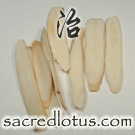 Bai Shao15 gTonify Blood
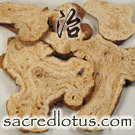 Bai Zhu12 gTonify Qi
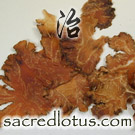 Chuan Xiong9 gInvigorate Blood and Remove Stagnation
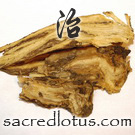 Dang Gui15 gTonify Blood
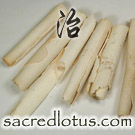 Fu Ling12-15 gRegulate Water and Drain Dampness
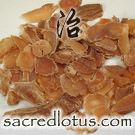 Ren Shen9 gTonify Qi
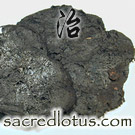 Shu Di Huang18 gTonify Blood
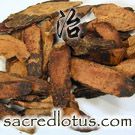 Zhi Gan Cao6 gTonify Qi
Preparation & dosage
How is Ba Zhen Tang prepared?
Ba Zhen Tang ("Eight Treasure Decoction") is traditionally prepared as a water decoction (tang) of its eight qi- and blood-tonifying herbs, taken warm. As a gentle tonic it is well suited to sustained use.
A common practical substitution: 2–3 times the quantity of Dang Shen is often used in place of Ren Shen for everyday tonification (milder and less costly), reserving Ren Shen for more marked qi deficiency. It is also produced as concentrated granules and honey pills for convenient longer-term use.
Source: Sacred Lotus sources & references (composition and preparation note) + Bensky & Barolet, Formulas & Strategies.
Decoction with Sheng Jiang and Da Zao. Reference relative amounts: Shu Di 18 g; Dang Gui, Bai Shao 15 g; Bai Zhu, Fu Ling 12 g; Ren Shen, Chuan Xiong 9 g; Zhi Gan Cao 6 g. Dang Shen (2-3x) often substitutes for Ren Shen. Reference only.
Safety — read before use
What are the cautions for Ba Zhen Tang?
Ba Zhen Tang is a warming tonic for deficiency, so it is inappropriate for excess or heat patterns. Its rich, cloying blood tonics (especially Shu Di Huang) can burden a weak Spleen and impair digestion, causing bloating, poor appetite, or loose stools — use cautiously where dampness or weak digestion is present, often adding aromatic, qi-moving herbs.
- Avoid in exterior conditions and where there are clear signs of heat, dampness, or food stagnation without underlying deficiency.
- Pregnancy: contains blood-invigorating herbs (Chuan Xiong, Dang Gui) — use only under professional guidance.
- Digestive fit matters: if the tonics cause fullness or reduced appetite, the formula is usually modified rather than pushed.
Source: Bensky & Barolet, Formulas & Strategies (cautions for rich tonifying formulas). Traditional-use framing; not medical advice.
Originally Appeared In:
- Cataloged Essentials for Correcting the Body (Zheng Ti Lei Yao)
Notes:
How is Ba Zhen Tang different from Si Jun Zi Tang, Si Wu Tang, and Shi Quan Da Bu Tang?
Ba Zhen Tang is literally Si Jun Zi Tang plus Si Wu Tang — it treats qi and blood deficiency together, whereas Si Jun Zi Tang addresses qi deficiency alone and Si Wu Tang addresses blood deficiency alone. Choose Ba Zhen Tang when both patterns are present.
- vs Si Jun Zi Tang: add the blood tonics when pale complexion, dizziness, and palpitations accompany the fatigue and poor appetite.
- vs Si Wu Tang: add the qi tonics when fatigue, shortness of breath, and poor appetite accompany the blood-deficiency signs.
- vs Shi Quan Da Bu Tang: Shi Quan Da Bu Tang is Ba Zhen Tang plus Huang Qi and Rou Gui — it adds warmth and stronger qi-raising for qi-and-blood deficiency with cold, chronic sores, or spontaneous sweating.
Key modifications: commonly add Sheng Jiang and Da Zao to harmonize the Stomach; add Huang Qi and Rou Gui to warm and strengthen (giving Shi Quan Da Bu Tang); add aromatic, qi-regulating herbs (e.g., Sha Ren, Chen Pi) when the rich tonics cause fullness or slow digestion.
Source: owner’s Five Branches formula notes (Shi Quan Da Bu Tang = Ba Zhen Tang + Huang Qi + Rou Gui) + Bensky & Barolet, Formulas & Strategies.
Clinical Studies & Research:
Is there modern research on Ba Zhen Tang?
Yes, but it is largely preclinical — network-pharmacology, cell, and animal studies plus a little clinical synthesis. A Bayesian network meta-analysis of randomized trials in post-fracture recovery found conventional care combined with Bazhen decoction ranked top for improving Harris functional-recovery scores after intertrochanteric femur fracture (one of several blood-and-qi formulas compared). Mechanistic work is mostly computational.
- Post-surgical recovery (clinical synthesis): Bazhen decoction ranked highest for Harris-score improvement in a network meta-analysis of 31 RCTs (PMID 39725985).
- Liver cancer (preclinical): network pharmacology plus HepG2/Huh7 cell assays reported multi-target activity via PI3K-AKT signaling (PMID 41546862).
- Skin photoaging (preclinical): network pharmacology and molecular docking of Ba Zhen Tang (PMID 35510223; PMC 10869601).
Sources: PubMed 39725985; PubMed 41546862; PubMed 35510223 / PMC 10869601. Research context, not a therapeutic claim; direct clinical trial evidence remains limited.
Sources & References
Compiled and edited by Thomas Dehli, Founder & Editor, Sacred Lotus Updated
The information here is referenced from numerous sources — teachers, practitioners, class notes from Five Branches University, the books below, and the published research literature, with citations given as resolvable PubMed identifiers. Where sources disagree, I have flagged the discrepancies directly. If facts couldn't be verified, I have left them out. How we source our content.
Reference information for students and practitioners — not medical advice. Consult a qualified practitioner. Terms of use.
Chinese Formulas Books & References
 https://amzn.to/4fYI3f8
 https://amzn.to/4j55NRA
 https://amzn.to/4gMROyv
 https://amzn.to/4h7msSK