
He Ren Yin Hé Rén Yǐn
Polygonum Multiflorum Root and Ginseng Decoction
- Category
- Formulas that Tonify
- Subcategory
- Formulas that Tonify the Qi and Blood
- Ingredients
- 5 herbs
Actions
What does He Ren Yin do?
He Ren Yin (Polygonum Multiflorum Root and Ginseng Decoction) tonifies the qi and nourishes the blood to treat chronic, recurring malarial disorder that persists after the underlying constitution has become deficient. Rather than continuing to dispel a lingering pathogen, it rebuilds the qi and blood that repeated bouts of intermittent fever and chills have exhausted — on the premise that the disorder will not resolve, and dispelling formulas will only cause further harm, until the underlying deficiency is corrected first.
The five ingredients divide by role:
- Chief: He Shou Wu (nourishes blood and Liver/Kidney essence) and Ren Shen (strongly tonifies Source qi) — the paired blood-and-qi tonics addressing the depleted root of the chronic disorder.
- Deputy: Dang Gui supports He Shou Wu in enriching and moving the blood.
- Assistant: Chen Pi regulates qi and aids digestion, keeping the rich tonics (especially He Shou Wu) from becoming cloying and stagnant.
- Envoy: Sheng Jiang (roasted) warms and harmonizes the Stomach, supporting assimilation of the tonics.
Source: Sacred Lotus sources & references + Bensky & Barolet, Formulas & Strategies (chief/deputy/assistant/envoy analysis; role flags unset in Sacred Lotus sources & references, derived per methodology). Traditional-use framing; not medical advice.
Indications
What is He Ren Yin used for?
He Ren Yin treats chronic, unremitting malarial disorder (nüè) that has outlasted its acute stage and is now sustained by qi and blood deficiency rather than an active pathogen. The classic presentation is a long-standing, recurring pattern of intermittent fever and chills in a patient who has become wan, emaciated, and easily fatigued — where the slightest exertion can trigger another episode.
- Qi-deficiency signs: fatigue, weakness, symptoms worsened by exertion.
- Blood-deficiency signs: pale, wan complexion; emaciation from the drawn-out illness.
- Timing: traditionally dosed shortly before the expected onset of the next paroxysm (see preparation).
Tongue and pulse: the tongue is pale; the pulse is large but deficient — wide yet hollow/weak on pressure, a sign of significant underlying deficiency rather than excess.
Source: Sacred Lotus sources & references on pattern/tongue/pulse + Bensky & Barolet, Formulas & Strategies. Traditional-use framing; not medical advice.
Western Uses:
What is He Ren Yin used for in modern practice?
He Ren Yin is a historical formula for a traditional Chinese medicine category ("malarial disorder," nüè) that predates, and only partly overlaps with, the modern biomedical diagnosis of malaria (Plasmodium infection); it is not a substitute for antimalarial medication. In premodern practice nüè covered a broader range of periodic-fever presentations than the modern diagnosis. He Ren Yin's traditional niche — qi-and-blood tonification for a depleted patient after repeated febrile episodes — reads closer to a convalescent tonic for exhaustion following prolonged illness than to any specific anti-infective action.
These correlates describe traditional use only, not a treatment claim for any diagnosed disease; malaria itself requires biomedical diagnosis and treatment. The more substantial body of modern research connected to this formula concerns its chief herb, He Shou Wu, and its documented hepatotoxicity risk (see cautions and research).
Source: traditional-use framing summarized from Bensky & Barolet, Formulas & Strategies; reference only, not a treatment claim.
Ingredients
5 substances in He Ren Yin — each links to its full herb monograph.
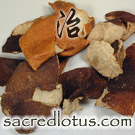 Chen Pi6-9 gRegulate the Qi
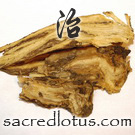 Dang Gui6-9 gTonify Blood
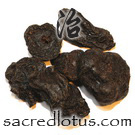 He Shou Wu9-30 gTonify Blood
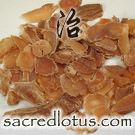 Ren Shen9-15 gTonify Qi
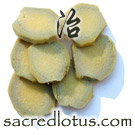 Sheng Jiang6-15 groastedWarm, Spicy Herbs that Release the Exterior
Preparation & dosage
How is He Ren Yin prepared?
He Ren Yin is prepared as a decoction, traditionally taken about two to three hours before the expected onset of the next fever-and-chills episode. Some traditional preparations decoct the herbs in a combination of water and wine. Sheng Jiang is roasted rather than used fresh, added to warm and harmonize the Stomach so the rich tonics are better assimilated.
Source: Bensky & Barolet, Formulas & Strategies (decoction method and timing).
Decoction, traditionally taken 2-3 hours before the expected onset of the fever/chills episode; some preparations combine water and wine. Reference relative amounts: He Shou Wu 9-30 g; Ren Shen 9-15 g; Dang Gui, Chen Pi 6-9 g; Sheng Jiang (roasted) 6-15 g. Dang Shen may substitute for Ren Shen at 2-3x the quantity. Reference only.
Safety — read before use
What are the cautions for He Ren Yin?
He Ren Yin should not be used during the early, active stage of a malarial disorder, or in a patient who has not yet become deficient — tonifying too early risks binding a still-active pathogen in place instead of resolving it. It is a warming, rich tonic and is otherwise inappropriate for excess or heat patterns.
- He Shou Wu hepatotoxicity: the formula's chief herb, He Shou Wu (Polygonum multiflorum), is well documented in modern case literature and pharmacovigilance reviews as a cause of idiosyncratic liver injury. Traditional use favors the wine/black-bean-processed (zhi) form over the raw root for tonification, though modern case series have implicated both. Watch for signs of liver injury (fatigue, nausea, dark urine, jaundice) with extended use, and avoid in anyone with pre-existing liver disease.
- Digestive fit: the rich tonics can burden a weak Spleen; Chen Pi is included to offset this, but bloating or reduced appetite calls for modification.
- Professional guidance: use only under a qualified practitioner, given the blood-moving/rich-tonic ingredients and the hepatotoxicity concern above.
Source: Bensky & Barolet, Formulas & Strategies (early-stage/deficiency caution) + PubMed 31920657; PubMed 32123300 (He Shou Wu hepatotoxicity). Traditional-use framing; not medical advice.
Originally Appeared In:
- Collected Treatises of Jing Yue (Jing Yue Quan Shu)
Notes:
What are the key modifications and substitutions for He Ren Yin?
Dang Shen commonly substitutes for Ren Shen, at roughly two to three times the quantity, when a gentler or more affordable qi tonic is preferred. Some traditional preparations decoct the herbs in a mix of water and wine, and dosing is timed around the expected fever paroxysm rather than given on a routine schedule.
- Ren Shen → Dang Shen: substitute at 2-3x the Ren Shen quantity for a milder qi tonic.
- He Shou Wu form: the wine/black-bean-processed (zhi) root is the traditional tonic form used here; raw He Shou Wu serves different purposes (mild laxative/detoxifying action) and carries a stronger hepatotoxicity association.
- Category placement: grouped among the Formulas that Tonify the Qi and Blood, alongside formulas such as Ba Zhen Tang, but distinguished by its specific historical indication for chronic malarial disorder.
Source: Bensky & Barolet, Formulas & Strategies (substitution, category) + He Shou Wu raw-vs-prepared processing literature.
Clinical Studies & Research:
Is there modern research on He Ren Yin?
No clinical trials or pharmacology studies of the He Ren Yin formula itself were found in PubMed/PMC; the modern research connected to this formula is almost entirely about its chief herb, He Shou Wu (Polygonum multiflorum), and its hepatotoxicity. Reviews of clinical case series describe a hepatocellular-or-mixed pattern of liver injury resembling acute viral hepatitis, now understood as an immune-mediated, idiosyncratic reaction rather than a simple dose-dependent toxicity.
- Clinical characteristics & risk factors (review): pattern, risk factors, and proposed material basis of Polygonum multiflorum-induced liver injury (PMID 31920657).
- Mechanism (review): evidence for an immune-mediated idiosyncratic mechanism underlying He Shou Wu hepatotoxicity (PMID 32123300).
Sources: PubMed 31920657; PubMed 32123300. These studies concern the herb He Shou Wu broadly (including supplement/monotherapy use), not the He Ren Yin decoction specifically; no formula-specific trials were located. Research context, not a therapeutic claim.
Sources & References
Compiled and edited by Thomas Dehli, Founder & Editor, Sacred Lotus Updated
The information here is referenced from numerous sources — teachers, practitioners, class notes from Five Branches University, the books below, and the published research literature, with citations given as resolvable PubMed identifiers. Where sources disagree, I have flagged the discrepancies directly. If facts couldn't be verified, I have left them out. How we source our content.
Reference information for students and practitioners — not medical advice. Consult a qualified practitioner. Terms of use.
Chinese Formulas Books & References
 https://amzn.to/4fYI3f8
 https://amzn.to/4j55NRA
 https://amzn.to/4gMROyv
 https://amzn.to/4h7msSK