
Shi Quan Da Bu Tang
All-Inclusive Great Tonifying Decoction
- Category
- Formulas that Tonify
- Subcategory
- Formulas that Tonify the Qi and Blood
- Ingredients
- 12 herbs
Actions
What does Shi Quan Da Bu Tang do?
Shi Quan Da Bu Tang tonifies qi and blood together while warming the interior — it is Ba Zhen Tang (the qi-and-blood pairing of Si Jun Zi Tang plus Si Wu Tang) strengthened with Huang Qi and Rou Gui for a deeper deficiency that has also let cold settle in.
- Tonifies qi: Ren Shen, Bai Zhu, Fu Ling, and Zhi Gan Cao (the Si Jun Zi Tang base) strengthen the Spleen and build qi.
- Nourishes and invigorates blood: Shu Di Huang, Bai Shao, Dang Gui, and Chuan Xiong (the Si Wu Tang base) build and move the blood.
- Strengthens qi tonification and raises yang: Huang Qi reinforces Ren Shen’s action, consolidates the exterior, and supports the healing of chronic, non-healing sores.
- Warms the interior and moves the qi and blood: Rou Gui adds the warmth this deeper pattern needs and helps circulate the rich tonics rather than letting them stagnate.
Source: cross-referenced against multiple online sources; Bensky & Barolet, Formulas & Strategies (chief/deputy/assistant analysis, attributed — not from Sacred Lotus composition data, which carries no role field).
Indications
What is Shi Quan Da Bu Tang used for?
Shi Quan Da Bu Tang treats qi-and-blood deficiency with internal cold — a deeper, more chronic depletion than Ba Zhen Tang alone addresses, typically following prolonged illness, major surgery, childbirth, or chronic blood loss, where cold limbs and sweating join the usual deficiency signs.
- Pale or sallow complexion with dizziness, palpitations, and marked fatigue
- Cold limbs or a general lack of warmth, reflecting the added interior-cold component
- Spontaneous sweating and poor appetite from combined qi-and-Wei-qi weakness
- Chronic, slow-healing sores or ulcers that fail to close from underlying qi-and-blood deficiency
- Irregular, scanty, or pale menstruation with cold signs, in gynecological use
Source: Sacred Lotus sources & references (pattern/tongue/pulse) + Bensky & Barolet, Formulas & Strategies, cross-referenced against multiple online sources. Traditional-use framing; not medical advice.
Western Uses:
What conditions is Shi Quan Da Bu Tang used for in modern practice?
Shi Quan Da Bu Tang is a major qi-and-blood tonic with warming herbs (deep deficiency with cold — pallor, fatigue, cold limbs, poor recovery), so it is referenced for depletion states: cardiac failure, anaemia, uterine bleeding, and chronic non-healing abscesses/sores.
It is chosen for the qi-and-blood-deficiency-with-cold pattern, not for a diagnosis. Heart failure and anaemia require medical diagnosis and management, and abnormal uterine bleeding must be assessed. This tonic is a traditional adjunct to that care, not a replacement. Traditional-use correlates only, not a treatment claim.
Source: Sacred Lotus sources & references (pattern) + Bensky & Barolet, Formulas & Strategies; biomedical correlates as reference only. Not medical advice.
Ingredients
12 substances in Shi Quan Da Bu Tang — each links to its full herb monograph.
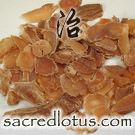 Ren Shen6-9 gTonify Qi
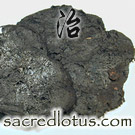 Shu Di Huang15-18 gTonify Blood
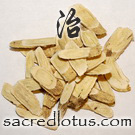 Huang Qi15-18 gTonify Qi
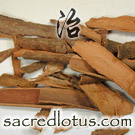 Rou Gui6-9 gWarm the Interior and Expel Cold
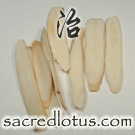 Bai Shao12-15 gTonify Blood
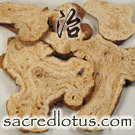 Bai Zhu9-12 gTonify Qi
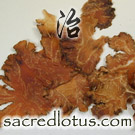 Chuan Xiong6-9 gInvigorate Blood and Remove Stagnation
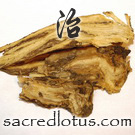 Dang Gui12-15 gTonify Blood
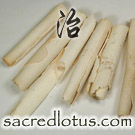 Fu Ling12-15 gRegulate Water and Drain Dampness
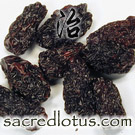 Da Zao2 piecesTonify Qi
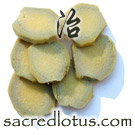 Sheng Jiang3 piecesWarm, Spicy Herbs that Release the Exterior
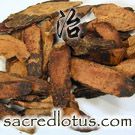 Zhi Gan Cao3-6 gTonify Qi
Preparation & dosage
How is Shi Quan Da Bu Tang prepared?
Classically it is a water decoction of the twelve herbs, taken warm, with several ingredients processed to suit their tonifying role.
- Shu Di Huang is the wine-steamed, processed form of Rehmannia (as its name “Shu” indicates), used for its warming, blood-nourishing action rather than the cooling raw root.
- Zhi Gan Cao is honey-fried licorice, standard processing for a Middle-Jiao-tonifying role.
- Rou Gui is added toward the end of decoction or steeped rather than boiled at length, since prolonged heating volatilizes its aromatic oils and weakens its warming effect — a standard processing consideration for cinnamon bark in tonifying formulas.
- Sheng Jiang is fresh/uncooked, sliced, per its composition-record annotation.
- Modern practice: a standard water decoction (herbs simmered after an initial boil, then strained) or a granule/powder preparation reconstituted per label; Dang Shen is a common substitute for Ren Shen at a proportionally larger dose.
Source: Bensky & Barolet, Formulas & Strategies (herb-processing notes for Shu Di Huang, Zhi Gan Cao, Rou Gui), cross-referenced against multiple online sources. Reference only; not administration guidance.
Safety — read before use
What are the cautions for Shi Quan Da Bu Tang?
Shi Quan Da Bu Tang is a warming tonic for deficiency-cold and is inappropriate for excess, heat, or yin-deficiency-with-heat patterns. Its rich, cloying tonics and warming Rou Gui can aggravate heat signs or burden a weak, damp-prone digestion.
- Avoid in exterior conditions and wherever there are clear heat, damp-heat, or yin-deficiency-with-heat signs; the warming, tonifying direction would aggravate these patterns.
- Pregnancy: contains blood-invigorating herbs (Chuan Xiong, Dang Gui) and warming Rou Gui — use only under professional guidance.
- Classical herb incompatibility: Rou Gui (Cinnamomi Cassiae) is traditionally listed among the “nineteen mutual restraints” (shi jiu wei) as incompatible with Chi Shi Zhi (Halloysitum Rubrum) — a classical pharmacy caution noted here as a neutral identity/safety reference, not administration guidance.
- Digestive fit matters: as with Ba Zhen Tang, if the rich tonics cause fullness or reduced appetite, the formula is usually modified with aromatic, qi-moving herbs rather than pushed.
Source: Bensky & Barolet, Formulas & Strategies (cautions for warming qi-blood tonics; classical Rou Gui/Chi Shi Zhi incompatibility), cross-referenced against multiple online sources. Traditional-use framing; not medical advice.
Originally Appeared In:
- Imperial Grace Formulary of the Tai Ping Era (Tai Ping Hui Min He Ji Ju Fang)
Notes:
How does Shi Quan Da Bu Tang differ from Ba Zhen Tang, and where does it come from?
Shi Quan Da Bu Tang is literally Ba Zhen Tang plus Huang Qi and Rou Gui — choose it over Ba Zhen Tang when the qi-and-blood deficiency is deeper or more chronic and cold has settled in, marked by cold limbs, spontaneous sweating, or non-healing sores, rather than the milder deficiency picture Ba Zhen Tang alone treats.
- vs Ba Zhen Tang: the direct parent formula — add Huang Qi (stronger qi tonification, raises yang, consolidates the exterior) and Rou Gui (warms the interior, moves the tonics) when cold signs and more pronounced qi collapse accompany the qi-and-blood deficiency.
- vs Si Jun Zi Tang / Si Wu Tang: both are foundational components one tier further back — Si Jun Zi Tang treats qi deficiency alone, Si Wu Tang treats blood deficiency alone; Ba Zhen Tang unites them, and Shi Quan Da Bu Tang deepens that union with warmth and stronger qi support.
Classical source: Shi Quan Da Bu Tang is recorded in the Tai Ping Hui Min He Ji Ju Fang (Formulary of the Bureau of People’s Welfare Pharmacy), a Song-dynasty imperial formulary compiled in the late 11th century.
Regional naming: the same twelve-herb formula is used across East Asia under different regional names — juzentaihoto in Japanese Kampo medicine and Sipjeondaebotang in Korean traditional medicine — which is relevant context for interpreting the modern research literature (see research).
Source: classical attribution per Tai Ping Hui Min He Ji Ju Fang, cross-referenced against multiple online sources; Bensky & Barolet, Formulas & Strategies (Ba Zhen Tang derivation and comparative analysis, own words).
Clinical Studies & Research:
Is there modern research on Shi Quan Da Bu Tang?
Yes — this formula has a notably large modern research base under its Japanese Kampo name, juzentaihoto (and Korean name, Sipjeondaebotang), spanning clinical reviews, a scoping review of anemia trials, and preclinical immune/kidney studies. This is reported as research context, not a treatment claim.
- Cancer supportive care (clinical, review of RCTs): a review of randomized controlled trials on Kampo medicines, including juzentaihoto, reported potential amelioration of refractory symptoms in cancer patients such as fatigue, anorexia, and peripheral neuropathy, alongside conventional care (PMID 35242536).
- Anemia (clinical, scoping review): a scoping review of 16 studies (9 RCTs) on Sipjeondaebotang — the Korean name for this same formula — found improved hemoglobin levels across anemia types with a lower reported adverse-event rate versus controls (PMID 39338353).
- Antiviral cellular immunity (preclinical): in tumor-bearing mice, juzentaihoto improved antiviral cellular immune responses through mechanisms independent of regulatory T cells and myeloid-derived suppressor cells (PMID 35996405).
- Chronic kidney disease (preclinical): in mice with adenine-induced chronic renal failure, juzentaihoto reduced tubular damage, fibrosis, and inflammatory markers while lowering creatinine (PMID 34924123).
Sources: PMID 35242536; PMID 39338353; PMID 35996405; PMID 34924123. Research context reported under the formula’s Japanese (juzentaihoto) and Korean (Sipjeondaebotang) names; not a therapeutic claim.
Sources & References
Compiled and edited by Thomas Dehli, Founder & Editor, Sacred Lotus Updated
The information here is referenced from numerous sources — teachers, practitioners, class notes from Five Branches University, the books below, and the published research literature, with citations given as resolvable PubMed identifiers. Where sources disagree, I have flagged the discrepancies directly. If facts couldn't be verified, I have left them out. How we source our content.
Reference information for students and practitioners — not medical advice. Consult a qualified practitioner. Terms of use.
Chinese Formulas Books & References
 https://amzn.to/4fYI3f8
 https://amzn.to/4j55NRA
 https://amzn.to/4gMROyv
 https://amzn.to/4h7msSK