

Dang Gui Bu Xue Tang (Tangkuei Decoction to Tonify the Blood)
Dang Gui Bu Xue Tang
Tangkuei Decoction to Tonify the Blood
- Category
- Formulas that Tonify
- Subcategory
- Formulas that Tonify the Qi and Blood
- Ingredients
- 2 herbs
Actions
What does Dang Gui Bu Xue Tang do?
Dang Gui Bu Xue Tang (Tangkuei Decoction to Tonify the Blood) tonifies qi in order to generate blood — a two-herb formula devised by the Jin-dynasty physician Li Dong-yuan (founder of the Spleen-Stomach school) built around a single, deliberate design choice: a very large dose of the qi tonic Huang Qi paired with a much smaller dose of the blood tonic Dang Gui, at a fixed 5:1 ratio.
- Huang Qi (Astragali Radix), 5 parts: strongly tonifies Spleen and Lung qi; in this formula its large dose drives the production of blood, reflecting the principle that qi generates blood.
- Dang Gui (Angelicae Sinensis Radix), 1 part: nourishes and invigorates the blood, supplying the material substance and directing the formula’s action toward blood deficiency.
The 5:1 ratio itself is the formula’s core teaching point: rather than treating blood deficiency by loading up on blood-nourishing herbs (which are heavy, cloying, and slow to absorb, especially when qi is also weak), Li Dong-yuan used a large dose of an easily-transformed qi tonic to vigorously stimulate blood production, with a small amount of Dang Gui to steer and supply that action — only two ingredients, but a specifically engineered ratio between them.
Source: Sacred Lotus sources & references (composition, 5:1 ratio) + Bensky & Barolet, Formulas & Strategies; Chen & Chen, Chinese Herbal Formulas and Applications (qi-generates-blood strategy). Traditional-use framing; not medical advice.
Indications
What is Dang Gui Bu Xue Tang used for?
Dang Gui Bu Xue Tang treats blood deficiency (often following significant blood loss) that has progressed to a floating, deficiency-type fever — a “heat from deficiency” pattern that can look, at a glance, like an excess heat condition but is actually rooted in profound qi and blood deficiency.
- Deficiency-type fever: fever, often with a flushed face, that classically follows heavy blood loss (historically described after childbirth or other major bleeding), together with thirst and restlessness.
- General qi-blood deficiency signs: fatigue, weakness, headache, and a pale or sallow complexion.
- Deceptively excess-looking presentation: the fever, flushed face, and thirst can resemble a true excess heat pattern, but the underlying deficiency is revealed by the pulse and the accompanying exhaustion rather than vigor.
Tongue and pulse: a pale tongue; a large, surging-feeling pulse that is nonetheless deficient/forceless (empty) on firm pressure — the key sign distinguishing this deficiency-fire pattern from a true excess-heat pulse, which would be large and forceful.
Source: Sacred Lotus sources & references (tongue/pulse) + Bensky & Barolet, Formulas & Strategies (classical deficiency-fever presentation). Traditional-use framing; not medical advice.
Ingredients
2 substances in Dang Gui Bu Xue Tang — each links to its full herb monograph.
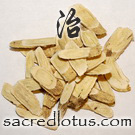
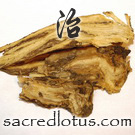
Preparation & dosage
How is Dang Gui Bu Xue Tang prepared?
The two herbs are decocted together in water at their fixed 5:1 weight ratio and taken warm — a simple, single-decoction preparation reflecting the formula’s minimalist, two-ingredient design.
- Huang Qi is commonly used honey-fried (zhi Huang Qi) to enhance its qi-tonifying action, consistent with standard processing for qi-tonic use of this herb.
- Dang Gui may be used raw or wine-prepared depending on whether blood-nourishing or blood-invigorating emphasis is desired.
- Ratio matters more than absolute dose: because the formula’s action depends on the 5:1 Huang Qi to Dang Gui relationship rather than either herb alone, the proportion is traditionally preserved even when overall dosage is scaled.
Source: Sacred Lotus sources & references (composition/processing) + Bensky & Barolet, Formulas & Strategies. Traditional-use framing; not medical advice.
Safety — read before use
What are the cautions for Dang Gui Bu Xue Tang?
Dang Gui Bu Xue Tang treats a deficiency-type fever and must not be mistaken for — or used against — a true excess-heat pattern, where warming qi tonics like Huang Qi would aggravate the condition. Correctly distinguishing this pattern from a true Yang Ming/excess-heat presentation (e.g., a Bai Hu Tang-type pattern) by pulse force and overall vitality, rather than by the fever and thirst alone, is essential.
- Not for true excess or exterior heat: using a warming qi-tonic formula for genuine excess heat, or for a fever caused by an active external pathogen, would be inappropriate and could aggravate the condition.
- Caution with an unresolved exterior pathogen: as with other qi/blood tonics, tonifying while an external pathogenic invasion is still present risks retaining the pathogen internally.
- Caution in dampness or food stagnation: the high dose of Huang Qi can be cloying in someone with a damp or qi-stagnant constitution, potentially causing bloating or a sense of fullness.
- Fever, especially significant or persistent fever, warrants professional evaluation rather than self-treatment, to rule out other causes before attributing it to blood/qi deficiency.
Source: Bensky & Barolet, Formulas & Strategies (cautions for qi-tonic formulas and deficiency-fever differentiation). Traditional-use framing; not medical advice.
Originally Appeared In:
- Clarifying Doubts About Injury from Internal and External Causes (Nei Wai Shang Bian Huo Lun)
Notes:
How does Dang Gui Bu Xue Tang differ from Si Wu Tang and Ba Zhen Tang?
Dang Gui Bu Xue Tang is distinguished from other blood-tonifying formulas by its narrow, two-herb design and its specific target: an acute deficiency-fever following major blood loss, not general chronic blood deficiency.
- vs Si Wu Tang (Four Substances Decoction): Si Wu Tang (Dang Gui, Chuan Xiong, Bai Shao, Shu Di Huang) nourishes and regulates the blood directly with four blood-oriented herbs and no strong qi tonic; Dang Gui Bu Xue Tang instead leans almost entirely on a qi tonic to generate blood indirectly, and is chosen when the deficiency-fever presentation (not routine blood deficiency) is the concern.
- vs Ba Zhen Tang (Eight Treasure Decoction): Ba Zhen Tang combines Si Wu Tang with the qi-tonifying Si Jun Zi Tang for broader, balanced qi-and-blood tonification in chronic deficiency; Dang Gui Bu Xue Tang is a much narrower, sharper formula built around one specific ratio and one specific clinical scenario.
Classical source: attributed to Li Dong-yuan (Li Gao, 1180–1251), founder of the Spleen-Stomach (Pi Wei) school, recorded in the Nei Wai Shang Bian Huo Lun (Treatise on the Differentiation of Endogenous and Exogenous Disorders), 1247 CE. Li Dong-yuan is said to have devised the formula to treat a postpartum-type fever that could be mistaken for a true excess-heat pattern, cautioning against the error of purging or strongly cooling such a patient.
Note on the fever it treats: because its large, surging-yet-forceless pulse and fever/thirst presentation can resemble the Yang Ming excess-heat pattern treated by formulas such as Bai Hu Tang, correctly telling the two apart — by pulse force and the patient’s overall condition rather than the fever alone — is the classic teaching point associated with this formula’s history.
Source: Bensky & Barolet, Formulas & Strategies; Chen & Chen, Chinese Herbal Formulas and Applications (classical source, lineage, and formula comparisons).
Clinical Studies & Research:
Is there modern research on Dang Gui Bu Xue Tang?
Yes — Dang Gui Bu Xue Tang (also transliterated Danggui Buxue Tang, DBT) is one of the more extensively studied classical formulas precisely because its simple two-herb, 5:1 composition makes it a useful model for investigating how a Chinese herbal decoction works. Much of this research is preclinical (cell and animal studies) exploring immune, hematopoietic, and other mechanisms, alongside reviews of its traditional and modern applications; it does not establish the formula as a treatment for any specific disease.
- Immune stimulation confirms the 5:1 ratio (foundational, cell study): DBT prepared at the classical 5:1 Huang Qi to Dang Gui ratio produced the strongest immune-stimulating effects — increased T-lymphocyte proliferation, interleukin-2 secretion, and macrophage phagocytosis — compared with other ratios tested (PMID 16902872).
- Active-compound analysis (cell study): calycosin, a flavonoid from Huang Qi, was identified as a key compound orchestrating DBT’s estrogenic, blood-forming (erythropoietic), and bone-related (osteogenic) effects, using a calycosin-depleted extract for comparison (PMID 25796405).
- Chronic fatigue model (animal study): DBT improved body weight, swimming endurance, and immune/cytokine markers in rats with induced chronic fatigue syndrome (PMID 21495102).
- Neuroprotection model (cell study): DBT reduced beta-amyloid-induced cell death in cultured cortical neurons, a preclinical model relevant to Alzheimer’s disease research (PMID 30621672).
- Review of clinical applications: a 2017 review discusses DBT’s traditional use for menopausal symptoms and the broader research strategy used to study this formula (PMID 28163116).
Sources: PubMed 16902872; PubMed 25796405; PubMed 21495102; PubMed 30621672; PubMed 28163116. Research context, not a therapeutic claim; all mechanistic studies cited are preclinical (cell or animal models), not human clinical trials.
Sources & References
Compiled and edited by Thomas Dehli, Founder & Editor, Sacred Lotus Updated
The information here is referenced from numerous sources — teachers, practitioners, class notes from Five Branches University, the books below, and the published research literature, with citations given as resolvable PubMed identifiers. Where sources disagree, I have flagged the discrepancies directly. If facts couldn't be verified, I have left them out. How we source our content.
Reference information for students and practitioners — not medical advice. Consult a qualified practitioner. Terms of use.
Chinese Formulas Books & References
 https://amzn.to/4fYI3f8
 https://amzn.to/4j55NRA
 https://amzn.to/4gMROyv
 https://amzn.to/4h7msSK