
Gui Pi Tang Guī Pí Tāng
Restore the Spleen Decoction
- Category
- Formulas that Tonify
- Subcategory
- Formulas that Tonify the Qi and Blood
- Ingredients
- 12 herbs
Actions
What does Gui Pi Tang do?
Gui Pi Tang tonifies Qi and Blood together while nourishing the Heart and strengthening the Spleen, and it restores the Spleen's ability to hold Blood within the vessels. It is built on a Qi-tonifying base (essentially Si Jun Zi Tang's Ren Shen, Bai Zhu, Fu Ling and Zhi Gan Cao, with Huang Qi added) combined with Blood-nourishing and spirit-calming herbs, so it addresses fatigue and bleeding tendencies as well as the mental-emotional symptoms of Heart-Spleen deficiency at the same time.
- Tonifies Qi and Blood — Ren Shen, Huang Qi, Bai Zhu and Zhi Gan Cao strengthen the Spleen's production of Qi, which is the source from which Blood is generated; Dang Gui and Long Yan Rou nourish Blood directly.
- Nourishes the Heart and calms the Spirit (Shen) — Suan Zao Ren, Long Yan Rou and Yuan Zhi settle palpitations, anxiety and disturbed sleep that arise when Heart Blood is insufficient to house the Shen.
- Strengthens the Spleen so it can govern Blood — by rebuilding Spleen Qi, the formula addresses bleeding that stems from Qi failing to keep Blood within the vessels (Spleen-not-controlling-Blood).
- Regulates Qi movement within a tonifying formula — Mu Xiang moves Qi so the heavy, cloying tonics do not stagnate digestion.
Source: Bensky & Barolet, Formulas & Strategies; Chen & Chen, Chinese Herbal Formulas and Applications.
Indications
What is Gui Pi Tang used for?
Gui Pi Tang is used for the combined pattern of Heart and Spleen Qi-Blood deficiency: overthinking/worry with fatigue, poor appetite, palpitations, insomnia, poor memory, and — distinctively — bleeding caused by the Spleen's failure to hold Blood in the vessels. It is a classic choice for exhaustion that follows chronic worry, overwork, prolonged illness, or blood loss.
- Palpitations with anxiety and a vague sense of unease, worse with exertion or worry
- Insomnia, difficulty falling asleep, or restless/dream-disturbed sleep
- Poor memory and difficulty concentrating, often after prolonged overthinking or mental strain
- Fatigue, low energy, poor appetite, and a sallow or pale complexion
- Spleen-not-controlling-Blood bleeding patterns: easy bruising, blood in the stool, and irregular uterine bleeding such as early, prolonged, or heavy pale-colored periods, spotting, or metrorrhagia
- Low-grade fatigue-related night sweating or a subjective low-grade fever in the context of overall deficiency
Source: Bensky & Barolet, Formulas & Strategies; Chen & Chen, Chinese Herbal Formulas and Applications.
Western Uses:
What conditions is Gui Pi Tang used for in modern practice?
Gui Pi Tang tonifies Spleen qi and Heart blood together — the "overthinking, worry and exhaustion" pattern with palpitations, poor sleep, poor memory and easy bleeding — so it is referenced across a wide deficiency spectrum: nervous exhaustion (neurasthenia), psycho-emotional disorders, post-concussion syndrome, myasthenia gravis, congestive heart disease, supraventricular tachycardia, anaemia, thrombocytopenic or allergic purpura, cervicitis, and functional uterine bleeding.
The thread is the Spleen-qi-and-Heart-blood deficiency pattern, not any one diagnosis. Heart disease, arrhythmia, the anaemias, and purpura (a bleeding/platelet disorder) all require medical diagnosis and management; this formula is a traditional adjunct to that care, not a replacement. Traditional-use correlates only, not a treatment claim.
Source: Sacred Lotus sources & references (pattern) + Bensky & Barolet, Formulas & Strategies; biomedical correlates as reference only. Not medical advice.
Ingredients
12 substances in Gui Pi Tang — each links to its full herb monograph.
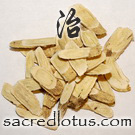 Huang Qi9-12 gTonify Qi
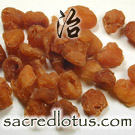 Long Yan Rou6-9 gTonify Blood
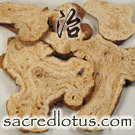 Bai Zhu9-12 gTonify Qi
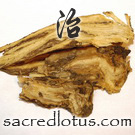 Dang Gui6-9 gTonify Blood
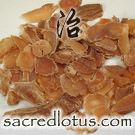 Ren Shen3-6 gTonify Qi
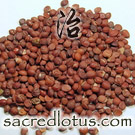 Suan Zao Ren9-12 gNourish the Heart and Calm the Spirit
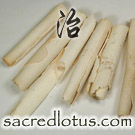 Fu Ling9-12 gRegulate Water and Drain Dampness
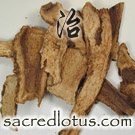 Mu Xiang3-6 gRegulate the Qi
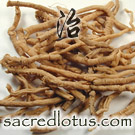 Yuan Zhi3-6 gNourish the Heart and Calm the Spirit
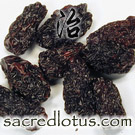 Da Zao1 pieceTonify Qi
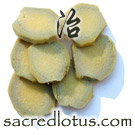 Sheng Jiang5 piecesWarm, Spicy Herbs that Release the Exterior
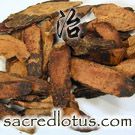 Zhi Gan Cao3-6 gTonify Qi
Preparation & dosage
How is Gui Pi Tang prepared?
Gui Pi Tang is traditionally taken as a water decoction of the twelve herbs, with Sheng Jiang (fresh ginger, several slices) and Da Zao (jujube) added during cooking to harmonize the Stomach and protect Spleen Qi. It is also manufactured as a patent pill/granule (Gui Pi Wan) for long-term maintenance dosing once the acute presentation has settled.
- Decoction: the ten primary herbs are simmered together in water; Sheng Jiang and Da Zao are added toward the end of cooking in the classical manner used for many Qi-tonifying decoctions.
- Common substitutions in practice: Ren Shen is often replaced with roughly 2–3 times its dose of Dang Shen (a gentler, more affordable Qi tonic) for everyday use; Fu Shen (Poria with attached pine root) is frequently substituted for plain Fu Ling, since Fu Shen is considered more specifically calming to the Shen.
- Zhi Gan Cao denotes honey-fried (mix-fried) licorice, used here for its stronger Spleen-Qi-tonifying and harmonizing action compared with raw Gan Cao.
- Patent form: Gui Pi Wan (concentrated pill/granule) follows the same formula and is commonly used for sustained daily dosing in milder or chronic presentations.
Source: Bensky & Barolet, Formulas & Strategies; Chen & Chen, Chinese Herbal Formulas and Applications.
Safety — read before use
What are the cautions for Gui Pi Tang?
Gui Pi Tang is a warming, tonifying formula and should not be used where there is interior excess heat, Yin-deficiency heat, or an active exterior (surface) pathogenic invasion, since its warming tonics can aggravate heat or "lock in" a pathogen. None of its twelve ingredients are on standard toxic/restricted-herb lists, but pattern-matching still matters.
- Avoid in interior excess-heat patterns or in Yin-deficiency heat with a rapid, thin pulse — the formula's warm, tonifying nature can worsen heat signs.
- Not appropriate for bleeding caused by Heat forcing Blood from the vessels (e.g., bright-red heavy bleeding with a rapid pulse and red tongue); it is intended for bleeding from Qi deficiency (Spleen not controlling Blood), which presents with pale blood and deficiency signs.
- Use with caution where Dampness or phlegm-damp obstruction with a greasy tongue coating predominates, since the cloying Qi/Blood tonics can reinforce Dampness; Mu Xiang is included specifically to offset this tendency.
- As with other rich tonifying formulas, caution is warranted during acute exterior illness (common cold/flu) — tonifying too early can trap the pathogen.
Source: Bensky & Barolet, Formulas & Strategies; Chen & Chen, Chinese Herbal Formulas and Applications.
Originally Appeared In:
- Formulas to Aid the Living (Ji Sheng Fang)
Notes:
How does Gui Pi Tang differ from Suan Zao Ren Tang and Tian Wang Bu Xin Dan?
All three formulas treat deficiency-type insomnia and anxiety, but they target different roots: Gui Pi Tang addresses combined Heart-Spleen Qi and Blood deficiency with cold/deficiency signs, Suan Zao Ren Tang addresses Liver Blood deficiency with mild deficiency heat, and Tian Wang Bu Xin Dan addresses Heart-Kidney Yin deficiency with more pronounced empty heat.
- Vs. Suan Zao Ren Tang: Suan Zao Ren Tang is a much smaller, gentler formula (five herbs) centered on nourishing Liver Blood and clearing mild deficiency heat — indicated for irritability, night sweats, and a wiry-thin, slightly rapid pulse. It carries no Spleen-Qi-tonifying core and does not address bleeding or marked fatigue/poor appetite the way Gui Pi Tang does.
- Vs. Tian Wang Bu Xin Dan: Tian Wang Bu Xin Dan nourishes Heart and Kidney Yin with cooling herbs (e.g., Sheng Di Huang, Mai Men Dong, Tian Men Dong) for a presentation with a red tongue and thin, rapid pulse — true empty-heat signs. Gui Pi Tang instead uses warm Qi and Blood tonics for a pale tongue and thin, weak pulse, with fatigue and poor appetite prominent rather than heat signs.
- Unique to Gui Pi Tang: the Spleen-not-controlling-Blood indication (easy bruising, blood in the stool, prolonged or irregular uterine bleeding) is not part of either comparison formula's traditional use.
What is the classical source of Gui Pi Tang and how has it changed over time?
Gui Pi Tang originates in the Song-dynasty formulary Ji Sheng Fang ("Formulas to Aid the Living," Yan Yonghe, 1253) as an eight-herb formula without Dang Gui or Yuan Zhi; the Ming-dynasty physician Xue Ji added both herbs (in Nei Ke Zhai Yao) to produce the version used today. A well-known later modification, Jia Wei Gui Pi Tang ("Gui Pi Tang Plus"), adds Chai Hu and Zhi Zi for the same Heart-Spleen deficiency pattern complicated by mild Liver constraint or heat signs such as irritability and a bitter taste; this modified formula is known in Korea and Japan as Kami Guibi-tang / Kami-kihi-to and is the version most often studied in recent East Asian clinical trials — findings from it should not be read as data on unmodified Gui Pi Tang.
Source: Bensky & Barolet, Formulas & Strategies; Chen & Chen, Chinese Herbal Formulas and Applications.
Clinical Studies & Research:
Is there modern research on Gui Pi Tang?
Laboratory research on unmodified Gui Pi Tang has examined antidepressant-related mechanisms in stress-model animals, while most human clinical trials in the literature actually studied Jia Wei Gui Pi Tang / Kami Guibi-tang, a modified variant with Chai Hu and Zhi Zi added — a distinction worth keeping in mind when reading the evidence. This research is cited as scientific context for a traditional formula, not as a treatment claim.
- A 2022 laboratory study using a chronic unpredictable mild stress rat model found that Guipi Tang reduced depression-like behavior and hippocampal cell apoptosis, associating this with upregulation of PI3K/Akt and BDNF/TrkB/CREB signaling components (PMID 36536902).
- A registered pilot randomized, placebo-controlled, double-blind trial protocol examined Kami Guibi-tang — a modified Gui Pi Tang formula used in Korean medicine — for amnestic mild cognitive impairment, reflecting the formula family's traditional use for memory and cognitive complaints (PMID 31331367).
Sources: PMID 36536902; PMID 31331367.
Sources & References
Compiled and edited by Thomas Dehli, Founder & Editor, Sacred Lotus Updated
The information here is referenced from numerous sources — teachers, practitioners, class notes from Five Branches University, the books below, and the published research literature, with citations given as resolvable PubMed identifiers. Where sources disagree, I have flagged the discrepancies directly. If facts couldn't be verified, I have left them out. How we source our content.
Reference information for students and practitioners — not medical advice. Consult a qualified practitioner. Terms of use.
Chinese Formulas Books & References
 https://amzn.to/4fYI3f8
 https://amzn.to/4j55NRA
 https://amzn.to/4gMROyv
 https://amzn.to/4h7msSK