
Xi Jiao Di Huang Tang
Rhinoceros Horn and Rehmannia Decoction
- Category
- Formulas that Clear Heat
- Ingredients
- 4 herbs
Actions
What does Xi Jiao Di Huang Tang do?
Xi Jiao Di Huang Tang (Rhinoceros Horn and Rehmannia Decoction) clears heat, cools and invigorates the blood, and resolves toxin. It is the classic formula for heat that has penetrated to the deepest of the four warm-disease levels — the blood (xue) level — where it can force blood to move recklessly outside the vessels (causing bleeding) or scorch and thicken the blood into stasis. Its design principle is to cool the blood without letting it congeal, and to move the blood without provoking further bleeding.
Conservation/legal notice: the chief herb named in the classical formula, Xi Jiao (rhinoceros horn), comes from a critically endangered animal; all rhinoceros species are listed on CITES Appendix I and international commercial trade is banned. Legitimate modern practice does not use rhinoceros horn. The standard substitute is Shui Niu Jiao (water buffalo horn, Cornu Bubali), dosed at roughly ten times the classical Xi Jiao amount — see Preparation and Dosage below.
The four ingredients divide by role:
- Chief: Xi Jiao (in current practice, Shui Niu Jiao) clears heat from the blood, resolves fire toxin, and calms the Heart/spirit — anchoring the formula's action at the deepest, most urgent level of heat penetration.
- Deputy: Sheng Di Huang nourishes yin, cools the blood, stops bleeding, and generates fluids, reinforcing Xi Jiao's cooling action while replenishing the yin and fluids that heat and blood loss consume.
- Assistants: Chi Shao and Mu Dan Pi both clear heat and cool the blood while also invigorating it and dispelling stasis — the crucial counterbalance that keeps the formula's strong cooling action from congealing the blood into further stasis, and helps resolve any stasis/heat-toxin already causing swelling, sores, or fixed masses.
Source: Sacred Lotus sources & references + Bensky & Barolet, Formulas & Strategies; Chen & Chen, Chinese Herbal Formulas and Applications (chief/deputy/assistant analysis). CITES Appendix I status of rhinoceros species is a documented regulatory/conservation fact. Traditional-use framing; not medical advice.
Indications
What is Xi Jiao Di Huang Tang used for?
Xi Jiao Di Huang Tang treats heat that has entered the blood (xue) level in a warm-febrile (Wen Bing) disease — the deepest of Ye Tianshi's four stages (wei, qi, ying, xue) — producing one of two classic clinical pictures depending on whether the heat forces blood out of the vessels or congeals it into stasis.
Its classic clinical presentations:
- Reckless hot bleeding: heat forcing blood out of its normal pathways — hematemesis (vomiting blood), epistaxis (nosebleed), blood in the stool or urine, and a dark purplish/purpuric maculopapular rash from blood extravasating under the skin.
- Heat with blood stasis (“accumulated/stagnant blood”): heat scorching and thickening the blood into stasis — restlessness progressing to manic behavior or delirium, forgetfulness, dark or black stool, and fixed, painful abdominal masses.
- Constitutional signs: fever (often worse at night), thirst without a strong desire to drink, and a dry mouth, reflecting deep heat and fluid/yin damage.
Tongue and pulse: a deep red or crimson (“scarlet”) tongue, sometimes dry or with prickles, is the hallmark of blood-level heat; the pulse is rapid and forceful, or wiry and rapid.
Source: Sacred Lotus sources & references fields + Bensky & Barolet, Formulas & Strategies (Wen Bing four-level differentiation, blood-level pattern). Traditional-use framing; not medical advice.
Western Uses:
What is Xi Jiao Di Huang Tang used for in modern practice?
In modern practice Xi Jiao Di Huang Tang (built on the Shui Niu Jiao substitute) is referenced within the Wen Bing framework for acute febrile illness with hemorrhagic or purpuric signs — historically applied to presentations such as bleeding disorders, purpura, and severe infectious/eruptive fevers with a hemorrhagic rash, where Western medicine recognizes categories such as disseminated intravascular coagulation, thrombocytopenic purpura, or hemorrhagic fever. Contemporary Chinese research on modified versions of the formula has also explored sepsis, systemic lupus erythematosus skin lesions, and Kawasaki disease’s coronary artery inflammation (see research).
These biomedical correlates are offered as a reference to the formula’s traditional use, not as a claim that it treats any disease. Bleeding, purpura, high fever, or altered consciousness are all indications for urgent evaluation by a qualified practitioner and, where warranted, emergency medical care — this formula is not a substitute for either.
Source: traditional-use correlates summarized from Bensky & Barolet, Formulas & Strategies; modern research context from PubMed (see research). Reference only, not a treatment claim.
Ingredients
4 substances in Xi Jiao Di Huang Tang — each links to its full herb monograph.
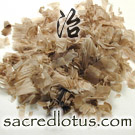 Xi Jiao3-4 gCool the Blood
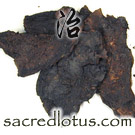 Sheng Di Huang24-30 gCool the Blood
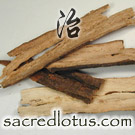 Chi Shao9-12 gCool the Blood
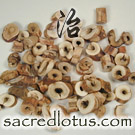 Mu Dan Pi6-8 gCool the Blood
Preparation & dosage
How is Xi Jiao Di Huang Tang prepared?
Xi Jiao Di Huang Tang is a water decoction, and preparation today always starts from the substitute, not the banned original. Xi Jiao (rhinoceros horn) is not sourced or used; Shui Niu Jiao (water buffalo horn), powdered or shaved, is substituted at roughly ten times the classical Xi Jiao dose — our reference dosage below reflects this at 30–120 g of Shui Niu Jiao. Being a hard horn material, Shui Niu Jiao is decocted separately from the other three herbs (Bensky & Barolet note roughly 20–30 minutes) before being combined with the strained decoction of Sheng Di Huang, Chi Shao, and Mu Dan Pi; some sources call for a longer separate decoction, so practitioners should follow their supplier/pharmacy's specific preparation instructions for the material dispensed.
Discrepancies: separate-decoction time for Shui Niu Jiao is not fully consistent across sources — Bensky & Barolet (materia medica entry) gives roughly 20–30 minutes, while some contemporary clinical/retail references call for a longer separate decoction (up to several hours) for raw shaved horn. Both cannot be independently verified against a single authoritative pharmacopoeial source here, so this entry states Bensky & Barolet's figure as the primary reference and flags the variance rather than asserting one figure as definitive.
Source: Bensky & Barolet, Formulas & Strategies and companion materia medica (Shui Niu Jiao substitution and preparation notes); Sacred Lotus sources & references. Traditional-use framing; not medical advice.
Water decoction. Reference relative amounts (per Sacred Lotus sources & references): Xi Jiao 3–4 g (classical figure — not used; see substitute); Sheng Di Huang 24–30 g; Chi Shao 9–12 g; Mu Dan Pi 6–8 g. Shui Niu Jiao (water buffalo horn), powdered or shaved, should be substituted for Xi Jiao at roughly ten times the classical dose — 30–120 g — and is usually decocted separately (roughly 20–30 minutes per Bensky & Barolet; some sources call for longer) before being added to the main decoction. Reference only; not a prescription.
Safety — read before use
What are the cautions for Xi Jiao Di Huang Tang?
Xi Jiao Di Huang Tang is a strongly cold, blood-level formula reserved for genuine heat-in-the-blood patterns with real signs of heat (crimson tongue, forceful/rapid pulse, active bleeding or purpura) — it is not appropriate for cold or deficiency-pattern bleeding, or for heat that has not actually reached the blood level.
- Rhinoceros horn is not used: all rhinoceros species are CITES Appendix I — international commercial trade is banned and the source animal is critically endangered. Legitimate modern practice substitutes Shui Niu Jiao (water buffalo horn) at a substantially higher dose (see Preparation/Dosage); Xi Jiao itself should not be sourced.
- Acute, high-stakes presentation: the bleeding, purpura, or altered mental state this formula addresses warrants prompt professional and, where appropriate, emergency medical evaluation; it is not a home remedy for undiagnosed bleeding.
- Cold/deficiency bleeding is a contraindication: bleeding from Spleen-qi-deficiency failing to control the blood, or from yang deficiency with cold, calls for warming/tonifying formulas instead — using this formula's cold, draining herbs in that context can worsen the underlying deficiency.
- Weak digestion: the cold, bitter-natured herbs and rich yin tonic (Sheng Di Huang) can burden a weak or cold Spleen, causing loose stools or reduced appetite; not intended for prolonged use once heat clears.
- Pregnancy: contains blood-invigorating herbs (Chi Shao, Mu Dan Pi) — use only under professional guidance.
Source: Bensky & Barolet, Formulas & Strategies (cautions for blood-level clearing formulas); CITES Appendix I status of rhinoceros species is a documented regulatory/conservation fact. Traditional-use framing; not medical advice.
Originally Appeared In:
- Thousand Ducat Formulas (Qian Jin Yao Fang)
Notes:
How is Xi Jiao Di Huang Tang different from Qing Ying Tang, and how is it modified?
Xi Jiao Di Huang Tang and Qing Ying Tang both clear heat from deep, late-stage warm-febrile disease, but they sit at adjacent levels in Ye Tianshi's wei-qi-ying-xue model. Qing Ying Tang treats heat at the nutritive (ying) level, before frank bleeding appears; Xi Jiao Di Huang Tang treats heat one stage deeper, at the blood (xue) level, once bleeding or blood stasis has actually developed — and correspondingly drops Qing Ying Tang's heat-venting herbs (Jin Yin Hua, Lian Qiao), since at the blood level there is no longer a qi-level pathway left to vent heat back out through.
- For reckless bleeding (hematemesis, epistaxis, blood in stool/urine): commonly add hemostatic herbs matched to the bleeding site, such as Bai Mao Gen or Ce Bai Ye, and San Qi to stop bleeding while also moving blood.
- For heat with blood stasis (mania/delirium, forgetfulness, dark stool, fixed abdominal masses): commonly add Da Huang and Huang Qin to drain heat and break up stasis — reflecting the formula's classical dual use for both “reckless bleeding” and “accumulated blood” presentations.
- For heat-toxin sores or deep-set swellings: add Jin Yin Hua, Lian Qiao, and Xuan Shen to strengthen toxin-resolving action.
Source: Bensky & Barolet, Formulas & Strategies (Wen Bing formula comparisons and classical modifications for the two presentations of blood-level heat).
Clinical Studies & Research:
Is there modern research on Xi Jiao Di Huang Tang?
Yes, though it is largely mechanistic/preclinical research on modified or reformulated versions of the decoction (built around the Shui Niu Jiao substitute) rather than clinical trials of the classical formula itself. Studies frame the formula's traditional "clear heat, cool and invigorate the blood" action in terms of modern inflammation, coagulation, and immune-signaling pathways.
- Blood-heat and blood-stasis syndrome (serum pharmacochemistry + network pharmacology): identified 60 serum-absorbed constituents of Xijiao Dihuang Tang and reported broad effects on inflammation, coagulation, oxidative stress, and apoptosis via the p38 MAPK pathway in animal and cell models (PMID 35178159).
- Sepsis (animal model): a modified Xi-Jiao-Di-Huang decoction reduced organ damage and cytokine release in septic mice, associated with shifting macrophages from a pro-inflammatory (M1) toward an anti-inflammatory (M2) state by inhibiting the PIM2/NF-κB signaling pathway (PMID 40248592).
- Kawasaki disease coronary artery injury (animal + cell model): reduced coronary artery inflammation and endothelial injury in a Candida-albicans-induced mouse model of coronary arteritis and a TNF-α-stimulated cell model, associated with the PI3K/Akt–NFκB signaling pathway (PMID 34665368).
Sources: PubMed 35178159; PubMed 40248592; PubMed 34665368. Research context, not a therapeutic claim; these are preclinical/mechanistic studies of modified formulas, and direct clinical-trial evidence for the classical formula's bleeding/purpura indication was not found in this search.
Sources & References
Compiled and edited by Thomas Dehli, Founder & Editor, Sacred Lotus Updated
The information here is referenced from numerous sources — teachers, practitioners, class notes from Five Branches University, the books below, and the published research literature, with citations given as resolvable PubMed identifiers. Where sources disagree, I have flagged the discrepancies directly. If facts couldn't be verified, I have left them out. How we source our content.
Reference information for students and practitioners — not medical advice. Consult a qualified practitioner. Terms of use.
Chinese Formulas Books & References
 https://amzn.to/4fYI3f8
 https://amzn.to/4j55NRA
 https://amzn.to/4gMROyv
 https://amzn.to/4h7msSK