
Cortex Radicis Moutan Cortex of the Peony Tree Root
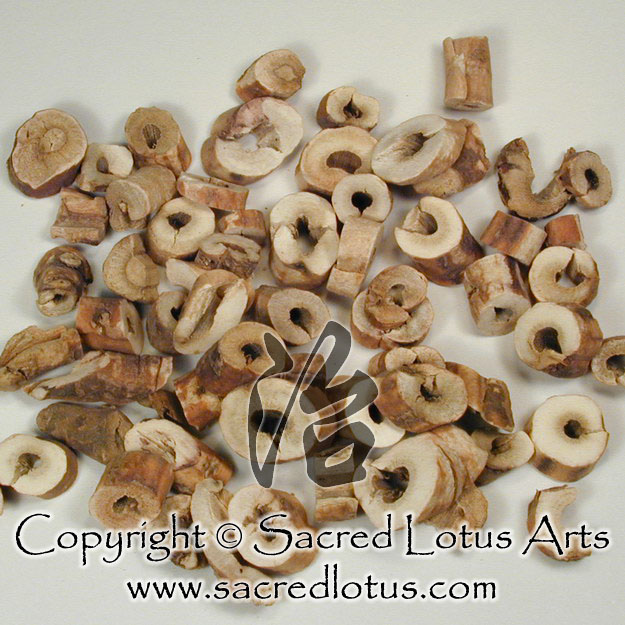
Materia Medica Data
- Category
- Herbs that Cool the Blood
- Temperature
- Cool
- Nature & Flavour
- Spicy, Bitter, Cool
- Channels Entered
- HT, LIV, KI
- Latin (pharmaceutical)
- Cortex Radicis Moutan
- Chinese
- 牡丹皮
- Tone Marks
- mŭ dān pí
Chinese Herb Actions
What is Mu Dan Pi used for in Chinese medicine?
Mu Dan Pi (Moutan Cortex, the root bark of the tree peony) is traditionally used to clear heat and cool the blood, drain fire from yin deficiency, invigorate the blood and dispel stasis, and calm Liver fire — for hot bleeding disorders, low-grade “steaming-bone” fevers, blood-stasis pain and masses, and Liver-fire headache or eye pain.
Its main traditional actions:
- Clears heat and cools the blood — hot bleeding patterns such as nosebleed, vomiting of blood, blood-tinged phlegm, subcutaneous bleeding/purpura, and heavy or hot menstrual bleeding.
- Clears fire from yin deficiency — vacuity-heat/steaming-bone disorder symptoms, especially when there is no accompanying sweating (a point used to differentiate it from herbs chosen for yin-deficiency sweating).
- Invigorates the blood and removes stagnation — abdominal masses/tumors, bruising and traumatic swelling, and amenorrhea or painful menstruation from blood stasis.
- Calms Liver fire — Liver-fire headache, rib-side (hypochondriac) pain, or eye pain.
- Reduces swelling and drains pus — used topically to drain pus and reduce firm sores, and internally for intestinal abscess.
Source: Sacred Lotus reference notes, cross-checked against Bensky & Barolet, Chinese Herbal Medicine: Materia Medica (3rd ed.) and Chen & Chen, Chinese Medical Herbology and Pharmacology consensus on Moutan Cortex (Mu Dan Pi). Traditional-use framing; not medical advice.
Chinese Herb Dosage
What is the typical dosage of Mu Dan Pi?
Roughly 6–12 g in a standard water decoction, using the dried root bark (cortex) of the tree peony — consistent with standard materia medica ranges. How it is processed before decoction shifts its emphasis (see combinations/processing below): raw for cooling the blood, charred for stopping bleeding, dry-fried for invigorating the blood.
Source: Sacred Lotus reference notes; standard materia medica dosage ranges. Reference only — not a prescription.
Chinese Herb Contraindications & Cautions
Are there cautions for Mu Dan Pi?
Mu Dan Pi is contraindicated in pregnancy, and is traditionally avoided in yin deficiency with profuse (spontaneous) sweating and in diarrhea/loose stools.
- Pregnancy — contraindicated; its blood-invigorating, stasis-dispelling action carries a traditional risk of provoking bleeding.
- Yin deficiency with profuse sweating — traditionally avoided, since these patterns call for astringing rather than the cooling/moving action of Mu Dan Pi.
- Diarrhea / Spleen-Stomach cold-deficiency — cautioned due to its cool, draining nature.
- Traditional incompatibilities (reference note) — some classical materia medica sources list Mu Dan Pi as incompatible with Bei Mu (Fritillariae Bulbus), Tu Si Zi (Cuscutae Semen), and Da Huang (Rhei Radix et Rhizoma), and advise against taking it together with garlic. This is a traditional caution carried in some sources, not a settled modern pharmacology finding.
Source: Sacred Lotus reference notes; Bensky & Barolet caution conventions for blood-invigorating, heat-clearing herbs.
Chinese Herb Toxicity & Overdose
Low. Mu Dan Pi is not classified as toxic or endangered in the Sacred Lotus database and has a long history of use at standard decoction doses (6–12 g). Its principal safety considerations are the pregnancy- and bleeding-related cautions above rather than organ toxicity.
Source: Sacred Lotus classification; materia medica consensus. Reference note, not a safety guarantee.
Herb-Drug Interactions
No well-established clinical herb–drug interactions are documented. Preclinical work shows two of Mu Dan Pi’s marker compounds affect platelet function: paeoniflorin selectively inhibits shear-stress-induced platelet aggregation and prevented arterial thrombosis in rats without prolonging bleeding or clotting time, and a related study found platelet anti-aggregatory and anticoagulant activity among compounds isolated from Paeonia lactiflora and P. suffruticosa. Given this and its traditional blood-invigorating use, practitioner awareness is reasonable for patients on anticoagulant or antiplatelet therapy (e.g. warfarin, aspirin, clopidogrel) — this is precautionary based on animal/in-vitro data, not a demonstrated clinical interaction. (Flagged for practitioner confirmation.)
Western / Biomedical Research
Chinese Herb Clinical Studies & Research
Provided as research context — a summary of published biomedical study, not a therapeutic or medical claim.
Is there modern research on Mu Dan Pi (Paeonia suffruticosa root bark / Cortex Moutan)?
Yes — chemistry/pharmacology reviews and preclinical studies support several traditional actions, but rigorous human clinical evidence for the whole herb is limited. The most directly relevant human trial tested paeonol as part of a two-compound drug candidate, not Mu Dan Pi itself.
- Chemistry & pharmacology review — a 2023 review in the Journal of Ethnopharmacology surveying three decades of literature on Moutan Cortex catalogued roughly 163 constituent compounds (paeonol, paeoniflorin, and gallotannins prominent) and summarized documented antioxidant, anti-inflammatory, antimicrobial, antitumor, antidiabetic, and cardio-/neuroprotective activity across preclinical and some clinical studies — a broad but heterogeneous evidence base, not one definitive trial.
- Human clinical (isolated compound, not the crude herb) — a 2024 phase 2a randomized, double-blind, placebo-controlled trial (n = 152 enrolled, 148 completed) tested APPA, a fixed-dose combination of apocynin and paeonol (Moutan Cortex’s marker compound), in symptomatic knee osteoarthritis. The primary WOMAC pain endpoint was not significantly different from placebo, though a predefined subgroup with nociplastic/neuropathic pain features showed a significant effect. Overall inconclusive, and it studied an isolated compound blend rather than Mu Dan Pi itself.
- Antithrombotic / antiplatelet (preclinical) — paeoniflorin selectively inhibited shear-stress-induced platelet aggregation and prevented arterial thrombosis in rats at 10 mg/kg without prolonging bleeding or clotting time; a related study found platelet anti-aggregatory and blood anticoagulant effects among compounds isolated from Paeonia lactiflora and P. suffruticosa. Both are animal/in-vitro findings, consistent with the herb’s traditional “invigorates the blood” action.
- Anti-inflammatory / anti-endotoxin (preclinical) — paeonol suppressed LPS-induced TNF-α, IL-1β, and IL-6 in macrophage cell culture and improved survival in a mouse lethal-endotoxin-shock model, offering a mechanistic parallel to Mu Dan Pi’s traditional use in febrile/epidemic-toxin formulas such as Qing Wen Bai Du Yin.
Overall, mechanistic and animal evidence for Moutan Cortex’s traditional actions is substantial, but rigorous human clinical trials of the whole herb are still lacking.
Sources: PMID 36822345 (Journal of Ethnopharmacology, 2023 comprehensive review); PMID 38697511 (Osteoarthritis and Cartilage, 2024 APPA randomized controlled trial); PMID 31614534 (International Journal of Molecular Sciences, paeoniflorin antithrombotic study); PMID 20824965 (platelet anti-aggregatory/anticoagulant compounds from Paeonia lactiflora and P. suffruticosa); PMID 23413967 (Fundamental & Clinical Pharmacology, paeonol/endotoxin-shock study). Research context, not a therapeutic claim.
Chinese Herb Notes
How is Mu Dan Pi different from Bai Shao and Chi Shao, and how is it processed / combined?
Mu Dan Pi, Bai Shao, and Chi Shao are all “peony” herbs but come from different plant parts and species and treat different patterns — a common point of confusion. Mu Dan Pi is the root bark of the tree peony (Paeonia suffruticosa); Bai Shao and Chi Shao are both the root of herbaceous peony (Paeonia lactiflora), processed differently.
- Mu Dan Pi (root bark, P. suffruticosa) — clears heat, cools blood, clears vacuity (yin-deficiency) fire, and invigorates blood; spicy, bitter, cool; enters Heart, Liver, Kidney.
- Chi Shao (unprocessed root, P. lactiflora) — sour, bitter, slightly cold; enters Liver, Spleen. Clears heat, cools blood, and invigorates blood similarly to Mu Dan Pi, and the two are often paired in blood-heat patterns (e.g. Xi Jiao Di Huang Tang).
- Bai Shao (processed/boiled root, P. lactiflora) — bitter, sour, cool; enters Liver, Spleen. An entirely different action category: it nourishes blood and yin and softens the Liver, rather than clearing heat.
Processing changes the emphasis: Mu Dan Pi is used raw to more effectively cool the blood, charred to stop bleeding, and dry-fried to remove blood stasis.
Common combinations (from Sacred Lotus formula data, 12 formulas): it appears as a Liver/Kidney-yin balancing herb in Liu Wei Di Huang Wan and Jin Gui Shen Qi Wan (draining Liver fire and moving stagnation alongside the tonifying herbs); with Chi Shao and cooling herbs in Xi Jiao Di Huang Tang and Qing Wen Bai Du Yin for heat-in-the-blood/epidemic febrile patterns; in Qing Hao Bie Jia Tang for yin-deficiency fever without sweating; in Da Huang Mu Dan Tang for intestinal abscess (its pus-draining action); in Qing Wei San for Stomach-fire patterns; in Wen Jing Tang for gynecological cold-heat/stasis patterns; and in Qing Re Zhi Beng Tang and Shi Hui San for heat-driven uterine/general bleeding. (Traditional formula context, not treatment advice.)
Source: Sacred Lotus Sacred Lotus sources & references fields and formula-herb links; Bensky & Barolet peony-herb differentiation; Chen & Chen.
Sources & References
Compiled and edited by Thomas Dehli, Founder & Editor, Sacred Lotus Updated
The information here is referenced from numerous sources — teachers, practitioners, class notes from Five Branches University, the books below, and the published research literature, with citations given as resolvable PubMed identifiers. Where sources disagree, I have flagged the discrepancies directly. If facts couldn't be verified, I have left them out. How we source our content.
Reference information for students and practitioners — not medical advice. Consult a qualified practitioner. Terms of use.
Chinese Herbs Books & References
 https://amzn.to/3WfB3DK
 https://amzn.to/3DR1VUh
 https://amzn.to/42aMz73
 https://amzn.to/3PuD4bt