

Xi Jiao (Rhinoceros Horn)
Materia Medica Data
- Category
- Herbs that Cool the Blood
- Temperature
- Cold
- Nature & Flavour
- Bitter, Salty, Cold
- Channels Entered
- HT, LIV, ST
- Latin (pharmaceutical)
- Cornu Rhinoceri
- Chinese
- 犀角
- Tone Marks
- xī jiăo
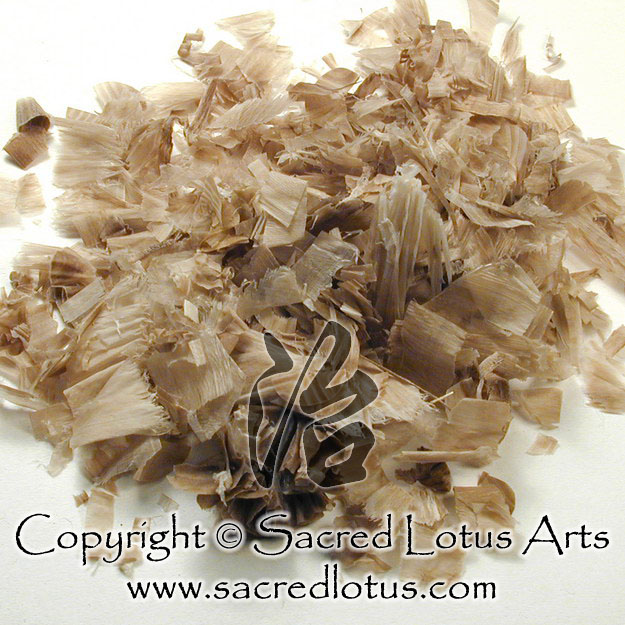
- Photo Note
- Shui Niu Jiao (water buffalo) Shown
Chinese Herb Actions
What was Xi Jiao (rhinoceros horn) used for in Chinese medicine?
Xi Jiao (犀角, rhinoceros horn) is a historical substance. International commercial trade in rhinoceros horn has been banned since 1977, all rhinoceros species have been listed under the strictest category of the international endangered-species trade convention since 1975, and the horn is no longer part of legitimate contemporary practice anywhere. This page is a reference record of what the classical literature described and of the substitute that modern formulas actually use — it is not a materia medica entry for use, and it gives no guidance on obtaining, preparing, dosing or substituting the substance in practice.
What the classical texts recorded, in the past tense:
- Cooled the blood and stopped bleeding — it was the archetypal blood-level cooling substance in warm-disease theory, described for very high fever with reckless movement of hot blood: nosebleed, vomiting of blood, and bleeding under the skin.
- Cleared heat from the nutritive and blood levels — used for the deep, late stages of febrile disease in the wei-qi-ying-xue framework, with a crimson tongue and disturbance of consciousness.
- Calmed convulsions and settled the spirit — described for tremor, convulsion and delirium arising from extreme heat entering the deeper levels.
- Resolved toxicity and cleared eruptions — recorded for maculopapular rashes, purpura and erysipelas attributed to heat toxin.
All of these roles are now filled by Shui Niu Jiao (水牛角, water buffalo horn, Cornu Bubali), which is the ingredient in the contemporary versions of the formulas listed on this site — see the notes section below.
Sources: classical materia medica consensus, cross-referenced against multiple online sources (historical description only); PMC 7273149, DOI 10.1016/j.gecco.2020.e01145 (trade banned since 1977); PMID 39090097, PMC 11294592, DOI 10.1038/s41467-024-49688-x (all rhinoceros species listed under the convention’s strictest appendix in 1975). Historical framing; not medical advice and not a description of any available product.
Chinese Herb Dosage
What is the dosage of Xi Jiao (rhinoceros horn)?
No dosage is published on this page, and none should be sought. Rhinoceros horn cannot be legally traded internationally, is not supplied by any legitimate herbal pharmacy, and is not used by qualified practitioners. Publishing a dose would imply that the substance is obtainable and usable, which it is not.
What replaced it in the same formulas is Shui Niu Jiao (water buffalo horn). Anyone studying the classical formulas for exams or scholarship should learn them in their modern, substituted form; that is how they are written in current pharmacopoeial and teaching sources.
Source: current legal status of rhinoceros horn (see actions and cautions sections); contemporary formula composition as taught and published today. Reference statement only.
Chinese Herb Contraindications & Cautions
Is Xi Jiao legal, and what is the conservation situation?
It is not legal to trade internationally, and the conservation situation is severe. All rhinoceros species were listed under the strictest appendix of the international endangered-species trade convention in 1975 (with some populations under the second appendix), and international commercial trade in rhinoceros horn has been banned since 1977. As assessed in a 2018 forensic-genetics paper, three of the five surviving rhinoceros species were considered critically endangered, one vulnerable and one near-threatened.
- Poaching is an active crisis, not a historical one. Poaching of the two African species rose sharply from 2007 onward; one 2020 analysis projected that African rhinoceroses could be extinct in the wild around 2036 on then-current trends.
- Traditional-medicine demand is part of the driver. The same analysis reports that half of all planned purchases of rhinoceros-horn products in Vietnam were motivated by the advice of a traditional medical doctor. We state this as a documented fact about the trade, not as a comment on Chinese medicine as a discipline — the profession’s own pharmacopoeial and teaching sources moved to water buffalo horn.
- Most “rhinoceros horn” on the market is something else. Forensic species-identification assays for seized horn were deliberately designed to detect water buffalo, described in the literature as a common substitute passed off as rhinoceros horn. Purchase carries legal exposure and, separately, no assurance of what the material actually is.
- Classical incompatibilities (historical record). Our records note that Xi Jiao was classically listed as antagonised by Chuan Wu and Cao Wu, and older sources also pair it with Lei Wan. This is recorded for completeness of the historical entry only.
Sources: PMID 39090097, PMC 11294592, DOI 10.1038/s41467-024-49688-x (appendix listing, 1975); PMC 7273149, DOI 10.1016/j.gecco.2020.e01145 (1977 trade ban; poaching trend; Vietnam purchase motivation); PMID 29035720, DOI 10.1016/j.fsigen.2017.10.003 (species status as of 2018; water buffalo as a common substitute in seizures); incompatibility pairs recorded on this site. Neutral reference facts.
Western / Biomedical Research
Chinese Herb Clinical Studies & Research
Provided as research context — a summary of published biomedical study, not a therapeutic or medical claim.
Is there modern research on Xi Jiao (Cornu Rhinoceri)?
Yes, but almost all of it falls into two categories that have nothing to do with using the substance: substitution research, and wildlife forensics. There is no contemporary clinical research programme on rhinoceros horn as a therapeutic material, and there could not legitimately be one.
- Substitution pharmacology — the 1991 antipyretic comparison in a rat fever model found the water-buffalo-horn version of Qing Ying Tang comparable to the rhinoceros-horn version, and concluded water buffalo horn could serve as the substitute within compound prescriptions. A 2011 proteomic comparison of rhinoceros, water buffalo and yak horn identified 14 shared protein spots and correlated a subset with measured pharmacological strength. A further 2011 study proposed bioactivity screening as a general method for finding replacements for endangered medicinal animal materials.
- Chemistry of the substitute — work on Cornu Bubali has characterised an antipyretic peptide fraction by nano-LC with Orbitrap detection and isolated antioxidant peptides, giving the substitute a research basis of its own.
- Authentication of the substitute — because water buffalo horn is itself adulterated in commerce, DNA-fingerprint and COI-barcode methods have been developed specifically to distinguish genuine Bubali Cornu from its adulterants, and infrared spectroscopy has been applied to discriminate animal horns generally.
- Wildlife forensics — an internationally standardised cytochrome-b species-identification test for seized horn was validated across five laboratories in four countries, nuclear DNA profiling systems exist for white and black rhinoceros, a microsatellite panel supports the RhoDIS-India programme for the greater one-horned rhinoceros, and colorimetric LAMP with nanopore sequencing has been reported for rapid species identification in the illegal wildlife trade. This body of work exists because trafficking is ongoing.
Sources: PMID 1943172, DOI 10.1016/0378-8741(91)90159-b; PMID 21268260, DOI 10.1002/jssc.201000617; PMID 21549826, DOI 10.1016/j.jep.2011.04.053; PMID 27860201, DOI 10.1002/jssc.201600821; PMID 20206218, DOI 10.1016/j.peptides.2010.02.016; PMID 38812195, DOI 10.19540/j.cnki.cjcmm.20240118.103 (DNA fingerprints for Bubali Cornu authenticity); PMID 29979865 (COI barcode identification of water buffalo horn and adulterants); PMID 21917506, DOI 10.1016/j.saa.2011.08.029 (infrared discrimination of animal horns); PMID 29035720, DOI 10.1016/j.fsigen.2017.10.003; PMID 23768315, DOI 10.1016/j.fsigen.2013.04.003; PMID 33548856, DOI 10.1016/j.fsigen.2021.102472; PMID 41421075, DOI 10.1016/j.fsigen.2025.103412. Research context, not a therapeutic claim.
Chinese Herb Notes
What is used instead of Xi Jiao today, and which formulas still carry the old name?
Shui Niu Jiao (水牛角, water buffalo horn, Cornu Bubali) is the documented substitute, and it is what modern versions of these formulas actually contain. The substitution is long-established: an ethnopharmacology study published in 1991 compared aqueous extracts of rhinoceros horn and water buffalo horn in a rat fever model and found that Qing Ying Tang prepared with water buffalo horn produced antipyretic action comparable to the version prepared with rhinoceros horn.
Formulas on this site that still carry the historical name in their traditional composition — and which are made today with water buffalo horn instead:
- Xi Jiao Di Huang Tang (Rhinoceros Horn and Rehmannia Decoction) — the formula whose very name preserves the historical ingredient; the blood-level counterpart to Qing Ying Tang.
- Qing Ying Tang (Clear the Nutritive Level Decoction) — the formula used in the 1991 substitution comparison described above.
- An Gong Niu Huang Wan, Zi Xue Dan and Zhi Bao Dan — the “three treasures” for heat entering the pericardium.
- Qing Wen Bai Du Yin (Clear Epidemics and Overcome Toxins Decoction) and Su He Xiang Wan (Liquid Styrax Pill).
Why substitution research exists at all. Comparative work on endangered animal-derived materials has been an explicit research programme: a 2011 study compared rhinoceros, water buffalo and yak horn by two-dimensional electrophoresis and identified shared protein components, and a separate 2011 paper evaluated horn and shell substitutes by antithrombotic and anticoagulant activity as a general method for replacing endangered medicinal animal resources. Water buffalo horn has itself been studied for antipyretic peptide fractions and antioxidant peptides.
Gap in our own records: this site currently has no separate herb entry for Shui Niu Jiao / Cornu Bubali, even though it is the ingredient that modern practice actually uses and the one all the formulas above depend on. We have not changed any identity data here; this is flagged for the site editor as a missing record rather than corrected in place. Separately, our identity field records the pharmaceutical Latin as “Cornu Rhinoceri,” while the research literature more often writes “Cornu Rhinoceri Asiatici”; we believe these refer to the same historical material and have left the field unchanged.
Sources: PMID 1943172, DOI 10.1016/0378-8741(91)90159-b (antipyretic comparison of rhinoceros- and water-buffalo-horn preparations of Qing Ying Tang); PMID 21268260, DOI 10.1002/jssc.201000617 (rhinoceros, water buffalo and yak horn compared by 2-DE); PMID 21549826, DOI 10.1016/j.jep.2011.04.053 (substitutes for endangered medicinal animal horns and shells); PMID 27860201, DOI 10.1002/jssc.201600821 (antipyretic peptide fraction of Bubali Cornu); PMID 20206218, DOI 10.1016/j.peptides.2010.02.016 (antioxidant peptides from Cornu Bubali); formula composition records held on this site.
This herb antagonizes or is antagonized by:
This herb is from an endangered/protected species and is illegal in the United States
Sources & References
Compiled and edited by Thomas Dehli, Founder & Editor, Sacred Lotus Updated
The information here is referenced from numerous sources — teachers, practitioners, class notes from Five Branches University, the books below, and the published research literature, with citations given as resolvable PubMed identifiers. Where sources disagree, I have flagged the discrepancies directly. If facts couldn't be verified, I have left them out. How we source our content.
Reference information for students and practitioners — not medical advice. Consult a qualified practitioner. Terms of use.
Chinese Herbs Books & References
 https://amzn.to/3WfB3DK
 https://amzn.to/3DR1VUh
 https://amzn.to/42aMz73
 https://amzn.to/3PuD4bt