

Su He Xiang Wan
Liquid Styrax Pill
- Category
- Formulas that Open the Orifices
- Subcategory
- Formulas that Warm and Open the Orifices
- Ingredients
- 15 herbs
Actions
What does Su He Xiang Wan do?
Su He Xiang Wan (Liquid Styrax Pill) is an intensely aromatic formula that opens the sensory orifices, warms, and dispels cold-phlegm to revive consciousness. It is the classical prototype of the “warm-opening” branch of orifice-opening formulas — used when cold combines with turbid phlegm to block the orifices through which the Heart-mind connects with the body, the cold-pattern counterpart to heat-opening formulas such as An Gong Niu Huang Wan.
The fifteen ingredients divide broadly by role:
- Principal orifice-openers: Su He Xiang (Styrax) and She Xiang (Musk) are the strongest aromatic substances in the formula, penetrating cold-phlegm obstruction to restore consciousness; Bing Pian (Borneol) and An Xi Xiang (Benzoin) support and extend this action.
- Qi-moving aromatics: Mu Xiang, Tan Xiang (Sandalwood), Chen Xiang (Agarwood), Ru Xiang (Frankincense), Ding Xiang (Clove), Xiang Fu, and the hot, pungent Bi Ba move qi and dispel cold through the chest and abdomen, relieving the pain and distension that accompany the closed pattern.
- Restraining/protective pair: Xi Jiao (Rhinoceros Horn — substituted with Shui Niu Jiao, Water Buffalo Horn, in modern manufacture) and Zhu Sha (Cinnabar) add a cooling, spirit-settling counterweight to so many hot, dispersing aromatics; Bai Zhu and He Zi protect Spleen qi and add mild astringency against the formula’s strongly dispersing action.
Secondary sources differ on the precise chief/deputy/assistant/envoy grouping of the fifteen ingredients — some list only Su He Xiang and She Xiang as chief, others include Bing Pian and An Xi Xiang as co-chiefs — but all agree on the general structure above.
Source: this site’s own composition record + Bensky & Barolet, Formulas & Strategies (orifice-opening formula category). Traditional-use framing; not medical advice.
Indications
What is Su He Xiang Wan used for?
Su He Xiang Wan treats the cold-type closed disorder — sudden collapse or loss of consciousness in which cold and turbid phlegm, rather than heat, have sealed the orifices. The classic presentation is abrupt fainting or coma with a clenched jaw, cold limbs, a pale (not flushed) face, no fever, and sometimes the sound of phlegm rattling in the throat.
Its secondary, non-emergency use is for cold-type qi stagnation:
- Windstroke, cold type: sudden collapse with the cold signs above, as opposed to the flushed, feverish presentation of a heat-type closed disorder.
- Chest and abdominal pain: qi stagnation and cold causing distension and pain in the chest and epigastrium.
- Sudden-turmoil disorders: abrupt, severe abdominal pain with cold limbs.
Tongue and pulse: a white, greasy tongue coating; a deep or slow pulse.
Source: this site’s own composition record + Bensky & Barolet, Formulas & Strategies. Traditional-use framing; not medical advice.
Western Uses:
What is Su He Xiang Wan used for in modern practice?
In modern Chinese practice, Su He Xiang Wan (marketed as the Suhexiang pill / Suhexiang Wan) is a licensed patent medicine studied mainly as an adjunct for acute ischemic stroke, and it is traditionally correlated with cold-pattern coma, syncope, and cold-type chest pain. A large multicenter real-world registry (SUNRISE, ClinicalTrials.gov NCT05833932) is currently following patients given the pill within seven days of acute ischemic stroke onset to assess functional recovery at three months.
These biomedical correlates describe how the formula’s traditional cold-closed-orifice pattern maps to conditions Western medicine recognizes — they are not a claim that the formula treats any diagnosed disease. Direct clinical trial evidence remains limited (see research). Any use for a diagnosed condition belongs with a qualified practitioner and appropriate medical care.
Source: traditional-use correlates summarized from Bensky & Barolet, Formulas & Strategies; modern-use context from PubMed 39875901. Reference only, not a treatment claim.
Ingredients
15 substances in Su He Xiang Wan — each links to its full herb monograph.
 Bing Pian30 gAromatic Substances that Open the OrificesNo specimen photographShe Xiang60 gAromatic Substances that Open the OrificesNo specimen photographSu He Xiang30 gAromatic Substances that Open the Orifices
 Chen Xiang60 gRegulate the Qi
 Ding Xiang60 gWarm the Interior and Expel Cold
 Mu Xiang60 gRegulate the Qi
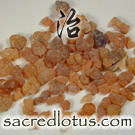 Ru Xiang60 gInvigorate Blood and Remove Stagnation
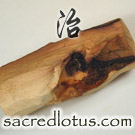 Tan Xiang60 gRegulate the Qi
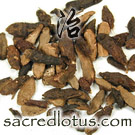 Xiang Fu60 gRegulate the Qi
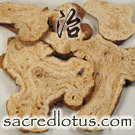 Bai Zhu60 gTonify Qi
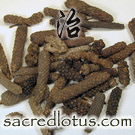 Bi Ba60 gWarm the Interior and Expel Cold
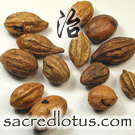 He Zi60 gAstringe, Stabilize, Bind
 Xi Jiao60 gCool the BloodNo specimen photographZhu Sha60 gAnchor, Settle, and Calm the Spirit
Preparation & dosage
How is Su He Xiang Wan prepared, and what serious cautions apply?
Su He Xiang Wan ("Liquid Styrax Pill") is prepared as honey pills from its many aromatic, orifice-opening herbs, ground to a fine powder and bound with honey; a typical dose is one ~3 g pill, once or twice a day with warm water. The aromatics are never boiled — the pill preserves their volatile, reviving action.
Critical safety and legal note. The classical formula contains Xi Jiao (rhinoceros horn) — an ILLEGAL product from a critically endangered animal that must never be used or sold — and Zhu Sha (cinnabar, a toxic mercury mineral) and She Xiang (musk, a restricted animal product). Any legitimate modern version omits or substitutes all of these (e.g. water-buffalo horn for rhino, synthetic musk); a product still containing rhino horn or cinnabar must be avoided. This is a practitioner-only, tightly-regulated formula.
Source: Sacred Lotus sources & references (composition and preparation note) + Bensky & Barolet, Formulas & Strategies; legal/toxicity notes from CITES and standard herb-safety references.
Classical proportions (Tai Ping Hui Min He Ji Ju Fang): Su He Xiang and Bing Pian 30 g each; the remaining twelve ingredients (She Xiang, An Xi Xiang, Mu Xiang, Tan Xiang, Chen Xiang, Ru Xiang, Ding Xiang, Xiang Fu, Bi Ba, Xi Jiao [now typically substituted with Shui Niu Jiao], Zhu Sha, Bai Zhu, He Zi) 60 g each, ground to a fine powder and formed into honey pills. Historical/reference proportions only — this formula contains cinnabar and other toxic or internationally regulated ingredients; this is not a self-administration guide.
Safety — read before use
What are the cautions for Su He Xiang Wan?
Su He Xiang Wan’s classical recipe contains toxic and internationally regulated ingredients, and it is intended only for the cold-type closed pattern — the facts below are public-safety reference information about the formula’s traditional composition and regulatory history, not instructions for use.
- Zhu Sha (Cinnabar, mercury sulfide) is toxic: sources warn against repeated or prolonged dosing because mercury can accumulate in the body, and describe cinnabar-containing formulas as contraindicated where kidney or liver function is impaired.
- She Xiang (Musk) is sourced from an endangered species: musk deer are internationally protected under CITES; classical texts separately list musk as a substance to avoid in pregnancy because of its strongly invigorating, moving action.
- Xi Jiao (Rhinoceros Horn) is banned from trade and medicinal use: rhinoceros are CITES Appendix-I protected, China prohibited rhinoceros horn in medicine in 1993, and modern commercial preparations substitute Shui Niu Jiao (Water Buffalo Horn concentrate) instead.
- Pattern-specific: the formula’s heat, aromatic dispersal, and orifice-opening action are inappropriate for heat-type closed disorders (fever, flushed face, rapid pulse) and for collapse/desertion (tuo) patterns of qi or yang failure — the opposite category of emergency.
- Regulatory status: because of the cinnabar content, Su He Xiang Wan is classified in China as a prescription-only patent medicine, not an over-the-counter remedy.
Source: Bensky & Barolet, Formulas & Strategies (cinnabar toxicity, pattern contraindications) + CITES species-protection status for musk deer and rhinoceros + China’s 1993 rhinoceros-horn/tiger-bone medicinal-use ban. Reference facts only; not medical or usage advice.
Originally Appeared In:
- Imperial Grace Formulary of the Tai Ping Era (Tai Ping Hui Min He Ji Ju Fang)
Notes:
How is Su He Xiang Wan different from An Gong Niu Huang Wan?
Su He Xiang Wan and An Gong Niu Huang Wan are the two classic emergency orifice-opening formulas, distinguished by temperature: Su He Xiang Wan treats the cold-type closed disorder, while An Gong Niu Huang Wan (together with Zhi Bao Dan and Zi Xue Dan) treats the heat-type closed disorder. Confusing the two patterns is a recognized clinical hazard — the warming aromatics of Su He Xiang Wan can aggravate a heat-type collapse, and vice versa.
- vs An Gong Niu Huang Wan: An Gong Niu Huang Wan clears heat and toxin (Niu Huang, Huang Lian, and historically Xi Jiao/Shui Niu Jiao) for a feverish, flushed, agitated collapse; Su He Xiang Wan warms and moves qi for a pale, cold, quiet collapse.
- Shared ingredient history: both formulas historically used Xi Jiao (Rhinoceros Horn) and Zhu Sha (Cinnabar) as restraining, spirit-settling substances — a reminder that the orifice-opening category as a whole was built around materials now largely toxic-restricted or substituted in modern manufacture.
Source: Bensky & Barolet, Formulas & Strategies (orifice-opening formula category: warm vs cool subtypes).
Clinical Studies & Research:
Is there modern research on Su He Xiang Wan?
Yes — research concentrates on ischemic stroke, ranging from a large real-world clinical registry to preclinical mechanism studies, on either the whole patent-medicine pill (Suhexiang Wan) or Su He Xiang (storax) as a single ingredient. Direct randomized-trial evidence for the full 15-ingredient formula remains limited; most mechanistic work is preclinical.
- Acute ischemic stroke (clinical registry): the SUNRISE registry protocol describes a multicenter, prospective, 1,000-patient observational study of the Suhexiang pill given within 7 days of stroke onset, tracking functional independence at 3 months (PMID 39875901).
- Stroke mechanism (preclinical): in-silico screening combined with an oxygen-glucose-deprivation cell model identified cirsiliol as a candidate active compound with neuroprotective, anti-oxidative effects (PMID 41389492).
- Post-stroke recovery (preclinical, single ingredient): in rats, post-stroke administration of Su He Xiang (storax) alone reduced neurological deficits and lesion size through day 28, associated with reduced brain TNF-alpha and IL-1beta expression (PMID 34343648).
Sources: PubMed 39875901; PubMed 41389492; PubMed 34343648. Research context, not a therapeutic claim; clinical trial evidence for the full formula remains limited.
Sources & References
Compiled and edited by Thomas Dehli, Founder & Editor, Sacred Lotus Updated
The information here is referenced from numerous sources — teachers, practitioners, class notes from Five Branches University, the books below, and the published research literature, with citations given as resolvable PubMed identifiers. Where sources disagree, I have flagged the discrepancies directly. If facts couldn't be verified, I have left them out. How we source our content.
Reference information for students and practitioners — not medical advice. Consult a qualified practitioner. Terms of use.
Chinese Formulas Books & References
 https://amzn.to/4fYI3f8
 https://amzn.to/4j55NRA
 https://amzn.to/4gMROyv
 https://amzn.to/4h7msSK