
Zi Xue Dan
Purple Snow Special Pill
- Category
- Formulas that Open the Orifices
- Subcategory
- Formulas that Clear Heat and Open the Orifices
- Ingredients
- 15 herbs
Actions
What does Zi Xue Dan do?
Zi Xue Dan (Purple Snow Special Pill) clears extreme heat, opens the sensory orifices, extinguishes Liver wind, and calms the spirit. It is one of Chinese medicine’s strongest cool-opening formulas — reserved historically for medical emergencies where searing heat has entered the Pericardium and stirred internal wind, producing impaired consciousness together with spasms or convulsions.
The fifteen ingredients (per Sacred Lotus sources & references, cross-checked against Bensky & Barolet) divide functionally:
- Heat-clearing mineral trio: Shi Gao (Gypsum), Han Shui Shi (Calcitum), and Hua Shi (Talcum) drain fire and heavy, cold heat from the interior.
- Wind-extinguishing / orifice-opening pair: Xi Jiao (Rhinoceros Horn — see cautions) and Ling Yang Jiao (Antelope Horn) cool the blood, clear heat toxin, and extinguish Liver wind; She Xiang (Musk) aromatically opens the orifices and helps restore consciousness.
- Heat-toxin clearing / yin-preserving deputies: Sheng Ma and Xuan Shen clear heat toxin and offset the drying effect of the mineral chiefs.
- Aromatic qi movers: Mu Xiang, Chen Xiang, and Ding Xiang keep qi moving so the heavy, cold minerals do not stagnate.
- Assistants: Ci Shi (Magnetite) anchors floating yang and supports wind-extinguishing; Mang Xiao (Mirabilite) purges heat downward and moistens dryness; Zhu Sha (Cinnabar — see cautions) calms the Heart spirit and settles agitation.
- Envoy: Zhi Gan Cao harmonizes the formula’s many potent minerals and aromatics.
Published sources classify the exact chief/deputy/assistant hierarchy somewhat differently (e.g. some group all six heat-clearing/orifice-opening substances as chiefs); the functional logic above is consistent across sources even where the formal role labels vary.
Source: Sacred Lotus sources & references + Bensky & Barolet, Formulas & Strategies. Traditional-use framing; not medical advice.
Indications
What is Zi Xue Dan used for?
Zi Xue Dan treats the pattern of blazing heat entering the Pericardium and generating internal Liver wind — a severe, acute excess-heat crisis, not a pattern for everyday deficiency-type illness.
Its classic clinical presentation:
- Heat / consciousness signs: high fever, impaired or lost consciousness, delirious speech, marked restlessness and agitation.
- Wind signs: muscle twitching progressing to spasms or convulsions, including infantile (childhood) convulsions.
- Interior heat-damage signs: thirst, parched lips, dark and scanty urine, constipation.
Tongue and pulse: the tongue is deep red or scarlet; the pulse is forceful, wiry, and rapid.
Zi Xue Dan belongs to the “formulas that clear heat and open the orifices” category and is traditionally grouped with An Gong Niu Huang Wan and Zhi Bao Dan as one of the “Three Treasures” (San Bao) cool-opening formulas — see notes for how the three are differentiated.
Source: Sacred Lotus category/subcategory + origin fields + Bensky & Barolet, Formulas & Strategies, cross-checked against independent formula-reference summaries. Traditional-use framing; not medical advice.
Western Uses:
What is Zi Xue Dan used for in modern practice?
In modern practice, Zi Xue Dan’s traditional high-fever/convulsion pattern has historically been referenced against conditions such as acute encephalitis, acute meningitis, febrile childhood convulsions, and high fevers accompanying measles, scarlet fever, or severe tonsillitis — contexts where Western medicine recognizes fever, altered consciousness, and seizure activity.
This biomedical correlate is offered as reference to the formula’s traditional use only, not as a claim that it treats any diagnosed disease. Because the classical recipe contains a CITES-restricted animal part (rhinoceros horn) and a toxic mineral (cinnabar), modern commercially manufactured versions are typically reformulated — for example substituting water buffalo horn (Shui Niu Jiao) for rhinoceros horn and often omitting or substituting cinnabar and musk. Any modern therapeutic use, in whatever reformulated version, belongs with a qualified, licensed practitioner operating within applicable law.
Source: traditional-use correlates and modern-reformulation practice summarized from independent formula-reference sources cross-checked against Bensky & Barolet, Formulas & Strategies; reference only, not a treatment claim.
Ingredients
15 substances in Zi Xue Dan — each links to its full herb monograph.
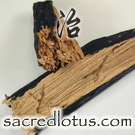 Chen Xiang150 gRegulate the Qi
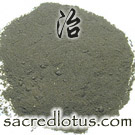 Ci Shi1500 gAnchor, Settle, and Calm the Spirit
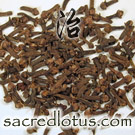 Ding Xiang30 gWarm the Interior and Expel Cold
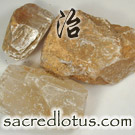 Han Shui Shi1500 gDrain Fire
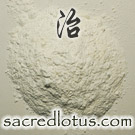 Hua Shi1500 gRegulate Water and Drain Dampness
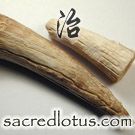 Ling Yang Jiao150 gExtinguish Wind and Stop Tremors
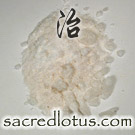 Mang Xiao5000 gPurgatives
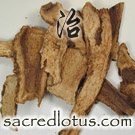 Mu Xiang150 gRegulate the QiNo specimen photographShe Xiang37.5 gAromatic Substances that Open the Orifices
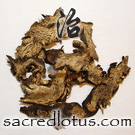 Sheng Ma500 gCool, Spicy Herbs that Release the Exterior
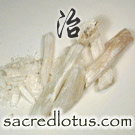 Shi Gao1500 gDrain Fire
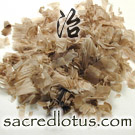 Xi Jiao150 gCool the Blood
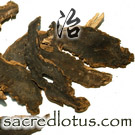 Xuan Shen500 gCool the Blood
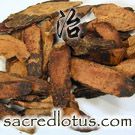 Zhi Gan Cao240 gTonify QiNo specimen photographZhu Sha90 gAnchor, Settle, and Calm the Spirit
Preparation & dosage
How is Zi Xue Dan prepared?
Zi Xue Dan is classically manufactured, not decocted at home like an ordinary herbal tea. The traditional process first decocts the four hard mineral substances (Shi Gao, Han Shui Shi, Hua Shi, Ci Shi), then combines the resulting liquid with the aromatic and mineral-salt ingredients, with Zhu Sha (Cinnabar) water-levigated separately and added last, to form a fine powder or small pill (hence “dan,” special pill/powder).
This is a historical/manufacturing description for reference purposes. It is not instruction for home preparation: several classical ingredients are toxic, CITES-restricted, or otherwise regulated, and modern manufactured products reformulate the recipe accordingly (see cautions and the Western Uses section).
Source: classical preparation method summarized from Bensky & Barolet, Formulas & Strategies and cross-checked against independent formula-reference sources. Reference only.
Historical reference only — not administration or dosing guidance. Classical base recipe (per Sacred Lotus sources & references, gram amounts consistent across sources): Mang Xiao 5000 g; Shi Gao, Han Shui Shi, Hua Shi, Ci Shi 1500 g each; Xuan Shen, Sheng Ma 500 g each; Zhi Gan Cao 240 g; Xi Jiao, Ling Yang Jiao, Mu Xiang, Chen Xiang 150 g each; Zhu Sha 90 g; She Xiang 37.5 g; Ding Xiang 30 g. This is a classical manufacturing ratio, not a modern per-dose amount. The Chinese Pharmacopoeia separately caps internal cinnabar dosing, and modern manufactured products reformulate several of these ingredients (see cautions). Any therapeutic use is restricted to licensed practitioners under applicable regulation.
Safety — read before use
What are the cautions for Zi Xue Dan?
Zi Xue Dan is an emergency-use, practitioner-only formula, not a general remedy, and its classical recipe contains substances that are toxic and/or internationally restricted. The following is public-safety reference information, not dosing or administration guidance.
- Cinnabar (Zhu Sha): a mercury sulfide mineral. Toxicology research finds cinnabar has relatively low acute toxicity compared to other mercury forms, but long-term or excessive use has been associated with renal (kidney) dysfunction from mercury accumulation; Chinese Pharmacopoeia limits set a maximum internal dose and prohibit heating cinnabar, which releases toxic mercury vapor and sharply increases its hazard (PMID 18445765).
- Rhinoceros horn (Xi Jiao): listed in the classical recipe; rhinoceros is CITES Appendix I and international commercial trade in its horn is banned. Modern manufactured products substitute water buffalo horn (Shui Niu Jiao).
- Musk (She Xiang) and antelope horn (Ling Yang Jiao): animal-derived ingredients from species of conservation concern; musk deer and saiga antelope are both recognized as threatened.
- Pregnancy: contraindicated — the formula contains musk and the strong purgative mineral salt Mang Xiao.
- Pattern fit: inappropriate for cold patterns, Spleen-Stomach deficiency, or any presentation without clear excess-heat signs; traditionally discontinued once the acute heat/consciousness crisis resolves rather than continued long-term.
Sources: PubMed 18445765 (cinnabar/mercury toxicology review); Bensky & Barolet, Formulas & Strategies (formula cautions); CITES Appendix I listing for rhinoceros. Reference information only; not administration or dosing guidance, and not medical advice.
Originally Appeared In:
- Imperial Grace Formulary of the Tai Ping Era (Tai Ping Hui Min He Ji Ju Fang)
Notes:
How does Zi Xue Dan compare to An Gong Niu Huang Wan and Zhi Bao Dan?
Zi Xue Dan, An Gong Niu Huang Wan, and Zhi Bao Dan are traditionally grouped as the “Three Treasures” (San Bao) — three cool-opening formulas for heat entering the Pericardium with loss of consciousness, distinguished by which secondary pattern dominates.
- Zi Xue Dan is favored when internal wind is prominent — agitation, spasms, and convulsions alongside impaired consciousness.
- An Gong Niu Huang Wan is favored for the strongest heat-clearing action, used for deeper stupor with a “muddled, confused” presentation and less convulsive activity.
- Zhi Bao Dan is favored when phlegm misting the orifices dominates — a quiet, unresponsive presentation without seizures.
Zi Xue Dan is also known by the name Zi Xue San (Purple Snow Powder), reflecting its traditional powder form.
Source: comparison summarized from Bensky & Barolet, Formulas & Strategies (orifice-opening formula category) cross-checked against independent formula-reference summaries.
Clinical Studies & Research:
Is there modern research on Zi Xue Dan?
Yes, though direct clinical-trial research on the formula itself is limited; the strongest recent work is network-pharmacology/mechanistic study of Zi Xue Powder’s antipyretic (fever-reducing) action, alongside separate toxicology research on its cinnabar component.
- Antipyretic mechanism (preclinical): a 2023 network-pharmacology study combined with experimental verification in a lipopolysaccharide-induced fever rat model found Zi Xue Powder reduced fever, with predicted mechanisms via multiple inflammatory and thermoregulatory targets (PMID 38069658 / PMC 11001279).
- Cinnabar/mercury safety (toxicology): a toxicology review of cinnabar (mercury sulfide) found relatively low acute oral toxicity compared to other mercury compounds but noted renal accumulation and dysfunction with long-term or excessive use, and that its inclusion in traditional formulas remains only partially justified by modern toxicological standards (PMID 18445765).
Sources: PubMed 38069658 / PMC 11001279; PubMed 18445765. Research context only, not a therapeutic claim; direct clinical trial evidence for the formula remains limited.
Sources & References
Compiled and edited by Thomas Dehli, Founder & Editor, Sacred Lotus Updated
The information here is referenced from numerous sources — teachers, practitioners, class notes from Five Branches University, the books below, and the published research literature, with citations given as resolvable PubMed identifiers. Where sources disagree, I have flagged the discrepancies directly. If facts couldn't be verified, I have left them out. How we source our content.
Reference information for students and practitioners — not medical advice. Consult a qualified practitioner. Terms of use.
Chinese Formulas Books & References
 https://amzn.to/4fYI3f8
 https://amzn.to/4j55NRA
 https://amzn.to/4gMROyv
 https://amzn.to/4h7msSK