

Bao He Wan (Preserve Harmony Pill)
Bao He Wan Bǎo Hé Wán
Preserve Harmony Pill
- Category
- Formulas that Reduce Food Stagnation
- Subcategory
- Formulas that Reduce Food Stagnation
- Ingredients
- 7 herbs
Actions
What does Bao He Wan do?
Bao He Wan (Preserve Harmony Pill) disperses food accumulation and harmonizes the Stomach — a mild, non-purgative digestive formula built around three herbs that each target a different category of stagnant food (meat/fat, grain/alcohol, and starch/dough), supported by herbs that regulate qi, dry dampness, and clear the low-grade heat that spoiled, undigested food generates.
- Disperses food accumulation (xiao shi): Shan Zha, Shen Qu, and Lai Fu Zi break down retained food by category rather than as one generic “digestive.”
- Harmonizes the Stomach and directs Stomach qi downward: Ban Xia and Chen Pi settle rebellious qi to relieve nausea, vomiting, and belching.
- Regulates qi and resolves distention: Chen Pi moves qi through the middle burner to ease bloating and fullness.
- Dries dampness and supports the Spleen’s transport function: Fu Ling drains the damp that accumulates once digestion stalls.
- Mildly clears heat from stagnant food: Lian Qiao disperses the low-grade heat that fermenting, undigested food tends to generate.
Source: Sacred Lotus sources & references + Bensky & Barolet, Formulas & Strategies; Chen & Chen, Chinese Medical Herbology and Pharmacology.
Indications
What is Bao He Wan used for?
Bao He Wan treats acute food stagnation from overeating — epigastric and abdominal distention and fullness, often with pain, that follows a heavy meal, dietary excess, or eating too quickly, in a patient who is otherwise robust (an excess-type presentation, not an underlying deficiency).
- Epigastric and abdominal distention, bloating, and fullness, sometimes with intermittent pain
- Belching and acid regurgitation, often with a foul or sour odor
- Nausea and vomiting of undigested food
- Reduced appetite or aversion to food
- Constipation, or loose/foul-smelling stool and flatus, depending on how the stagnation resolves
- A frequently used formula for simple dietary-excess indigestion in children as well as adults
Source: Sacred Lotus sources & references on pattern/tongue/pulse + Bensky & Barolet, Formulas & Strategies.
Western Uses:
What conditions is Bao He Wan used for in modern practice?
Bao He Wan resolves food stagnation — distention, belching, sour regurgitation, and stools that clear the accumulation — so it is referenced for digestive upset from over-eating or sluggish digestion: indigestion, diarrhoea, acute gastroenteritis, an acute flare of chronic gastritis, and (where a food-stagnation picture is present) hepatitis, acute pancreatitis, and acute or chronic cholecystitis.
The formula addresses the food-stagnation pattern, not a diagnosis. Several entries on this list — acute pancreatitis and cholecystitis in particular — are potential surgical emergencies presenting with severe abdominal pain, and require immediate medical care, not self-treatment; persistent vomiting or diarrhoea also needs assessment. Traditional-use correlates only, not a treatment claim.
Source: Sacred Lotus sources & references (pattern) + Bensky & Barolet, Formulas & Strategies; biomedical correlates as reference only. Not medical advice.
Ingredients
7 substances in Bao He Wan — each links to its full herb monograph.
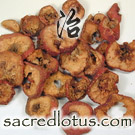 Shan Zha9-15 gRelieve Food Stagnation
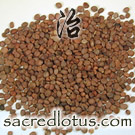 Lai Fu Zi6-9 gRelieve Food Stagnation
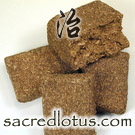 Shen Qu9-12 gRelieve Food Stagnation
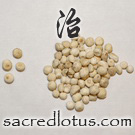 Ban Xia9-12 gWarm Herbs that Transform Phlegm-Cold
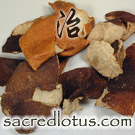 Chen Pi6-9 gRegulate the Qi
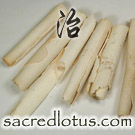 Fu Ling9-12 gRegulate Water and Drain Dampness
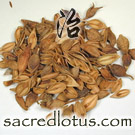 Lian Qiao3-6 gClear Heat and Eliminate Toxins
Preparation & dosage
How is Bao He Wan prepared?
Classically prepared as a pill (wan), as the formula’s name states — the herbs are ground to a fine powder and formed into pills with a paste binder, taken with warm water; in modern clinical practice it is also commonly prepared as a stronger-acting decoction (tang), which is the form the reference amounts below assume.
- Reference decoction amounts (from Sacred Lotus sources & references): Shan Zha 9–15 g; Shen Qu 9–12 g; Lai Fu Zi 6–9 g; Chen Pi 6–9 g; Ban Xia 9–12 g; Fu Ling 9–12 g; Lian Qiao 3–6 g.
- Herb processing: Shen Qu is traditionally dry-fried (chao) before use to enhance its digestive property; Ban Xia is always used in a processed (zhi) form, never raw, to remove its irritant toxicity.
- Pill form: the traditional pill is taken with warm water, typically after meals, and is milder and slower-acting than the decocted form.
Source: Sacred Lotus sources & references + Bensky & Barolet, Formulas & Strategies (traditional pill preparation and herb processing).
Safety — read before use
What are the cautions for Bao He Wan?
Bao He Wan is for excess-type food stagnation and should not be used for similar-looking digestive symptoms caused by underlying Spleen Qi deficiency — chronic fatigue, poor appetite, loose stools, and a pale tongue rather than an acute bout of overeating — where a purely dispersing formula can further weaken digestion instead of resolving it.
- Not for Spleen Qi deficiency-type indigestion (fatigue, poor appetite over time, loose stool, pale tongue); Jian Pi Wan is the formula built for that presentation instead.
- Use in pregnancy only with professional guidance, as is customary for qi-regulating, downward-directing digestive formulas.
- Ban Xia is classically listed among the “eighteen incompatibilities” (shi ba fan) as incompatible with aconite-type herbs (Wu Tou/Fu Zi); noted here as neutral public-safety reference on traditional herb-pairing restrictions, not as administration guidance.
Source: Sacred Lotus sources & references on cautions + Bensky & Barolet, Formulas & Strategies (pattern appropriateness); classical “eighteen incompatibilities” (shi ba fan) convention for Ban Xia.
Originally Appeared In:
- Teachings of Dan Xi (Dan Xi Xin Fa)
Notes:
How does Bao He Wan differ from Zhi Shi Dao Zhi Wan and Jian Pi Wan?
Bao He Wan is the mildest of the three — a gentle, non-purgative digestive for uncomplicated recent food stagnation — while Zhi Shi Dao Zhi Wan is reserved for stagnation that has already transformed into damp-heat, and Jian Pi Wan is chosen when food stagnation coexists with an underlying Spleen Qi deficiency.
- vs Zhi Shi Dao Zhi Wan (Li Dong-yuan): built around Zhi Shi and Da Huang to purge lodged food/damp-heat from the intestines, with Huang Lian and Huang Qin clearing more pronounced heat — used for more severe distention, constipation, and a thicker greasy-yellow coat than Bao He Wan addresses. Bao He Wan digests and disperses; Zhi Shi Dao Zhi Wan purges.
- vs Jian Pi Wan (Strengthen the Spleen Pill): pairs food-stagnation-relieving herbs with Spleen-qi tonics (in the pattern of Si Jun Zi Tang — Ren Shen/Dang Shen, Bai Zhu, Fu Ling, Gan Cao) — appropriate for chronic or recurrent food stagnation layered on an underlying Spleen Qi deficiency, rather than the acute, excess-type presentation Bao He Wan is designed for.
- Da Bao He Wan (Major Preserve Harmony Pill): a commonly cited expanded variant that adds Mai Ya (germinated barley sprout), broadening the formula’s reach into grain-stagnation alongside Shen Qu.
Classical source and lineage: Bao He Wan comes from Dan Xi Xin Fa (“Teachings of [Zhu] Dan-xi”), a Yuan-dynasty text compiled by the students of Zhu Dan-xi (1281–1358), one of the “Four Great Masters” of Jin-Yuan medicine, known for favoring gentle regulation over harsh purgation.
Source: Bensky & Barolet, Formulas & Strategies (formula comparisons, classical source, Da Bao He Wan variant).
Clinical Studies & Research:
Is there modern research on Bao He Wan’s ingredients?
Direct clinical trials of the complete Bao He Wan formula were not found in verified sources, but two of its three signature “disperse food accumulation” herbs have documented pharmacological research individually. A 2024 study compared Shen Qu (Massa Medicata Fermentata) before and after charring in a rat model of functional dyspepsia, finding both forms improved gastrointestinal function via gut-hormone regulation and gut-microbiota changes, with the charred form showing a stronger effect (PMID 38462026). A separate 2021 study found that Lai Fu Zi (Raphanus sativus seed) improved intestinal motility in rats fed a high-calorie diet, via regulation of gastrointestinal motility hormones and motility-related proteins (PMID 34118598).
Sources: PMID 38462026; PMID 34118598. Preclinical (animal) research on individual formula ingredients, offered as context for their traditional digestive use — not a clinical claim for Bao He Wan as a whole.
Sources & References
Compiled and edited by Thomas Dehli, Founder & Editor, Sacred Lotus Updated
The information here is referenced from numerous sources — teachers, practitioners, class notes from Five Branches University, the books below, and the published research literature, with citations given as resolvable PubMed identifiers. Where sources disagree, I have flagged the discrepancies directly. If facts couldn't be verified, I have left them out. How we source our content.
Reference information for students and practitioners — not medical advice. Consult a qualified practitioner. Terms of use.
Chinese Formulas Books & References
 https://amzn.to/4fYI3f8
 https://amzn.to/4j55NRA
 https://amzn.to/4gMROyv
 https://amzn.to/4h7msSK