

Mu Xiang Bing Lang Wan
Aucklandia and Betel Nut Pill
- Category
- Formulas that Reduce Food Stagnation
- Subcategory
- Formulas that Reduce Food Stagnation
- Ingredients
- 10 herbs
Actions
What does Mu Xiang Bing Lang Wan do?
Mu Xiang Bing Lang Wan (Aucklandia and Betel Nut Pill) moves qi, purges accumulation, and drains damp-heat from the Stomach and Intestines. It is a strong combination formula built for food and qi stagnation that has already transformed into damp-heat — not a gentle digestive aid, but a formula meant to move a genuine blockage out through the bowels.
The ten ingredients divide by role (derived from our actual composition, following Bensky & Barolet’s chief/deputy/assistant method):
- Chief: Mu Xiang and Bing Lang — the classic qi-moving pair that gives the formula its name; together they break stagnant qi in the digestive tract and direct the formula’s action downward.
- Deputies: Da Huang and Qian Niu Zi purge accumulation and drain excess heat through the bowels; Qian Niu Zi is dosed highest of all ten ingredients, making it the formula’s principal purgative alongside Da Huang.
- Assistants: Qing Pi, Chen Pi, and dry-fried Xiang Fu reinforce the qi-moving action through the Liver, Spleen, and Stomach; E Zhu breaks qi and blood stagnation to help clear the accumulation; Huang Lian and Huang Bai clear the damp-heat that has developed from the stagnation.
Source: Sacred Lotus sources & references + Bensky & Barolet, Formulas & Strategies (chief/deputy/assistant method, applied by Sacred Lotus to this composition). Traditional-use framing; not medical advice.
Indications
What is Mu Xiang Bing Lang Wan used for?
Mu Xiang Bing Lang Wan treats damp-heat with food and qi stagnation lodged in the Stomach and Intestines — a pattern that develops when unresolved food stagnation generates heat and combines with dampness, obstructing the free flow of qi through the digestive tract.
Its classic clinical presentation:
- Bowel signs: tenesmus (a constant, unproductive urge to defecate) with foul-smelling diarrhea or dysenteric stool, or, alternately, constipation from the same underlying blockage.
- Abdominal signs: marked distention and pain in the epigastrium and abdomen.
- Associated signs: a bitter taste in the mouth reflecting the heat component of the pattern.
Tongue and pulse: a yellow, greasy tongue coating is the consistent diagnostic marker across sources; the pulse is described as excess (forceful) — secondary compilations vary on the exact descriptor (deep and forceful vs. slippery and rapid), which this entry flags rather than overstates (see Discrepancies).
Discrepancies: published summaries of this formula's pulse quality vary (deep/forceful vs. slippery/rapid) depending on the compilation consulted; all agree it reflects an excess condition, so the specific wave-quality descriptor is left general here rather than asserted with false precision.
Source: Sacred Lotus sources & references on pattern/tongue/pulse + Bensky & Barolet, Formulas & Strategies. Traditional-use framing; not medical advice.
Western Uses:
What is Mu Xiang Bing Lang Wan used for in modern practice?
In modern practice, Mu Xiang Bing Lang Wan is referenced in the traditional Chinese medicine literature for acute bacterial dysentery and acute gastroenteritis with damp-heat food stagnation — conditions where Western medicine recognizes an analogous acute intestinal-inflammatory presentation.
This biomedical correlate is offered as a reference to the formula’s traditional use, not as a claim that it treats any diagnosed disease. No dedicated clinical trials or formula-specific research on Mu Xiang Bing Lang Wan itself were located on PubMed (see research); the correlate below rests on component-herb pharmacology (berberine-containing Huang Lian and Huang Bai, and rhubarb/Da Huang) rather than whole-formula trial evidence. Because the formula is a strong purgative built on a slightly toxic chief herb (Qian Niu Zi), any use for a diagnosed acute intestinal condition belongs with a qualified practitioner and appropriate medical care, not self-treatment.
Source: traditional-use correlate summarized from Bensky & Barolet, Formulas & Strategies, cross-checked against PubMed component-herb research (see research). Reference only, not a treatment claim.
Ingredients
10 substances in Mu Xiang Bing Lang Wan — each links to its full herb monograph.
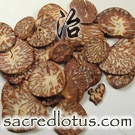 Bing Lang30 gExpel Parasites
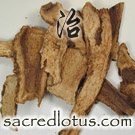 Mu Xiang30 g ramsRegulate the Qi
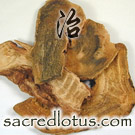 Da Huang90 gPurgativesNo specimen photographQian Niu Zi120 gHarsh Expellants
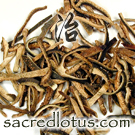 Qing Pi30 gRegulate the Qi
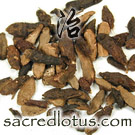 Xiang Fu120 gdry-friedRegulate the Qi
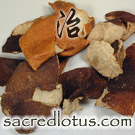 Chen Pi30 gRegulate the Qi
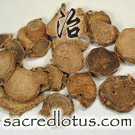 E Zhu30 gInvigorate Blood and Remove Stagnation
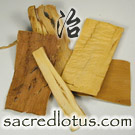 Huang Bai90 gClear Heat and Dry Dampness
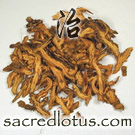 Huang Lian30 gClear Heat and Dry Dampness
Preparation & dosage
How is Mu Xiang Bing Lang Wan prepared?
Classically, all ten ingredients are ground into an even powder and formed into pills with water. The typical dose is 3-6 g, taken two to three times daily with warm water or a light decoction of Sheng Jiang (fresh ginger); dosages may be reduced and the powder decocted directly when prepared as a decoction instead of pills.
Source: Sacred Lotus sources & references on preparation. Historical/reference preparation; not administration guidance.
Reference relative amounts (pill form, per Sacred Lotus sources & references): Qian Niu Zi 120 g; Xiang Fu 120 g (dry-fried); Da Huang, Huang Bai 90 g; Mu Xiang, Bing Lang, Qing Pi, Chen Pi, E Zhu, Huang Lian 30 g each. Ground to a fine powder, formed into water pills; typical dose 3-6 g, 2-3 times daily with warm water or a Sheng Jiang (ginger) decoction. Reference only, not a dosing guide.
Safety — read before use
What are the cautions for Mu Xiang Bing Lang Wan?
Mu Xiang Bing Lang Wan is a strong purgative formula for genuine excess, damp-heat patterns, and is inappropriate for deficiency, cold, or weak-digestion presentations. Its chief purgative, Qian Niu Zi (Semen Pharbitidis), is classified Cold and Slightly Toxic in Bensky's materia medica and is flagged toxic in the Sacred Lotus database; the formula is intended for short-term use in an acute excess pattern, not ongoing or repeated dosing.
- Contraindicated in pregnancy — the formula combines strong purgative and qi-breaking herbs (Da Huang, Qian Niu Zi, E Zhu).
- Avoid in deficiency patterns — weak Spleen-Stomach qi, cold-type accumulation, or a generally frail/elderly constitution; the formula's purgative and qi-breaking action can further injure digestive function in these cases.
- Not for children without direct practitioner guidance and reduced dosing, given the toxicity classification of Qian Niu Zi.
- Short-term, acute use only: classical and modern secondary sources consistently describe this as a formula for clearing an acute blockage, discontinued once bowel function normalizes rather than used as a maintenance digestive.
Source: Bensky & Barolet, Formulas & Strategies (cautions for purgative/food-stagnation formulas) + PubMed review of Qian Niu Zi toxicology (PMID 37178984). Public-safety reference; not medical advice.
Originally Appeared In:
- Confucian's Duties to Their Parents (Ru Men Shi Qin)
Notes:
How is Mu Xiang Bing Lang Wan different from Bao He Wan and Zhi Shi Dao Zhi Wan?
Mu Xiang Bing Lang Wan is the strongest of the classic food-stagnation formulas — it purges as well as digests, whereas Bao He Wan and Zhi Shi Dao Zhi Wan work more gently. All three share the goal of resolving food stagnation, but they escalate in intensity.
- vs Bao He Wan: Bao He Wan uses purely digestive herbs (e.g., Shan Zha, Shen Qu, Lai Fu Zi) for mild-to-moderate food stagnation without a purgative; choose Mu Xiang Bing Lang Wan when stagnation has become entrenched and generated damp-heat requiring a bowel-clearing purge.
- vs Zhi Shi Dao Zhi Wan: Zhi Shi Dao Zhi Wan also treats damp-heat food stagnation but is gentler, pairing its purgative/heat-clearing herbs with Spleen-protecting herbs (Bai Zhu, Fu Ling); Mu Xiang Bing Lang Wan is reserved for a more forceful excess presentation and omits the Spleen-protective herbs.
Source: Bensky & Barolet, Formulas & Strategies (comparison within "Formulas that Reduce Food Stagnation"). Encyclopedia reference.
Clinical Studies & Research:
Is there modern research on Mu Xiang Bing Lang Wan?
No dedicated clinical trials or network-pharmacology studies of the whole formula were located on PubMed under this name or its Pinyin/English variants. The research below is component-herb pharmacology relevant to the formula's traditional damp-heat, anti-dysenteric action — offered as background on individual ingredients, not evidence for the formula as a combined preparation.
- Berberine and Shigella-induced dysentery (preclinical, 2026): berberine — the principal alkaloid in Huang Lian and Huang Bai — protected mice from Shigella flexneri-induced dysentery by strengthening the intestinal barrier and rebalancing inflammatory T-cell responses (PMID 41596706).
- Qian Niu Zi (Pharbitidis Semen) phytochemistry and toxicology (review, 2023): a review of the formula's chief purgative found roughly 170 identified compounds and confirmed its traditional anti-diarrheal efficacy, while noting its bioactive and toxic constituents remain incompletely characterized (PMID 37178984).
- Pharbitin mechanism (preclinical): pharbitin, a resin glycoside from Qian Niu Zi, was identified as the seed's principal anthelmintic (intestinal-parasite-expelling) compound, acting on a nicotinic acetylcholine receptor subunit in nematodes (PMID 36555386).
- Da Huang / rhubarb pharmacology (systematic review, 2024): a systematic review of rhubarb's botany, phytochemistry, and clinical applications summarized its antibacterial, anti-inflammatory, and gastrointestinal-motility effects (PMID 39558546).
Sources: PubMed 41596706; PubMed 37178984; PubMed 36555386; PubMed 39558546. Component-herb research context only; no formula-specific trial evidence exists, and none of these findings constitute a treatment claim.
Sources & References
Compiled and edited by Thomas Dehli, Founder & Editor, Sacred Lotus Updated
The information here is referenced from numerous sources — teachers, practitioners, class notes from Five Branches University, the books below, and the published research literature, with citations given as resolvable PubMed identifiers. Where sources disagree, I have flagged the discrepancies directly. If facts couldn't be verified, I have left them out. How we source our content.
Reference information for students and practitioners — not medical advice. Consult a qualified practitioner. Terms of use.
Chinese Formulas Books & References
 https://amzn.to/4fYI3f8
 https://amzn.to/4j55NRA
 https://amzn.to/4gMROyv
 https://amzn.to/4h7msSK