
Di Tan Tang
Scour Phlegm Decoction
- Category
- Formulas that Open the Orifices
- Subcategory
- Formulas that Scour Phlegm and Open the Orifices
- Ingredients
- 9 herbs
Actions
What does Di Tan Tang do?
Di Tan Tang (Scour Phlegm Decoction) powerfully dries dampness and scours out stubborn phlegm to open the sensory orifices and restore speech, while a qi tonic supports the underlying deficiency that let the phlegm form in the first place. It builds outward from the classic phlegm-resolving core of Er Chen Tang (Ban Xia, Ju Hong, Fu Ling, Gan Cao), adds the qi-directing pungent/bitter pair from Wen Dan Tang (Zhi Shi, Zhu Ru), and is then strengthened with two potent additions aimed specifically at wind-phlegm misting the mind: Dan Nan Xing and Shi Chang Pu.
Composition and roles (per Sacred Lotus sources & references + Bensky & Barolet):
- Chief: Ban Xia and Dan Nan Xing (bile-processed Arisaema) together dry dampness and forcefully transform thick, stubborn phlegm; Dan Nan Xing in particular targets wind-phlegm and is traditionally credited with helping to extinguish wind.
- Deputies: Zhi Shi and Ju Hong (aged tangerine peel) regulate qi and break up stagnation so accumulated phlegm can move rather than re-form; Fu Ling strengthens the Spleen and drains dampness at its source (the Spleen being the traditional “source” of phlegm); Zhu Ru clears heat and calms rebellious qi in the chest and Stomach, tempering the warmth and dryness of Ban Xia and Dan Nan Xing.
- Assistants: Ren Shen tonifies the underlying qi deficiency that allowed phlegm to congeal and supports the body against the aggressive, drying action of the other herbs; Shi Chang Pu is the formula’s aromatic orifice-opener — it disperses phlegm-damp misting the Heart and is the herb most directly credited with helping restore speech.
- Envoy: Gan Cao harmonizes the formula and moderates the toxicity of Ban Xia and Dan Nan Xing.
Discrepancy: the local database lists nine named herbs for Di Tan Tang and does not carry a separate ingredient row for Sheng Jiang. Bensky & Barolet’s classical version of the formula additionally decocts in a few slices of fresh Sheng Jiang alongside the nine, in the same envoy role as Gan Cao — harmonizing the Stomach and further moderating the toxicity of Ban Xia and Dan Nan Xing. We note Sheng Jiang here on that classical basis; our nine-herb core composition is otherwise authoritative and unchanged.
Source: Sacred Lotus sources & references + Bensky & Barolet, Formulas & Strategies (chief/deputy/assistant/envoy analysis; classical Sheng Jiang addition). Traditional-use framing; not medical advice.
Indications
What is Di Tan Tang used for?
Di Tan Tang treats wind-phlegm misting the mind (the Heart orifices) against a background of qi deficiency — the classic presentation seen in the aftermath of wind-stroke, where phlegm that has surged upward with wind blocks the sensory orifices and the pathways governing speech.
- Hallmark presentation: wind-stroke sequelae with a stiff, rigid tongue and inability to speak (motor aphasia/slurred speech).
- Accompanying signs: dizziness, a stifling sensation in the chest, and copious phlegm, sometimes with a rattling sound in the throat.
- Tongue: stiff/rigid with a greasy coating, reflecting phlegm obstructing the tongue’s channels; Sacred Lotus sources & references on tongue records “Stiff tongue.”
Source: Sacred Lotus sources & references on pattern/tongue + Bensky & Barolet, Formulas & Strategies. Traditional-use framing; not medical advice.
Western Uses:
What is Di Tan Tang used for in modern practice?
In modern practice Di Tan Tang is referenced for the sequelae of stroke — particularly motor aphasia or dysarthria (difficulty forming or producing speech), copious oral/airway secretions, and dizziness following a cerebrovascular event — contexts that parallel its traditional “wind-phlegm misting the orifices” pattern.
These biomedical correlates describe the formula’s traditional use; they are not a claim that it treats, cures, or replaces emergency care for stroke or any diagnosed condition. Contemporary clinical research on it is summarized in research below, but any use following a stroke belongs alongside a qualified practitioner and appropriate medical care, never in place of it.
Source: traditional-use correlates summarized from Bensky & Barolet, Formulas & Strategies, cross-checked against modern clinical research (see research). Reference only, not a treatment claim.
Ingredients
9 substances in Di Tan Tang — each links to its full herb monograph.
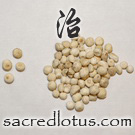 Ban Xia6.6 gWarm Herbs that Transform Phlegm-Cold
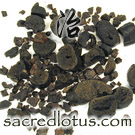 Dan Nan Xing6.6 gCool and Transform Phlegm-Heat
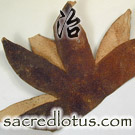 Ju Hong6 gRegulate the Qi
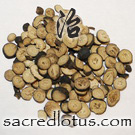 Zhi Shi6 gRegulate the Qi
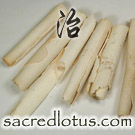 Fu Ling6 gRegulate Water and Drain Dampness
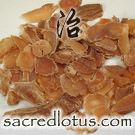 Ren Shen3 gTonify Qi
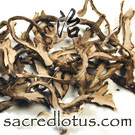 Shi Chang Pu3 gAromatic Substances that Open the Orifices
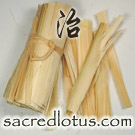 Zhu Ru2.1 gCool and Transform Phlegm-Heat
 Gan Cao1.5 gTonify Qi
Preparation & dosage
How is Di Tan Tang prepared?
Di Tan Tang is prepared as a decoction (tang), with the nine core herbs cooked together in water; classically a few slices of fresh Sheng Jiang are added during cooking to harmonize the Stomach and moderate the toxicity of Ban Xia and Dan Nan Xing.
Because this formula is aimed at a serious, often acute-to-subacute presentation (post-stroke phlegm misting the orifices), it is typically prescribed and adjusted by a practitioner over the early weeks of recovery rather than used as a self-directed remedy.
Source: Bensky & Barolet, Formulas & Strategies (standard decoction method for this formula class).
Decoction. Reference relative amounts from Sacred Lotus sources & references: Ban Xia 6.6 g; Dan Nan Xing 6.6 g; Ju Hong 6 g; Zhi Shi 6 g; Fu Ling 6 g; Shi Chang Pu 3 g; Ren Shen 3 g; Zhu Ru 2.1 g; Gan Cao 1.5 g. Classically a few slices of fresh Sheng Jiang are decocted in alongside the nine (see the Actions section discrepancy note). Reference only; not a prescription.
Safety — read before use
What are the cautions for Di Tan Tang?
Di Tan Tang is a strongly drying, phlegm-scouring formula built on Ban Xia and bile-processed Dan Nan Xing, both potent herbs that call for care in sourcing and use. It is not appropriate for dry or yin-deficient presentations, and it addresses a serious underlying condition (post-stroke sequelae) that requires proper medical management alongside any herbal treatment.
- Processed herbs required: Ban Xia is listed as toxic in its raw, unprocessed form — only correctly processed Ban Xia (and correctly bile-processed Dan Nan Xing) should be used. Classically Ban Xia is considered incompatible with aconite-type herbs (Wu Tou/Fu Zi) under the “eighteen antagonisms” (shí bā fǎn) and should not be combined with them.
- Avoid or modify in yin/fluid deficiency or dryness, and where there is little or no phlegm — the formula’s drying herbs can aggravate dry mouth, dry cough, or constipation.
- Pregnancy: contains qi-breaking, downward-directing herbs (Zhi Shi); use only under professional guidance.
- Not a substitute for emergency care: this formula supports recovery from wind-stroke sequelae; it does not replace emergency evaluation and medical treatment of stroke.
Source: Bensky & Barolet, Formulas & Strategies; herb properties from local Sacred Lotus (Ban Xia listed Toxic in raw form). Traditional-use framing; not medical advice.
Originally Appeared In:
- Formulas to Aid the Living (Ji Sheng Fang)
Notes:
How is Di Tan Tang different from Er Chen Tang, Wen Dan Tang, and Dao Tan Tang?
Di Tan Tang sits at the strong end of a family of phlegm-transforming formulas built outward from Er Chen Tang (Ban Xia, Ju Hong, Fu Ling, Gan Cao) — each addition in the family increases potency and narrows the target pattern.
- vs Er Chen Tang: Er Chen Tang is the base formula for damp-phlegm generally; Di Tan Tang adds qi-breaking, heat-clearing, and orifice-opening herbs for a far more severe and specific presentation — phlegm misting the mind after wind-stroke.
- vs Wen Dan Tang: Wen Dan Tang (Er Chen Tang plus Zhi Shi and Zhu Ru) clears phlegm-heat disturbing the Gallbladder and Stomach (irritability, insomnia, nausea); Di Tan Tang shares that Zhi Shi/Zhu Ru pair but adds Dan Nan Xing, Ren Shen, and Shi Chang Pu to target wind-phlegm blocking the orifices and speech, with an added qi-deficiency component.
- vs Dao Tan Tang: Dao Tan Tang (“Guide Out Phlegm Decoction,” Er Chen Tang plus Zhi Shi and Nan Xing) is the more direct precursor; Di Tan Tang is essentially Dao Tan Tang plus Ren Shen, Shi Chang Pu, and Zhu Ru, extending a general phlegm-purging formula into one aimed specifically at the Heart orifices and speech.
Source: Bensky & Barolet, Formulas & Strategies (formula-family comparisons).
Clinical Studies & Research:
Is there modern research on Di Tan Tang?
Yes — a clinical meta-analysis of Di Tan Tang for post-stroke neurological disorders, plus mechanistic network-pharmacology work on intracerebral hemorrhage. A systematic review and meta-analysis pooling 11 randomized controlled trials (492 controls, 502 treated with Di-Tan Decoction; patients 1–6 weeks post-stroke) found significantly better odds of improvement on post-stroke neurological symptom scales with Di-Tan Decoction (alone or added to Western medicine) than with Western medicine alone, and no adverse effects were reported across the reviewed trials.
- Post-stroke neurological disorders (clinical meta-analysis): 11 RCTs, OR 0.30 (95% CI 0.21–0.43, P < 0.00001) favoring Di-Tan Decoction groups on standardized post-stroke symptom scales (PMID 33941339).
- Intracerebral hemorrhage (preclinical, network pharmacology): systems-pharmacology analysis identified a core set of active ingredients whose predicted targets substantially overlapped ICH-pathogenic-gene pathways, implicating MAPK and PI3K-Akt signaling; select compounds (6-shogaol, 6-gingerol, kaempferol, sitosterol) were further tested in cell-viability assays (PMID 36765346).
Sources: PubMed 33941339 (Chinese Journal of Natural Medicine, 2021); PubMed 36765346 (BMC Complementary Medicine and Therapies, 2023). Research context, not a therapeutic claim; larger, higher-quality trials are still needed.
Sources & References
Compiled and edited by Thomas Dehli, Founder & Editor, Sacred Lotus Updated
The information here is referenced from numerous sources — teachers, practitioners, class notes from Five Branches University, the books below, and the published research literature, with citations given as resolvable PubMed identifiers. Where sources disagree, I have flagged the discrepancies directly. If facts couldn't be verified, I have left them out. How we source our content.
Reference information for students and practitioners — not medical advice. Consult a qualified practitioner. Terms of use.
Chinese Formulas Books & References
 https://amzn.to/4fYI3f8
 https://amzn.to/4j55NRA
 https://amzn.to/4gMROyv
 https://amzn.to/4h7msSK