
Fu Yuan Huo Xue Tang
Revive Health By Invigorating the Blood Decoction
- Category
- Formulas that Invigorate the Blood
- Ingredients
- 8 herbs
Actions
What does Fu Yuan Huo Xue Tang do?
Fu Yuan Huo Xue Tang (Revive Health by Invigorating the Blood Decoction) invigorates the blood, dispels blood stasis, spreads the Liver qi, and unblocks the channels and collaterals to stop pain. It is a trauma formula: written for stasis that lodges after a fall, blow, or other physical injury, particularly when the stasis settles along the Liver channel in the chest, hypochondrium, or flank.
The eight ingredients divide by role:
- Chief: Chai Hu unblocks the Liver channel and guides the other herbs to the hypochondrium while spreading constrained Liver qi; Da Huang (wine-fried) breaks up stasis and drives old, extravasated blood downward and out.
- Deputies: Tao Ren and Hong Hua strongly invigorate the blood and break stasis; Dang Gui nourishes and moves blood at the same time, so the formula doesn’t injure healthy blood while it clears the stagnant.
- Assistants: Chuan Shan Jia (traditionally; see cautions for the modern substitute) penetrates deeply to unblock the channels and collaterals where stasis is lodged; Tian Hua Fen reduces the swelling and heat that stasis and trauma generate, and offsets the drying effect of Da Huang’s purgative action.
- Envoy: Gan Cao harmonizes the formula and moderates the harshness of Da Huang and Chuan Shan Jia.
Source: this site’s own composition record + Bensky & Barolet, Formulas & Strategies (chief/deputy/assistant/envoy analysis). Traditional-use framing; not medical advice.
Indications
What is Fu Yuan Huo Xue Tang used for?
Fu Yuan Huo Xue Tang treats blood stasis from traumatic injury that has lodged in the Liver channel — classically a fall or blow that leaves blood outside the vessels in the chest, hypochondrium, or flank. The hallmark is pain that is fixed in location, stabbing or piercing in quality, and unbearable, rather than the diffuse ache of a simple strain.
- Pain pattern: fixed, stabbing, severe pain in the chest, ribs, or flank following trauma; often worse with pressure or movement, and classically worse at night, as is typical of blood-stasis pain.
- Associated signs: local bruising or swelling, restricted turning or bending of the torso, and irritability or a sense of Liver-qi constraint alongside the physical injury.
Tongue and pulse: the tongue tends dark or purplish, sometimes with stasis spots, with a thin white coat; the pulse is wiry and choppy.
Source: this site’s own pattern record + Bensky & Barolet, Formulas & Strategies. Traditional-use framing; not medical advice.
Western Uses:
What is Fu Yuan Huo Xue Tang used for in modern practice?
In modern practice this formula is referenced for acute blunt trauma to the chest wall and flank — contusions, rib-area soft-tissue injury, and bruising from a fall, blow, or sports injury, contexts where Western medicine recognizes localized swelling, bruising, and pain from tissue and small-vessel damage. Practitioners have also applied it, with modification, to fractures (commonly adding San Qi) and to post-injury or post-surgical stasis pain.
These biomedical correlates describe the formula’s traditional use pattern, not a claim that it treats any diagnosed condition. Direct clinical-trial evidence for the formula as a whole remains limited (see research). Traumatic chest or flank pain can mask more serious injury, so its use after significant trauma belongs alongside appropriate medical evaluation.
Source: traditional-use correlates summarized from Bensky & Barolet, Formulas & Strategies, cross-referenced against multiple online sources; reference only, not a treatment claim.
Ingredients
8 substances in Fu Yuan Huo Xue Tang — each links to its full herb monograph.
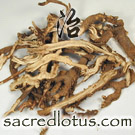 Chai Hu15 gCool, Spicy Herbs that Release the Exterior
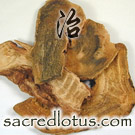 Da Huang30 gwine treatedPurgatives
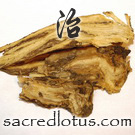 Dang Gui9 gTonify Blood
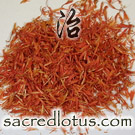 Hong Hua6 gInvigorate Blood and Remove Stagnation
 Tao Ren9 gInvigorate Blood and Remove StagnationNo specimen photographChuan Shan Jia6 gInvigorate Blood and Remove Stagnation
 Tian Hua Fen9 gCool and Transform Phlegm-Heat
 Gan Cao6 gTonify Qi
Preparation & dosage
How is Fu Yuan Huo Xue Tang prepared?
Da Huang is wine-fried (jiu zhi) before decocting — a processing step that moderates its cold, purgative harshness while enhancing its blood-invigorating action, which suits a formula meant to break stasis rather than simply purge. The remaining seven herbs are prepared as a standard water decoction.
- Decoct and take warm, traditionally in divided doses over the day.
- Modern granule and patent versions commonly reduce or omit Chuan Shan Jia (see cautions) and may moderate the Da Huang dose relative to the classical amount.
Source: this site’s own composition record (Da Huang listed “wine treated”) + Bensky & Barolet, Formulas & Strategies; cross-referenced against multiple online sources. Reference only.
Decoction. Reference relative amounts (this site’s own composition record, matching Bensky & Barolet): Da Huang (wine-fried) 30 g; Chai Hu 15 g; Dang Gui, Tao Ren, Tian Hua Fen 9 g each; Hong Hua, Chuan Shan Jia, Gan Cao 6 g each.
Modern commercial/clinical formularies vary the Da Huang dose considerably — e.g. some modern formularies list 6 g rather than the classical 30 g — most likely a deliberate reduction of the purgative dose for standardized patent/granule products; the higher classical amount matches this site’s own record and Bensky & Barolet, and is given above as the reference. Chuan Shan Jia is commonly reduced, omitted, or replaced with Wang Bu Liu Xing in current practice (see cautions).
Reference only, not a prescription.Safety — read before use
What are the cautions for Fu Yuan Huo Xue Tang?
This is a strongly moving, purgative formula, not a gentle one — wine-fried Da Huang at a substantial dose gives it a downward-draining action, and the formula is built to break stasis aggressively. It is inappropriate for blood deficiency without stasis, for general weakness, or for anyone who cannot tolerate a laxative effect.
- Pregnancy: contraindicated — Da Huang and the blood-breaking herbs (Tao Ren, Hong Hua) risk miscarriage.
- Bowel effect: loose stools are an expected part of Da Huang’s action in this formula; if diarrhea becomes excessive, the dose is reduced or Da Huang is removed rather than continuing unmodified.
- Short-term use: as an acute trauma formula it is generally used only until the fixed, stabbing pain resolves, then adjusted or stopped.
- Chuan Shan Jia (pangolin scales): all eight pangolin species were uplisted to CITES Appendix I in 2017, banning international commercial trade, and China has since removed pangolin scales from the official Chinese Pharmacopoeia ingredient list amid conservation concern. Contemporary practice substitutes Wang Bu Liu Xing (Vaccariae Semen) — traditionally paired with Chuan Shan Jia for unblocking the channels — or omits the ingredient; Zhu Ti Jia (pig’s hoof nail) is also cited as an alternative.
Source: Bensky & Barolet, Formulas & Strategies (cautions for breaking/purgative blood formulas) + CITES Appendix I pangolin listing (2017) and China’s 2020 Chinese Pharmacopoeia revision (pangolin scale removal). Reference only, not medical or sourcing advice.
Originally Appeared In:
- Medical Innovations (Yi Xue Fa Ming)
Notes:
How is Fu Yuan Huo Xue Tang different from Xue Fu Zhu Yu Tang?
Both formulas invigorate blood and dispel stasis from the chest and hypochondrium, but they were written for different situations, centuries apart. Fu Yuan Huo Xue Tang comes from the Jin-Yuan physician Li Dongyuan (Li Gao, 1180–1251) in Yi Xue Fa Ming (Enlightenment of Medicine) and is specifically for acute traumatic injury — a fall or blow that drives stasis into the Liver channel. Xue Fu Zhu Yu Tang, written centuries later by the Qing physician Wang Qingren, targets chronic qi stagnation with blood stasis in the chest and head without necessarily any trauma, and presents more with palpitations, insomnia, or headache alongside chest/hypochondriac pain.
- Choose Fu Yuan Huo Xue Tang after a known injury, with fixed, severe, stabbing pain, where a purgative/downward-draining strategy is acceptable.
- Choose Xue Fu Zhu Yu Tang for longstanding qi-stagnation-with-stasis patterns in the chest without a traumatic trigger.
Common modification: San Qi (Tian Qi) is frequently added when there is an accompanying fracture or significant bruising, for its dedicated hemostatic and blood-moving action.
Source: Bensky & Barolet, Formulas & Strategies (formula origin and comparison); multiple online sources for the San Qi modification.
Clinical Studies & Research:
Is there modern research on Fu Yuan Huo Xue Tang?
Direct research on this specific formula is limited, but at least one recent controlled animal study supports its traditional pain-relieving use. A 2026 rat study found that Fuyuan Huoxue Decoction reduced mechanical and thermal pain sensitivity in a chronic inflammatory (CFA-induced) pain model, and used HPLC–MS and network analysis to identify candidate active compounds — including scutellarein and several methoxy-flavones — associated with the effect.
- Chronic pain (preclinical, rat model): Fuyuan Huoxue Decoction alleviated CFA-induced mechanical and thermal hyperalgesia, with the effect linked to modulation of chemokine signaling in the dorsal root ganglia and IL-17 signaling in the spinal cord (PMID 41237869; DOI 10.1016/j.jep.2025.120857; Journal of Ethnopharmacology, 2026 Feb 28;357:120857).
Reports of the formula’s use for concussion, knee osteoarthritis, and post-injury nerve recovery appear in the Chinese-language clinical literature, but could not be confirmed against a resolvable PubMed/PMC record within this review and are omitted here rather than cited loosely.
Sources: PubMed 41237869 (J Ethnopharmacol. 2026 Feb 28;357:120857). Research context, not a therapeutic claim; formula-specific clinical-trial evidence remains sparse.
Sources & References
Compiled and edited by Thomas Dehli, Founder & Editor, Sacred Lotus Updated
The information here is referenced from numerous sources — teachers, practitioners, class notes from Five Branches University, the books below, and the published research literature, with citations given as resolvable PubMed identifiers. Where sources disagree, I have flagged the discrepancies directly. If facts couldn't be verified, I have left them out. How we source our content.
Reference information for students and practitioners — not medical advice. Consult a qualified practitioner. Terms of use.
Chinese Formulas Books & References
 https://amzn.to/4fYI3f8
 https://amzn.to/4j55NRA
 https://amzn.to/4gMROyv
 https://amzn.to/4h7msSK