
Qi Li San
Seven Thousandths of a Tael Powder
- Category
- Formulas that Invigorate the Blood
- Ingredients
- 8 herbs
Actions
What does Qi Li San do?
Qi Li San (“Seven Thousandths of a Tael Powder”) is a classical external/internal powder formulated to invigorate the blood, dispel blood stasis, move qi, reduce swelling, stop pain, and stop bleeding after traumatic injury. It belongs to the traditional category of formulas that invigorate the blood in the treatment of traumatic injury, and was historically applied directly to the injury as well as taken internally in very small amounts.
The eight ingredients divide by role (dose-weighted analysis of Sacred Lotus sources & references, cross-checked against secondary formula overviews — the database does not itself tag chief/deputy/assistant/envoy status):
- Chief: Xue Jie (Dragon’s Blood Resin), dosed far higher than any other ingredient in the formula, strongly invigorates the blood, dispels stasis, stops bleeding, and promotes healing of injured tissue.
- Deputies: Hong Hua (Safflower Flower), Ru Xiang (Frankincense Resin), and Mo Yao (Myrrh) reinforce Xue Jie’s blood-invigorating and stasis-resolving action, reduce swelling, and relieve pain.
- Assistants: Er Cha (Catechu) astringes and helps close wounds and arrest bleeding; Zhu Sha (Cinnabar) was traditionally included to calm the spirit-disturbance (shock/fright) that can follow acute trauma — see cautions for its toxicity profile.
- Envoys: She Xiang (Musk) and Bing Pian (Borneol), both strongly aromatic and penetrating, were traditionally understood to guide the formula’s action quickly to the site of injury.
Source: Sacred Lotus sources & references + Bensky & Barolet-style chief/deputy/assistant/envoy analysis cross-referenced against published formula overviews. Traditional-use framing; not medical advice.
Indications
What is Qi Li San used for?
Qi Li San is a classical formula for acute traumatic injury with blood stasis — bruising, swelling, and pain from contusions, sprains, and closed fractures, as well as bleeding from lacerations. It was designed for dual use: a small internal dose taken with warm water or wine, and the powder mixed with wine and applied topically to the injured area.
Traditional indications include:
- Bruising, contusion, and localized swelling from blunt trauma.
- Sprains, strains, and torn sinews.
- Adjunctive support around closed fractures.
- Open lacerations with bleeding, applied topically.
Sacred Lotus places Qi Li San in the category “Formulas that Invigorate the Blood in the Treatment of Traumatic Injury.” No tongue or pulse presentation is recorded for this formula in our records and none is asserted here.
Source: Sacred Lotus sources & references/category + cross-referenced traditional-formula overviews. Traditional-use framing; not medical advice.
Western Uses:
What is Qi Li San used for in modern practice?
Qi Li San in its original cinnabar-and-musk formulation is essentially a historical formula today, not a commercial product. Multiple independent formula references agree that, because of cinnabar’s toxicity and musk’s endangered-species/CITES status, contemporary manufacturers either omit these two ingredients or reformulate the product entirely rather than sell the classical version. One documented example is Resinall K (Health Concerns), marketed as a modernized reformulation for bruising, swelling, and pain from traumatic injury that does not contain cinnabar or musk.
This is offered as a reference to how the formula’s traditional action has been carried forward commercially, not as a claim that any product treats a disease. See cautions and research for the safety and evidence context behind this shift away from the original formulation.
Source: cross-referenced modern formula/product overviews (independent secondary sources agree cinnabar and musk are omitted or substituted in commercial versions). Reference only, not a treatment claim.
Ingredients
8 substances in Qi Li San — each links to its full herb monograph.
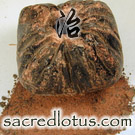 Xue Jie30 gInvigorate Blood and Remove Stagnation
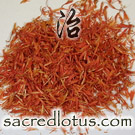 Hong Hua4.5 gInvigorate Blood and Remove Stagnation
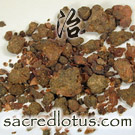 Mo Yao4.5 gInvigorate Blood and Remove Stagnation
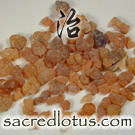 Ru Xiang4.5 gInvigorate Blood and Remove Stagnation
 Bing Pian0.36 gAromatic Substances that Open the Orifices
 Er Cha7.5 gSubstances for External ApplicationNo specimen photographShe Xiang0.36 gAromatic Substances that Open the OrificesNo specimen photographZhu Sha3.6 gAnchor, Settle, and Calm the Spirit
Preparation & dosage
How is Qi Li San prepared, and what safety cautions apply?
Qi Li San is a fine powder: all the substances are ground together and taken internally in very small doses (about 0.22–1.5 g) with water or warm yellow wine, or mixed with wine and applied externally to a bruise or bleeding injury — a classic trauma medicine.
Important safety note. This formula as classically written contains Zhu Sha (cinnabar — mercuric sulfide, a toxic mercury mineral) and She Xiang (musk, a restricted animal product). Cinnabar is toxic and is banned or heavily restricted in many countries; modern versions omit or substitute it. The tiny stated dose reflects the potency and toxicity of the ingredients — this is a practitioner-only preparation, and any cinnabar-containing product should be avoided.
Source: Sacred Lotus sources & references (composition and preparation note) + Bensky & Barolet, Formulas & Strategies; toxicity note from standard herb-safety references.
Reference/historical record only — not a usage recommendation. Secondary sources describing the classical formula cite an internal dose on the order of 1–4 g taken with warm water or wine, with the powder alternatively mixed with wine for topical application to the injury; per-ingredient reference weights recorded here (per formula) are Xue Jie 30 g, Er Cha 7.5 g, Hong Hua/Ru Xiang/Mo Yao 4.5 g each, Zhu Sha 3.6 g, and Bing Pian/She Xiang 0.36 g each. Because the formula contains cinnabar (mercury) and musk (CITES-protected), it is not manufactured or administered in its original form in contemporary practice in most jurisdictions — see cautions.
Safety — read before use
What are the cautions for Qi Li San?
Qi Li San’s classical formulation contains two ingredients of particular public-safety and regulatory relevance: Zhu Sha (cinnabar, mercuric sulfide) and She Xiang (musk). The facts below are presented as neutral reference information, not as administration or dosing guidance.
- Zhu Sha (cinnabar) is a mercury-bearing mineral. Its oral bioavailability and toxicity are markedly lower than soluble mercury compounds such as mercuric chloride, but excessive or long-term use is still associated with hepatotoxicity, nephrotoxicity, and neurotoxicity, and heating cinnabar releases toxic mercury vapor. It is contraindicated in pregnancy, and case literature documents mercury poisoning from Chinese patent medicines containing cinnabar or calomel through misuse, overdose, or improper storage.
- She Xiang (musk) is a CITES-protected, IUCN-listed product of the musk deer (Moschus spp.). Populations in Afghanistan, Bhutan, India, Myanmar, Nepal, and Pakistan are CITES Appendix I; all other populations are Appendix II; the IUCN Red List rates most Moschus species Endangered. It is also strongly contraindicated in pregnancy (traditionally used to expel a retained fetus) and is not intended for prolonged use. Most modern products substitute farmed-deer musk or synthetic muscone rather than wild-sourced natural musk.
- General caution recorded for this formula: do not use during pregnancy — its blood-invigorating ingredients as a group are traditionally regarded as capable of stimulating uterine contraction.
- Because of the above, Qi Li San in its original form is not a formula in contemporary clinical use in most jurisdictions; see the Western Uses section for how its action has been carried forward in modern reformulated products.
Source: Sacred Lotus sources & references on cautions + CITES Appendices; IUCN Red List (Moschus spp.); PubMed 18445765 (cinnabar vs. common mercurials); PubMed 1609495 (Chinese patent medicine mercury poisoning). Public-safety reference facts, not medical or dosing advice.
Originally Appeared In:
- Small Collection of Fine Formulas (Liang Fang Ji Ye)
Notes:
What is Resinall K, and how does it relate to Qi Li San?
Resinall K is a commercial reformulation, produced by Health Concerns, that is positioned as a modern, non-toxic alternative carrying forward Qi Li San’s blood-invigorating, swelling-reducing, pain-relieving action for traumatic injury — without cinnabar or musk. Its existence and marketing position are corroborated by more than one independent source, though its exact ingredient list was not verified here and is not reproduced.
Source: cross-referenced commercial/formula overviews (product listing plus independent formula-reference sites). Reference note; not a product endorsement.
Clinical Studies & Research:
Is there modern research on Qi Li San?
No dedicated clinical studies of Qi Li San as originally formulated were located — consistent with the fact that it is not manufactured or used in its classical cinnabar-and-musk form today (see the Western Uses section). The available modern research instead concerns the safety pharmacology of cinnabar itself, and the role of cinnabar within other, related bone-setting/trauma tablets.
- Cinnabar safety pharmacology: reviews find cinnabar has far lower gastrointestinal absorption and tissue accumulation than soluble mercury compounds (mercuric chloride, methylmercury), yet can still cause hepato-, nephro-, and neurotoxicity with excessive or prolonged use, and releases toxic mercury vapor if heated (PMID 18445765; PMID 36204126).
- Patent-medicine mercury poisoning (case-literature synthesis): cinnabar and calomel are identified as recurring sources of mercury poisoning from Chinese patent medicines, generally through misuse, overdose, or improper storage rather than correct traditional use (PMID 1609495).
- Cinnabar’s role within a related trauma/bone-setting tablet (not Qi Li San): a comparison of a cinnabar-containing vs. cinnabar-free version of Shangke Jiegu tablet found the cinnabar-containing version gave a lower seizure rate from a co-ingredient (Semen Strychni) at high dose and somewhat better early pain-threshold and bone-mineral-recovery measures, illustrating why cinnabar’s formula-level contribution is still actively studied even as its independent risk is well documented (PMID 36590508).
Sources: PubMed 18445765; PubMed 36204126; PubMed 1609495; PubMed 36590508. Research context on cinnabar generally and on a related formula, not a therapeutic claim about Qi Li San itself; no dedicated efficacy studies of Qi Li San were found.
Sources & References
Compiled and edited by Thomas Dehli, Founder & Editor, Sacred Lotus Updated
The information here is referenced from numerous sources — teachers, practitioners, class notes from Five Branches University, the books below, and the published research literature, with citations given as resolvable PubMed identifiers. Where sources disagree, I have flagged the discrepancies directly. If facts couldn't be verified, I have left them out. How we source our content.
Reference information for students and practitioners — not medical advice. Consult a qualified practitioner. Terms of use.
Chinese Formulas Books & References
 https://amzn.to/4fYI3f8
 https://amzn.to/4j55NRA
 https://amzn.to/4gMROyv
 https://amzn.to/4h7msSK