
Gui Ling Gan Lu Yin
Cinnamon and Poria Sweet Dew Decoction
- Category
- Formulas that Clear Heat
- Subcategory
- Formulas that Relieve Summerheat
- Ingredients
- 10 herbs
Actions
What does Gui Ling Gan Lu Yin do?
Gui Ling Gan Lu Yin clears summerheat and qi-level heat while transforming qi and draining dampness through urination. Structurally it fuses two smaller classical formulas — Liu Yi San (Hua Shi and Gan Cao, for summerheat) and Wu Ling San (Zhu Ling, Fu Ling, Ze Xie, Bai Zhu, and a cinnamon herb, for water metabolism) — then reinforces the heat-clearing side with Shi Gao and Han Shui Shi, giving three cold, heavy minerals ("the three stones") working together.
Roles by herb:
- Chief: Hua Shi clears summerheat and drains damp-heat downward through the urine, addressing both the heat and the dampness at once.
- Deputies: Shi Gao and Han Shui Shi are very cold, heavy minerals that reinforce Hua Shi’s heat-clearing power for more pronounced fever, thirst, and irritability.
- Assistants: Zhu Ling, Fu Ling, and Ze Xie promote urination and drain dampness; Bai Zhu strengthens the Spleen to move damp; Rou Gui warms and enables qi transformation in the lower burner so that dampness can actually be expelled through urination, and its warmth balances the very cold minerals so they do not injure yang.
- Envoy: Gan Cao harmonizes the formula and moderates the heavy, cold, downward-draining nature of the three stones so they clear heat without damaging the Middle Burner; Sheng Jiang is traditionally used as the vehicle the powder is taken in, further protecting the Stomach.
Source: this site’s own composition record + Bensky & Barolet, Formulas & Strategies + the formula’s analysis (fangjie) in its original source text, Huang Di Su Wen Xuan Ming Lun Fang. Traditional-use framing; not medical advice.
Indications
What is Gui Ling Gan Lu Yin used for?
Gui Ling Gan Lu Yin treats summerheat combined with dampness that has lodged internally and obstructed the qi mechanism and water passages. It is a classic warm-weather formula: heat scorches fluids while trapped dampness blocks their normal circulation, so both problems must be addressed together rather than by clearing heat or draining damp alone.
Its classic clinical presentation:
- Heat signs: fever, headache, irritability, and marked thirst with a desire to drink.
- Damp/water-metabolism signs: difficult, scanty urination as the qi mechanism fails to move fluids properly.
- Severe cases: sudden, simultaneous vomiting and diarrhea in the heat of summer (classically described as "sudden turmoil disorder," huoluan).
Sources describe this pattern consistently, but none reviewed give a formula-specific tongue or pulse description beyond the general summerheat-damp presentation, so those fields are left blank here rather than generalized from an unrelated formula.
Source: this site’s own pattern record + Bensky & Barolet, Formulas & Strategies + the formula’s original source text, Huang Di Su Wen Xuan Ming Lun Fang. Traditional-use framing; not medical advice.
Western Uses:
What is Gui Ling Gan Lu Yin used for in modern practice?
In modern practice Gui Ling Gan Lu Yin is referenced for warm-weather presentations that combine dehydration/heat stress with disrupted fluid balance — contexts practitioners have traditionally associated with its pattern include early heat-exhaustion-type presentations, acute summer gastroenteritis with vomiting and diarrhea, and damp-heat urinary discomfort with scanty, difficult urination.
These biomedical correlates are offered strictly as a reference to the formula’s traditional use, not as a claim that it treats any diagnosed condition. As detailed in the research field, this specific formula has not been the subject of dedicated modern clinical or pharmacological study. Any use for an acute or diagnosed condition, especially involving fever, vomiting, or diarrhea, belongs with a qualified practitioner and appropriate medical care.
Source: traditional-use correlates summarized from Bensky & Barolet, Formulas & Strategies; reference only, not a treatment claim.
Ingredients
10 substances in Gui Ling Gan Lu Yin — each links to its full herb monograph.
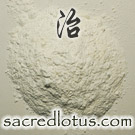 Hua Shi60 gRegulate Water and Drain Dampness
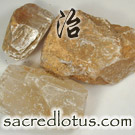 Han Shui Shi60 gDrain Fire
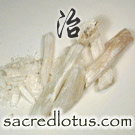 Shi Gao60 gDrain Fire
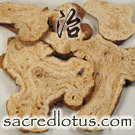 Bai Zhu15 gTonify Qi
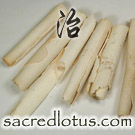 Fu Ling30 gRegulate Water and Drain Dampness
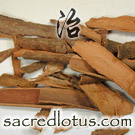 Rou Gui60 gWarm the Interior and Expel Cold
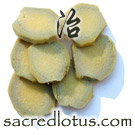 Sheng Jiang1 SliceWarm, Spicy Herbs that Release the Exterior
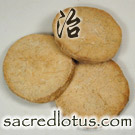 Ze Xie30 gRegulate Water and Drain Dampness
 Zhu Ling15 gRegulate Water and Drain Dampness
 Gan Cao60 gTonify Qi
Preparation & dosage
How is Gui Ling Gan Lu Yin prepared?
Gui Ling Gan Lu Yin was originally prepared as a fine powder (san), not a decoction. The minerals and other herbs are ground together, and roughly 9 g of the powder is taken per dose, stirred into warm water; the original text notes that a fresh ginger decoction makes an especially good vehicle for taking it, which is why ginger (Sheng Jiang) appears alongside the other ingredients in this formula’s listing.
Modern practice may instead prepare it as a decoction (tang) with the same herbs in proportionally reduced amounts, typically decocting the mineral herbs (Hua Shi, Shi Gao, Han Shui Shi) first before adding the remaining herbs.
Source: the formula’s original source text, Huang Di Su Wen Xuan Ming Lun Fang, and its standard method-of-use description as republished in current TCM formula references.
Reference amounts per this entry’s composition: Hua Shi, Gan Cao, Shi Gao, Han Shui Shi, Rou Gui 60 g each; Fu Ling, Ze Xie 30 g; Zhu Ling, Bai Zhu 15 g; Sheng Jiang 1 slice. Historically these were combined and ground into a powder, with about 9 g (roughly 3 qian) taken per dose in warm water, one to three times daily (children's doses reduced); a modern decoction uses the same herbs at proportionally reduced weights. Discrepancy: some historical editions record Hua Shi at roughly four times the weight of the cinnamon herb rather than equal amounts (see notes). Reference only; not a prescription.
Safety — read before use
What are the cautions for Gui Ling Gan Lu Yin?
Gui Ling Gan Lu Yin is a strongly cold, draining formula for an acute excess pattern, so it is inappropriate wherever heat is not truly present or where the Spleen and Kidney yang are already weak. Its heavy cold minerals (Hua Shi, Shi Gao, Han Shui Shi) and diuretic herbs (Zhu Ling, Fu Ling, Ze Xie) can injure yang and further deplete fluids if used past the acute presentation or in the wrong pattern.
- Avoid in yin deficiency with heat: the formula’s draining, diuretic action can worsen fluid depletion rather than relieve it.
- Avoid in cold-damp or Spleen/Stomach yang deficiency without heat: the cold minerals can injure yang and worsen digestion in the absence of true heat.
- Pregnancy: contains strongly draining diuretics (Hua Shi, Ze Xie, Zhu Ling) and very cold minerals — use only under professional guidance.
- Short-course, acute-pattern formula: traditionally dosed for brief use during acute summerheat-damp illness and discontinued as symptoms resolve, not taken as an ongoing tonic; Gan Cao at sustained higher intake carries the usual general caution around fluid retention and blood pressure.
Source: Bensky & Barolet, Formulas & Strategies (cautions for cold, draining summerheat formulas). Traditional-use framing; not medical advice.
Originally Appeared In:
- Formulas from the Discussion Illuminating the Yellow Emperor's Basic Questions (Huang Di Su Wen Xuan Ming Lun Fang)
Notes:
How is Gui Ling Gan Lu Yin different from Liu Yi San and Wu Ling San, and what versions exist?
Gui Ling Gan Lu Yin is essentially Liu Yi San plus Wu Ling San, reinforced with two additional cold minerals. Choose it over its simpler components when both summerheat and water-metabolism dysfunction are pronounced together.
- vs Liu Yi San (Hua Shi + Gan Cao): Liu Yi San alone clears summerheat and drains damp through urination but has no strong additional heat-clearing power and no warming herb to drive qi transformation — use it for milder summerheat-damp.
- vs Wu Ling San (Zhu Ling, Fu Ling, Ze Xie, Bai Zhu, and a cinnamon herb): Wu Ling San transforms qi and moves water but has no heat-clearing minerals — it is used for water retention without significant heat.
- vs Xiang Ru San: Xiang Ru San releases the exterior for summerheat constrained by external cold (chills, no sweating); Gui Ling Gan Lu Yin has no exterior-releasing herbs and instead addresses interior summerheat-damp with disordered urination and, in severe cases, vomiting/diarrhea.
Composition varies by source and edition. The formula’s original text (Xuan Ming Lun Fang) records the cinnamon herb with a "peel removed" (qu pi) instruction traditionally associated with Gui Zhi (cinnamon twig), and its historical proportions give roughly four parts Hua Shi to every one part of the cinnamon herb — not equal amounts. Several current clinical references (including this site’s own prior content and multiple online sources) instead list Rou Gui (cinnamon bark) in equal proportion to Hua Shi, and one reviewed reference source omits the cinnamon herb from its listing entirely. This entry follows this site’s own composition record, which uses Rou Gui; readers comparing across texts should expect this variation.
Source: the formula’s original source text, Huang Di Su Wen Xuan Ming Lun Fang (Liu Wansu, also known as Liu Hejian, ~1172 CE) + Bensky & Barolet, Formulas & Strategies.
Clinical Studies & Research:
Is there modern research on Gui Ling Gan Lu Yin?
No dedicated clinical or pharmacological studies on this specific formula were located in PubMed/PMC searches. Gui Ling Gan Lu Yin (桂苓甘露饮/散) does not appear to have been the subject of network-pharmacology, animal, or clinical-trial research indexed there as of this review, unlike some of its component herbs and several similarly-named but distinct formulas.
- Not the same formula — avoid confusion: "Gan-Lu-Yin" (甘露饮, a different Sweet Dew Drink for Stomach/Spleen damp-heat with mouth sores) has its own separate research, e.g. an antiangiogenic extract study (PMID 20527984) and an anti-inflammatory study (PMID 22920190) — these concern that different formula, not Gui Ling Gan Lu Yin.
- Also not the same formula: "Ling-Gui-Zhu-Gan Tang" (苓桂术甘汤, Poria, Cinnamon Twig, Atractylodes and Licorice Decoction) has a substantial modern literature on metabolic syndrome and fatty liver disease (e.g. PMC 10036033, PMC 11237417), but it is a distinct four-herb formula, not Gui Ling Gan Lu Yin.
Sources: PubMed/PMC searched directly for this formula (English and Chinese terms), no matching studies found; comparison formulas cited only to distinguish them, not as evidence for Gui Ling Gan Lu Yin itself.
Sources & References
Compiled and edited by Thomas Dehli, Founder & Editor, Sacred Lotus Updated
The information here is referenced from numerous sources — teachers, practitioners, class notes from Five Branches University, the books below, and the published research literature, with citations given as resolvable PubMed identifiers. Where sources disagree, I have flagged the discrepancies directly. If facts couldn't be verified, I have left them out. How we source our content.
Reference information for students and practitioners — not medical advice. Consult a qualified practitioner. Terms of use.
Chinese Formulas Books & References
 https://amzn.to/4fYI3f8
 https://amzn.to/4j55NRA
 https://amzn.to/4gMROyv
 https://amzn.to/4h7msSK