
Bu Dai Wan Bù Dài Wán
Cloth Sack Pill
- Category
- Formulas that Expel Parasites
- Subcategory
- Formulas that Expel Parasites
- Ingredients
- 8 herbs
Actions
What does Bu Dai Wan do?
Bu Dai Wan expels intestinal parasites while tonifying the Spleen and Stomach at the same time — a "purge and support together" strategy for the classical pediatric pattern of gan ji (infantile malnutrition/accumulation disorder), in which chronic parasites and poor digestion reinforce each other. Its logic is that a fragile, malnourished child cannot safely tolerate pure purgation, so an anthelmintic/purgative action is built on top of a Spleen-qi-tonifying base rather than delivered alone.
- Expel parasites — Shi Jun Zi & Wu Yi: the classical anthelmintic pair for childhood intestinal parasites (traditionally roundworm), each used in a substantial proportion of the formula.
- Purge and clear accumulation — Lu Hui & Ye Ming Sha: Lu Hui purges downward, helping expel parasites and clear the heat/stagnation of chronic food accumulation; Ye Ming Sha (bat guano) clears heat and food accumulation and, in classical pediatric medicine, is specifically associated with the eye-related complications of the gan-ji pattern.
- Tonify the Spleen and Stomach — Ren Shen, Bai Zhu, Fu Ling & Gan Cao: this quartet is the classical Si Jun Zi Tang (Four Gentlemen) Spleen-qi-tonifying base, included so the child's digestion can recover and so the purging/expelling herbs do not further weaken an already-depleted constitution.
Source: Sacred Lotus record (composition, category); role/strategy analysis cross-referenced against multiple online sources describing the classical gan-ji "purge and support" strategy, in our own words. Historical/traditional-use framing; not medical advice.
Indications
What is Bu Dai Wan used for?
Bu Dai Wan is a classical pediatric formula for gan ji (infantile malnutrition/accumulation disorder) associated with intestinal parasites — a pattern documented in the classical pediatric literature, distinct from ordinary childhood undernutrition, in which parasites and food stagnation are understood to compound a child's Spleen-qi weakness.
- A distended, firm abdomen together with visibly thin, emaciated limbs — the classical "big belly, wasted limbs" presentation.
- A sallow, yellow complexion and dry, lackluster hair.
- Poor appetite, or an irregular/excessive appetite alternating with disinterest in food.
- Restlessness, teeth-grinding during sleep, or picking at the nose — signs classically associated with intestinal parasites in children.
- A weak pulse and pale tongue, per the Sacred Lotus record, reflecting the underlying Spleen-qi deficiency beneath the accumulation.
Source: Sacred Lotus category and pattern/tongue/pulse record; cross-referenced against multiple online sources for the classical gan-ji presentation. Historical reference only, not a diagnosis; a child with these signs should be evaluated by a pediatric clinician.
Ingredients
8 substances in Bu Dai Wan — each links to its full herb monograph.
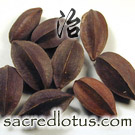 Shi Jun Zi60 gExpel ParasitesNo specimen photographWu Yi60 gExpel Parasites
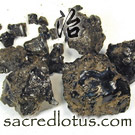 Lu Hui15 gPurgatives
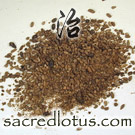 Ye Ming Sha60 gDrain Fire
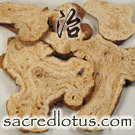 Bai Zhu15 gTonify Qi
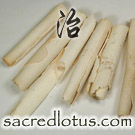 Fu Ling15 gRegulate Water and Drain Dampness
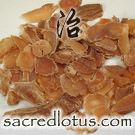 Ren Shen15 gTonify Qi
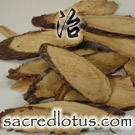 Gan Cao15 gTonify Qi
Preparation & dosage
How is Bu Dai Wan prepared?
A powder, per the Sacred Lotus record, historically ground fine and, in a variant preparation reflected in the same record, taken in a single small dose on an empty stomach with pork broth. Despite the pill-suggesting name ("Wan"), the Sacred Lotus preparation record for this formula describes a powder rather than a formed pill; the "cloth sack" (bu dai) name is classically explained by the coarse, husk-like texture of Wu Yi (fermented elm fruit cake) and Shi Jun Zi, which historical preparation wrapped in a cloth bag for straining/administration. This is a description of a documented historical method, not a preparation instruction for use today.
Source: Sacred Lotus preparation record; cross-referenced against multiple online sources for the classical name/preparation explanation.
Safety — read before use
What are the cautions for Bu Dai Wan?
Bu Dai Wan is documented classical pediatric-formula content, presented here as historical/traditional reference only — not as guidance for treating a child today. Suspected intestinal parasites, malnutrition, or failure to thrive in a child should be evaluated and managed by a pediatric clinician using modern diagnostic and treatment standards.
- Lu Hui (Aloe) is a purgative: purgative herbs in children carry real risks of dehydration, electrolyte disturbance, and abdominal cramping, and pediatric dosing of any purgative substance is not something to approximate from a classical text.
- Pattern-specific: classically reserved for the accumulation-with-parasites (gan ji) pattern with a weak pulse and pale tongue; not indicated where diarrhea or wasting stems from a different cause.
- Not a substitute for modern antiparasitic treatment: confirmed parasitic infection in children today is treated with modern antiparasitic medicine under medical supervision.
Source: Sacred Lotus record; cross-referenced against multiple online sources for standard cautions on pediatric purgative/anthelmintic formulas. Historical/traditional-use framing; not medical advice.
Originally Appeared In:
- Supplement to the Pocket Sized Discussion of Formulas for Children (Bu Yao Xiu Zhen Xiao er Fang Lun)
Notes:
What is the classical source of Bu Dai Wan, and how does it compare to Fei Er Wan?
Bu Dai Wan is recorded in the Sacred Lotus record as originating from Bu Yao Xiu Zhen Xiao Er Fang Lun (Supplement to the Pocket-Sized Discussion of Formulas for Children), a classical pediatric formulary, and sits within the "Formulas that Expel Parasites" category alongside other childhood anthelmintic pills.
- vs Fei Er Wan (Healthy Children Pill): Fei Er Wan is a closely related pediatric gan-ji formula built on a similar anthelmintic-plus-Spleen-tonifying logic; the two are commonly discussed together in the classical pediatric literature as sibling formulas for the same underlying pattern, with differing secondary ingredients.
- vs Wu Mei Wan: Wu Mei Wan targets a Shang Han Lun-derived Jueyin/roundworm-disturbance pattern in a broader age range and includes warming and sour-restraining herbs; Bu Dai Wan is specifically a pediatric malnutrition-with-parasites formula built on a Spleen-tonifying base.
Source: Sacred Lotus origin record; cross-referenced against multiple online sources for comparison with related pediatric anthelmintic formulas.
Sources & References
Compiled and edited by Thomas Dehli, Founder & Editor, Sacred Lotus Updated
The information here is referenced from numerous sources — teachers, practitioners, class notes from Five Branches University, the books below, and the published research literature, with citations given as resolvable PubMed identifiers. Where sources disagree, I have flagged the discrepancies directly. If facts couldn't be verified, I have left them out. How we source our content.
Reference information for students and practitioners — not medical advice. Consult a qualified practitioner. Terms of use.
Chinese Formulas Books & References
 https://amzn.to/4fYI3f8
 https://amzn.to/4j55NRA
 https://amzn.to/4gMROyv
 https://amzn.to/4h7msSK