
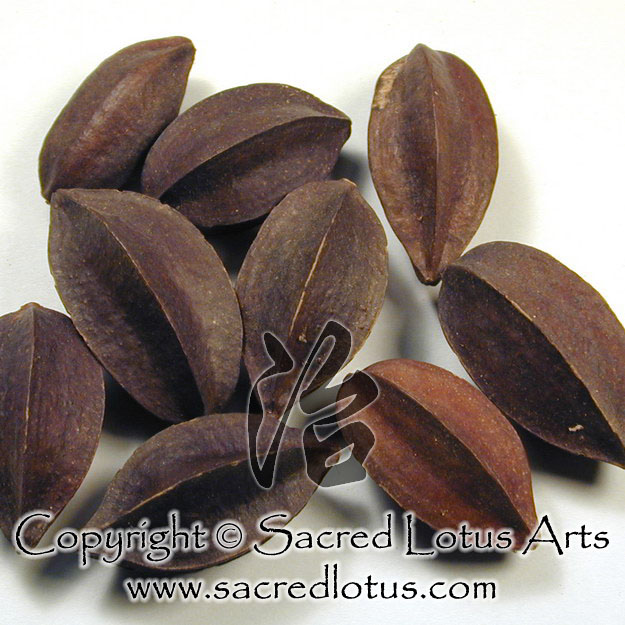
Materia Medica Data
- Category
- Herbs that Expel Parasites
- Temperature
- Warm
- Nature & Flavour
- Sweet, Warm
- Channels Entered
- SP, ST
- Latin (pharmaceutical)
- Fructus Quisqualis
- Chinese
- 使君子
- Tone Marks
- shĭ jūn zĭ
- Translation
- Envoy Seeds
Chinese Herb Actions
What is Shi Jun Zi used for in Chinese medicine?
Shi Jun Zi (Fructus Quisqualis) is a sweet, warm herb entering the Spleen and Stomach channels, classified among the herbs that expel parasites — it kills and expels intestinal parasites, especially roundworm (Ascaris) and pinworm (Enterobius), while also strengthening the Spleen. That combination makes it one of the most widely used pediatric anti-parasitic herbs in the Chinese materia medica.
Its main traditional actions:
- Kills and expels parasites — classically singled out as especially effective against roundworm, and also used for pinworm; some materia medica sources extend its traditional use to other intestinal worms, though roundworm and pinworm are the consistently emphasized indications.
- Strengthens the Spleen and boosts appetite — used for childhood nutritional impairment (gan ji / 疻积, “infantile malnutrition with accumulation”) presenting with poor appetite, abdominal distention, emaciation, and a sallow complexion, often with concurrent parasites.
- Mild enough for children — its sweet flavor and warm (rather than harsh/bitter) nature make it gentler than other anti-parasitic herbs such as Ku Lian Gen Pi, which is a major reason it remains a go-to pediatric herb (see Notes for differentiation).
Source: published materia medica consensus (Bensky/Chen & Chen-level texts), cross-referenced against multiple online sources; this site’s own category “Herbs that Expel Parasites.”
Chinese Herb Dosage
What is the typical dosage of Shi Jun Zi?
Roughly 9–12 g in decoction (some texts give a wider 4.5–12 g range), or 6–9 g when stir-baked and chewed. Pediatric dosing is traditionally calculated by age rather than a flat adult dose.
- Decoction: about 9–12 g (materia medica sources give a range of roughly 4.5–12 g).
- Stir-baked, chewed and swallowed: about 6–9 g.
- Pediatric (whole seeds): traditionally about 1–1.5 seeds per year of the child’s age, taken on an empty stomach — but capped at a firm maximum of 20 seeds per day regardless of age. This age-scaled-with-hard-ceiling approach is consistent across the practitioner references reviewed.
This dose ceiling is not incidental — exceeding it (or combining it with hot tea) is specifically associated with an adverse-effect pattern; see Cautions.
Source: multiple online sources, cross-checked against one another; consistent with standard materia medica dosing conventions. Reference only — not a prescription.
Chinese Herb Contraindications & Cautions
Are there cautions for Shi Jun Zi?
Yes — a well-documented, dose-dependent adverse-effect pattern: taking Shi Jun Zi in excess of the traditional dose ceiling, or together with hot tea, is consistently associated with hiccups, dizziness, and vomiting. This is a real, traditionally observed reaction, not a rare idiosyncratic report, and it is the reason the pediatric dose is capped by a hard maximum rather than scaled by age alone.
- Overdose: large doses are associated with hiccups, dizziness/vertigo, nausea and vomiting, abdominal pain, and diarrhea.
- Hot tea interaction: independent materia medica references specifically flag hot tea taken with or after Shi Jun Zi as a trigger for the same hiccup/dizziness/vomiting pattern; the exact mechanism is not established in the sources reviewed, but the association is consistent enough across independent references to document as a genuine traditional food–herb interaction, not folklore to be dismissed.
- Dose ceiling: the pediatric maximum of 20 seeds per day applies regardless of the child’s age-scaled calculation.
- General use: intended for confirmed parasite infection; several references caution against use in children with Spleen-Stomach deficiency-cold when no parasites are present, and recommend professional guidance, particularly for pediatric dosing.
Note: sources describe the reaction with slightly different words — “hiccup” versus “belching” — which most likely reflects translation variance of the same clinical phenomenon (哑逆 è nì / hiccup vs. 嚲气 ài qì / belching) rather than two distinct effects; treated here as one adverse-effect cluster.
Source: multiple online sources (independently converge on the overdose/hot-tea pattern); general practitioner materia medica summaries. Neutral safety reference, not a substitute for professional guidance.
Chinese Herb Toxicity & Overdose
Low acute toxicity at recommended doses, but a real and reproducible dose-dependent adverse reaction above the traditional dose ceiling — hiccup, dizziness, and vomiting, as described in Cautions. Children are more exposed to this risk than adults because the dose ceiling is an absolute seed count (max 20/day) rather than a body-weight-scaled dose.
A 13-week repeated-dose oral toxicity and genotoxicity study of a standardized Quisqualis indica extract in Sprague-Dawley rats (doses up to 2,000 mg/kg/day) and a micronucleus test in mice (up to 5,000 mg/kg) found no treatment-related clinical, body-weight, hematology, histopathology, or genotoxicity findings, with a no-observed-adverse-effect level (NOAEL) above 2,000 mg/kg/day. This supports a favorable safety margin for the standardized extract tested, but it does not directly model the crude decoction or chewed-seed dosing used traditionally, and it did not specifically assess the classic hiccup/hot-tea reaction — so it should be read as reassuring background, not a contradiction of the traditional caution.
Source: PMID 36277358, DOI 10.1007/s43188-022-00140-6 (13-week rat repeat-dose toxicity + micronucleus genotoxicity study, standardized Quisqualis indica extract). Reference note, not a safety guarantee.
Herb-Drug Interactions
No established clinical herb–drug interactions are documented in the sources reviewed. The seed's characteristic constituent, quisqualic acid, is a well-characterized excitatory amino acid that acts as an agonist at AMPA-type and group I metabotropic glutamate receptors and is widely used as a laboratory research tool in neuroscience — a plausible, but not directly studied, pharmacological link to the classic hiccup/dizziness overdose pattern. No demonstrated clinical interaction with other CNS-active medications was found; this is flagged for practitioner awareness rather than as a confirmed interaction.
Western / Biomedical Research
Chinese Herb Clinical Studies & Research
Provided as research context — a summary of published biomedical study, not a therapeutic or medical claim.
Is there modern research on Shi Jun Zi (Fructus Quisqualis)?
Yes — modern research on Fructus Quisqualis is concentrated in chemical characterization and preclinical safety rather than controlled human efficacy trials. No human clinical trial specific to Shi Jun Zi's antiparasitic or Spleen-strengthening use was found in the sources reviewed; anthelmintic use remains grounded in classical/traditional-use evidence.
- Chemical characterization (2024) — a UPLC-Q-TOF-MS/HPLC fingerprinting study of 16 Fructus Quisqualis batches from different growing origins tentatively characterized 106 constituents (fatty acids, organic acids, amino acids, alkaloids, glycosides) and identified quality markers such as trigonelline, adenosine, ellagic acid, and 3,3′-di-O-methylellagic acid for distinguishing geographic origin — supports quality-control standards, not efficacy.
- Repeat-dose toxicity & genotoxicity (preclinical) — a 13-week oral toxicity study in rats plus a mouse micronucleus assay on a standardized Quisqualis indica extract found no treatment-related toxicity up to 2,000 mg/kg/day (NOAEL >2,000 mg/kg) and no mutagenic or clastogenic signal. Preclinical, standardized-extract data; not a study of the traditional crude-herb dose or the hot-tea reaction.
- Active constituent — quisqualic acid — first isolated from this plant and now a standard neuroscience research reagent as an AMPA/metabotropic glutamate-receptor agonist. This receptor pharmacology offers a biologically plausible explanation for the herb's classic CNS-excitation-type overdose symptoms (hiccup, dizziness), but a study directly linking Shi Jun Zi dosing to this mechanism in vivo was not located in the sources reviewed — noted here as informed context, not an established causal finding.
Overall: chemical and preclinical-safety research is active; controlled human efficacy evidence specific to Shi Jun Zi was not found in the sources reviewed.
Sources: PMID 38988635, DOI 10.3389/fpls.2024.1418480 (chemical constituent characterization, Frontiers in Plant Science, 2024); PMID 36277358, DOI 10.1007/s43188-022-00140-6 (13-week rat repeat-dose toxicity + genotoxicity study, standardized extract). Research context, not a therapeutic claim.
Chinese Herb Notes
How is Shi Jun Zi different from Ku Lian Gen Pi and Bing Lang, and what formulas is it combined in?
All three are used against roundworm, but Shi Jun Zi is the mildest of the group and is unique in also strengthening the Spleen — which is why it, rather than the more aggressive anti-parasitic herbs, is favored for children.
- Ku Lian Gen Pi (China Tree Root Bark) — also targets roundworm and pinworm, generally regarded as more potent against the parasites but harsher on the digestive tract and more toxic; less suited to a weak or deficient child.
- Bing Lang (Betel Nut) — broader-spectrum (traditionally used for tapeworm as well as roundworm) and moves qi/purges downward, but does not tonify the Spleen and can be more taxing for a child who is already deficient.
- Shi Jun Zi — sweet and warm, the gentlest of the three, and distinctive for combining anti-parasitic action with Spleen support — the preferred choice when roundworm or pinworm coexists with Spleen deficiency and gan ji (childhood malnutrition with accumulation).
Formula combinations (per this site’s own record): Shi Jun Zi appears in Fei Er Wan (“Healthy Child Pills”), a Spleen-strengthening formula for childhood malnutrition/gan ji, and in Bu Dai Wan, also used for pediatric parasites with malnutrition. (Traditional formula context, not treatment advice.)
Source: published materia medica consensus on herb differentiation (Bensky/Chen & Chen-level texts); this site’s own formula links (Fei Er Wan, Bu Dai Wan).
Sources & References
Compiled and edited by Thomas Dehli, Founder & Editor, Sacred Lotus Updated
The information here is referenced from numerous sources — teachers, practitioners, class notes from Five Branches University, the books below, and the published research literature, with citations given as resolvable PubMed identifiers. Where sources disagree, I have flagged the discrepancies directly. If facts couldn't be verified, I have left them out. How we source our content.
Reference information for students and practitioners — not medical advice. Consult a qualified practitioner. Terms of use.
Chinese Herbs Books & References
 https://amzn.to/3WfB3DK
 https://amzn.to/3DR1VUh
 https://amzn.to/42aMz73
 https://amzn.to/3PuD4bt