
Fei Er Wan
Fat Baby Pill
- Category
- Formulas that Expel Parasites
- Subcategory
- Formulas that Expel Parasites
- Ingredients
- 7 herbs
Actions
What does Fei Er Wan do?
Fei Er Wan (“Fat Baby Pill”) simultaneously expels intestinal parasites and clears food stagnation while gently supporting Spleen-Stomach digestion. It addresses the classic two-part logic of pediatric gan ji (childhood nutritional impairment): worms and undigested food both accumulate in the gut, generating heat and starving the child of nutrition even when appetite looks normal or ravenous.
The seven ingredients divide by role:
- Co-chiefs: Shi Jun Zi (the classic antiparasitic, expelling roundworms) and Shen Qu (reduces food stagnation and harmonizes the Stomach) — together they target the formula’s two drivers, parasites and accumulation.
- Deputies: Bing Lang reinforces Shi Jun Zi’s antiparasitic action and moves stagnant qi downward; Mai Ya supports digestion of stagnant food; Huang Lian clears the damp-heat that accumulation generates.
- Assistant: Rou Dou Kou warms the middle and astringes the intestines, checking the loose stools common in gan ji and tempering Huang Lian’s cold, bitter nature.
- Envoy: Mu Xiang moves qi through the Middle Burner, relieves distension, and harmonizes the formula.
Source: Sacred Lotus sources & references + Bensky & Barolet, Formulas & Strategies (chief/deputy/assistant/envoy framework; formulas that expel parasites / reduce food stagnation categories).
Indications
What is Fei Er Wan used for?
Fei Er Wan treats gan ji — traditional childhood nutritional impairment caused by intestinal parasites combined with food stagnation and an underlying weak, heat-affected Spleen and Stomach. The pattern was historically common wherever roundworm and other soil-transmitted parasites were widespread in children.
Its classic presentation:
- Digestive/parasite signs: a distended, drum-like abdomen in an otherwise thin child, foul breath, and loose or irregular stools.
- Nutritional-impairment signs: progressive wasting or poor growth despite normal or increased appetite, a yellow, lusterless (“withered”) complexion, and low-grade or afternoon tidal fever.
- Behavioral signs: restlessness and poor sleep, sometimes grinding of the teeth at night.
Tongue and pulse are traditionally described as red with a thin or patchy coating, with a thin, rapid, or weak pulse reflecting concurrent Spleen deficiency and accumulated heat.
Source: Sacred Lotus sources & references on pattern + Bensky & Barolet, Formulas & Strategies, cross-checked against independent formula compendia. Traditional-use framing; not medical advice.
Western Uses:
What is Fei Er Wan used for in modern practice?
In modern practice, Fei Er Wan’s traditional pattern is referenced against intestinal parasitic infection (such as ascariasis) occurring alongside signs of childhood malnutrition or failure to thrive. The pairing is not folklore: modern epidemiology confirms parasitic helminth infection and poor nutritional status reinforce each other in children, each worsening the other’s effects on growth and development.
This biomedical correlate is offered as reference to the formula’s traditional use, not as a claim that it treats or cures parasitic infection or malnutrition. A child with suspected intestinal parasites or malnutrition needs stool testing, appropriate antiparasitic medication, and nutritional/medical care from a qualified provider; Fei Er Wan is a historical formula, not a substitute for that care.
Source: traditional-use correlate summarized from Bensky & Barolet, Formulas & Strategies; epidemiological link between helminth infection and childhood malnutrition per Papier et al., Clinical Infectious Diseases 2014 (PMID 24704723). Reference only, not a treatment claim.
Ingredients
7 substances in Fei Er Wan — each links to its full herb monograph.
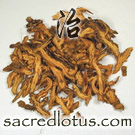 Huang Lian300 gClear Heat and Dry Dampness
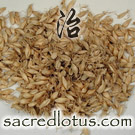 Mai Ya150 gdry friedRelieve Food Stagnation
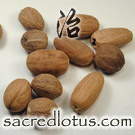 Rou Dou Kou150 gAstringe, Stabilize, Bind
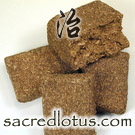 Shen Qu300 gdry friedRelieve Food Stagnation
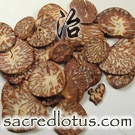 Bing Lang120 gExpel Parasites
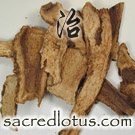 Mu Xiang60 gRegulate the Qi
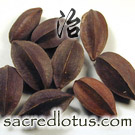 Shi Jun Zi150 gExpel Parasites
Preparation & dosage
How is Fei Er Wan prepared?
Traditionally, the seven herbs are ground to a fine powder and formed into small pills, historically bound with fresh pig bile rather than honey. Modern patent versions are typically manufactured as small honey- or water-based pills for oral dosing.
Because this is a children’s formula, dosing is age-scaled rather than fixed, and doses for very young children are reduced well below an adult or older-child amount, per general TCM pediatric dosing convention. A qualified TCM practitioner should set the actual dose and duration for a given child.
Source: Bensky & Barolet, Formulas & Strategies pill-preparation conventions, cross-checked against independent formula compendia citing this formula’s classical (pig-bile-bound pill) preparation. Reference only, not a dosing instruction.
Traditionally ground to a fine powder and formed into pills (classically bound with fresh pig bile). Reference relative amounts from Sacred Lotus sources & references: Shen Qu 300 g; Huang Lian 300 g; Rou Dou Kou 150 g; Shi Jun Zi 150 g; Mai Ya 150 g; Bing Lang 120 g; Mu Xiang 60 g. As a pediatric formula, actual pill dosing is age-scaled and should be set by a qualified TCM practitioner, with reduced dosing for younger children. Reference only, not a dosing instruction.
Safety — read before use
What are the cautions for Fei Er Wan?
Fei Er Wan is formulated for children and pairs a genuine antiparasitic action with several ingredients that carry real, documented toxicity considerations at high or inappropriate doses — noted here as public-safety reference facts, not to alarm. It should only be used at professionally guided, age-adjusted doses, and is inappropriate for Spleen-Stomach deficiency-cold without stagnation, where its cold, bitter Huang Lian could further injure a weak digestion.
- Shi Jun Zi toxicity: flagged in our records as a toxic/cautioned substance; overdose or combination with hot tea can cause hiccups, dizziness, and vomiting in children — classic reasons TCM pediatric dosing of this herb is strictly age-scaled.
- Huang Lian (berberine) in infants: berberine can displace bilirubin from albumin (Biol Neonate 1993; PMID 8513024), which decades ago led to bans on Coptis-based products for jaundiced or G6PD-deficient neonates. Discrepancy: a later Guangxi clinical investigation found no evidence C. chinensis worsened jaundice in G6PD-deficient neonates (PMID 18330254), and a 2017 systematic review found insufficient evidence to contraindicate most herbal supplements, including berberine sources, in G6PD deficiency at therapeutic doses (PMID 27081765). We flag both: avoid in newborns/jaundiced or G6PD-deficient infants without professional guidance, pending stronger evidence.
- Bing Lang (areca/betel nut): WHO/IARC classifies areca nut as a Group 1 human carcinogen from habitual betel-quid chewing (IARC Monographs Vol. 85, 2004). This finding concerns chronic recreational chewing exposure, a very different context from a short-course, professionally dosed TCM pill — but it is a genuine safety fact about the raw substance worth knowing.
- Rou Dou Kou (nutmeg): at high, unprocessed doses nutmeg’s myristicin is neurotoxic and psychoactive; a 10-year U.S. poison-center review found children under 13 made up nearly a third of nutmeg-exposure cases (J Med Toxicol 2014; PMID 24452991). Standard TCM decoction/pill doses are far below toxic thresholds, but the substance warrants careful handling and storage around children.
- Pregnancy: not applicable to this pediatric formula, but Bing Lang’s purgative, downward-moving action is traditionally avoided in pregnancy if the formula were ever considered for an adult.
Source: Sacred Lotus toxicity flag on Shi Jun Zi + PubMed 8513024; PubMed 18330254; PubMed 27081765; WHO/IARC Monographs Vol. 85 (2004); PubMed 24452991. Public-safety reference facts, not medical advice; consult a qualified pediatric practitioner before use.
Originally Appeared In:
- Imperial Grace Formulary of the Tai Ping Era (Tai Ping Hui Min He Ji Ju Fang)
Notes:
How is Fei Er Wan different from Hua Chong Wan, Bao He Wan, and Jian Pi Wan?
Fei Er Wan is distinguished by combining antiparasitic and food-stagnation actions in one formula, aimed specifically at children. Related formulas isolate one piece of that picture.
- vs Hua Chong Wan: a more purely antiparasitic formula without Fei Er Wan’s food-stagnation-reducing and Spleen-supporting herbs — choose it when expelling parasites is the primary concern without significant nutritional impairment.
- vs Bao He Wan: treats food stagnation from overeating without any antiparasitic component — choose it for straightforward dietary stagnation where parasites are not suspected.
- vs Jian Pi Wan: emphasizes tonifying a weak Spleen with only mild food-stagnation herbs and no antiparasitic or heat-clearing action — suited to Spleen deficiency alone.
Preparation detail: some formula sources (Tai Ping Hui Min He Ji Ju Fang lineage texts) describe fresh pig bile (Zhu Dan Zhi) as the traditional binder used to form the ground herb powder into pills, rather than as a medicinal ingredient in its own right — consistent with why it does not appear among our seven listed herbs.
Source: Bensky & Barolet, Formulas & Strategies (formula-category comparisons), cross-checked against independent formula compendia citing the Tai Ping Hui Min He Ji Ju Fang (Song-dynasty Formulary of the Peaceful Benevolent Dispensary) as this formula’s classical source text.
Clinical Studies & Research:
Is there modern research on Fei Er Wan?
No dedicated modern clinical trials of the Fei Er Wan formula itself were found in PubMed/PMC; the available evidence is at the level of its individual ingredients and the pattern it targets. Berberine, the marker compound of chief herb Huang Lian, has broad documented antimicrobial activity relevant to intestinal infection, and the epidemiological link between parasitic infection and childhood malnutrition — the pattern Fei Er Wan was designed to address — is well established in the modern literature.
- Helminth infection and childhood malnutrition (clinical/epidemiological): a cross-sectional study of 693 schistosomiasis-endemic children found parasitic infection and poor nutrient intake compound each other’s effect on stunting and wasting (Papier et al., Clinical Infectious Diseases 2014; PMID 24704723).
- Berberine (Huang Lian) pharmacology (review): a comprehensive review documents berberine’s antimicrobial efficacy against intestinal pathogens, among other activities (Frontiers in Pharmacology 2025; PMID 40894216).
Despite Shi Jun Zi’s 1,700-year traditional use as China’s premier antiparasitic herb, we did not find a PubMed-indexed pharmacological study confirming its anthelmintic mechanism with a resolvable citation, so that claim is omitted here rather than asserted.
Sources: PubMed 24704723; PubMed 40894216. Research context, not a therapeutic claim; direct clinical trial evidence for this formula remains absent.
Sources & References
Compiled and edited by Thomas Dehli, Founder & Editor, Sacred Lotus Updated
The information here is referenced from numerous sources — teachers, practitioners, class notes from Five Branches University, the books below, and the published research literature, with citations given as resolvable PubMed identifiers. Where sources disagree, I have flagged the discrepancies directly. If facts couldn't be verified, I have left them out. How we source our content.
Reference information for students and practitioners — not medical advice. Consult a qualified practitioner. Terms of use.
Chinese Formulas Books & References
 https://amzn.to/4fYI3f8
 https://amzn.to/4j55NRA
 https://amzn.to/4gMROyv
 https://amzn.to/4h7msSK