
Materia Medica Data
- Category
- Purgatives
- Temperature
- Cold
- Nature & Flavour
- Bitter, Cold
- Channels Entered
- LI, LIV, ST
- Latin (pharmaceutical)
- Herba Aloes
- Chinese
- 芦荟
- Tone Marks
- lú huì
Chinese Herb Actions
What is Lu Hui used for in Chinese medicine?
Lu Hui is a bitter, cold purgative that drains fire downward and reduces accumulation. Our record places it in the purgatives category alongside Da Huang and Fan Xie Ye, and gives it three channels — Large Intestine, Liver and Stomach. That Liver channel is what separates it from the other two: Lu Hui is the purgative used when heat has risen in the Liver as well as accumulated in the bowel.
Its traditional actions, as our record gives them:
- Drains fire and reduces accumulation — constipation with headache, dizziness, red eyes, insomnia and irritability from heat in the Large Intestine and Liver. Our record also notes its use in chronic constipation.
- Kills parasites and strengthens digestion — childhood nutritional impairment, particularly where roundworm is involved; also recorded for ringworm.
- External use — our record notes topical application for burns.
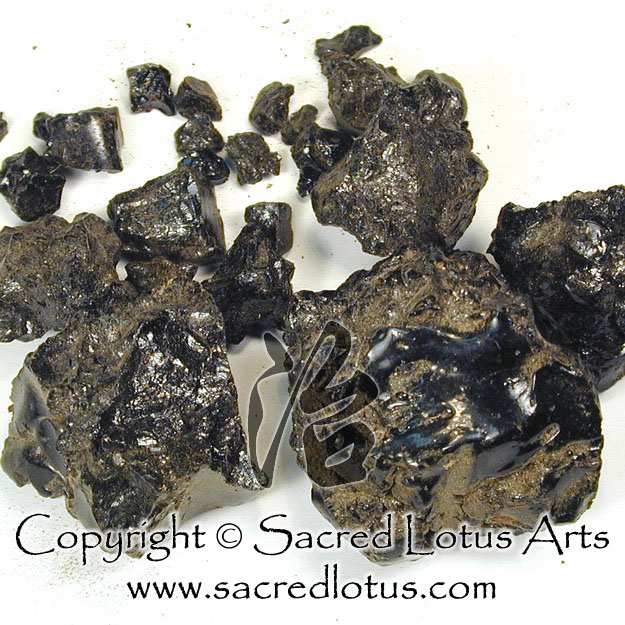
Part used: the juice from the leaves — dried and concentrated. This is not the same product as the clear inner-leaf gel sold for skin care. See the notes section, because the distinction is the single most muddled point about this herb.
How it sits among the three purgatives: Da Huang is the broadest, also invigorating blood and used topically. Fan Xie Ye enters the Large Intestine only and does one job. Lu Hui adds the Liver-fire dimension and the childhood-nutritional-impairment use, and is given at a fraction of the dose of either.
Source: our own herb record (category, nature and flavour, channels, indications, part used, external use), cross-referenced against multiple online sources and published materia medica consensus; comparison drawn from our own Da Huang and Fan Xie Ye records. Traditional-use framing; not medical advice.
Chinese Herb Dosage
What is the dosage of Lu Hui, and why is it not decocted?
Our record gives 0.3–1.5 g, taken in powder or pill form and specifically not in tea. That is one of the smallest dose ranges in our entire materia medica — roughly a twentieth of a typical Fan Xie Ye dose and a small fraction of a Da Huang dose. The low ceiling reflects what the substance is: not a leaf or a root but a dried, concentrated latex, so the active anthraquinones arrive in a far more concentrated form per gram.
- Range — 0.3–1.5 g, per our record.
- Form — powder or pill. Our record states plainly: do not take in tea.
- Why not decocted — Lu Hui is a resinous concentrate rather than plant tissue; it is intensely bitter, dissolves poorly and is traditionally handled as a finished powder rather than simmered with a formula. This is a preparation fact recorded in our own entry, not an instruction.
- Part used — the juice from the leaves.
Reference only. These figures are catalogued, not prescribed. Lu Hui is a strong stimulant laxative with an unresolved regulatory and toxicological profile in several jurisdictions (see toxicity and research), and self-directed use is a matter for a physician or pharmacist rather than a reference page.
Source: our own herb record dosage, preparation note and part used, cross-referenced against multiple online sources and published materia medica consensus. Reference only — not a prescription and not dosing advice.
Chinese Herb Contraindications & Cautions
Are there cautions for Lu Hui?
Our record contraindicates Lu Hui during pregnancy, during menstruation, and in cold from deficiency of the Spleen and Stomach. To that traditional list the modern reference literature adds the contraindication that belongs on every stimulant laxative — known or suspected intestinal obstruction — and a regulatory context that readers deserve to know about.
- Pregnancy and lactation — contraindicated in pregnancy per our record. Anthraquinone laxatives are conventionally avoided in pregnancy and breastfeeding.
- Menstruation — contraindicated per our record.
- Deficiency-cold of the Spleen and Stomach — contraindicated per our record; a strong cold purgative is poorly tolerated where digestion is already weak.
- Intestinal obstruction, ileus or an acute undiagnosed abdomen — a stimulant laxative drives propulsive contraction against a blockage. Standard for the whole class, not a traditional-versus-modern question.
- Regulatory status in the United States — aloe ingredients (aloe, aloe extract, aloe flower extract) are listed in US federal drug regulation among stimulant-laxative active ingredients for which, in the regulation’s own words, “there are inadequate data to establish general recognition of the safety and effectiveness.” The entry for aloe ingredients carries the date 5 November 2002. In plain terms: aloe is not an approved over-the-counter laxative ingredient in the United States.
- Regulatory status in the European Union — the European food-safety assessment of hydroxyanthracene derivatives concluded that these substances should be considered genotoxic and carcinogenic unless there are specific data to the contrary, and that a safe daily intake could not be established.
- Dose — our record’s range is very small by materia medica standards. That is the traditional expression of the same concern.
The honest framing: Lu Hui is effective at what it does, which is exactly why it is easy to over-use, and it carries more unresolved regulatory and toxicological baggage than any other purgative on this site. Anyone with persistent constipation, blood in the stool, unexplained weight loss or a change in bowel habit needs a diagnosis, not a laxative.
Source: our own herb record caution entry; US regulatory status per 21 CFR 310.545 (US Code of Federal Regulations, stimulant laxatives, aloe ingredients); EU assessment per PMID 32625659, PMC 7009633, DOI 10.2903/j.efsa.2018.5090; class contraindications per the anthraquinone laxative literature, PMID 37214441, PMC 10193150. Reference information, not medical advice.
Chinese Herb Toxicity & Overdose
Is Lu Hui (aloe) toxic or carcinogenic?
Aloe latex is not acutely poisonous at ordinary doses, but the aloe safety file is the most contested of any herb in our purgatives category — and it turns on which aloe preparation is being discussed. The findings below are documented as neutral reference facts, with the preparation named each time, because conflating them is how the public argument about aloe goes wrong.
- Rodent carcinogenicity (whole-leaf extract) — a two-year drinking-water study found clear evidence of carcinogenic activity of an Aloe barbadensis whole-leaf extract in F344/N rats, with adenomas and carcinomas of the large intestine at the higher doses. No large-intestine tumours occurred in mice or in the lowest-dose rat group. The authors describe the extract as an intestinal irritant in both species and a large-intestine carcinogen in rats.
- IARC classification — the International Agency for Research on Cancer has classified aloe vera as possibly carcinogenic to humans (Group 2B), in its evaluation of some drugs and herbal products.
- Purified preparations — by contrast, a purified Aloe vera whole-leaf dry juice showed no genotoxicity in an in vitro mouse lymphoma assay or an in vivo comet assay in rats, and a mixture of aloin A and B with a commercial aloe gel beverage was likewise reported non-genotoxic. Purification removes the anthraquinone fraction; the safety signal travels with that fraction.
- Aloe-emodin — the anthraquinone at the centre of the argument. Early work found emodin, aloe-emodin and danthron genotoxic in mammalian cells, and the 2018 European assessment stated that aloe-emodin was shown to be genotoxic in vivo. A 2021 study reported that aloe-emodin was not genotoxic in an in vivo comet test.
- Liver — oral aloe preparations have been linked to rare instances of clinically apparent liver injury; a Korean series described three cases of aloe-induced toxic hepatitis meeting standard causality criteria, with enzymes normalising after the preparation was stopped. Rare, but documented.
- Melanosis coli — Lu Hui is one of twenty anthraquinone-containing herbs identified in a 2023 review as implicated in melanosis coli, the benign brownish-black colonic pigmentation seen after prolonged anthranoid laxative use. The same review names Da Huang, Fan Xie Ye and He Shou Wu; our records for those herbs report the same finding.
Discrepancy note — genuine and unresolved: sources agree that the unpurified whole-leaf extract produced colon tumours in rats and that IARC placed aloe vera in Group 2B. They do not agree on aloe-emodin itself. The 2018 European food-safety opinion treats it as genotoxic in vivo and could not set a safe intake; a 2021 in vivo comet study reports it as not genotoxic. We report both positions rather than reconciling them. Note also that the rodent finding concerns whole-leaf extract in drinking water over two years, which is not the same exposure as the small, short-course powder dose our own record describes — a difference that cuts in aloe’s favour and is often omitted by both sides of the argument.
Sources: PMID 22968693, PMC 3537128, DOI 10.1093/toxsci/kfs275 (two-year whole-leaf extract carcinogenicity in F344/N rats); PMID 34290474, PMC 8280299, DOI 10.1293/tox.2021-0016 (reports the IARC Group 2B classification of aloe vera); PMID 24058961 (IARC working-group summary, carcinogenicity of some drugs and herbal products); PMID 32625659, PMC 7009633 (European assessment of hydroxyanthracene derivatives); PMID 33747796, PMC 7973126 (purified whole-leaf dry juice, absence of genotoxicity); PMID 34979868 (aloin A/B mixture and aloe gel beverage, absence of genotoxicity); PMID 34062205 (aloe-emodin not genotoxic in in vivo comet test); PMID 9008718 (early genotoxicity of emodin, aloe-emodin and danthron); PMID 31643946 (NIH LiverTox aloe vera chapter); PMID 20191055, PMC 2826749 (aloe-induced toxic hepatitis, three cases); PMID 37214441, PMC 10193150 (melanosis coli and anthraquinone-containing herbs); PMID 17613130 (cosmetic-ingredient safety assessment of aloe-derived materials). Neutral reference facts, not a safety guarantee and not usage guidance.
Herb-Drug Interactions
Does Lu Hui interact with medications?
The interactions that matter with aloe latex are the interactions of any stimulant laxative: it speeds intestinal transit and, with sustained use, can deplete potassium. Both are mechanical and predictable, and both are documented in the general laxative literature rather than in aloe-specific trials. Our records give the same account for Fan Xie Ye and Da Huang, because it is the same drug class.
- Potassium loss — sustained or excessive stimulant-laxative use is a recognised cause of hypokalaemia. Low potassium is the classical concern in patients taking cardiac glycosides such as digoxin, and it compounds the effect of potassium-depleting diuretics and corticosteroids.
- Other oral medicines — anything that shortens the time a drug spends in the gut can in principle reduce how much of it is absorbed. A general property of laxatives, relevant to oral medicines taken close together.
- Stacking anthraquinones — Lu Hui, Da Huang, Fan Xie Ye and He Shou Wu all contain anthraquinones. Taking a prescribed formula alongside an over-the-counter laxative, or two anthraquinone herbs at once, doubles the same class without the patient necessarily knowing.
- Pharmacokinetic caveat — reviews of anthraquinone absorption and metabolism describe enterohepatic recirculation and interconversion between related anthraquinones, both of which can alter blood levels, and the authors specifically call for more work on drug–drug interactions in this class. In other words, the interaction picture is under-studied rather than reassuring.
Anyone taking prescription medication — particularly heart, diuretic or corticosteroid therapy — should raise any laxative, herbal or otherwise, with their doctor or pharmacist.
Sources: PMID 33935728, PMC 8082241, DOI 10.3389/fphar.2021.638993 (pharmacokinetics of anthraquinones; enterohepatic recirculation; interaction research gap); PMID 37214441, PMC 10193150 (overlap across anthraquinone-containing herbs). Reference information, not medical advice.
Western / Biomedical Research
Chinese Herb Clinical Studies & Research
Provided as research context — a summary of published biomedical study, not a therapeutic or medical claim.
Is there modern research on Lu Hui (Aloe)?
Yes — a large body of it, but almost none of it is about Lu Hui as our record describes it. The published aloe literature is dominated by inner-leaf gel and by purified food and cosmetic preparations. The research that bears directly on the dried latex concentrate is mostly toxicological and regulatory, and it is summarised in the toxicity section above. Reading gel research as evidence about the laxative is the commonest error made about this plant.
- Mechanism — the laxative action belongs to the anthrone C-glycosides of the latex, chiefly aloin, which behave as prodrugs: they pass the small intestine largely unabsorbed and are converted by colonic bacteria to the active anthrone metabolite that stimulates colonic motility and alters water and electrolyte handling. This is the same bacterial-activation mechanism our Fan Xie Ye record describes for the sennosides, which is why both take hours rather than minutes to act.
- Regulatory history, United States — aloe ingredients appear in US federal drug regulation among stimulant-laxative active ingredients for which there are inadequate data to establish general recognition of safety and effectiveness, dated 5 November 2002. The practical consequence is that aloe cannot be marketed as an over-the-counter laxative active ingredient in the United States. Cascara sagrada is listed under the same heading and date.
- Regulatory history, European Union — the 2018 European food-safety opinion on hydroxyanthracene derivatives concluded that these substances should be considered genotoxic and carcinogenic unless specific data show otherwise, that there is a safety concern for extracts containing them, and that no safe daily intake could be advised.
- The rodent bioassay — the two-year whole-leaf extract study in rats is the single most consequential piece of aloe research and is the basis of much of the regulatory caution. Its limits matter too: the exposure was continuous drinking water over two years, not a small intermittent powder dose.
- Gel and food preparations — a separate literature covers decolorised and purified aloe products used in foods and drinks, their composition and their regulatory treatment. Findings there do not transfer to the latex, and vice versa.
Honest summary: the mechanism is understood, the regulatory posture in both the United States and the European Union is cautious, and the strongest safety signals attach to unpurified whole-leaf and latex preparations rather than to purified gel. Nothing here is a recommendation to use aloe as a laxative.
Sources: 21 CFR 310.545 (US Code of Federal Regulations — aloe ingredients and cascara sagrada ingredients listed under stimulant laxatives, dated 5 November 2002, in a section covering ingredients for which there are inadequate data to establish general recognition of safety and effectiveness); PMID 32625659, PMC 7009633, DOI 10.2903/j.efsa.2018.5090 (European hydroxyanthracene derivatives opinion); PMID 22968693, PMC 3537128 (two-year whole-leaf extract rodent bioassay); PMID 33221425 (aloe gel-base food products: chemical, toxicological and regulatory aspects); PMID 33935728, PMC 8082241 (anthraquinone pharmacokinetics and bacterial activation); PMID 37214441, PMC 10193150 (anthraquinone-containing herbs). Research context, not a therapeutic claim.
Chinese Herb Notes
Is Lu Hui the same as the aloe vera gel used on skin?
No — and this is the distinction that is misunderstood more often than any other on this page. Lu Hui is the dried, concentrated latex: the bitter yellow exudate that runs from the cut leaf, evaporated to a hard resinous solid. Our own record names the part used as the juice from the leaves. The clear, near-tasteless inner-leaf gel sold for burns, sunburn and skin care is the mucilaginous parenchyma of the same leaf, and it is a different product with a different composition. The latex is rich in anthraquinones and is the laxative; the gel is largely water and polysaccharide and is not.
- Latex (Lu Hui) — the yellow exudate from the pericyclic cells just beneath the leaf rind, dried to a concentrate. Contains anthrone C-glycosides, principally aloin (barbaloin), and related anthraquinones such as aloe-emodin. This is the purgative.
- Inner-leaf gel — the clear parenchymal tissue. Sold as a topical and, in decolorised or purified form, in drinks and foods. Not a purgative and not what our record describes.
- “Whole-leaf extract” — a third thing again: the entire leaf processed together, so it carries latex constituents. In the toxicology literature this is the preparation with the adverse findings, and it is routinely confused with gel in popular writing. The distinction is not pedantry; the safety data diverge sharply along exactly this line.
- Why it matters commercially — food and cosmetic aloe products are commonly decolorised or purified specifically to remove the anthraquinone fraction. A purified whole-leaf dry juice showed no genotoxicity in mouse lymphoma and in vivo comet assays, while the unpurified whole-leaf extract produced tumours in rats. Same plant; different article.
Which plants does Lu Hui come from?
The medicinal concentrate is drawn chiefly from Aloe species of the Asphodelaceae — principally Aloe barbadensis Miller (also written Aloe vera) and Aloe ferox Miller. Our record gives the pharmaceutical Latin as Herba Aloes. Older commerce distinguished the two by origin — Curaçao aloe from the first, Cape aloe from the second — and both names still appear on trade material. They are treated as the same article of materia medica.
Its siblings on this site: Lu Hui, Da Huang and Fan Xie Ye all work through anthraquinones activated by gut bacteria, and all three appear together in the review literature on anthraquinone-containing herbs. Anyone taking more than one is taking the same drug class more than once.
Source: our own herb record part used and pharmaceutical Latin; latex-versus-gel composition and the purified-versus-whole-leaf contrast per PMID 33221425, PMID 33747796, PMC 7973126, and PMID 22968693, PMC 3537128; anthraquinone-herb overlap per PMID 37214441, PMC 10193150; botanical nomenclature cross-referenced against multiple online sources and published materia medica consensus.
Sources & References
Compiled and edited by Thomas Dehli, Founder & Editor, Sacred Lotus Updated
The information here is referenced from numerous sources — teachers, practitioners, class notes from Five Branches University, the books below, and the published research literature, with citations given as resolvable PubMed identifiers. Where sources disagree, I have flagged the discrepancies directly. If facts couldn't be verified, I have left them out. How we source our content.
Reference information for students and practitioners — not medical advice. Consult a qualified practitioner. Terms of use.
Chinese Herbs Books & References
 https://amzn.to/3WfB3DK
 https://amzn.to/3DR1VUh
 https://amzn.to/42aMz73
 https://amzn.to/3PuD4bt