
Shao Yao Tang
Peony Decoction
- Category
- Formulas that Expel Dampness
- Subcategory
- Formulas that Clear Damp-Heat
- Ingredients
- 9 herbs
Actions
What does Shao Yao Tang do?
Shao Yao Tang (Peony Decoction) clears damp-heat from the intestines while regulating both the qi and the blood — the classic treatment for damp-heat dysenteric disorder. Its guiding maxim is that when the blood is invigorated the bloody pus in the stool heals of itself, and when the qi is regulated the tenesmus (rectal heaviness) ceases of itself.
How the ingredients work together:
- Chief — Bai Shao (large dose): with Dang Gui it harmonizes and invigorates the blood, and with Gan Cao it softens spasm to relieve abdominal pain.
- Deputies — Huang Qin & Huang Lian: clear heat, dry dampness, and resolve toxicity in the intestines.
- Assistants — Mu Xiang & Bing Lang move qi to relieve tenesmus; Da Huang drains heat and expels stagnation through the stool (the “use purgation to treat diarrhea,” tong yin tong yong, method).
- Corrective — a small dose of Rou Gui warms to keep the bitter-cold herbs from congealing the qi and blood.
Source: Bensky, Chinese Herbal Medicine: Formulas & Strategies; owner’s Five Branches notes. Traditional-use framing; not medical advice.
Indications
What is Shao Yao Tang used for?
Shao Yao Tang is used for damp-heat dysenteric disorder — damp-heat lodged in the intestines that obstructs the movement of the qi and blood. It is the archetypal formula for a hot, damp dysentery with both blood and pus in the stool.
Typical presentation:
- Abdominal pain and cramping.
- Tenesmus — a heavy, dragging urge at the rectum (houzhong).
- Diarrhea with pus and blood in the stool, classically in roughly equal amounts (reddish-white).
- A burning sensation around the anus and scanty, dark urine.
- A slightly yellow, greasy tongue coat and a rapid pulse.
Source: Sacred Lotus formula record (tongue: slightly yellow greasy coat; pulse: rapid); Bensky, Formulas & Strategies. Reference only, not a diagnosis.
Western Uses:
What is Shao Yao Tang used for in modern practice?
In modern Chinese medicine practice, Shao Yao Tang is applied to damp-heat patterns of the large intestine that can present as acute bacterial or amoebic dysentery, acute enteritis, and ulcerative colitis. These are Western-diagnostic labels for presentations that still must fit the damp-heat dysentery pattern; the formula is selected on the TCM pattern, not on the biomedical name.
Source: Bensky, Formulas & Strategies (reported biomedical correlations). Framed by TCM pattern; not a treatment claim or medical advice.
Ingredients
9 substances in Shao Yao Tang — each links to its full herb monograph.
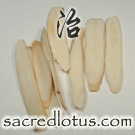 Bai Shao15-20 gTonify Blood
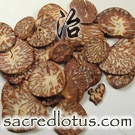 Bing Lang4.5 gExpel Parasites
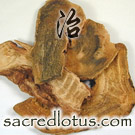 Da Huang6-9 gPurgatives
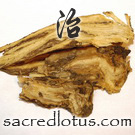 Dang Gui6-9 gTonify Blood
 Gan Cao4.5 gTonify Qi
 Huang Lian6-9 gClear Heat and Dry Dampness
 Huang Qin9-12 gClear Heat and Dry Dampness
 Mu Xiang4.5 gRegulate the Qi
 Rou Gui1.5-3 gWarm the Interior and Expel Cold
Preparation & dosage
How is Shao Yao Tang prepared?
Shao Yao Tang is prepared as a water decoction (tang) of Bai Shao (the chief), Dang Gui, Huang Lian, Huang Qin, Da Huang, Mu Xiang, Bing Lang, Gan Cao and a small amount of a warming cinnamon.
Two preparation notes: Rou Gui (cassia bark) is now used in place of the original Guan Gui; and Da Huang here is used in modest amount to gently guide heat downward rather than as a strong purge. Used for damp-heat dysenteric disorders. Available as granules.
Source: Sacred Lotus sources & references (composition and preparation note) + Bensky & Barolet, Formulas & Strategies.
Decoction. Bai Shao 15-20 g; Huang Qin 9-12 g; Da Huang, Dang Gui, Huang Lian 6-9 g each; Bing Lang, Gan Cao, Mu Xiang 4.5 g each; Rou Gui 1.5-3 g (substituted for Guan Gui).
Safety — read before use
What are the cautions for Shao Yao Tang?
Shao Yao Tang is for damp-heat excess dysentery only. It is not appropriate for chronic or deficiency-cold dysentery, nor for early dysentery that still has prominent exterior (fever/chills) signs. It is generally reduced or modified once the pus, blood, and tenesmus resolve.
- Pregnancy — it contains Da Huang (a purgative), Bing Lang, Dang Gui, and other blood-moving herbs, so it is used with great caution or avoided in pregnancy.
- Deficiency patterns — the cold, draining, and purging herbs can injure an already weak Spleen and Stomach.
Source: Bensky, Formulas & Strategies (cautions & contraindications). Practitioner reference, not medical advice.
Originally Appeared In:
- Collection of Writings on the Mechanism of Illness, Suitability of Qi, and the Safeguarding of Life as Discussed in the Basic Questions (Su Wen Bing Ji Qi Yi Bao Ming Ji)
Notes:
How does Shao Yao Tang compare to similar formulas, and how is it modified?
Its distinguishing feature is that it regulates the qi and blood, not merely clears heat. That, plus its small warming dose of Rou Gui and its purgative Da Huang, sets it apart from the pure heat-clearing dysentery formulas.
- vs Bai Tou Weng Tang — Bai Tou Weng Tang treats heat-toxin (“hot-blood”) dysentery with more blood than pus; it cools the blood and resolves toxicity but does not regulate the qi and blood the way Shao Yao Tang does.
- vs Ge Gen Huang Qin Huang Lian Tang — that formula treats damp-heat diarrhea with a lingering exterior component, rather than a bloody-pus dysentery.
Common modifications (following the formula’s own logic): for severe tenesmus, emphasize the qi-movers Mu Xiang and Bing Lang; for pronounced bleeding and heat, add blood-cooling, dysentery-checking herbs such as Di Yu or Bai Tou Weng.
Source: Bensky, Formulas & Strategies (associated formulas & modifications); owner’s Five Branches notes.
Clinical Studies & Research:
Is there modern research on Shao Yao Tang?
Yes, mostly for ulcerative colitis. A meta-analysis of 23 randomized trials (2,068 patients) found higher response rates and lower TNF-α/IL-6 when it was added to standard care; rat models show reduced colonic inflammation via the TLR4/NF-κB pathway. The clinical evidence is largely adjunctive.
Sources: PMC 12051808; PubMed 31090304, 38879471. Research context, not a claim.
Sources & References
Compiled and edited by Thomas Dehli, Founder & Editor, Sacred Lotus Updated
The information here is referenced from numerous sources — teachers, practitioners, class notes from Five Branches University, the books below, and the published research literature, with citations given as resolvable PubMed identifiers. Where sources disagree, I have flagged the discrepancies directly. If facts couldn't be verified, I have left them out. How we source our content.
Reference information for students and practitioners — not medical advice. Consult a qualified practitioner. Terms of use.
Chinese Formulas Books & References
 https://amzn.to/4fYI3f8
 https://amzn.to/4j55NRA
 https://amzn.to/4gMROyv
 https://amzn.to/4h7msSK