
Yin Chen Hao Tang
Artemisia Yinchenhao Decoction
- Category
- Formulas that Expel Dampness
- Subcategory
- Formulas that Clear Damp-Heat
- Ingredients
- 3 herbs
Actions
What does Yin Chen Hao Tang do?
Yin Chen Hao Tang clears damp-heat from the Liver, Gallbladder, Spleen, and Stomach and specifically resolves jaundice — a classic Shang Han Lun formula built for “yang jaundice” (damp-heat type) with interior excess, draining the damp-heat out through both the urine and the stool at once.
The three ingredients divide by role:
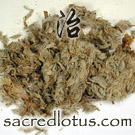
- Chief: Yin Chen Hao (Herba Artemisiae Yinchenhao), 18 g — the classic jaundice-resolving herb; clears damp-heat from the Liver and Gallbladder and promotes the free flow of bile.
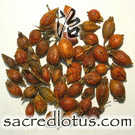
- Deputy: Zhi Zi (Fructus Gardeniae), 9 g — bitter and cold; clears heat from all three burners and drains damp-heat downward via the urine, reinforcing Yin Chen Hao’s action.
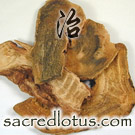
- Assistant/Envoy: Da Huang (Radix et Rhizoma Rhei), 6 g — purges accumulated heat and stagnation via the stool, guiding damp-heat out and unblocking the bowels so the other two herbs are not trapped by interior excess.
Together the three herbs clear heat and drain dampness through both stool and urine — the “double drainage” strategy that distinguishes this formula from milder jaundice formulas (see Notes).
Source: Sacred Lotus sources & references + Bensky & Barolet, Formulas & Strategies (2nd ed.), chief/deputy/assistant/envoy analysis. Traditional-use framing; not medical advice.
Indications
What is Yin Chen Hao Tang used for?
Yin Chen Hao Tang treats yang-type jaundice caused by damp-heat obstructing the Liver, Gallbladder, Spleen, and Stomach — the classic textbook presentation of damp-heat jaundice, distinguished from cold-damp (“yin”) jaundice by the brightness of the discoloration and the presence of interior heat signs.
Its classic clinical presentation:
- Jaundice: bright, vivid orange-yellow discoloration of the skin and eyes (a “yang” color, contrasted with the dull, smoky-yellow of cold-damp jaundice).
- Urination: scanty, dark yellow urine.
- Abdomen: fullness or distention of the abdomen or epigastrium.
- Associated signs: thirst without much desire to drink, possible nausea, possible low fever, dry or constipated stool.
Tongue and pulse: yellow, greasy tongue coat; slippery, rapid pulse.
Source: Sacred Lotus sources & references on pattern/tongue/pulse + Bensky & Barolet, Formulas & Strategies (2nd ed.). Traditional-use framing; not medical advice.
Western Uses:
What is Yin Chen Hao Tang used for in modern practice?
In modern practice, Yin Chen Hao Tang (YCHD) is referenced in the context of jaundice and cholestatic liver conditions — hepatitis presenting with jaundice, cholestasis (including drug- or disease-induced cholestasis), and elevated bilirubin from various causes, where its traditional damp-heat jaundice pattern is thought to overlap with these biomedical presentations. A widely used proprietary derivative, Yinzhihuang (built from Yin Chen Hao and Zhi Zi plus Huang Qin and Jin Yin Hua — not the same three-herb formula), has separately been studied for neonatal jaundice.
These biomedical correlates are offered as a reference to the formula’s traditional use, not as a claim that it treats any diagnosed disease. Any use for jaundice, hepatitis, or a diagnosed liver condition belongs with a qualified practitioner and appropriate medical evaluation — jaundice always warrants a proper diagnostic workup.
Source: traditional-use correlates summarized from Bensky & Barolet, Formulas & Strategies (2nd ed.) and the modern research literature (see research). Reference only, not a treatment claim.
Ingredients
3 substances in Yin Chen Hao Tang — each links to its full herb monograph.
Preparation & dosage
How is Yin Chen Hao Tang prepared?
Yin Chen Hao Tang is taken as a decoction. Modern formulations commonly use roughly double the classical reference dosage. The strength of the purgative (bowel-moving) effect can be adjusted: substituting wine-processed Shu Da Huang for raw Da Huang produces a gentler action, as does adding the Da Huang later in the cooking process rather than decocting it with the other herbs from the start.
Source: Sacred Lotus formula record + Bensky & Barolet, Formulas & Strategies (2nd ed.), preparation notes for purgative decoctions.
Decoction. Reference relative amounts: Yin Chen Hao 18 g (chief); Zhi Zi 9 g (deputy); Da Huang 6 g (assistant/envoy). Modern formulations commonly use roughly double this dosage. Purgative strength can be reduced by substituting wine-processed Shu Da Huang for raw Da Huang, or by adding Da Huang later in the decoction process. Reference only, not a prescription.
Safety — read before use
What are the cautions for Yin Chen Hao Tang?
Yin Chen Hao Tang is a strongly cold, purging formula built only for excess, damp-heat (“yang”) jaundice — it is inappropriate for cold-damp (“yin”) jaundice, which presents with a dull, smoky-yellow discoloration, cold limbs, fatigue, and loose stool; giving this formula for that pattern would further injure Spleen and Stomach yang.
- Pregnancy: Da Huang is a strong purgative and is generally contraindicated in pregnancy — use only under professional guidance.
- Weak digestion: use cautiously with Spleen/Stomach deficiency, diarrhea, or a tendency toward loose stool, since Da Huang purges.
- Duration: intended for short-term use while damp-heat and interior excess are present; typically modified or discontinued as jaundice and stool resolve.
- Dose-titration by design: the purgative strength can be adjusted — substituting wine-processed Shu Da Huang for raw Da Huang, or adding Da Huang later in the cooking process, produces a gentler effect (see Preparation).
Source: Bensky & Barolet, Formulas & Strategies (2nd ed.), cautions for purgative damp-heat formulas; preparation detail per the Sacred Lotus formula record. Not a substitute for professional advice.
Originally Appeared In:
- On Cold Damage (Shang Han Lun)
Notes:
How does Yin Chen Hao Tang compare to the other Shang Han Lun jaundice formulas?
Yin Chen Hao Tang is the most severe of the three classic Shang Han Lun formulas for yang (damp-heat) jaundice, distinguished from the other two by its interior excess (abdominal fullness, constipation) and its inclusion of the purgative Da Huang.
- vs Zhi Zi Bo Pi Tang (Gardenia and Phellodendron Decoction): used for milder damp-heat jaundice without interior excess — no abdominal fullness or constipation — and so omits Da Huang, relying on Zhi Zi and Huang Bai to clear heat.
- vs Ma Huang Lian Qiao Chi Xiao Dou Tang (Ephedra, Mume, and Phaseolus Decoction): used when damp-heat jaundice is accompanied by exterior signs (fever, body aches) or generalized edema, releasing the exterior while clearing damp-heat rather than purging the interior.
The three are traditionally taught together as a set, differentiated by whether interior excess, exterior signs, or neither is present alongside the jaundice.
Source: Bensky & Barolet, Formulas & Strategies (2nd ed.), Shang Han Lun jaundice formula group. Reference only.
Clinical Studies & Research:
Is there modern research on Yin Chen Hao Tang?
Yes — both clinical and preclinical research support its traditional use for jaundice and cholestasis. A systematic review and meta-analysis of 15 randomized controlled trials (1,405 patients) found Yinchenhao decoction significantly improved cholestasis-related markers (ALT, AST, total and direct bilirubin) and potentiated the effect of other anti-cholestatic drugs when combined, with no serious adverse events reported (PMID 25849734, J Ethnopharmacol 2015).
- Preclinical cholestasis (animal-study meta-analysis): a systematic review of animal studies confirmed reductions in bilirubin, ALT, and ALP across bile-duct-ligation and ANIT-induced cholestasis models (PMID 32975338).
- Mechanism — ER stress/apoptosis: in rats with obstructive jaundice, the formula reduced hepatocyte apoptosis and liver injury by suppressing the PERK-CHOP-GADD34 endoplasmic-reticulum-stress pathway (PMID 31749592).
- Mechanism — oxidative stress: in obstructive-jaundice models, the formula reduced liver injury and oxidative damage via upregulation of the Nrf2 antioxidant signaling pathway (PMID 36157920).
Sources: PubMed 25849734; PubMed 32975338; PubMed 31749592; PubMed 36157920. Research context, not a therapeutic claim; jaundice always warrants professional medical evaluation.
Sources & References
Compiled and edited by Thomas Dehli, Founder & Editor, Sacred Lotus Updated
The information here is referenced from numerous sources — teachers, practitioners, class notes from Five Branches University, the books below, and the published research literature, with citations given as resolvable PubMed identifiers. Where sources disagree, I have flagged the discrepancies directly. If facts couldn't be verified, I have left them out. How we source our content.
Reference information for students and practitioners — not medical advice. Consult a qualified practitioner. Terms of use.
Chinese Formulas Books & References
 https://amzn.to/4fYI3f8
 https://amzn.to/4j55NRA
 https://amzn.to/4gMROyv
 https://amzn.to/4h7msSK