

Lian Po Yin
Coptis and Magnolia Bark Decoction
- Category
- Formulas that Expel Dampness
- Subcategory
- Formulas that Clear Damp-Heat
- Ingredients
- 7 herbs
Actions
What does Lian Po Yin do?
Lian Po Yin (Coptis and Magnolia Bark Decoction) clears damp-heat lodged in the middle burner, moves qi, and stops vomiting and diarrhea. It pairs a bitter, cold heat-clearer with an aromatic, warm qi-mover — an “acrid-opening, bitter-descending” strategy that unblocks the Spleen–Stomach qi mechanism when damp and heat are equally intense.
The seven ingredients divide by role:
- Chief: Huang Lian (clears heat and dries damp-heat from the Stomach and Intestines) and Hou Po (aromatic, bitter-acrid; dries dampness and moves qi to relieve fullness) — one clears the heat, the other opens the qi mechanism the heat has blocked.
- Deputies: Zhi Zi and Dan Dou Chi vent depressed heat from the chest and relieve the restlessness and oppression that heat trapped in the upper and middle burner produces.
- Assistants: Shi Chang Pu aromatically transforms dampness and opens the sensory orifices; Ban Xia dries dampness and directs rebellious Stomach qi downward to stop vomiting; Lu Gen, used in a comparatively large dose, clears heat and generates fluids — balancing the warm, drying herbs and replacing fluids lost to vomiting and diarrhea.
Source: this site’s own composition record + Bensky & Barolet, Formulas & Strategies (chief/deputy/assistant analysis). Traditional-use framing; not medical advice.
Indications
What is Lian Po Yin used for?
Lian Po Yin treats damp-heat accumulated in the middle burner with simultaneous vomiting and diarrhea — the classic “sudden turmoil” (huoluan) presentation, where damp and heat lodge together in equal measure and block the Stomach’s normal downward movement and the Spleen’s normal upward movement.
Its clinical presentation:
- Digestive: sudden vomiting together with foul-smelling, watery diarrhea, and a stifling sensation of fullness in the chest and epigastrium.
- Heat signs: restlessness or vexation, thirst without a strong desire to drink, and scanty, dark urine.
Tongue and pulse: this site’s own record records a yellow, greasy tongue coating; formula references describe the pulse as slippery and rapid.
Source: this site’s own tongue record + Bensky & Barolet, Formulas & Strategies. Traditional-use framing; not medical advice.
Western Uses:
What is Lian Po Yin used for in modern practice?
In modern practice Lian Po Yin’s damp-heat, vomiting-and-diarrhea pattern is referenced for acute gastroenteritis-type presentations — the kind of sudden, foul-smelling vomiting and diarrhea with epigastric fullness traditionally described as “sudden turmoil disorder,” and, in modified forms, for Helicobacter pylori-associated gastritis.
These biomedical correlates describe the formula’s traditional pattern-based use; they are not a claim that it treats any diagnosed disease, and modern research on it (see research) remains limited relative to better-studied formulas. Acute vomiting or diarrhea with dehydration, high fever, or symptoms lasting more than a day or two calls for prompt medical evaluation, not self-treatment.
Source: traditional-use correlates summarized from Bensky & Barolet, Formulas & Strategies, cross-checked against modern H. pylori research (see research). Reference only, not a treatment claim.
Ingredients
7 substances in Lian Po Yin — each links to its full herb monograph.
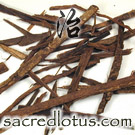 Hou Po6 gAromatic Herbs that Transform and Dissolve Dampness
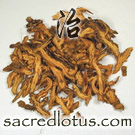 Huang Lian3 gClear Heat and Dry Dampness
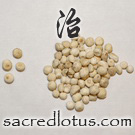 Ban Xia3 gWarm Herbs that Transform Phlegm-Cold
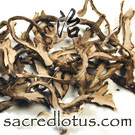 Shi Chang Pu3 gAromatic Substances that Open the Orifices
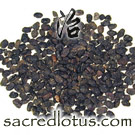 Dan Dou Chi9 gCool, Spicy Herbs that Release the Exterior
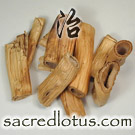 Lu Gen60 gDrain Fire
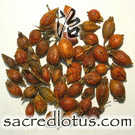 Zhi Zi9 gDrain Fire
Preparation & dosage
How is Lian Po Yin prepared?
Lian Po Yin is prepared as a water decoction and taken warm, typically in two divided doses. Classically Huang Lian is stir-fried with ginger juice before decocting, and Hou Po and Ban Xia are used in their prepared (processed) forms.
Source: multiple online sources + Bensky & Barolet, Formulas & Strategies general decoction convention. Reference only.
Decoction, taken warm. Reference amounts (this site’s own composition record): Lu Gen 60 g; Zhi Zi, Dan Dou Chi 9 g; Hou Po 6 g; Huang Lian, Shi Chang Pu, Ban Xia 3 g. Huang Lian classically stir-fried with ginger juice before decocting. Reference only.
Safety — read before use
What are the cautions for Lian Po Yin?
Lian Po Yin is built from cold, bitter, and drying herbs for a damp-heat excess pattern, so it is inappropriate where the underlying pattern is cold or deficient. It should not be used for cold-damp diarrhea (clear, watery stool, cold limbs, pale tongue) or in Spleen–Stomach yang deficiency, where its cold, bitter herbs would further injure digestive yang.
- Yin deficiency with heat: use cautiously — the drying herbs (Hou Po, Shi Chang Pu, Ban Xia) can further deplete fluids, though Lu Gen’s large, fluid-generating dose offsets some of this.
- Pregnancy: contains Ban Xia; classically cautioned in pregnancy, use only under qualified professional guidance.
- Acute, short-course formula: intended for active damp-heat vomiting and diarrhea; prolonged use of its bitter, drying herbs can itself injure Spleen–Stomach qi and fluids.
- Seek care for severe illness: significant dehydration, persistent vomiting, bloody stool, high fever, or symptoms lasting beyond a day or two warrant prompt medical evaluation rather than herbal self-treatment.
Source: Bensky & Barolet, Formulas & Strategies (cautions for damp-heat clearing/drying formulas). Traditional-use framing; not medical advice.
Originally Appeared In:
- Discussion of Sudden Turmoil Disorders (Huo Luan Lun)
Notes:
How is Lian Po Yin different from San Ren Tang and Huo Xiang Zheng Qi San?
Lian Po Yin is written for damp-heat that has already broken down into vomiting and diarrhea, not for damp-heat still spreading through the triple burner or for a cold-damp pattern. It comes from Wang Shi Xiong’s Qing-dynasty text Huo Luan Lun (“Discussion of Sudden Turmoil Disorders”), written specifically for this acute damp-heat vomiting-diarrhea presentation.
- vs San Ren Tang: San Ren Tang treats damp-heat at an earlier, more diffuse stage spreading through the triple burner with fever and heavy-body sensations, before the Stomach/Spleen qi mechanism has broken down into vomiting and diarrhea.
- vs Huo Xiang Zheng Qi San: Huo Xiang Zheng Qi San treats the cold-damp mirror image — vomiting and diarrhea from cold-damp obstructing the middle burner (white, greasy tongue coat) rather than damp-heat, and it warms rather than clears heat.
Processing note: classically Huang Lian is stir-fried with ginger juice before decocting, tempering its coldness slightly for a formula meant to move a blocked qi mechanism, not just clear heat.
Source: Bensky & Barolet, Formulas & Strategies (formula comparisons) + multiple online sources.
Clinical Studies & Research:
Is there modern research on Lian Po Yin?
Yes — recent work focuses on gastritis and Helicobacter pylori, using network pharmacology and clinical meta-analysis rather than large randomized trials on the classic formula alone. A network meta-analysis of nine traditional Chinese medicine regimens added to standard quadruple therapy for H. pylori-associated gastritis found Lianpuyin (Lian Po Yin) significantly improved eradication rates over quadruple therapy alone, though its safety ranked below several other regimens.
- H. pylori eradication (clinical meta-analysis): Lianpuyin plus standard quadruple therapy improved H. pylori eradication versus quadruple therapy alone (OR 1.516, 95% CI 1.017–2.056) in a network meta-analysis of 9 TCM regimens across 940 patients; it ranked third of nine for symptom-response probability, behind Xiangsha Liujunzi Wan and HPS, and lower on safety (PMID 36660649).
- H. pylori gastritis mechanism (preclinical): a modified formula, Jiawei Lianpu Yin, suppressed H. pylori colonization and reduced gastric mucosal inflammation via MUC5AC mucin assembly and the IRE1–XBP1 pathway, shown with transcriptomics and network pharmacology (PMID 40239879).
- Chronic gastritis mechanism (preclinical): network pharmacology identified quercetin, ephedrine, trigonelline, crocetin, and beta-sitosterol as active compounds acting via JAK2–STAT3 signaling to reduce inflammation in chronic gastritis models (PMID 33959188).
Sources: PubMed 36660649; PubMed 40239879; PubMed 33959188. Research context, not a therapeutic claim; direct high-quality clinical trial evidence on the classic formula remains limited.
Sources & References
Compiled and edited by Thomas Dehli, Founder & Editor, Sacred Lotus Updated
The information here is referenced from numerous sources — teachers, practitioners, class notes from Five Branches University, the books below, and the published research literature, with citations given as resolvable PubMed identifiers. Where sources disagree, I have flagged the discrepancies directly. If facts couldn't be verified, I have left them out. How we source our content.
Reference information for students and practitioners — not medical advice. Consult a qualified practitioner. Terms of use.
Chinese Formulas Books & References
 https://amzn.to/4fYI3f8
 https://amzn.to/4j55NRA
 https://amzn.to/4gMROyv
 https://amzn.to/4h7msSK