
Herba Artemisiae Yinchenhao Yinchenhao Shoots and Leaves, Capillaris
Also known as Yin Chen Hao, Main Yin Chen, Mian Chen
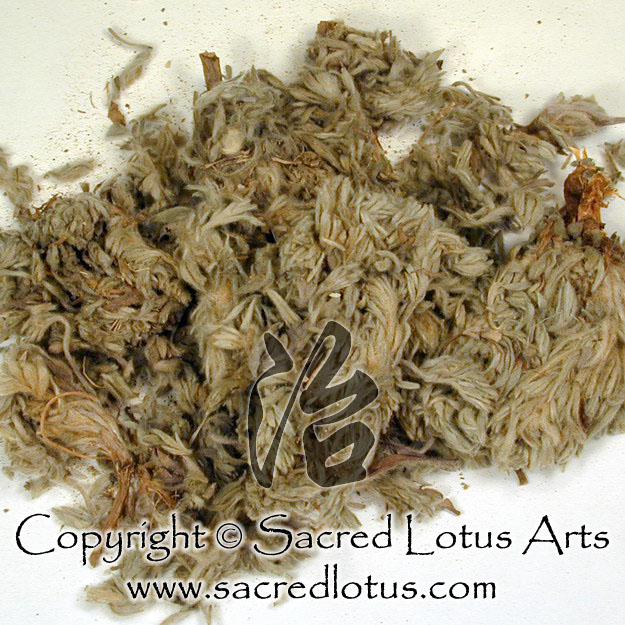
Materia Medica Data
- Temperature
- Cool
- Nature & Flavour
- Bitter, Spicy, Cool
- Channels Entered
- LIV, SP, GB, ST
- Latin (pharmaceutical)
- Herba Artemisiae Yinchenhao
- Chinese
- 茵陈
- Tone Marks
- yīn chén
- Also Known As
- Yin Chen Hao, Main Yin Chen, Mian Chen
Chinese Herb Actions
What is Yin Chen used for in Chinese medicine?
Yin Chen is the principal herb for jaundice in Chinese medicine. Our record states it plainly: this is the best herb for jaundice due to damp-heat or damp-cold, and it is most commonly used where the skin has the bright orange-yellow cast described as yang-type jaundice. It is bitter, spicy and cool, and enters the Liver, Spleen, Gallbladder and Stomach — the four channels that between them describe the whole damp-heat-and-bile picture.
Its traditional actions, as our record gives them:
- Clears damp-heat and treats yang-type jaundice — the defining action. Our record notes it is also used with other herbs for yin-type jaundice, where the yellow is dull and lustreless, although it is traditionally contraindicated for that type.
- Clears damp-heat from the skin — especially lower-body skin disease: sores, rashes, eczema, oozing lesions and urticaria arising from damp-heat on the exterior.
- Treats febrile disease with damp-heat — fever, body aches, oppression in the chest, constipation, dark urine and abdominal distension.
- Promotes urination — weakly. Our record is careful about this: it sits in the water-regulating and damp-draining category, but diuresis is not its strength. Its power is directed at damp-heat in the Liver and Gallbladder.
Part used: the young shoots and leaves. The name itself records this — see the notes section.
Source: our own herb record (category, nature and flavour, channels, indications, part used), cross-referenced against multiple online sources and published materia medica consensus. Traditional-use framing; not medical advice.
Chinese Herb Dosage
What is the typical dosage of Yin Chen?
Our record gives two published ranges: 10–30 g and 9–30 g in decoction. These are effectively the same figure and the difference is one of editorial rounding rather than a genuine disagreement. The range is generous by materia medica standards — Yin Chen is a light, aerial herb and a large volume of it weighs very little, which is part of why the numbers run high.
- Decoction — 9–30 g, per our record’s two cited ranges.
- Part used — the young shoots and leaves.
- In formula — in Yin Chen Hao Tang it is the chief herb and is conventionally given in a notably larger proportion than the other two ingredients, and cooked first. Recorded as classical formula construction, not as a preparation instruction.
Source: our own herb record dosage entries and part used; formula role per our own Yin Chen Hao Tang record, cross-referenced against multiple online sources. Reference only — not a prescription and not dosing advice.
Chinese Herb Contraindications & Cautions
Are there cautions for Yin Chen?
Our record gives two: use caution where there is no damp-heat, and do not use for jaundice arising from blood accumulation. Both are pattern-based rather than pharmacological, and both follow from what the herb is — a cool, damp-clearing herb aimed at a specific mechanism, which is of little use and some cost when that mechanism is not the one at work.
- No damp-heat present — caution. A cool, draining herb given where there is no damp-heat to drain can weaken rather than help.
- Jaundice from blood accumulation — contraindicated per our record. Jaundice is a sign, not a diagnosis, and Yin Chen addresses only one of its patterns.
- Yin-type jaundice — our record notes it is traditionally contraindicated here, while also recording that it is used for this type in combination with warming herbs. Reported as our record has it.
- Jaundice is a medical sign — a neutral reference point that belongs on this page: new or unexplained jaundice needs medical assessment. This herb’s traditional indication is one of the few in the materia medica that maps onto a symptom nobody should be self-treating.
- Overdose — see the toxicity note; our record documents rare effects at excessive dose.
Source: our own herb record caution entries and differentiation note, cross-referenced against multiple online sources and published materia medica consensus. Reference information, not medical advice.
Chinese Herb Toxicity & Overdose
Is Yin Chen toxic?
Yin Chen is not classed as a toxic herb and has a long record of use at substantial doses, but our own record documents rare adverse effects at excessive dose: fainting, dizziness, headache, numbness of the upper limbs with tremor, palpitations and a feeling of oppression in the chest. These are described as rare and dose-related rather than as effects of ordinary use.
- Dose-related, not idiosyncratic — the effects our record lists are those of the herb taken to excess.
- Harvest timing and constituent load — the review literature notes that the appropriate harvest time is a real consideration for this species precisely because it affects the concentration of active constituents, scoparone among them, and therefore both the pharmacological action and any possible toxicity. A useful reminder that “the same herb” is not always the same material.
- No dosing, preparation or monitoring guidance is given here. These are documented reference facts about a herb whose main indication is a medical sign requiring assessment.
Source: our own herb record toxicity entry; harvest-time and constituent-variability point per PMID 34680529, PMC 8533588. Neutral reference facts, not a safety guarantee.
Herb-Drug Interactions
Does Yin Chen interact with medications?
No well-established clinical herb–drug interactions are documented, but our own record already flags the sensible one: caution when combining with diuretic drugs. Two lines of preclinical research support keeping a practitioner in the loop rather than treating this herb as inert.
- Diuretics — our record’s own note. A preclinical study examined simultaneous pharmacokinetic and pharmacodynamic herb–drug interactions between Yin Chen Hao Tang and spironolactone, which is exactly this concern investigated formally. Animal work, not a clinical trial.
- Liver enzyme handling — Artemisia capillaris and its constituent 6,7-dimethylesculetin have been shown to regulate a hepatic cytochrome P450 enzyme in mouse hepatocytes, and the herb’s best-documented mechanism involves activation of a nuclear receptor that governs hepatic detoxification pathways. Anything that shifts those pathways is a reasonable practitioner concern for co-administered medicines cleared by the liver. Preclinical and precautionary, not a demonstrated clinical interaction.
Anyone taking prescription medication, particularly diuretics or medicines with a narrow margin cleared by the liver, should raise any herbal product with their doctor or pharmacist. (Flagged for practitioner confirmation.)
Source: our own herb record interaction note; PMID 32799863, PMC 7429772, DOI 10.1186/s12906-020-03042-y (Yin-Chen-Hao-Tang and spironolactone, preclinical); PMID 34880749, PMC 8645941 (cytochrome P450 2a5 regulation by Artemisia capillaris and 6,7-dimethylesculetin); PMID 14702117, PMC 300765 (nuclear receptor activation and hepatic clearance). Reference information, not medical advice.
Western / Biomedical Research
Chinese Herb Clinical Studies & Research
Provided as research context — a summary of published biomedical study, not a therapeutic or medical claim.
Is there modern research on Yin Chen (Artemisia capillaris)?
Yes — and Yin Chen is one of the few Chinese herbs where a laboratory mechanism lines up strikingly well with the classical indication. In 2004 a study in the Journal of Clinical Investigation showed that a traditional preparation built on Yin Chen Hao enhanced bilirubin clearance by activating the nuclear receptor CAR (the constitutive androstane receptor), which switches on the liver’s bilirubin-handling machinery. The active component was identified as 6,7-dimethylesculetin (scoparone). A herb used for two thousand years for the yellowing of jaundice turned out to accelerate the clearance of the pigment that causes it.
- The bilirubin mechanism — CAR activation induces the enzymes and transporters that conjugate and excrete bilirubin. This is the most-cited single finding about this herb, and it is a mechanistic result in cell and animal models rather than a clinical trial.
- Active constituents — scoparone (6,7-dimethylesculetin), capillarisin, chlorogenic and isochlorogenic acids, capillin. A dedicated review covers scoparone’s pharmacology, pharmacokinetics and molecular mechanisms in liver disease specifically.
- Yin Chen Hao Tang as a whole formula — a 2017 review in the World Journal of Gastroenterology surveys the therapeutic mechanisms attributed to the decoction across hepatic disease models. Animal and cell work predominates; the review is a mechanism survey, not an efficacy verdict.
- Other preclinical directions — anti-inflammatory activity, hepatoprotection in chemically induced and obstructive liver injury models, antifibrotic effects, and metabolic and cholestasis models. Consistently preclinical.
- Species and material variability — a 2021 review of the pharmacological effects and pharmacokinetics of A. capillaris constituents makes the point that species (A. capillaris versus A. scoparia), plant part and harvest time all shift the constituent profile, and calls for that to be accounted for before effective doses can be defined.
- Herbological history — a Japanese pharmaco-historical investigation of Yinchenhao traces the identity and use of the drug through the historical literature.
Honest summary: the mechanistic match between the classical indication and the CAR/bilirubin finding is genuinely remarkable and is why this herb appears so often in the crossover literature between herbal and molecular medicine. It is not, on its own, clinical proof of anything, and jaundice remains a sign that requires medical assessment.
Sources: PMID 14702117, PMC 300765, DOI 10.1172/JCI18385 (bilirubin clearance via the nuclear receptor CAR; 6,7-dimethylesculetin as the active component); PMID 28275293, PMC 5323438, DOI 10.3748/wjg.v23.i7.1125 (therapeutic mechanisms of Yin-Chen-Hao decoction in hepatic diseases); PMID 34680529, PMC 8533588, DOI 10.3390/biomedicines9101412 (pharmacological effects and pharmacokinetics of A. capillaris active compounds; species, plant part and harvest-time variability); PMID 32877694, DOI 10.1016/j.phrs.2020.105170 (scoparone in liver disease: pharmacology, pharmacokinetics and mechanisms); PMID 34880749, PMC 8645941 (cytochrome P450 2a5 regulation); PMID 32799863, PMC 7429772 (Yin-Chen-Hao-Tang and spironolactone, preclinical herb–drug interaction); PMID 14570059 (historical and herbological investigation of Yinchenhao). Research context, not a therapeutic claim.
Chinese Herb Notes
Why is Yin Chen harvested in spring, and what does the name mean?
The name records a harvesting rule: yīn chén means, roughly, the “lingering” or overwintered growth — the plant survives the winter and puts out fresh shoots in early spring, and it is those young spring shoots that are gathered as medicine. A well-known Chinese saying holds that gathered in the third month it is Yin Chen, gathered in the fourth it is only hao — ordinary wormwood, and no longer the medicine. Our own record preserves the trace of this in its alternate names: Mian Yin Chen (“silky” or downy Yin Chen), which is the trade name for the soft, woolly spring-harvested young shoots, as distinct from the coarser later-season article.
- Spring harvest — the soft young shoots, downy and grey-green, gathered before the plant becomes woody. This is the classical article and the one our record describes as shoots and leaves.
- Autumn harvest — the same plant taken later with flowering tops is recognised as a separate commercial grade in modern practice.
- Botanical source — Artemisia capillaris Thunb. is the main species used in medicinal formulations. Artemisia scoparia is also used clinically in Chinese medicine under the same name; the two differ in constituent profile, with more scoparone in A. scoparia and more chlorogenic acid in A. capillaris.
Discrepancy note: the classical rule says spring, and the trade name in our own record follows it. Modern constituent measurement does not straightforwardly agree — capillarisin and scoparone in A. capillaris leaf have been reported to peak at the end of July, with maximum levels in the flowering head later still. This is a genuine tension, not a resolvable error: the traditional rule may be tracking qualities other than these two markers, or a different balance of constituents altogether. Both positions are reported here rather than reconciled.
What is the difference between Yin Chen, Qing Hao and Ai Ye?
All three are Artemisia species and all three are in our materia medica, but they are three different medicines and are constantly confused. The genus name on a label tells you very little.
- Yin Chen (this herb) — Artemisia capillaris. Bitter, spicy, cool; Liver, Spleen, Gallbladder, Stomach. The jaundice and damp-heat herb. Young spring shoots.
- Qing Hao — our record gives it as bitter and cold, entering Kidney, Liver and Gallbladder, used for deficiency heat and for the alternating fever of malarial disorders. This is the plant (Artemisia annua) from which artemisinin was isolated, work recognised with the 2015 Nobel Prize in Physiology or Medicine. Yin Chen has no such compound and no antimalarial reputation.
- Ai Ye — Artemisia argyi, mugwort leaf. Our record gives it as bitter, spicy and warm, entering Spleen, Liver and Kidney — a warming, bleeding-stopping, channel-warming herb, and the plant from which moxa is made. Warm where Yin Chen is cool, and used for the opposite kind of pattern.
- Liu Ji Nu — also an Artemisia in our records, and a blood-invigorating herb again unrelated in use.
What formulas contain Yin Chen?
Our own records place Yin Chen in three formulas, and the first is named after it.
- Yin Chen Hao Tang (Artemisia Yinchenhao Decoction) — the classical jaundice formula, with Zhi Zi and Da Huang.
- Gan Lu Xiao Du Dan (Sweet Dew Special Pill to Eliminate Toxins) — a broad damp-heat formula.
- Zhen Gan Xi Feng Tang (Sedate the Liver and Extinguish Wind Decoction).
Our record’s own differentiation note is worth repeating: because this herb is bitter and cool, yang-type jaundice with clear heat signs calls for it alongside other bitter cold herbs such as Zhi Zi, whereas yin-type jaundice with cold signs requires warming herbs such as Fu Zi in the formula. (Traditional formula context, not treatment advice.)
Source: our own herb record alternate names, notes and identity; our own formula links (Yin Chen Hao Tang, Gan Lu Xiao Du Dan, Zhen Gan Xi Feng Tang); our own Qing Hao, Ai Ye and Liu Ji Nu records; species and constituent comparison per PMID 34680529, PMC 8533588; harvest-time constituent data per PMID 34680529; herbological history of the name per PMID 14570059; artemisinin history per PMID 27488942; Ai Ye botany per PMID 38775853. Cross-referenced against multiple online sources and published materia medica consensus.
Sources & References
Compiled and edited by Thomas Dehli, Founder & Editor, Sacred Lotus Updated
The information here is referenced from numerous sources — teachers, practitioners, class notes from Five Branches University, the books below, and the published research literature, with citations given as resolvable PubMed identifiers. Where sources disagree, I have flagged the discrepancies directly. If facts couldn't be verified, I have left them out. How we source our content.
Reference information for students and practitioners — not medical advice. Consult a qualified practitioner. Terms of use.
Chinese Herbs Books & References
 https://amzn.to/3WfB3DK
 https://amzn.to/3DR1VUh
 https://amzn.to/42aMz73
 https://amzn.to/3PuD4bt