
Huang Long Tang
Yellow Dragon Decoction
- Category
- Formulas that Drain Downward
- Subcategory
- Formulas that Purge Heat Accumulation
- Ingredients
- 10 herbs
Actions
What does Huang Long Tang do?
Huang Long Tang (Yellow Dragon Decoction) purges heat accumulation from the Yang Ming (Stomach/Large Intestine) while simultaneously tonifying qi and blood. It is built by adding four qi-and-blood tonics plus three harmonizing herbs onto the core of Da Cheng Qi Tang (Da Huang, Mang Xiao, Zhi Shi, Hou Po) — the classic "attack and tonify simultaneously" strategy for a patient who has severe interior heat/stool accumulation but is too deficient to tolerate purgation alone.
our ingredient links did not have chief/deputy/assistant/envoy flags set for this entry; the following role analysis is derived from Bensky & Barolet:
- Chief: Da Huang (9 g) drains the bowels and clears the heat accumulation — the core action the formula is built around.
- Deputies: Mang Xiao (12 g), Zhi Shi (6 g), and Hou Po (3 g) complete the Da Cheng Qi Tang core — Mang Xiao softens hardness and moistens dryness; Zhi Shi and Hou Po break qi stagnation and disperse abdominal clumping and distension.
- Assistants: Ren Shen (6 g) and Dang Gui (9 g) tonify qi and nourish blood, supporting the underlying deficiency so the strong purgation does not collapse the patient's righteous qi; Jie Geng (3 g) opens the Lung/chest qi dynamic, an "ascend to aid descent" technique that helps the formula's downward purgative action.
- Envoys: Sheng Jiang (9 g), Da Zao (2 pieces), and Gan Cao (3 g) harmonize the Stomach and protect digestive qi and fluids through the purgation.
Source: Sacred Lotus sources & references + Bensky & Barolet, Formulas & Strategies (chief/deputy/assistant/envoy analysis, derived — role data is not recorded). Traditional-use framing; not medical advice.
Indications
What is Huang Long Tang used for?
Huang Long Tang treats Yang Ming heat/stool accumulation occurring in a patient who is also qi-and-blood deficient — classically the elderly, postpartum, chronically ill, or otherwise weak person who develops a severe excess-heat bowel obstruction their constitution cannot safely be purged for with a plain purgative alone.
Its classic clinical presentation:
- Excess-heat/accumulation signs: severe constipation or hard, dry stool (sometimes paradoxical foul watery diarrhea seeping around a stubborn obstruction), abdominal pain and distension worse on pressure, high fever, thirst, and possible delirium or mental confusion.
- Underlying deficiency signs: fatigue, weakness, and a frail constitution unable to withstand purgation on its own; some presentations show cold extremities despite the interior heat.
Tongue and pulse (per Sacred Lotus sources & references): dry yellow or black tongue coat; a weak pulse — the weak pulse against a heat-accumulation presentation is the diagnostic signature of the combined excess-with-deficiency pattern.
Source: Sacred Lotus sources & references on pattern/tongue/pulse + Bensky & Barolet, Formulas & Strategies. Traditional-use framing; not medical advice.
Western Uses:
What is Huang Long Tang used for in modern practice?
In modern practice this formula's pattern — severe bowel/heat accumulation layered onto marked underlying weakness — is referenced against conditions such as elderly or postoperative constipation, paralytic ileus, and febrile illness with impaction in frail or debilitated patients. This correlate describes the traditional pattern the formula addresses, not a claim that it treats any diagnosed disease.
Direct modern clinical research on Huang Long Tang itself is sparse (see research). Because the formula pairs strong purgatives with tonics in a patient who is, by definition, already weak, any use for a diagnosed condition belongs with a qualified TCM practitioner working alongside conventional medical care, particularly in elderly, postoperative, or critically ill patients.
Source: traditional-use correlates summarized from Bensky & Barolet, Formulas & Strategies; reference only, not a treatment claim.
Ingredients
10 substances in Huang Long Tang — each links to its full herb monograph.
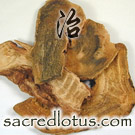 Da Huang9 gPurgatives
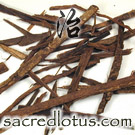 Hou Po3 gAromatic Herbs that Transform and Dissolve Dampness
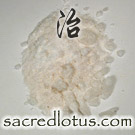 Mang Xiao12 gPurgatives
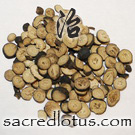 Zhi Shi6 gRegulate the Qi
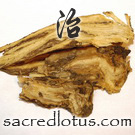 Dang Gui9 gTonify Blood
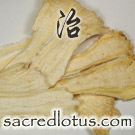 Jie Geng3 gWarm Herbs that Transform Phlegm-Cold
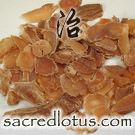 Ren Shen6 gTonify Qi
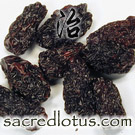 Da Zao2 piecesTonify Qi
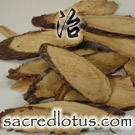 Gan Cao3 gTonify Qi
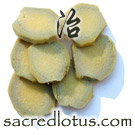 Sheng Jiang9 gWarm, Spicy Herbs that Release the Exterior
Preparation & dosage
How is Huang Long Tang prepared?
Huang Long Tang is decocted as a strong purgative formula, with Mang Xiao dissolved into the strained decoction rather than boiled with the other herbs. The main herbs (Da Huang, Zhi Shi, Hou Po, Ren Shen, Dang Gui, Sheng Jiang, Da Zao, Gan Cao) are decocted together; Jie Geng is traditionally added near the end for a brief final boil; Mang Xiao is stirred into the hot, strained liquid to dissolve rather than decocted, preserving its softening/purgative action. The formula is typically given for only one to a few doses and discontinued once the bowels move, since it is meant to resolve an acute accumulation, not to be taken as an ongoing tonic.
Source: Formula preparation convention for Da Cheng Qi Tang-family purgatives (Mang Xiao dissolved separately; late addition of aromatic/light herbs), cross-checked against Bensky & Barolet, Formulas & Strategies.
Decoction. Reference relative amounts (per Sacred Lotus sources & references): Mang Xiao 12 g; Da Huang, Dang Gui, Sheng Jiang 9 g; Zhi Shi, Ren Shen 6 g; Hou Po, Jie Geng, Gan Cao 3 g; Da Zao 2 pieces. Mang Xiao is dissolved into the strained decoction rather than boiled. Given for 1-3 doses, discontinued once the bowels move. Reference only; dosing in a formula this strong (purgatives combined with tonics, for an already-deficient patient) should be set by a qualified practitioner.
Safety — read before use
What are the cautions for Huang Long Tang?
Huang Long Tang is contraindicated in pregnancy and requires professional supervision whenever it is used, because it combines two of the strongest purgative herbs in the Chinese materia medica (Da Huang, Mang Xiao) with a patient population that is, by definition, already deficient. It is not a formula for self-treatment.
- Pregnancy: Da Huang and Mang Xiao are classic pregnancy-contraindicated purgatives (strongly draining and blood-moving); Dang Gui's blood-invigorating action adds further caution. Avoid in pregnancy.
- Deficiency without true excess accumulation: if there is no genuine heat/stool accumulation to justify purgation, the strong draining herbs can injure Spleen/Stomach qi and worsen deficiency — the formula's tonics offset but do not eliminate this risk.
- Frail, elderly, or critically ill patients: this is exactly the population the formula is designed for, which is also why it demands careful dosing and monitoring by a qualified practitioner rather than fixed self-administered doses; some sources note reducing or omitting Mang Xiao for very weak patients.
- Predominant yin/fluid depletion: where fluid depletion is more severe than the qi-and-blood deficiency this formula addresses, a more yin-nourishing modification is traditionally favored instead (see notes).
Source: Bensky & Barolet, Formulas & Strategies (purgative/pregnancy cautions for Da Huang and Mang Xiao are standard across TCM materia medica references). Traditional-use framing; not medical advice.
Originally Appeared In:
- Six Texts of Cold Induced Disorders (Shang Han Liu Shu)
Notes:
How is Huang Long Tang different from Da Cheng Qi Tang?
Huang Long Tang is Da Cheng Qi Tang (Da Huang, Mang Xiao, Zhi Shi, Hou Po) plus six added herbs — Ren Shen and Dang Gui to tonify qi and blood, Jie Geng to open the chest/Lung qi dynamic, and Sheng Jiang, Da Zao, and Gan Cao to harmonize and protect the Stomach. Da Cheng Qi Tang alone is reserved for a robust patient with pure excess; Huang Long Tang is chosen when clear qi-and-blood deficiency signs accompany the same excess-heat accumulation.
- vs Da Cheng Qi Tang: use Da Cheng Qi Tang for vigorous patients with pure Yang Ming excess and no deficiency; use Huang Long Tang when the patient is also weak, elderly, or depleted.
- vs Xin Jia Huang Long Tang (Augmented Yellow Dragon Decoction): a later modification (from the Wen Bing/warm-disease tradition) that shifts the tonifying side toward richer yin/fluid-nourishing herbs (e.g. Sheng Di Huang, Mai Men Dong, Xuan Shen) for cases where fluid/yin depletion is more prominent than qi-and-blood deficiency.
Source: Bensky & Barolet, Formulas & Strategies (Da Cheng Qi Tang relationship; Xin Jia Huang Long Tang as a Wen Bing-tradition modification).
Clinical Studies & Research:
Is there modern research on Huang Long Tang?
Direct modern clinical research on Huang Long Tang itself is sparse — a PubMed search did not surface trials or mechanistic studies specific to this exact formula. The formula's purgative core, Da Cheng Qi Tang (Da Huang, Mang Xiao, Zhi Shi, Hou Po), has its own separate modern research base; this is offered as background on the shared core, not as evidence for Huang Long Tang as a whole, since adding the qi-and-blood tonics (Ren Shen, Dang Gui) changes the formula.
- Da Cheng Qi Tang core, sepsis with GI dysfunction (clinical, related formula only): a randomized controlled trial of 80 sepsis patients found Da Cheng Qi Tang (Dachengqi decoction) added to standard care reduced gastric antrum cross-sectional area and inflammatory markers and shortened ICU stay versus standard care alone (PMID 37803958).
Sources: PubMed search conducted for "Huang Long Tang" / "Huanglong decoction" (no formula-specific results found); PubMed 37803958 (Da Cheng Qi Tang, the shared purgative core, cited for context only). Research context, not a therapeutic claim; no direct trial evidence for Huang Long Tang itself was found.
Sources & References
Compiled and edited by Thomas Dehli, Founder & Editor, Sacred Lotus Updated
The information here is referenced from numerous sources — teachers, practitioners, class notes from Five Branches University, the books below, and the published research literature, with citations given as resolvable PubMed identifiers. Where sources disagree, I have flagged the discrepancies directly. If facts couldn't be verified, I have left them out. How we source our content.
Reference information for students and practitioners — not medical advice. Consult a qualified practitioner. Terms of use.
Chinese Formulas Books & References
 https://amzn.to/4fYI3f8
 https://amzn.to/4j55NRA
 https://amzn.to/4gMROyv
 https://amzn.to/4h7msSK