

Jiao ai Tang
Ass Hide Gelatin and Mugwort Decoction
- Category
- Formulas that Stop Bleeding
- Subcategory
- Formulas that Tonify and Stop Bleeding
- Ingredients
- 7 herbs
Actions
What does Jiao Ai Tang do?
Jiao Ai Tang nourishes the blood, stops bleeding, warms the uterus and channels, and calms a restless fetus by directly replenishing and stabilizing the Chong (Penetrating) and Ren (Conception) vessels. When Chong and Ren are deficient and cold, the uterus loses its ability to hold blood, producing uterine bleeding, heavy or constantly-spotting menstruation, bleeding during pregnancy, or postpartum bleeding together with a pale complexion and cold, aching lower-abdominal pain.
The herbs divide by classical role:
- Chief: E Jiao (Asini Corii Colla) richly nourishes blood and yin and “seals” leaking vessels with its gelatinous, astringent quality; Ai Ye warms the uterus and the Chong/Ren vessels, stops bleeding, and calms the fetus.
- Deputies: Sheng Di Huang, Dang Gui, Bai Shao, and Chuan Xiong — the Si Wu Tang (Four Substances) base — nourish and regulate the blood, so the formula rebuilds what is being lost even as it stops the bleeding.
- Envoy: Gan Cao harmonizes the other herbs and helps ease abdominal pain.
Editorial note: the local database's ingredient list for this formula currently omits E Jiao, though it is the formula's namesake and classical chief herb per the Jin Gui Yao Lue and Bensky & Barolet, Formulas & Strategies. Flagged for owner review; the six recorded herbs (Ai Ye, Sheng Di Huang, Dang Gui, Chuan Xiong, Bai Shao, Gan Cao) match the classical formula exactly aside from this gap.
Source: this site’s own composition record (6 of 7 classical herbs on file) + Jin Gui Yao Lue + Bensky & Barolet, Formulas & Strategies (chief/deputy/envoy analysis, including E Jiao). Traditional-use framing; not medical advice.
Indications
What is Jiao Ai Tang used for?
Jiao Ai Tang treats bleeding from Chong-and-Ren deficiency and cold — when the two vessels that govern menstruation and pregnancy lose their ability to hold blood in place. Classically this covers a family of gynecological bleeding presentations rather than a single complaint.
Its classic clinical presentation:
- Bleeding patterns: uterine bleeding, heavy or continuous (spotting) menstruation, bleeding during pregnancy with a restless fetus, and postpartum bleeding.
- Accompanying signs: pale, thin blood without clots; dull or pale complexion; cold, aching lower-abdominal pain; a sore, weak low back.
Tongue and pulse: pale tongue with a thin white coat; thin, frail pulse — both consistent with blood deficiency and cold rather than heat or stasis.
Source: this site’s own pattern/tongue/pulse record + Bensky & Barolet, Formulas & Strategies. Traditional-use framing; not medical advice.
Western Uses:
What is Jiao Ai Tang used for in modern practice?
In modern practice, Jiao Ai Tang and closely related preparations (e.g. the Kampo variant Xiong-Gui-Jiao-Ai-Tang, which uses the same core herbs) are referenced for threatened miscarriage with vaginal bleeding, dysfunctional/abnormal uterine bleeding, menorrhagia, and postpartum bleeding — contexts where Western medicine recognizes abnormal gestational or menstrual blood loss.
A randomized trial in early pregnancy bleeding found the herbal formula achieved hemostasis and resolution of retroplacental hematoma significantly faster than hCG injection (see research). These biomedical correlates are offered as a reference to the formula’s traditional use, not as a claim that it treats any diagnosed condition. Any bleeding during pregnancy or heavy/abnormal uterine bleeding warrants prompt evaluation by a qualified practitioner; this content is not a substitute for medical care.
Source: traditional-use correlates summarized from Bensky & Barolet, Formulas & Strategies, and PubMed 17080540 (see research); reference only, not a treatment claim.
Ingredients
7 substances in Jiao ai Tang — each links to its full herb monograph.
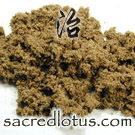 Ai Ye6 gStop Bleeding
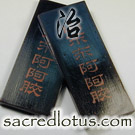 E JiaoTonify Blood
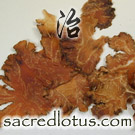 Chuan Xiong6 gInvigorate Blood and Remove Stagnation
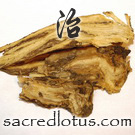 Dang Gui9 gTonify Blood
 Sheng Di Huang9 gCool the Blood
 Bai Shao12 gTonify Blood
 Gan Cao6 gTonify Qi
Preparation & dosage
How is Jiao Ai Tang prepared?
The other herbs are decocted together first; E Jiao is then melted into the strained, hot decoction rather than boiled with the rest. As a gelatin, E Jiao would scorch or clump if simmered directly with the other herbs, so it is dissolved into the strained liquid, stirred until fully incorporated, and taken warm. The Jin Gui Yao Lue's original method also called for a portion of rice wine (mi jiu) added to the decoction; modern preparation commonly uses water alone.
Source: Jin Gui Yao Lue (original method) + Bensky & Barolet, Formulas & Strategies (standard preparation of gelatin-containing decoctions).
Decoction, E Jiao melted into the strained hot liquid rather than decocted with the other herbs. Reference relative amounts (per this site’s own + Bensky & Barolet): Bai Shao 12 g; Sheng Di Huang, Dang Gui 9 g; Ai Ye, Chuan Xiong, Gan Cao 6 g; E Jiao ~9 g (dissolved in, not on file in local this site’s own record — see discrepancy note). Reference only.
Safety — read before use
What are the cautions for Jiao Ai Tang?
Jiao Ai Tang is a warming, tonifying formula for deficiency-and-cold bleeding, so it is not appropriate for bleeding caused by heat or by blood stasis. Bright-red bleeding with a rapid pulse and other heat signs, or bleeding with dark clots and fixed abdominal pain from stasis, calls for a different strategy — astringing and tonifying a stasis pattern can worsen it.
- Not for heat-pattern bleeding: avoid where there are clear signs of heat (bright-red blood, thirst, rapid pulse) without underlying cold and deficiency.
- Digestive fit: E Jiao is rich and gelatinous and can be cloying to a weak Spleen or stagnant digestion; reduce or modify if it causes bloating or poor appetite.
- Bleeding during pregnancy is a medical concern: any bleeding, cramping, or restless fetus in pregnancy should be evaluated promptly by a qualified practitioner; this formula is traditional-use reference, not a substitute for medical care.
Source: Bensky & Barolet, Formulas & Strategies (cautions for warming hemostatic/tonifying formulas). Traditional-use framing; not medical advice.
Originally Appeared In:
- Essentials from the Golden Cabinet (Jin Gui Yao Lue)
Notes:
How is Jiao Ai Tang different from Si Wu Tang, Tai Shan Pan Shi San, and Gu Ben Zhi Beng Tang?
Jiao Ai Tang is built on the Si Wu Tang (Four Substances) blood-nourishing base, plus E Jiao, Ai Ye, and Gan Cao to add the hemostatic and womb-warming action Si Wu Tang alone does not have. Choose among these formulas by what is driving the bleeding or fetal disturbance.
- vs Si Wu Tang: use Si Wu Tang for plain blood deficiency (pale complexion, dizziness, irregular scanty menses) without active bleeding; add E Jiao, Ai Ye, and Gan Cao (i.e. move to Jiao Ai Tang) once bleeding, spotting, or a restless fetus is present.
- vs Tai Shan Pan Shi San: Tai Shan Pan Shi San tonifies qi and blood together (with Ren Shen, Huang Qi, Bai Zhu) to calm a restless fetus from combined qi-and-blood deficiency and prevent habitual miscarriage; it is not built around active bleeding the way Jiao Ai Tang is.
- vs Gu Ben Zhi Beng Tang: Gu Ben Zhi Beng Tang targets severe flooding (beng) with qi collapse, led by strongly qi-tonifying and yang-raising herbs (Ren Shen, Huang Qi, Bai Zhu); reserve it for more urgent, heavier bleeding with collapse signs, and Jiao Ai Tang for moderate bleeding from Chong-and-Ren deficiency and cold.
Common modifications: add Huang Qin or Huang Bai if cold has begun transforming toward heat; add Sheng Long Gu and Sheng Mu Li or Wu Zei Gu to strengthen astringing for persistent bleeding; add Xu Duan and Sang Ji Sheng to reinforce Kidney support for a restless fetus.
Source: Bensky & Barolet, Formulas & Strategies (formula comparisons and modifications).
Clinical Studies & Research:
Is there modern research on Jiao Ai Tang?
Yes — one randomized clinical trial and preclinical mechanistic studies, concentrated on threatened miscarriage/abortion. A randomized controlled trial of the closely related Kampo formula Xiong-Gui-Jiao-Ai-Tang (same core herbs) in 72 women with threatened abortion found significantly faster uterine hemostasis (2.9 vs 10.8 days) and faster resolution of retroplacental hematoma (9.9 vs 23.2 days) versus hCG injection. More recent work has characterized the formula's chemical constituents and proposed mechanisms in animal models.
- Threatened abortion (clinical RCT): Xiong-Gui-Jiao-Ai-Tang vs hCG injection, 72 women, significantly faster hemostasis and hematoma resolution (PMID 17080540).
- Chemical profile & miscarriage prevention (preclinical): UPLC-MS/MS identified 101 compounds/27 quality markers; in a mifepristone-induced rat threatened-abortion model, Jiao-Ai Decoction regulated the hypothalamus-pituitary-ovarian axis (PMID 35636007).
- Angiogenesis mechanism (preclinical): Jiao-Ai Decoction and its active constituents reduced embryo loss by roughly 30% in rats via miR-16-mediated VEGF/VEGFR signaling, enhancing uterine microvessel density (PMID 40774577).
Sources: PubMed 17080540; PubMed 35636007; PubMed 40774577. Research context, not a therapeutic claim; direct modern clinical trial evidence is limited to the Kampo-variant RCT above.
Sources & References
Compiled and edited by Thomas Dehli, Founder & Editor, Sacred Lotus Updated
The information here is referenced from numerous sources — teachers, practitioners, class notes from Five Branches University, the books below, and the published research literature, with citations given as resolvable PubMed identifiers. Where sources disagree, I have flagged the discrepancies directly. If facts couldn't be verified, I have left them out. How we source our content.
Reference information for students and practitioners — not medical advice. Consult a qualified practitioner. Terms of use.
Chinese Formulas Books & References
 https://amzn.to/4fYI3f8
 https://amzn.to/4j55NRA
 https://amzn.to/4gMROyv
 https://amzn.to/4h7msSK