
Actions
What does Si Ni San do?
Si Ni San releases constrained Liver qi so the body’s own yang qi can reach the extremities again — it does not warm or tonify anything. That single fact is what separates it from every other “frigid extremities” formula: the cold hands and feet it treats come from qi being blocked in transit, not from a shortage of yang to begin with.
- Courses and vents constrained Liver qi — frees up a qi mechanism that has become “knotted” rather than depleted.
- Regulates the ascending/descending qi mechanism — one herb raises clear yang, one directs turbid qi downward, re-opening the pathway yang qi needs to extend outward to the limbs.
- Harmonizes the Liver and Spleen — resolves the Liver-overacting-on-Spleen pattern behind associated digestive symptoms.
- Nourishes blood and softens the Liver, relieving spasmodic pain — balances the formula’s dispersing action so it does not dry or deplete yin.
Source: Sacred Lotus sources & references + Bensky & Barolet, Formulas & Strategies; Shang Han Lun (Zhang Zhongjing), Shaoyin chapter, line 318.
Indications
What is Si Ni San used for?
Si Ni San treats cold hands and feet caused by constrained Liver qi blocking the normal flow of yang qi to the limbs — the cold characteristically stops at the wrist or ankle rather than climbing the arm or leg. Its classical source, the Shang Han Lun, places it in the Shaoyin chapter (line 318) alongside a cluster of possible accompanying signs.
- Cold fingers and toes that do not extend past the wrist or ankle — the hallmark sign distinguishing this pattern from true yang collapse.
- Distension or fullness of the chest and hypochondriac (rib-side) region from constrained Liver qi.
- Epigastric or abdominal pain from qi stagnation crossing to the Stomach/Spleen.
- Diarrhea with tenesmus (urgency and a sensation of incomplete evacuation), cough, palpitations, or inhibited urination — the accompanying “or” symptoms named alongside cold limbs in the original text.
- Modern extensions of the same Liver-qi-constraint pattern: premenstrual irritability and breast distension, dysmenorrhea, and functional digestive complaints (e.g. IBS-type or chronic-gastritis-type presentations) framed as Liver overacting on Spleen/Stomach.
Source: Shang Han Lun (Zhang Zhongjing), Shaoyin chapter, line 318 + Bensky & Barolet, Formulas & Strategies; Chen & Chen, Chinese Medical Herbology and Pharmacology (modern extensions).
Western Uses:
What conditions is Si Ni San used for in modern practice?
Si Ni San spreads constrained Liver qi that is over-controlling the Spleen and Stomach (flank and epigastric tension, irritability, cold hands and feet from qi constraint), so it is referenced for Liver-Spleen disharmony and hepatobiliary conditions: gastritis, peptic ulcer, cholecystitis, gallstones (cholelithiasis), hepatitis, intestinal obstruction, mastitis, breast lumps (fibroadenoma), hernia, and pancreatitis.
It is chosen for the Liver-qi-constraint pattern, not for a diagnosis. Intestinal obstruction, pancreatitis and cholecystitis are potential surgical emergencies presenting with severe abdominal pain and need immediate care; a hernia, a breast lump, and hepatitis all require medical assessment. Traditional-use correlates only, not a treatment claim.
Source: Sacred Lotus sources & references (pattern) + Bensky & Barolet, Formulas & Strategies; biomedical correlates as reference only. Not medical advice.
Ingredients
4 substances in Si Ni San — each links to its full herb monograph.
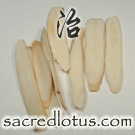 Bai Shao12-24 gTonify Blood
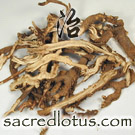 Chai Hu9-12 gCool, Spicy Herbs that Release the Exterior
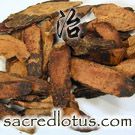 Zhi Gan Cao6-9 gTonify Qi
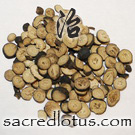 Zhi Shi9-12 gRegulate the Qi
Preparation & dosage
How is Si Ni San prepared?
Classically ground into a fine powder (“san”), per its name and its origin in the Shang Han Lun — equal amounts of the four herbs taken as a small measured dose, historically with warm water or rice-based liquid, several times a day. Contemporary TCM practice most often decocts the same four herbs as a standard tang instead, dosed to the ranges in the formula’s composition (Chai Hu 9–12 g, Zhi Shi 9–12 g, Bai Shao 12–24 g, Zhi Gan Cao 6–9 g in Sacred Lotus).
The only herb-specific processing reflected in our records is Gan Cao used in its honey-fried (zhi) form, which moderates its property and strengthens its harmonizing, Spleen-tonifying action; the other three herbs are used raw/unprocessed in the classical formula.
Source: Shang Han Lun (powder preparation) + Bensky & Barolet, Formulas & Strategies (modern decoction practice; Gan Cao processing) + Sacred Lotus sources & references.
Safety — read before use
What are the cautions for Si Ni San?
Si Ni San must not be mistaken for Si Ni Tang — its near-identical name describes the opposite mechanism. Si Ni San's cold limbs come from qi constraint blocking yang qi that is otherwise intact; Si Ni Tang's near-identical-sounding name describes true Yang collapse, a life-threatening depletion pattern requiring a warming, yang-rescuing formula built around aconite (Fu Zi) that Si Ni San does not contain. This distinction is a public-safety reference point, not administration guidance.
- Signs pointing to true Yang collapse (not this formula's pattern): cold extending past the elbow or knee, profound exhaustion, profuse sweating, watery diarrhea with undigested food, and an extremely faint or almost imperceptible pulse — this combination signals a medical emergency requiring a different clinical approach.
- Zhi Shi's qi-breaking, downward-directing action is noted with caution in pregnancy in the herb's own materia medica profile.
- Not indicated for cold limbs arising from straightforward Yang or Qi deficiency without underlying qi constraint — the formula's dispersing herbs are not a substitute for a tonifying formula in that pattern.
Source: Bensky & Barolet, Formulas & Strategies (Si Ni San vs Si Ni Tang differentiation; Zhi Shi caution) + Shang Han Lun (Shaoyin chapter presentations). Traditional-use framing; not medical advice.
Originally Appeared In:
- On Cold Damage (Shang Han Lun)
Notes:
How does Si Ni San differ from Si Ni Tang, and what formula descends from it?
Si Ni San and Si Ni Tang share a name (both mean roughly “frigid extremities” and both appear in the Shang Han Lun's Shaoyin chapter) but treat opposite mechanisms — this is the single most important distinction to get right when reading either formula's name.
- vs Si Ni Tang (Frigid Extremities Decoction): Si Ni Tang is built from Fu Zi (aconite), Gan Jiang, and Zhi Gan Cao to rescue devastated, collapsing Yang — true Shaoyin cold with cold extending past the elbow/knee, severe fatigue, watery diarrhea with undigested food, and a faint, almost-imperceptible pulse. Si Ni San contains no warming, yang-rescuing herbs at all; it uses Chai Hu, Zhi Shi, Bai Shao, and Gan Cao to free a constrained qi mechanism, fitting a patient who is not exhausted or collapsing — cold limited to the fingers/toes, a wiry (not faint) pulse, and signs of qi stagnation (distension, irritability) rather than depletion.
- vs Xiao Yao San: both harmonize Liver and Spleen, but Xiao Yao San adds Dang Gui, Bai Zhu, Fu Ling, Sheng Jiang, and Bo He for a gentler, more tonifying and blood-nourishing approach suited to Liver qi stagnation with underlying blood/Spleen deficiency; Si Ni San is the more purely qi-regulating of the two, without Xiao Yao San's tonifying herbs.
- Ancestor to Chai Hu Shu Gan San: Chai Hu Shu Gan San (from Zhang Jingyue's Ming-dynasty Jingyue Quanshu) is built directly on Si Ni San's four herbs, adding Xiang Fu, Chuan Xiong, and Chen Pi (and typically substituting the milder Zhi Ke for Zhi Shi) to intensify the qi-moving and mild blood-invigorating action for more pronounced Liver-qi-stagnation pain in the chest, hypochondrium, or epigastrium. A later meta-analysis of 42 randomized trials found Chai Hu Shu Gan San performed favorably against fluoxetine for depression across several subtypes (PMID 29454341) — evidence for the descendant formula, not for Si Ni San itself.
Source: Shang Han Lun (Zhang Zhongjing) for both Si Ni formulas + Bensky & Barolet, Formulas & Strategies (Xiao Yao San comparison; Chai Hu Shu Gan San lineage) + PubMed 29454341 (Chai Hu Shu Gan San trial evidence, cited for context only).
Clinical Studies & Research:
Is there modern research on Si Ni San?
Yes — a 2026 randomized, double-blind, placebo-controlled crossover trial found Si Ni San significantly reduced depression scores compared with placebo in breast cancer patients with mild-to-moderate depression, and separate rodent studies have explored a hepatic lipid-metabolism mechanism. Evidence remains limited in volume, and none of it supports the formula for treating any diagnosed disease.
- Depression, breast cancer patients (clinical, randomized crossover trial): a four-week-on/four-week-off crossover trial with a two-week washout reported significantly greater reduction in depression scores during the Si Ni San phase than during placebo, with accompanying multi-omics analysis exploring a possible biological mechanism (PMID 41491244).
- Metabolic-associated fatty liver disease (preclinical, rat model): in rats fed a high-fat, high-cholesterol diet, Si Ni San reduced hepatic lipid deposition, an effect associated with activation of the AMPK/SIRT1 signaling pathway (PMID 37808345). This is animal-model evidence, not a clinical finding.
Sources: PubMed 41491244; PubMed 37808345. Research context, not a therapeutic claim; direct clinical trial evidence for Si Ni San remains limited to the single trial above.
Sources & References
Compiled and edited by Thomas Dehli, Founder & Editor, Sacred Lotus Updated
The information here is referenced from numerous sources — teachers, practitioners, class notes from Five Branches University, the books below, and the published research literature, with citations given as resolvable PubMed identifiers. Where sources disagree, I have flagged the discrepancies directly. If facts couldn't be verified, I have left them out. How we source our content.
Reference information for students and practitioners — not medical advice. Consult a qualified practitioner. Terms of use.
Chinese Formulas Books & References
 https://amzn.to/4fYI3f8
 https://amzn.to/4j55NRA
 https://amzn.to/4gMROyv
 https://amzn.to/4h7msSK