
Xiao Yao San
Rambling Powder, Free and Easy Wanderer
- Category
- Formulas that Harmonize
- Ingredients
- 8 herbs
Actions
What does Xiao Yao San do?
Xiao Yao San spreads constrained Liver qi, nourishes the blood, and strengthens a Spleen weakened by the Liver’s excess control over it — the classic three-part strategy for Liver-Spleen disharmony. Eight herbs divide by role:
- Chief: Chai Hu courses the Liver and resolves qi constraint, letting yang qi that has become bound up rise and spread again.
- Deputies: Dang Gui and Bai Shao nourish and soften the Liver’s blood, giving the organ enough blood to move its qi smoothly instead of forcing constraint against a deficient base.
- Assistants: Bai Zhu and Fu Ling strengthen the Spleen and drain dampness, shoring up the Middle Burner the Liver would otherwise invade; baked Sheng Jiang and Zhi Gan Cao harmonize the Stomach and support Spleen qi.
- Envoy: a small amount of Bo He disperses the mild heat generated by stagnation and helps lift constrained Liver qi outward, added briefly at the end of cooking for its aromatic, dispersing action.
Source: Sacred Lotus sources & references + Bensky & Barolet, Formulas & Strategies (chief/deputy/assistant/envoy analysis).
Indications
What is Xiao Yao San used for?
Xiao Yao San treats Liver qi stagnation complicated by blood deficiency and Spleen qi weakness — the classic pattern behind cyclical irritability, rib-side or breast distension, and fatigue that worsens with stress. It comes from the Song-dynasty imperial formulary Tai Ping Hui Min He Ji Ju Fang (Formulas of the Peaceful Benevolent Dispensary, compiled by the Imperial Medical Bureau, c. 1078–1085 CE).
- Irritability, depression, and moodiness that fluctuate with stress or the menstrual cycle.
- Hypochondriac (rib-side) fullness or distending pain, and breast distention.
- Irregular menstruation and dysmenorrhea, often with premenstrual mood and breast symptoms.
- Fatigue, dizziness, and headache from blood deficiency compounding qi stagnation.
- Poor appetite from Spleen qi weakened by the Liver’s excess control over it.
- Bitter taste in the mouth, and dry mouth and throat, from the mild heat of constraint.
Source: Sacred Lotus sources & references/identity + Bensky & Barolet, Formulas & Strategies (classic presentation and source text).
Western Uses:
What is Xiao Yao San used for in modern/integrative practice?
In Japanese Kampo medicine the plain formula is known as Shoyosan and is referenced for premenstrual and menopausal irritability, fatigue, and mild mood symptoms fitting a blood-deficiency-with-stagnation pattern — distinct from the more heavily studied augmented Kampo formula Kamishoyosan (Tsumura TJ-24, corresponding to Jia Wei/Dan Zhi Xiao Yao San), which carries most of the Japanese clinical-trial literature (see research). In US/European TCM and integrative practice, Xiao Yao San (commonly sold as the pill Xiao Yao Wan) is referenced for PMS, perimenopausal mood symptoms, and stress-related digestive complaints that fit a Liver-Spleen disharmony pattern.
Source: Kampo formulary references (Shoyosan vs Kamishoyosan naming) + clinical literature cited in research; reference only, not a treatment claim.
Ingredients
8 substances in Xiao Yao San — each links to its full herb monograph.
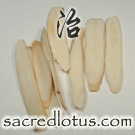 Bai Shao9 gTonify Blood
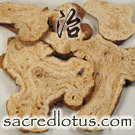 Bai Zhu9 gTonify Qi
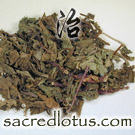 Bo He3 gCool, Spicy Herbs that Release the Exterior
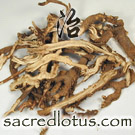 Chai Hu9 gCool, Spicy Herbs that Release the Exterior
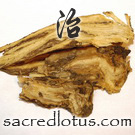 Dang Gui9 gTonify Blood
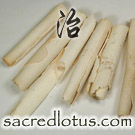 Fu Ling9 gRegulate Water and Drain Dampness
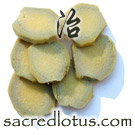 Sheng Jiang3 gRoastedWarm, Spicy Herbs that Release the Exterior
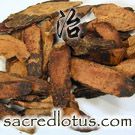 Zhi Gan Cao6 gTonify Qi
Preparation & dosage
How is Xiao Yao San prepared?
Classically ground into a coarse powder (“san”) and taken in small doses of roughly 6–9 g with warm water, per its origin in the Tai Ping Hui Min He Ji Ju Fang. Two per-herb processing details from the source text still carry real functional weight today:
- Sheng Jiang is used baked (“wei jiang”), not raw — baking mellows its acrid, strongly dispersing action so it can gently warm and harmonize the Stomach alongside Bai Zhu and Fu Ling, without adding to the dispersal that Chai Hu and Bo He already provide.
- Bo He is added only briefly, near the end of cooking, since its aromatic, qi-lifting constituents are volatile and are lost with prolonged decoction.
- Zhi Gan Cao (honey-fried licorice) is used rather than raw Gan Cao, for a stronger Spleen-tonifying, harmonizing action.
In contemporary practice the formula is most often prepared as a standard water decoction (tang) of all eight herbs, with Bo He added for the last few minutes, or taken as a pre-made pill (Xiao Yao Wan) or granulated extract.
Source: Bensky & Barolet, Formulas & Strategies (classical preparation, per-herb processing) + Sacred Lotus sources & references.
Reference relative amounts: Chai Hu, Dang Gui, Bai Shao, Bai Zhu, Fu Ling 9 g each; Zhi Gan Cao 6 g; Bo He and baked Sheng Jiang 3 g each. Classically ground to a coarse powder and taken in doses of roughly 6-9 g with warm water; the gram amounts above reflect a modern one-day decoction dose. Reference only, not a prescription.
Safety — read before use
What are the cautions for Xiao Yao San?
Xiao Yao San is built for Liver-Spleen disharmony with blood deficiency, not for patterns where stagnation has already transformed into clear heat or fire, or for pure excess without underlying deficiency.
- Heat-transformation signs — a red tongue, more pronounced irritability, thirst, or a strong (rather than mild) bitter taste — call for the heat-clearing variant Jia Wei Xiao Yao San (Dan Zhi Xiao Yao San, with Mu Dan Pi and Zhi Zi added) rather than the plain formula; see notes.
- Not for blood stasis presenting as sharp, fixed, stabbing pain, or for pure Liver qi stagnation without any blood deficiency or Spleen weakness.
- Chai Hu and Bo He’s dispersing, mildly drying nature is a reason for caution in significant Yin deficiency or Liver-yang-rising patterns (marked headache, dizziness, or a bounding pulse), where formulary sources note Chai Hu’s ascending, dispersing action can aggravate the picture.
- Pregnancy and extended use should be supervised by a qualified TCM practitioner, as with any formula containing a blood-invigorating herb (Dang Gui) taken over a long period.
Source: Bensky & Barolet, Formulas & Strategies (cautions, pattern-matching, Chai Hu cautions). Traditional-use framing; not medical advice.
Originally Appeared In:
- Imperial Grace Formulary of the Tai Ping Era (Tai Ping Hui Min He Ji Ju Fang)
Notes:
How does Xiao Yao San differ from Jia Wei Xiao Yao San and Chai Hu Shu Gan San?
Xiao Yao San, Jia Wei Xiao Yao San, and Chai Hu Shu Gan San all course the Liver, but they are built for three different depths of the same problem — plain stagnation with deficiency, stagnation that has generated heat, and pure stagnation without deficiency.
- Jia Wei Xiao Yao San (Dan Zhi Xiao Yao San, “Augmented Rambling Powder”): the Ming-dynasty physician Xue Ji (1487–1559) added Mu Dan Pi and Zhi Zi to this base formula in his Nei Ke Zhai Yao (“Essentials of Internal Medicine,” c. 1529) to clear the heat that develops when Liver constraint runs long enough to transform into fire — irritability, a red tongue (especially the tip and sides), a more rapid or wiry-rapid pulse, and sometimes breast tenderness with a burning quality. Xiao Yao San itself carries no heat-clearing herb and is not built for that presentation.
- Chai Hu Shu Gan San (“Bupleurum Powder to Spread the Liver”): from Zhang Jiebin’s (Zhang Jingyue) Jing Yue Quan Shu (“Jingyue’s Complete Works,” Ming dynasty, c. 1624), this formula pairs Chai Hu with Chen Pi, Chuan Xiong, Xiang Fu, Zhi Ke, Bai Shao, and Gan Cao — a stronger qi-moving, pain-relieving combination built for pronounced distending or stabbing rib-side/chest pain from pure Liver qi stagnation. It has no dedicated blood-nourishing pair (Dang Gui is absent) and no Spleen-fortifying Bai Zhu/Fu Ling, so it suits a more excess presentation without the blood deficiency and Spleen weakness that Xiao Yao San is built to address.
Source: Bensky & Barolet, Formulas & Strategies (formula comparisons, historical sources) + Chen & Chen, Chinese Medical Herbology and Pharmacology (Jia Wei Xiao Yao San and Chai Hu Shu Gan San composition).
Clinical Studies & Research:
Is there modern research on Xiao Yao San?
Yes — the largest body of clinical evidence covers depression, anxiety, and functional gastrointestinal disorders, generally as an adjunct to conventional treatment rather than a proven stand-alone therapy, with reviewers consistently flagging low-to-moderate trial quality.
- Depression (systematic review, 26 RCTs, 1,837 patients): a systematic review of trials using both plain Xiao Yao San and several modified versions found the combination of Xiao Yao San with antidepressants outperformed antidepressants alone on the Hamilton Depression Rating Scale and other outcome measures; standard Xiao Yao San alone showed mixed results against placebo, and overall trial quality was rated generally low (PMID 21869903).
- Anxiety (meta-analysis, 9 RCTs, 809 patients): Xiao Yao San, alone or combined with conventional anxiolytics, produced greater improvement in anxiety symptoms and fewer adverse reactions than anxiolytics alone (PMID 35432568).
- Functional gastrointestinal disorders (meta-analysis, 48 RCTs, 4,403 patients): Xiao Yao San, alone or combined with conventional medication, improved symptom resolution and reduced recurrence across functional dyspepsia, irritable bowel syndrome, and functional constipation, with few adverse effects reported (PMID 35126152).
- Mechanism (network pharmacology, 2020): laboratory analysis identified paeoniflorin (from Bai Shao) among the formula’s active constituents acting on hub genes including AKT1, TP53, and VEGFA, suggesting a multi-pathway effect touching metabolic, neuroendocrine, and neuroimmune signaling relevant to depression models (PMID 32256358).
Related but distinct: the augmented variant (Jia Wei/Dan Zhi Xiao Yao San, studied in the Kampo literature as “Free and Easy Wanderer Plus”) has its own separate trial base — for example, a 2011 meta-analysis of 14 RCTs found it more effective than placebo and, combined with antidepressants, more effective than antidepressants alone (PMID 21820672) — and should not be read as evidence for the plain formula covered on this page.
Sources: PubMed 21869903; PubMed 35432568; PubMed 35126152; PubMed 32256358; PubMed 21820672 (augmented-variant research, cited for comparison only). Research context, not a therapeutic claim; trial quality is generally low-to-moderate across this literature.
Sources & References
Compiled and edited by Thomas Dehli, Founder & Editor, Sacred Lotus Updated
The information here is referenced from numerous sources — teachers, practitioners, class notes from Five Branches University, the books below, and the published research literature, with citations given as resolvable PubMed identifiers. Where sources disagree, I have flagged the discrepancies directly. If facts couldn't be verified, I have left them out. How we source our content.
Reference information for students and practitioners — not medical advice. Consult a qualified practitioner. Terms of use.
Chinese Formulas Books & References
 https://amzn.to/4fYI3f8
 https://amzn.to/4j55NRA
 https://amzn.to/4gMROyv
 https://amzn.to/4h7msSK