

Shen Ling Bai Zhu San
Ginseng, Poria, and Atractylodes Macrocephala Powder
- Category
- Formulas that Tonify
- Subcategory
- Formulas that Tonify the Qi
- Ingredients
- 10 herbs
Actions
What does Shen Ling Bai Zhu San do?
Shen Ling Bai Zhu San strengthens the Spleen, augments the qi, leaches out dampness, and stops diarrhea. It builds on Si Jun Zi Tang — the base Spleen-qi tonic — by adding herbs that drain damp and bind the intestines, so it is used when Spleen qi deficiency has generated dampness and loose stools. It also gently supports the Lung.
The ten ingredients divide by role:
- Chief: Ren Shen, Bai Zhu, and Fu Ling (with Zhi Gan Cao) — the Si Jun Zi Tang core that powerfully tonifies Spleen and Stomach qi.
- Deputies: Shan Yao and Lian Zi strengthen the Spleen and bind the intestines to stop diarrhea; Bai Bian Dou and Yi Yi Ren strengthen the Spleen and leach out dampness.
- Assistant: Sha Ren is aromatic — it awakens the Spleen, moves qi, resolves dampness, and keeps the tonics from clogging.
- Envoy: Jie Geng carries the formula’s action upward and opens the Lung qi (linking Spleen to Lung); Zhi Gan Cao harmonizes.
Source: Sacred Lotus sources & references + Bensky & Barolet, Formulas & Strategies (chief/deputy/assistant/envoy analysis). Traditional-use framing; not medical advice.
Indications
What is Shen Ling Bai Zhu San used for?
Shen Ling Bai Zhu San treats Spleen qi deficiency with dampness. When the Spleen is too weak to transform food and fluids, dampness accumulates and descends, producing diarrhea or loose stools. The formula is the classic choice for this deficiency-type digestive weakness with damp.
Its classic clinical presentation:
- Digestive: loose stools or chronic diarrhea, poor appetite, epigastric and abdominal fullness or distention, sometimes vomiting.
- Constitutional: fatigue, weakness of the limbs, weight loss, and a sallow, wan complexion.
- Lung involvement: may include a cough with copious clear or white sputum when Spleen damp affects the Lung.
Tongue and pulse: the tongue is pale with a white (often greasy) coat; the pulse is deficient, thin, or moderate/soggy.
Source: Sacred Lotus sources & references on pattern/tongue/pulse + Bensky & Barolet, Formulas & Strategies. Traditional-use framing; not medical advice.
Western Uses:
What is Shen Ling Bai Zhu San used for in modern practice?
In modern practice Shen Ling Bai Zhu San is referenced for chronic digestive weakness with loose stools. Practitioners have traditionally applied its Spleen-strengthening, damp-draining pattern to conditions such as chronic diarrhea, irritable bowel syndrome, chronic gastritis or colitis, functional dyspepsia, and childhood failure-to-thrive with poor digestion.
These biomedical correlates describe the formula’s traditional scope of use; they are not a claim that it treats any diagnosed disease. Contemporary research is largely preclinical (see research). Care for a diagnosed gastrointestinal condition belongs with a qualified practitioner and appropriate medical evaluation.
Source: traditional-use correlates summarized from Bensky & Barolet, Formulas & Strategies; reference only, not a treatment claim.
Ingredients
10 substances in Shen Ling Bai Zhu San — each links to its full herb monograph.
 Bai Zhu10 gTonify Qi
 Fu Ling10 gRegulate Water and Drain Dampness
 Ren Shen10 gTonify Qi
 Bai Bian Dou7.5 gClear and Relieve Summerheat
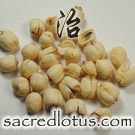 Lian Zi5 gAstringe, Stabilize, Bind
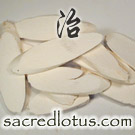 Shan Yao10 gTonify Qi
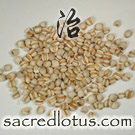 Yi Yi Ren5 gRegulate Water and Drain Dampness
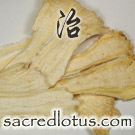 Jie Geng5 gWarm Herbs that Transform Phlegm-Cold
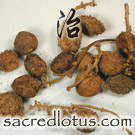 Sha Ren5 gAromatic Herbs that Transform and Dissolve Dampness
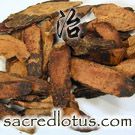 Zhi Gan Cao10 gTonify Qi
Preparation & dosage
How is Shen Ling Bai Zhu San prepared?
Shen Ling Bai Zhu San ("Ginseng, Poria and Atractylodes Powder") is classically a powder taken with a jujube-based drink, and is also commonly prepared as a water decoction (tang) of its gentle Spleen-strengthening, damp-draining herbs.
A common substitution: about 20–25 g of Dang Shen (or Hai Er Shen) is used in place of Ren Shen for everyday tonification. The aromatic Sha Ren is added toward the end of cooking so its volatile oils aren't lost. Available as granules.
Source: Sacred Lotus sources & references (composition and preparation note) + Bensky & Barolet, Formulas & Strategies.
Classically a fine powder, ~6-10 g with a Da Zao (jujube) decoction; also a water decoction. Larger amounts of Ren Shen, Bai Zhu, Fu Ling, Shan Yao and Zhi Gan Cao; less of Bai Bian Dou, Lian Zi, Yi Yi Ren, Sha Ren and Jie Geng. Reference only.
Safety — read before use
What are the cautions for Shen Ling Bai Zhu San?
Shen Ling Bai Zhu San is for deficiency-and-damp patterns, so it is inappropriate for damp-heat diarrhea — acute, foul-smelling, or burning diarrhea with heat signs should not be treated with this warming, drying formula. It is likewise unsuited to purely excess patterns or to yin deficiency with heat.
- Wrong pattern: avoid where diarrhea stems from damp-heat, food stagnation, or acute infection rather than Spleen deficiency.
- Drying nature: the aromatic, damp-resolving herbs can further injure fluids in someone with marked yin or fluid deficiency.
- Pregnancy and interactions: use under professional guidance; no well-documented herb-drug interactions are established, which is not the same as proven safety.
Source: Bensky & Barolet, Formulas & Strategies (contraindications for Spleen-damp tonics). Traditional-use framing; not medical advice.
Originally Appeared In:
- Imperial Grace Formulary of the Tai Ping Era (Tai Ping Hui Min He Ji Ju Fang)
Notes:
How is Shen Ling Bai Zhu San different from Si Jun Zi Tang and Bu Zhong Yi Qi Tang?
Shen Ling Bai Zhu San is Si Jun Zi Tang extended for dampness and diarrhea. It keeps the four-ingredient Spleen-qi core and adds Shan Yao, Lian Zi, Bai Bian Dou, Yi Yi Ren, Sha Ren, and Jie Geng — so it is chosen when qi deficiency has progressed to loose stools with damp, and it also treats the Lung (“cultivate earth to generate metal”).
- vs Si Jun Zi Tang: use Shen Ling Bai Zhu San when the plain qi-deficiency picture is joined by diarrhea, damp, and phlegm; Si Jun Zi Tang alone lacks the damp-draining and astringent herbs.
- vs Bu Zhong Yi Qi Tang: Bu Zhong Yi Qi Tang raises sunken qi (organ prolapse, chronic fatigue, fever from qi collapse); Shen Ling Bai Zhu San instead resolves damp and stops diarrhea and does not primarily lift yang.
Key modifications: for more pronounced cold in the middle burner, add warming herbs such as dried ginger (Gan Jiang); for stubborn chronic diarrhea, add astringents; where qi stagnation and fullness dominate, emphasize the aromatic qi-movers (Sha Ren, and add Chen Pi / Mu Xiang).
Source: owner’s Five Branches formula notes (Sha Ren / Jie Geng roles; damp-and-diarrhea modifications) + Bensky & Barolet, Formulas & Strategies.
Clinical Studies & Research:
Is there modern research on Shen Ling Bai Zhu San?
Yes — a growing but mostly preclinical body of work, concentrated on the gut. Consistent with its traditional use for Spleen-damp diarrhea, animal and cell studies focus on chronic diarrhea, ulcerative colitis, and the gut microbiota. Human clinical trial evidence remains limited, so these findings are mechanistic rather than proof of efficacy.
- Chronic diarrhea (animal): in mice, the formula promoted gut IgA+ plasma cells and raised systemic glutamine to ease chronic diarrhea (PMID 40915370; PMC 13332076, J Ethnopharmacol 2026).
- Ulcerative colitis (animal/cell): alleviated colitis in DSS rats by enhancing mitophagy via the Nrf2/PINK1/Parkin pathway (PMID 41460377); a separate study reported strengthened intestinal-barrier integrity (PMID 41031501).
Sources: PubMed 40915370 / PMC 13332076; PubMed 41460377; PubMed 41031501. Research context, not a therapeutic claim; direct clinical trial evidence remains limited.
Sources & References
Compiled and edited by Thomas Dehli, Founder & Editor, Sacred Lotus Updated
The information here is referenced from numerous sources — teachers, practitioners, class notes from Five Branches University, the books below, and the published research literature, with citations given as resolvable PubMed identifiers. Where sources disagree, I have flagged the discrepancies directly. If facts couldn't be verified, I have left them out. How we source our content.
Reference information for students and practitioners — not medical advice. Consult a qualified practitioner. Terms of use.
Chinese Formulas Books & References
 https://amzn.to/4fYI3f8
 https://amzn.to/4j55NRA
 https://amzn.to/4gMROyv
 https://amzn.to/4h7msSK