
Fructus Amomi Cardamom (Grains of Paradise Fruit)
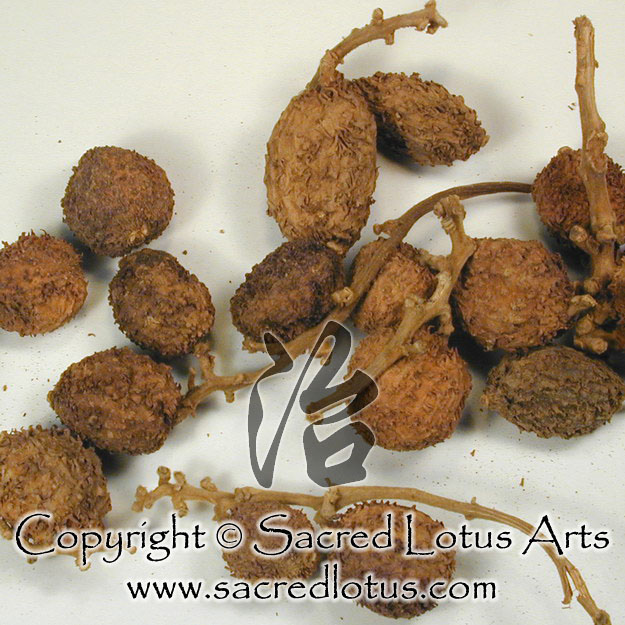
Materia Medica Data
- Temperature
- Warm
- Nature & Flavour
- Spicy, Warm, Aromatic
- Channels Entered
- SP, ST
- Latin (pharmaceutical)
- Fructus Amomi
- Chinese
- 砂仁
- Tone Marks
- shā rén
- Translation
- Sand Seeds
Chinese Herb Actions
What is Sha Ren used for in Chinese medicine?
Sha Ren (Amomum villosum fruit) is an aromatic, warming herb that moves qi and transforms dampness in the Spleen and Stomach — the classic remedy for a stuffy, distended epigastrium with poor appetite, nausea, and loose stool from dampness obstructing digestion. Its warmth and qi-moving action also make it the aromatic herb traditionally used to calm an unsettled pregnancy.
- Moves qi, transforms dampness, strengthens the Spleen — indigestion, epigastric and abdominal distention/pain, poor appetite, nausea, vomiting, and diarrhea from dampness obstructing the Middle Burner.
- Warms the Spleen, stops diarrhea — watery, undigested-food diarrhea from Spleen-Stomach cold.
- Calms a restless fetus (an tai) — morning sickness, and a “restless fetus” with abdominal pain or spotting attributed to qi stagnation or cold in pregnancy; by moving qi smoothly through the Middle Burner it is traditionally said to settle the fetus as a secondary effect.
Source: cross-referenced against multiple online sources and standard materia medica texts (Bensky, Chen & Chen). Traditional-use framing; not medical advice.
Chinese Herb Dosage
What is the typical dosage of Sha Ren, and why is it added at the end of decoction?
Roughly 3–6 g (up to ~10 g), crushed and added in the last 5–10 minutes of cooking — Sha Ren is a “late-added” herb (下, xià) because its therapeutic effect lives in volatile aromatic oils that boil off if simmered with the rest of the formula for the usual 20–30+ minutes. Crushing the pod just before use also freshly exposes those oils, since pre-ground powder loses potency in storage.
- Bensky: 3–6 g, crushed, added near the end of cooking.
- Chen & Chen: 3–6 g, crushed and added at the end of cooking.
Source: Sacred Lotus sources & references (Bensky, Chen & Chen dosage ranges), cross-referenced against multiple online sources. Reference only — not a prescription.
Chinese Herb Contraindications & Cautions
Are there cautions for Sha Ren?
Sha Ren is warm and drying, so it is traditionally avoided in heat patterns, especially heat arising from yin deficiency — dry mouth, night sweats, and other deficient-heat signs are a poor match for a warming, aromatic herb. As with other aromatic qi-moving herbs, it is used cautiously where significant underlying deficiency is present without accompanying cold or dampness to justify it.
Source: cross-referenced against multiple online sources and standard materia medica texts.
Chinese Herb Toxicity & Overdose
Low. Sha Ren is a culinary spice pod (related to true cardamom) with a long dietary history; standard materia medica texts report no significant toxicity at normal decoction doses. Occasional allergic skin reactions (pruritus) have been noted anecdotally in clinical practice.
Source: cross-referenced against multiple online sources and materia medica texts. Reference note, not a safety guarantee.
Herb-Drug Interactions
No well-documented clinical herb–drug interactions are confirmed for Amomum villosum specifically. Some materia medica references flag a theoretical caution around antiplatelet activity reported for related aromatic Zingiberaceae spices, and suggest awareness for patients on anticoagulant or antiplatelet therapy — this is precautionary, not a demonstrated interaction for Sha Ren itself. (Flagged for practitioner confirmation.)
Western / Biomedical Research
Chinese Herb Clinical Studies & Research
Provided as research context — a summary of published biomedical study, not a therapeutic or medical claim.
Is there modern research on Sha Ren (Amomum villosum)?
Yes — a growing body of preclinical (cell and animal) pharmacology, though clinical trial evidence is still limited. A 2024 review catalogs roughly 500 isolated compounds from the plant and reports anti-inflammatory, antioxidant, hepatoprotective, anti-tumor, hypoglycemic, antimicrobial, gut-microbiota-modulating, and gastrointestinal-regulating activities across preclinical studies, while explicitly calling for more toxicity and pharmacokinetic research before wider use.
- Digestive-tract relevance — Amomum villosum essential oil showed bacteriostatic activity against Helicobacter pylori in vitro (minimum inhibitory concentration 256 µg/mL) and disrupted its biofilm formation, with additive effects when combined with conventional antibiotics; laboratory research, not a treatment claim.
- Gastrointestinal motility (preclinical) — a 2024 network-pharmacology and mouse study identified β-sitosterol as an active constituent that increased bowel-movement frequency and intestinal contraction via an adrenoceptor/myosin-light-chain pathway — evidence that Sha Ren’s constituents can modulate gut motility mechanistically; an animal-model finding, not a clinical treatment claim, and a different direction (constipation) from the herb’s traditional anti-diarrheal use.
- Chemistry — further phytochemical work has isolated additional antioxidant aromatic compounds and terpenoids from the fruit, including some with hypoglycemic activity in laboratory testing.
Note: Sha Ren (Amomum villosum) is sometimes loosely translated as “cardamom,” but true cardamom is Elettaria cardamomum, a related but botanically distinct Zingiberaceae species. Some cardamom research circulating online is about Elettaria, not Amomum villosum, and has been excluded here in favor of species-specific citations.
Sources: PMID 39069030 (Amomum villosum ethnopharmacological/phytochemical/pharmacological review, J Ethnopharmacol 2024); PMID 40803452 (essential oil vs. Helicobacter pylori, Fitoterapia 2025); PMID 38065427 (network pharmacology/mouse GI-motility study, Gene 2024). Research context, not a therapeutic claim.
Chinese Herb Notes
Why is Sha Ren specifically used to calm a restless fetus?
Traditional medicine treats an unstable, “restless” pregnancy as often rooted in qi stagnation or cold obstructing the Spleen and Stomach, and Sha Ren’s warming, qi-moving action is aimed at that Middle Burner disturbance rather than at the uterus directly — harmonizing digestion is said to settle the fetus as a secondary effect.
Common combinations: for calming the fetus it is traditionally paired with Su Geng (perilla stem), Bai Zhu, and Huang Qin in Spleen-qi-supporting formulas; for general digestive complaints it pairs with Mu Xiang (to move qi) and Bai Zhu/Fu Ling (to strengthen the Spleen), and it appears in the Xiang Sha Liu Jun Zi Tang family of Spleen-qi formulas. (Traditional formula context, not treatment advice.)
Source: cross-referenced against multiple online sources and standard materia medica texts.
Sources & References
Compiled and edited by Thomas Dehli, Founder & Editor, Sacred Lotus Updated
The information here is referenced from numerous sources — teachers, practitioners, class notes from Five Branches University, the books below, and the published research literature, with citations given as resolvable PubMed identifiers. Where sources disagree, I have flagged the discrepancies directly. If facts couldn't be verified, I have left them out. How we source our content.
Reference information for students and practitioners — not medical advice. Consult a qualified practitioner. Terms of use.
Chinese Herbs Books & References
 https://amzn.to/3WfB3DK
 https://amzn.to/3DR1VUh
 https://amzn.to/42aMz73
 https://amzn.to/3PuD4bt