
Bu Zhong Yi Qi Tang Bǔ Zhōng Yì Qì Tāng
Tonify the Middle and Augment the Qi Decoction
- Category
- Formulas that Tonify
- Subcategory
- Formulas that Tonify the Qi
- Ingredients
- 8 herbs
Actions
What does Bu Zhong Yi Qi Tang do?
Bu Zhong Yi Qi Tang tonifies Spleen and Stomach (Middle Jiao) qi, raises sunken clear yang, and vents the deficiency ("yin") fire that qi collapse allows to float upward — the founding formula of Li Dong-yuan's Spleen-Stomach school, built to treat exhaustion-type fatigue and fever together rather than as separate problems.
- Tonifies Middle Jiao qi: Huang Qi, Ren Shen, Bai Zhu, and Zhi Gan Cao rebuild Spleen/Stomach qi at the source.
- Raises sunken (collapsed) yang qi: the Sheng Ma + Chai Hu pair lifts qi that has sunk downward back to its normal ascending path, addressing organ prolapse and heaviness/sagging sensations.
- Vents deficiency fire: once qi is tonified and lifted, the false, floating heat it generated when trapped below subsides — the formula treats the fever by correcting the collapse, not by cooling directly.
- Nourishes blood alongside qi: Dang Gui supports the blood that a purely qi-tonifying formula would otherwise leave unaddressed (qi and blood are mutually rooted).
- Regulates qi flow: Chen Pi keeps the rich tonics from becoming stagnating or cloying to digestion.
Source: Sacred Lotus sources & references + Bensky & Barolet, Formulas & Strategies (qi-tonifying/yang-raising strategy and herb roles). Traditional-use framing; not medical advice.
Indications
What is Bu Zhong Yi Qi Tang used for?
Bu Zhong Yi Qi Tang treats Spleen-qi deficiency with sinking of the clear yang — the pattern behind chronic fatigue, poor digestion, and organ prolapse, plus the distinctive low fever that qi collapse itself can generate.
- Fatigue and weakness: profound tiredness, heavy limbs, reluctance to speak, and a low, weak voice.
- Spontaneous sweating that worsens with exertion, from an unsecured protective (Wei) qi.
- Digestive signs: poor appetite, epigastric fullness or a sensation of sagging in the abdomen, and loose or watery stools.
- Organ prolapse ("sinking" disorders): uterine, rectal, or gastric prolapse, and a chronic sensation of downward-bearing heaviness in the abdomen or perineum.
- Chronic, low-grade fever that is worse with exertion and eases with rest — a deficiency ("yin") fire rather than an externally contracted or excess-heat fever (see description for how the two are told apart).
- Dizziness or lightheadedness on standing, from clear yang failing to rise to the head.
Source: Sacred Lotus sources & references on pattern/tongue/pulse + Bensky & Barolet, Formulas & Strategies. Traditional-use framing; not medical advice.
Western Uses:
What conditions is Bu Zhong Yi Qi Tang used for in modern practice?
Bu Zhong Yi Qi Tang raises "sunken" middle qi — the Spleen-qi deficiency and organ-prolapse pattern — so it is referenced for a broad set of prolapse, fatigue, and chronic-deficiency conditions: gastric prolapse (gastroptosis), rectal and uterine prolapse, functional uterine bleeding, myasthenia gravis, recurrent miscarriage, chronic bronchitis, chronic vaginal discharge (leucorrhoea), chronic hepatitis, corneal ulcers, cerebral arteriosclerosis, pernicious anaemia, leukopenia, and chronic nephritis.
The unifying thread is the TCM sinking-qi / qi-deficiency pattern, not any single diagnosis — which is why the list spans so many systems. Organ prolapse, abnormal uterine bleeding, myasthenia gravis, the anaemias, and kidney or liver disease all require medical diagnosis and management; this formula is a traditional adjunct to that care, not a substitute. Traditional-use correlates only, not a treatment claim.
Source: Sacred Lotus sources & references (pattern) + Bensky & Barolet, Formulas & Strategies; biomedical correlates as reference only. Not medical advice.
Ingredients
8 substances in Bu Zhong Yi Qi Tang — each links to its full herb monograph.
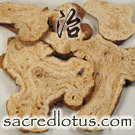 Bai Zhu9-12 gTonify Qi
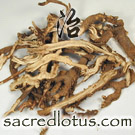 Chai Hu3-9 gCool, Spicy Herbs that Release the Exterior
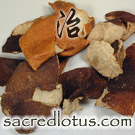 Chen Pi6-9 gRegulate the Qi
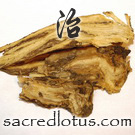 Dang Gui6-12 gTonify Blood
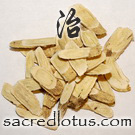 Huang Qi12-24 gTonify Qi
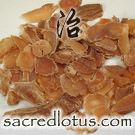 Ren Shen9-12 gTonify Qi
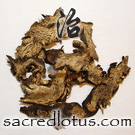 Sheng Ma3-6 gCool, Spicy Herbs that Release the Exterior
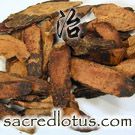 Zhi Gan Cao3-6 gTonify Qi
Preparation & dosage
How is Bu Zhong Yi Qi Tang prepared?
Traditionally decocted in water as a single combined brew ("tang"), taken warm; Sheng Ma and Chai Hu are cooked together with the qi-tonifying herbs rather than separately, so their yang-raising action rides on Huang Qi and Ren Shen's bulk tonification rather than acting as an independent exterior-releasing dose.
- Herb processing: Zhi Gan Cao (honey-fried licorice) is used rather than raw Gan Cao, per Sacred Lotus sources & references, to strengthen its Middle Jiao-tonifying and harmonizing action.
- Modern forms: also produced as concentrated granules or pills for longer-term maintenance of chronic prolapse or fatigue, where sustained low-dose use is more practical than repeated decoctions.
Source: Sacred Lotus sources & references + Bensky & Barolet, Formulas & Strategies.
Safety — read before use
What are the cautions for Bu Zhong Yi Qi Tang?
Bu Zhong Yi Qi Tang is a warming, qi-raising formula, so it is inappropriate for fevers or heat signs of an excess or externally-contracted nature — using it in that setting risks fueling the heat rather than resolving it. Correctly distinguishing deficiency (yin) fire from excess heat (see description) is the key safety checkpoint before use.
- Not for excess-heat or exterior (externally contracted) fevers: high fever, thirst for cold drinks, red tongue, or a rapid/forceful pulse indicate a pattern this formula is not designed for and could aggravate.
- Caution in ascendant Liver-yang or upward-rushing conditions (e.g., marked dizziness or headache from yang rising rather than qi sinking): Sheng Ma and Chai Hu's lifting action is traditionally used cautiously here, as it could reinforce an already-ascending pattern rather than correct a sinking one.
- Caution during acute external invasion (e.g., a fresh common-cold-type illness with chills and fever): tonifying at this early stage is traditionally avoided, as it risks "locking the door on the thief" — trapping the pathogen rather than expelling it.
- Professional guidance advised in pregnancy and for any use alongside a diagnosed medical condition, given Dang Gui's blood-invigorating quality and the need for correct pattern differentiation.
Source: Bensky & Barolet, Formulas & Strategies (cautions for qi-tonifying, yang-raising formulas). Traditional-use framing; not medical advice.
Originally Appeared In:
- Discussion of the Spleen and Stomach (Pi Wei Lun)
Notes:
How is Bu Zhong Yi Qi Tang different from Ju Yuan Jian and Sheng Xian Tang?
All three formulas raise sunken qi around a Huang Qi/Ren Shen core, but they diverge in scope and in exactly which herbs are kept or dropped.
- vs Ju Yuan Jian (Lift the Source Drink, Zhang Jing-yue): a pared-down five-herb formula — Ren Shen, Huang Qi, Bai Zhu, Gan Cao, and Sheng Ma — that omits both Dang Gui and Chai Hu. It is used for more urgent qi collapse with profuse uterine bleeding ("qi failing to hold blood"), where Dang Gui's blood-moving quality and Chai Hu's more vigorous, dispersing lift are traditionally considered less desirable than Bu Zhong Yi Qi Tang's broader, gentler tonify-and-raise action.
- vs Sheng Xian Tang (Uplift the Sinking Decoction, Zhang Xi-chun, early 20th century): a later formula built on the same Huang Qi + Sheng Ma + Chai Hu logic but adding Zhi Mu (to balance Huang Qi's warmth) and Jie Geng (to "carry" qi upward via the Lung), without Ren Shen, Bai Zhu, Dang Gui, or Chen Pi. It is generally reserved for more acute or pronounced qi-collapse presentations (e.g., marked shortness of breath with a sensation of qi sinking), while Bu Zhong Yi Qi Tang remains the standard formula for chronic, broader Spleen-qi deficiency with sinking.
What is the classical source of Bu Zhong Yi Qi Tang?
Bu Zhong Yi Qi Tang was devised by Li Dong-yuan (Li Gao, 1180–1251), a physician of the Jin-Yuan era and founder of the Spleen-Stomach school, as the flagship formula of his "yin fire" theory — that internal fever can arise from qi collapse itself, not only from external or excess heat.
Secondary sources differ slightly on the exact originating text: most formula compendia (e.g., Bensky & Barolet) attribute it to Li Dong-yuan's Pi Wei Lun (Treatise on the Spleen and Stomach, 1249); a number of other references instead date its first appearance to his earlier Nei Wai Shang Bian Huo Lun (Clarifying Doubts about Damage from Internal and External Causes, 1247). Both are works by the same author, two years apart, within the same Spleen-Stomach doctrine, so this reads as a bibliographic variant between sources rather than a substantive dispute about the formula itself.
Japanese Kampo lineage: the same formula is known in Japan as Hochuekkito (TJ-41), used clinically for fatigue, weakness, and immune support; commercial Kampo preparations sometimes add Sheng Jiang (ginger) and Da Zao (jujube) to the core eight herbs, so composition can vary slightly by manufacturer even though the formula strategy is the same.
Source: Bensky & Barolet, Formulas & Strategies (formula comparisons, classical attribution); Wikipedia/Kampo manufacturer references cross-checked for the Hochuekkito lineage note.
Clinical Studies & Research:
Is there modern research on Bu Zhong Yi Qi Tang?
Yes — several systematic reviews and meta-analyses, mostly pooling Chinese-language randomized controlled trials, have examined Bu Zhong Yi Qi Tang (BZYQT) as an adjunct therapy, though the authors of each review call for larger, higher-quality trials.
- Chronic obstructive pulmonary disease (systematic review/meta-analysis, 16 RCTs, ~1,400 participants): BZYQT, alone or combined with conventional treatment, was associated with improved clinical symptoms, exercise capacity, lung function, and quality of life in stable COPD, with an excellent reported safety profile (PMID 27912964).
- Cancer-related fatigue (systematic review/meta-analysis with exploratory network pharmacology, 2024): the Buzhong Yiqi method showed significant efficacy in reducing cancer-related fatigue with minimal adverse reactions across pooled trials (PMID 39564104; PMC 11573511).
- Atopic dermatitis (systematic review protocol, 2019): summarizes existing clinical evidence and experimental anti-allergic, anti-inflammatory, and immunoregulatory findings for BZYQT (or modified BZYQT) in atopic dermatitis; a protocol synthesizing prior studies rather than new trial results (PMID 30608425; PMC 6344144).
- Functional dyspepsia (feasibility study protocol, 2017): a single-arm, non-randomized pilot (n=30) testing BZYQT for functional dyspepsia with a Spleen-qi-deficiency pattern over 4 weeks; a feasibility protocol only, not efficacy results (PMID 28951846; PMC 5605384).
Sources: PubMed 27912964; PubMed 39564104 / PMC 11573511; PubMed 30608425 / PMC 6344144; PubMed 28951846 / PMC 5605384. Research context, not a therapeutic claim; evidence is preliminary/mixed-quality and largely limited to the cited indications above.
Sources & References
Compiled and edited by Thomas Dehli, Founder & Editor, Sacred Lotus Updated
The information here is referenced from numerous sources — teachers, practitioners, class notes from Five Branches University, the books below, and the published research literature, with citations given as resolvable PubMed identifiers. Where sources disagree, I have flagged the discrepancies directly. If facts couldn't be verified, I have left them out. How we source our content.
Reference information for students and practitioners — not medical advice. Consult a qualified practitioner. Terms of use.
Chinese Formulas Books & References
 https://amzn.to/4fYI3f8
 https://amzn.to/4j55NRA
 https://amzn.to/4gMROyv
 https://amzn.to/4h7msSK