
Sheng Mai San
Generate the Pulse Powder
- Category
- Formulas that Tonify
- Subcategory
- Formulas that Tonify the Qi
- Ingredients
- 3 herbs
Actions
What does Sheng Mai San do?
Sheng Mai San (Generate the Pulse Powder) tonifies Qi, nourishes Yin and generates fluids, and astringes the Lung to stop abnormal sweating — the classic three-herb formula for Qi-and-Yin collapse, whether from prolonged heat-disease/summerheat exhaustion or chronic Lung deficiency. Its name refers to restoring a weak, almost-imperceptible pulse by replenishing the Qi and fluids that give the pulse its substance.
- Tonifies Qi — replenishes Lung and Source Qi that has been consumed by heat, sweating, or chronic cough.
- Nourishes Yin and generates fluids — restores fluids lost to sweating or febrile disease and moistens Lung dryness.
- Astringes to stop leakage — checks spontaneous sweating and holds in the Qi and fluids the other two herbs have just generated.
Source: Sacred Lotus sources & references (composition); Bensky & Barolet, Chinese Herbal Medicine: Formulas & Strategies; Chen & Chen, Chinese Medical Herbology and Pharmacology. Traditional-use framing; not medical advice.
Indications
What is Sheng Mai San used for?
Sheng Mai San is used for Qi-and-Yin deficiency of the Lungs, most often after prolonged heat-disease, summerheat exhaustion, or chronic cough — presenting as spontaneous sweating, shortness of breath, and a faint or forceless pulse. In classical emergency use it addresses frank Qi-and-Yin collapse (near-collapse from heat-stroke or profuse sweating), with the pulse becoming faint and about to expire.
- Chronic dry or unproductive cough with scanty, sticky sputum that is difficult to expectorate.
- Spontaneous sweating and shortness of breath, worse with exertion.
- Dry mouth and throat, with thirst.
- Fatigue and a weak voice, sometimes with palpitations or insomnia.
- Qi-and-Yin collapse after profuse sweating, severe summerheat, or major fluid loss, with a faint, thready, or barely perceptible pulse — the classical emergency indication.
Source: Sacred Lotus sources & references (pattern: Qi and Yin deficiency of the Lungs; tongue: pale red or red with thin dry coat; pulse: empty, thin, possibly weak and rapid); Bensky & Barolet, Formulas & Strategies. Reference only, not a diagnosis.
Western Uses:
What conditions is Sheng Mai San used for in modern practice?
Sheng Mai San tonifies qi and yin (of the Lung and Heart) — the picture of exhaustion, shortness of breath, spontaneous sweating and palpitations after a depleting illness — so it is referenced across respiratory and cardiac deficiency conditions: chronic bronchitis, pulmonary tuberculosis, supraventricular arrhythmias, rheumatic heart disease, angina pectoris, coronary artery disease, and debility after cardiac bypass surgery.
The thread is the qi-and-yin-deficiency pattern, not any one diagnosis. Angina, coronary artery disease, arrhythmia and heart disease require medical diagnosis and management — chest pain must always be assessed — and tuberculosis needs medical treatment. This formula is a traditional adjunct, not a substitute. Traditional-use correlates only, not a treatment claim.
Source: Sacred Lotus sources & references (pattern) + Bensky & Barolet, Formulas & Strategies; biomedical correlates as reference only. Not medical advice.
Ingredients
3 substances in Sheng Mai San — each links to its full herb monograph.
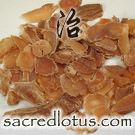
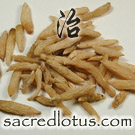
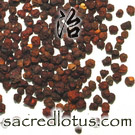
Preparation & dosage
How is Sheng Mai San prepared?
Sheng Mai San is prepared as a water decoction of the three herbs simmered together, despite “san” (powder) in its classical name — a naming holdover from an earlier coarse-powder form that was itself decocted in water. Wu Wei Zi is typically lightly crushed before decocting to help release its astringent constituents.
Typical adult ranges (live Sacred Lotus sources & references): Ren Shen 9–15 g, Mai Men Dong 9–12 g, Wu Wei Zi 3–6 g, taken as a decoction. For milder presentations, or where Ren Shen’s warmth is undesirable, Xi Yang Shen (American Ginseng) or Dang Shen is commonly substituted at roughly 2–3 times the Ren Shen dose. It is also produced as a concentrated granule and, in hospital settings, as the injectable preparation discussed under Research — a distinct route of administration from the oral decoction described here.
Source: Sacred Lotus sources & references (dosage range, substitution note); Bensky & Barolet, Formulas & Strategies (classical preparation). Reference only, not a prescription.
Safety — read before use
What are the cautions for Sheng Mai San?
Sheng Mai San is a tonifying, astringent formula and is not appropriate while an exogenous (exterior) pathogen is still present, or for excess-heat patterns without underlying Qi-and-fluid damage. Its sour-astringent component can “lock in” a lingering pathogen — the classical caution against astringing too early.
- Not for active exterior conditions — where Qi-and-Yin deficiency coexists with an unresolved exogenous pathogen (e.g. early-stage cold or flu), astringing with Wu Wei Zi risks trapping the pathogen inside.
- Not for high fever or summerheat fever without Qi/fluid impairment — the formula addresses deficiency and collapse, not active excess heat on its own.
- Use caution with active phlegm-damp or phlegm-heat cough — the enriching, astringing herbs can encourage retention of phlegm or a lingering pathogen rather than resolving it.
- No toxic or restricted ingredients — none of the three herbs (Ren Shen, Mai Men Dong, Wu Wei Zi) carry toxicity or endangered-species restrictions, unlike formulas containing aconite, ephedra, or cinnabar.
Source: Bensky & Barolet, Formulas & Strategies; Chen & Chen, Chinese Medical Herbology and Pharmacology (cautions & contraindications). Practitioner reference, not medical advice.
Originally Appeared In:
- Clarifying Doubts About Injury from Internal and External Causes (Nei Wai Shang Bian Huo Lun)
Notes:
How does Sheng Mai San differ from related formulas, and what is its source?
Sheng Mai San is attributed to Zhang Yuansu’s Yi Xue Qi Yuan (Currents of Medicine), a Jin–Yuan dynasty (12th–13th century) text, per formulary consensus. It is also known as Sheng Mai Yin (“Generate the Pulse Drink”) — the same three herbs under a different generic name.
- vs Zhi Gan Cao Tang (Fu Mai Tang, “Restore the Pulse Decoction”) — both are named for restoring the pulse in deficiency, but Zhi Gan Cao Tang more richly nourishes Qi, Blood, and Yin together and specifically targets a knotted or intermittent (arrhythmic) pulse, using warming Gui Zhi and Sheng Jiang to unblock Heart Yang. Sheng Mai San targets a weak, faint pulse from Qi-and-Yin collapse with sweating, and relies on astringent Wu Wei Zi rather than warming envoys.
- vs Zhu Ye Shi Gao Tang (Lophatherum and Gypsum Combination) — both treat Qi-and-fluid damage following febrile or heat disease and share Ren Shen and Mai Men Dong, but Zhu Ye Shi Gao Tang additionally clears lingering heat (Shi Gao, Zhu Ye, Ban Xia) and has no astringing herb. Sheng Mai San is chosen once the picture is primarily deficiency/collapse rather than lingering heat.
Common modifications: Huang Qi is added for more pronounced Qi deficiency with marked spontaneous sweating; Long Gu and Mu Li may be added to strengthen the astringing action in profuse sweating; Xi Yang Shen or Dang Shen commonly replaces Ren Shen for milder presentations (see Preparation).
Source: Bensky & Barolet, Formulas & Strategies (classical source, comparisons, modifications); Chen & Chen, Chinese Medical Herbology and Pharmacology.
Clinical Studies & Research:
Is there modern research on Sheng Mai San?
Sheng Mai San is one of the more heavily studied classical formulas in modern Chinese cardiovascular medicine, chiefly in the form of Shengmai injection — an intravenous preparation, not the oral decoction — used in Chinese hospitals as an adjunct to standard heart-failure care. A systematic review of 20 randomized controlled trials (1,562 patients) found Shengmai injection, made from the same three herbs (ginseng, Ophiopogon, and Schisandra), improved cardiac function indicators as an adjunct to conventional treatment for chronic heart failure, with a generally good safety record; the authors noted trial quality was mixed and called for more rigorous studies.
Separately, laboratory work has examined the oral formula’s extract directly on heart tissue: an animal study found Sheng Mai San protective against post-ischemic myocardial dysfunction, linked to opening of mitochondrial K-ATP channels, and a cell-culture study found the extract reduced hyperglycemia-induced apoptosis in H9C2 cardiomyoblast cells. These are preclinical, mechanism-level findings, not clinical outcomes.
A note on naming: English-language sources sometimes conflate Shengmai injection with the separately marketed Shenmai injection, a related but compositionally distinct commercial product; its own trials in chronic cor pulmonale/heart failure are reported separately in the literature. We flag this distinction rather than merge the two products’ evidence.
Sources: PubMed 32655670 (Evid Based Complement Alternat Med, 2020, systematic review, 20 RCTs / 1,562 patients, Shengmai injection, chronic heart failure); PubMed 12197603 (Circ J, 2002, animal study, mitochondrial K-ATP channels); PubMed 31718632 (BMC Complement Altern Med, 2019, H9C2 cell study); PubMed 26603978 and PubMed 25532414 (Shenmai injection trials, cited only to distinguish that separate product). Research context, not a therapeutic claim; injectable preparations are not the oral formula.
Sources & References
Compiled and edited by Thomas Dehli, Founder & Editor, Sacred Lotus Updated
The information here is referenced from numerous sources — teachers, practitioners, class notes from Five Branches University, the books below, and the published research literature, with citations given as resolvable PubMed identifiers. Where sources disagree, I have flagged the discrepancies directly. If facts couldn't be verified, I have left them out. How we source our content.
Reference information for students and practitioners — not medical advice. Consult a qualified practitioner. Terms of use.
Chinese Formulas Books & References
 https://amzn.to/4fYI3f8
 https://amzn.to/4j55NRA
 https://amzn.to/4gMROyv
 https://amzn.to/4h7msSK